Reviewed · MEDINA & SOUK TOURS
Marrakech Guided Souks Tour with a Local Insider
Marrakech’s souks make more sense once you understand their layout. This three-hour walk takes you beyond the obvious shopping lanes into specialist craft areas, old foundouks, and narrow passages you could easily miss on your own. Guides such as Mohammed, Abdel, Charif, and Atman explain how the medina works while helping you find the trades and products that interest you.
I like two things here: the tour teaches you how to move through the souks without feeling lost, and it gives real context to the goods being sold. You may see leather traded, wool dyed, metalwork shaped, or traditional tools made. You also get useful advice on bargaining, local manners, and spotting handmade work.
The main consideration is that shopping is part of the experience. Some stops can feel sales-focused, especially if you are not planning to buy anything. The guides are generally willing to move on, but tell yours early if you want history and craft demonstrations more than shopping.
Key points to know before you go
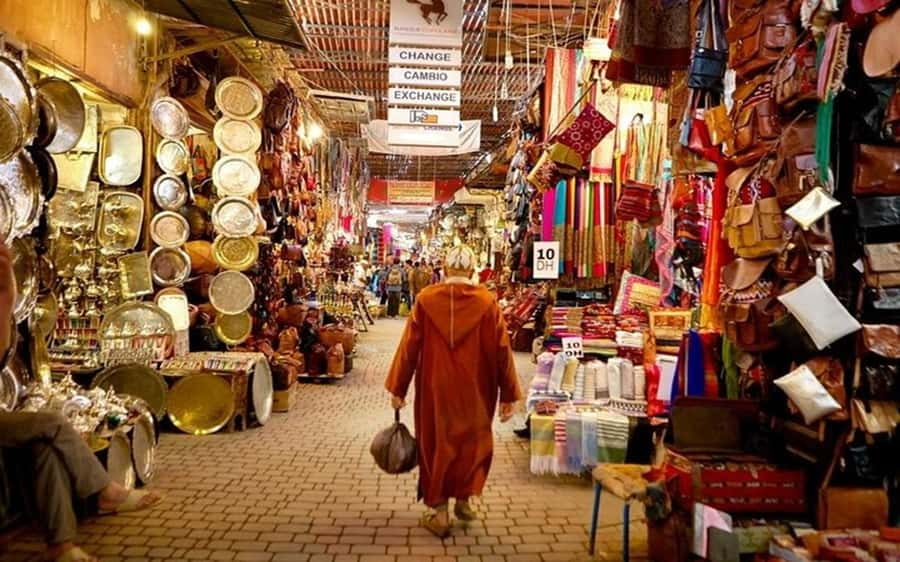
- See the souks by trade: Explore areas devoted to leather, wool, spices, textiles, wood, copper, silver, and traditional tools.
- Go beyond the main lanes: Your guide leads you through quieter alleys, lesser-known corners, and old merchant foundouks.
- Learn how to bargain: Get practical advice about etiquette, prices, and how to shop without feeling pressured.
- Choose your tour style: Shared and private options are available, with private visits allowing more room for your own interests.
- Meet at Café de France: The standard meeting point is in front of the café on Jemaa el Fna, with hotel pickup available on selected options.
Why a guide helps inside Marrakech’s souks
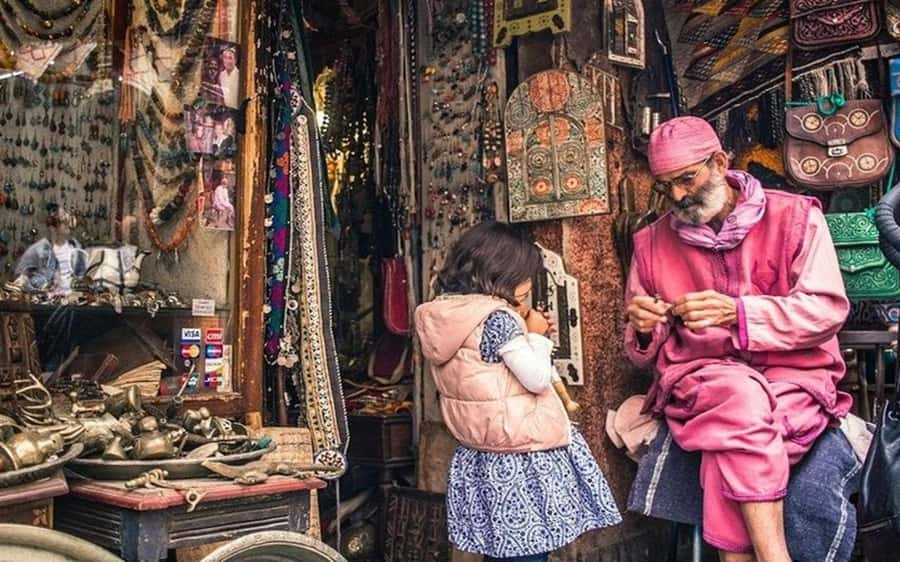
The Marrakech medina is easy to enter and surprisingly hard to understand. From Jemaa el Fna, the lanes quickly split into smaller routes. Shops, workshops, food stalls, homes, mosques, and old commercial buildings share the same tight network.
You can certainly wander alone, and getting a little lost is part of the fun. But a local guide gives your walk a purpose. Instead of seeing a wall of rugs, lamps, shoes, and spices, you learn why different goods appear in different sections and how the old trading system still shapes the market.
I find this especially useful early in a Marrakech stay. You learn the names and locations of the areas you may want to return to later. You also get a feel for the pace of the medina, where pedestrians, handcarts, scooters, shopkeepers, and artisans all share limited space.
The guides bring different personal strengths. Mohammed is repeatedly described as flexible and good at adjusting the route. Abdel grew up in the medina and can explain daily life from first-hand experience. Charif has been praised for showing leather and wool areas, while Atman has combined a souk walk with a visit to Ben Youssef Madrasa.
You should not expect every guide to follow exactly the same route. That is a benefit, not a flaw, if you tell the guide what matters to you.
More Medina & Souk Tours in Marrakech
- Marrakech: Bahia Palace, Saadian Tombs, Souk and Medina Tour
★ 4.7 · 4,974 reviews - Marrakech: Ben Youssef, Secret Garden, & Souks Walking Tour
★ 4.6 · 2,802 reviews - Marrakech: Colorful Medina Souks Guided Walking Tour
★ 4.7 · 2,470 reviews
Starting at Café de France and Jemaa el Fna
The usual meeting point is in front of Café de France, on the main square of Jemaa el Fna. This is a practical place to begin because it is one of the easiest landmarks to identify in the medina.
Your guide introduces the walk here before leading you into the market streets. If you have selected hotel pickup, the starting arrangements can differ, so check the option you book. The standard experience is a three-hour walking tour, and food and drinks are not included.
The square gives you a useful first lesson in Marrakech. It is open, busy, and easy to understand compared with the souks themselves. Once you move into the covered lanes, the city becomes more compressed and the need for orientation becomes clear.
Wear comfortable shoes. The tour is on foot, and even a short distance can take time when the route includes stops, narrow alleys, workshops, shopping conversations, and photo pauses.
Souk Semmarine and the market’s working sections
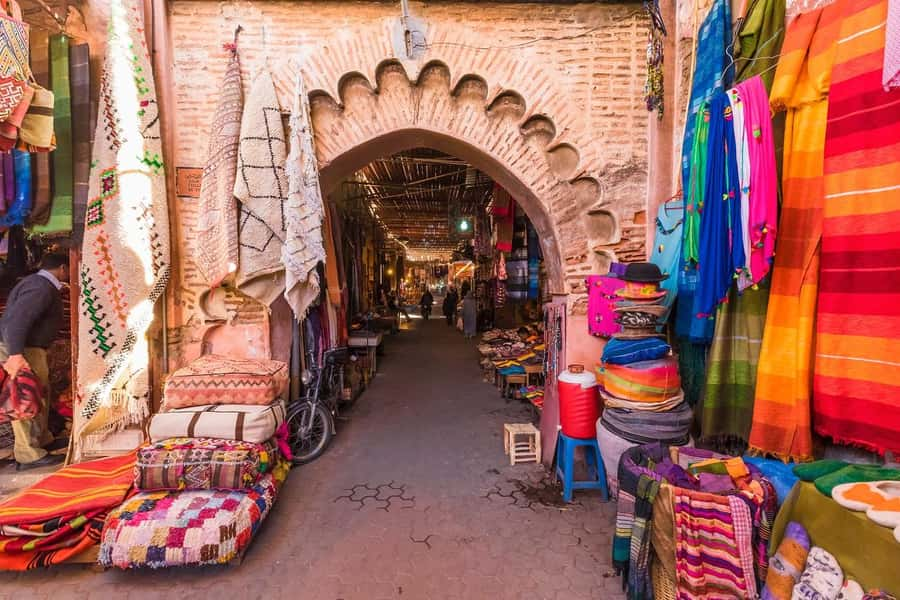
Souk Semmarine is the main commercial spine of the walk. This is where you get your first broad look at Marrakech’s famous shopping streets, but the guide’s job is to take you beyond the surface.
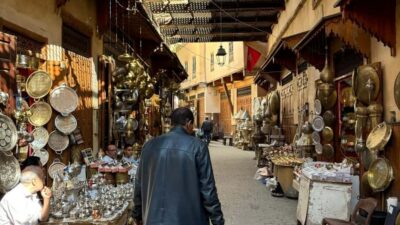
You may pass stalls selling textiles, spices, leather goods, clothing, woodwork, copper, silver, and other traditional products. The point is not simply to name each item. You learn how the souks are arranged and how different trades fit into the wider market.
A strong part of the tour is the practical shopping advice. Your guide can explain how bargaining works and how to approach a purchase without rushing. You learn to look at workmanship, ask questions, compare products, and decide if an item is right for you.
That help can be valuable with larger purchases. Several guides have assisted people looking for carpets, leather, wood, copper, silver, clothes, and spices. If you have a particular item in mind, say so at the start. A private route can then spend more time in the sections that match your interests.
If you do not want to shop, be direct. Some participants have found that the tour felt partly like a personal shopping outing, with repeated suggestions to visit particular stalls. The guides accepted polite refusals, but your expectations will be better if you explain that you mainly want architecture, history, or craft demonstrations.
Foundouks and the old business of the medina
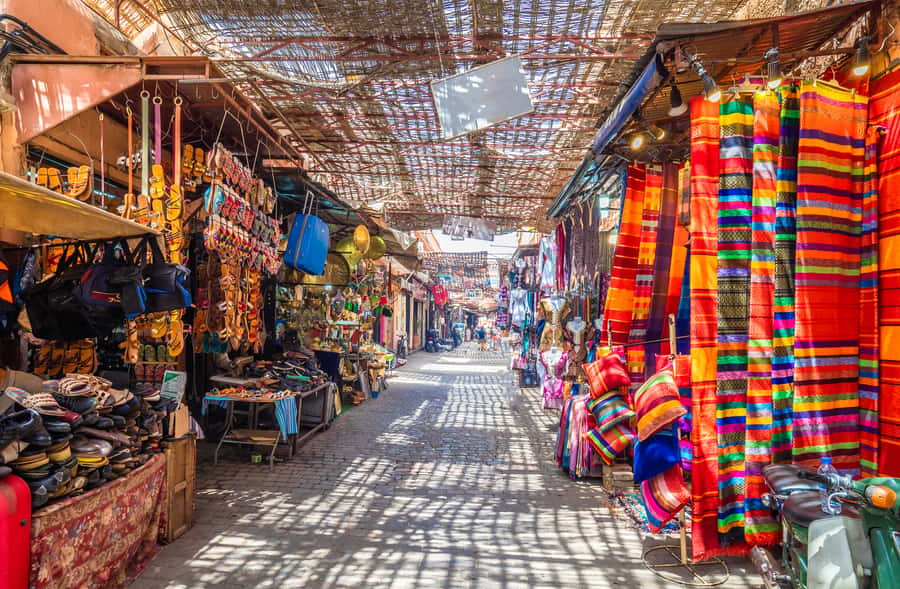
The tour’s most interesting historical element is the visit to foundouks. These were merchant inns where traders arriving from other regions could stay, store goods, and conduct business.
A foundouk helps explain why Marrakech developed such a dense network of commercial lanes. Goods did not simply appear in finished shops. Merchants, transporters, makers, dyers, sellers, and buyers formed a connected system inside the old city.
You may find that a foundouk looks quieter than the market streets around it. That change in mood is part of its appeal. Instead of the constant flow of shopping activity, you get a clearer sense of the buildings and spaces that supported trade.
The guide can also point out how older structures are being repaired and how people continue to live and work inside the medina. This adds context to what you see on the walk. The souks are not a museum display. They are working neighborhoods with businesses, homes, and long-established trades.
More Medina & Souk Tours in Morocco
- Marrakech: Saadian Tombs & Bahia Palace, Medina Guided Tour
★ 4.6 · 1,989 reviews - Marrakech Monuments & Souks 3-Hour Tour
★ 3.8 · 1,540 reviews - Marrakech: Bahia Palace, Madrasa Ben Youssef and Medina Tour
★ 4.7 · 1,347 reviews - Marrakech: Madrassa Ben Youssef, Secret Garden & Medina Tour
★ 4.8 · 1,303 reviews
Souk Cherifia and quieter corners
Souk Cherifia offers another view of the market, away from the most obvious route. The walk here is a chance to notice smaller workshops and less familiar sections of the medina.
This is where a guide’s local knowledge matters most. Without help, you might pass an unmarked doorway or assume a narrow lane leads nowhere. Instead, you may be taken through passages that reveal small artisan spaces, tucked-away shops, and parts of the souk that are easy to miss.
Craft remains the focus. Depending on the route and your interests, you might see leather work, wool, wood, copper, silver, or other handmade goods. Some participants have watched artisans work and spoken with local merchants through the guide.
I would not treat every shop visit as a guaranteed demonstration. The exact stops depend on the day, the guide, and your group. Still, the tour gives you a better chance of seeing the working side of the souks rather than only the finished products arranged for sale.
The medina walk and Ben Youssef option
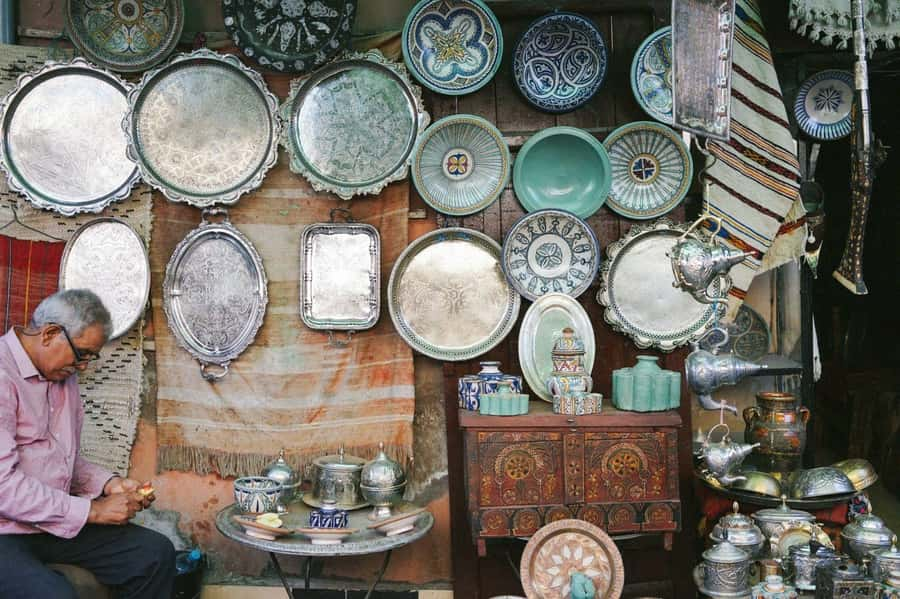
The route continues through the medina, with time for photographs, further walking, and questions. You can use this part of the tour to understand the street system and get advice on returning to areas you want to explore later.
Some routes include a stop at Ben Youssef Madrasa. The supplied details do not promise admission on every departure, so ask your guide what is planned if this sight matters to you. Even when the route focuses on the souks, the surrounding medina adds architectural and historical context.
The medina section also gives you time to ask about daily life. Guides who grew up inside the old city can explain how people use the lanes, where different activities take place, and how the commercial and residential sides of the neighborhood fit together.
One particularly useful feature is the chance to ask questions as you go. You are not limited to a fixed narration delivered at set points. A private group is especially good for this, since you can slow down for architecture, spend longer at a craft area, or skip a shop that does not interest you.
Food, tea, and local customs
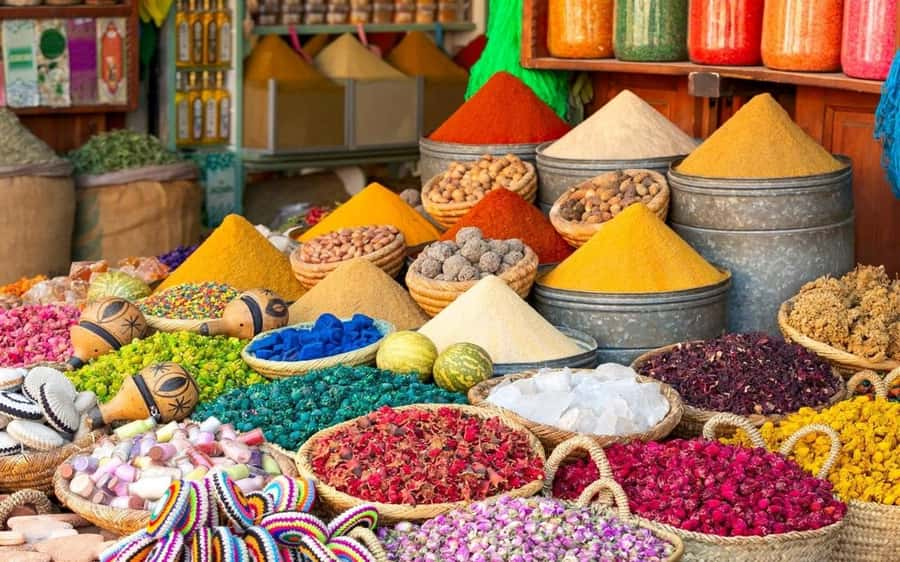
Food is not included, but some guides may point out places connected with local eating and drinking. One route has included Moroccan tea, food stops, olives, fresh bread, and a coffee heated in sand. These details should be treated as possible additions rather than guaranteed parts of the booking.
The same applies to water, juices, or other refreshments. Some guides have provided drinks during the walk, but the formal inclusion is an expert local guide, not food and beverages. Bring water and do not count on an included meal.
The value of these moments is not just the snack. A quick food stop can show you how the market is used by local people, rather than presenting it only as a place for tourists to shop. If you are interested in food, mention it early and ask what can reasonably fit into the route.
You also learn small points of local etiquette. How you address a seller, how long you negotiate, and how clearly you decline an offer all affect the mood of a shopping conversation. Your guide can help you avoid wasting time and can explain when bargaining is expected.
Shared group or private walk?
At $19 per person, the shared tour is a good-value introduction to the medina. You get three hours with a local guide, orientation in a confusing part of the city, and practical help with shopping. For a first day in Marrakech, that is a useful return on a modest spend.
A private group costs more in many tour setups, though the exact price depends on the selected option. The advantage is control. You can tell the guide that you want artisans, history, food, carpets, leather, or simply a broad introduction.
Private touring has another benefit for shoppers. If you are looking for a rug or a specific kind of leather item, a guide can spend more time in the right section. You can also ask for help with bargaining without having to keep pace with a larger group.
The shared format may suit you better if you want a social walk and a general overview. One unusual benefit is that a small group can sometimes become almost private if few people book that departure. The tradeoff is that a very small group may lack the useful example of watching other people negotiate.
What the guides do best
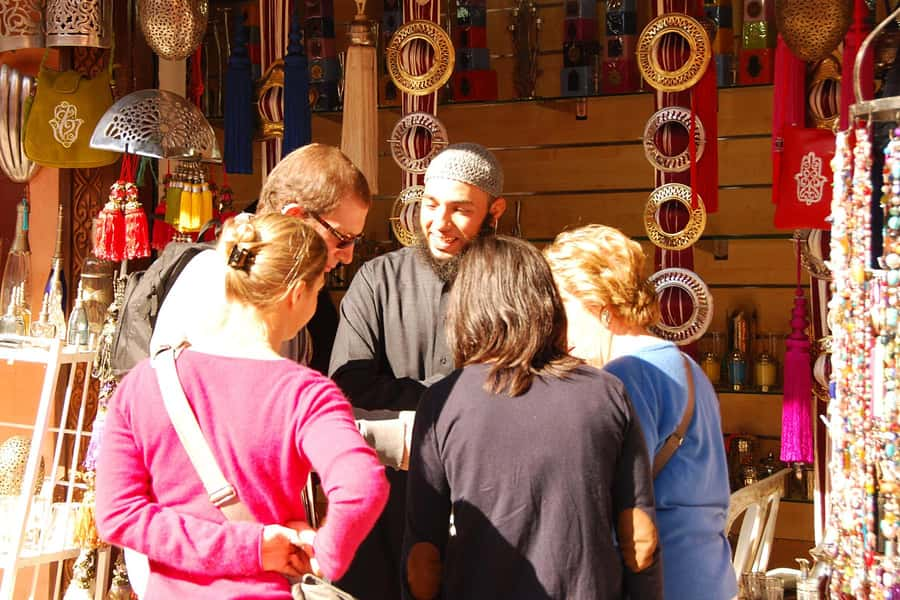
The strongest feature of this experience is the human explanation of the medina. Guides have been praised for clear English, humor, patience, and the ability to answer questions about Marrakech, Moroccan culture, Berber people, and life inside the old city.
Mohammed appears in several descriptions of the experience, often helping people find craft areas, adjust the route, and understand shopping etiquette. Abdel has been valued for his connection to the medina and his ability to explain how the souks operate. Charif has shown the leather trade and wool dyeing areas, while Atman has helped visitors buy goods and learn about artisans.
There is also a female guide working with the company, which may matter to people who prefer a woman’s perspective on the souks. The company offers guiding in English and French.
You should remember that the individual guide shapes the experience. Ask for your priorities at the beginning and be clear about your shopping plans. A guide cannot tailor the route if you remain vague.
Practical details that affect the day
The tour lasts three hours, though the exact pace depends on group size, stops, and shopping conversations. The meeting point is in front of Café de France on Jemaa el Fna unless you choose an option with hotel pickup.
You can cancel up to 24 hours ahead for a full refund, and reserve now while paying later. Starting times vary, so check availability before booking.
Bring comfortable shoes and a small amount of water. Keep your belongings secure in crowded lanes, and avoid carrying more than you need. If you plan to shop, leave room in your luggage and decide in advance how much time and money you want to spend.
The tour is not designed as a formal food tour, an all-day history walk, or a guaranteed artisan workshop visit. It is a guided introduction to the market, with history and craft woven into a shopping and orientation walk.
Who should book this Marrakech souks tour?
I would choose this tour if you are visiting Marrakech for the first time, feel unsure about entering the souks alone, or want practical help before shopping. It is also a good fit if you care about how goods are made and want to see more than the main retail lanes.
It suits people who enjoy walking, asking questions, and making flexible plans. A private booking is best if you have a shopping list or want the guide to shape the route around your interests.
I would think twice if you dislike bargaining, do not want to visit shops, or prefer a fixed sightseeing route with no commercial element. You can tell the guide you are not buying, but shopping remains part of the setting and may be part of the conversation.
Should you book it?
Book this tour if you want to understand the souks before exploring them alone. For $19, the orientation, local explanations, foundouks, craft sections, and bargaining advice offer solid value, especially early in your stay.
Choose the private option if you want help finding a carpet, leather item, spice, textile, or metal product. Choose the shared option if you mainly want a clear introduction to Marrakech’s old market system.
I would not book it as a pure history tour or a guaranteed food experience. But if you want the medina to feel less confusing and more human, this is a sensible three-hour start.
FAQ
How long is the Marrakech souks tour?
The walking tour lasts three hours. The pace and exact stops can vary depending on the group and the interests you share with your guide.
Where does the tour meet?
The standard meeting point is in front of Café de France on Jemaa el Fna in the Marrakech medina.
Is hotel pickup available?
Hotel pickup is available only with selected options. Check the option details when booking, since pickup is not included in every choice.
What languages are available?
The tour is offered with a live guide speaking English or French.
Is this a private tour?
You can choose a shared group or a private group, depending on the option selected.
Does the price include food and drinks?
No. Food and drinks are not included. Some guides may suggest or arrange food and drink stops, but these are not part of the standard inclusions.
What can I see in the souks?
The route can include leather, textiles, spices, wool, metalwork, wood, copper, silver, traditional tools, specialist market sections, and artisan areas.
Will the tour visit historic foundouks?
The experience includes visits to historic foundouks, former merchant inns connected with Marrakech’s trading past. The exact buildings visited can depend on the route.
Can the guide help with shopping?
Yes. The guide can explain bargaining etiquette, suggest places for different goods, and help you shop with more confidence. Tell the guide what you want to buy at the start.
Can I cancel for a refund?
You can cancel up to 24 hours in advance for a full refund. The activity also offers a reserve now and pay later option.
More Tours with a Local in Morocco
- Marrakech: Moroccan Cooking Class with a Local Family
★ 4.9 · 668 reviews - Marrakesh: Guided Souk Shopping Tour with a Local Guide
★ 4.9 · 651 reviews - Marrakech: Bicycle Tour with a Local Guide
★ 4.7 · 495 reviews - Dutch Bike Tour in Marrakech with Local Guide
★ 4.7 · 269 reviews
More Tours with a Local in Marrakech
- Marrakech: Street Food Tour with a Local Guide
★ 4.9 · 3,119 reviews - Marrakesh: Moroccan Dishes Cooking Class with a Local Chef
★ 5.0 · 1,615 reviews - Authentic Moroccan Food Tour in Marrakech with Dinner
★ 5.0 · 1,423 reviews - Marrakech: Authentic Moroccan Hammam Experience in Mouassine
★ 4.1 · 681 reviews
Just added for Marrakech
- Marrakech: Tailor-Made City Tour With Your Own Private Guide★ 4.9 · 236 reviews
- Marrakech palm grove: Sunset camel ride★ 4.8 · 194 reviews
- Sparkling Marrakech through the eyes of your local Guide★ 4.7 · 247 reviews
- Quad Bike Activity in Marrakech Palmeraie★ 4.2 · 123 reviews
- Marrakech: Historical Discovery Tour★ 4.1 · 87 reviews
- Marrakech: Palm Grove Horseback Riding Tour★ 4.6 · 163 reviews
- Moroccan Food Cooking Class with a Local Chef in Marrakech★ 4.7 · 90 reviews
- Marrakech: Babouch Making Workshop in the Medina★ 4.9 · 117 reviews
Medina & Souk Tours, compared.
Bahia Palace, Saadian Tombs, Souk and Medina Tour
Read our review →
Cairo 8 Hour Private Tour of Pyramids, Egyptian Museum and Bazaar
Read our review →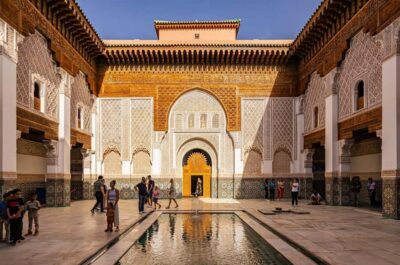
Ben Youssef, Secret Garden, & Souks Walking Tour
Read our review →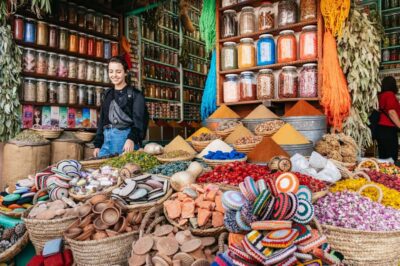
Saadian Tombs & Bahia Palace, Medina Guided Tour
Read our review →
Museum, Al Attarine Madrasa & Tannery and Medina Tour
Read our review →