Reviewed · CAIRO & GIZA TOURS
Cairo: All-Inclusive Coptic & Islamic Cairo Tour with Lunch
Cairo’s religious story is best understood by visiting its mosques and churches side by side. This private five-hour tour moves from the grand Mamluk buildings of Islamic Cairo to the quiet lanes of Coptic Cairo, with guides such as Hazem, Doha, Hishek, and Miriam bringing the details into focus.
I like the private format, which lets you ask questions and spend longer at the sites that catch your eye. I also like the simple all-in-one price: at $40 per person, you get hotel transfers, an Egyptologist guide, entrance fees, and lunch. The main consideration is time. Five hours gives you a good introduction, but not a slow, scholarly visit to every corner.
Key points to know before booking

- Al-Hakim Mosque offers an unusual introduction to Cairo’s Fatimid past and the strange rule of Caliph Al-Hakim.
- The Qalawun Complex combines a hospital, religious school, and mausoleum in one fine Mamluk monument.
- The Hanging Church is home to more than 100 icons, including some dating from the 8th century.
- St. George’s Church is one of Egypt’s few round churches, built above a Roman tower.
- Lunch and hotel transfers are included, making this an easy first-day orientation in Cairo.
- Guide quality is central to the day, with past guides including Hazem, Doha, Hishek, Tamer, Jasmine, and Omar.
A smart first look at Cairo’s religious quarters

This tour makes sense if you want more than pyramids and museums. Cairo’s Islamic and Coptic districts show how several faiths and ruling dynasties shaped the same city over many centuries.
The route is also practical. Your driver collects you in the morning from a Cairo or Giza hotel, then takes you between the sites in a private air-conditioned vehicle. Cairo traffic can be wild, so having a calm local driver matters. Several named drivers, including Ahmad, Mohamed, Raymond, and Seif, were praised for safe driving and clean, comfortable cars.
You can expect the guide to do much of the work of joining the dots. Instead of seeing a church as just an old building or a mosque as just a place for photographs, you learn why it was built, what changed around it, and how it fits into Cairo’s long religious story.
The private setup is especially useful for questions. Guides such as Elham helped visitors with broader Cairo plans, food suggestions, and ideas for later days. Others adjusted the pace so visitors could take photographs or spend more time at a favorite site.
A few more Cairo & Giza trips worth putting side by side
- Cairo: Pyramids & Great Sphinx Private Tour with Camel Ride
★ 4.9 · 6,335 reviews - Tour to Giza Pyramids and The Egyptian Museum
★ 5.0 · 6,016 reviews - From Hurghada: Cairo and Giza Highlights Full-Day Tour
★ 4.5 · 6,014 reviews
Al-Hakim Mosque and the story of an unusual caliph
The first major stop is Al-Hakim Mosque, one of Cairo’s important Fatimid monuments. Its appeal is not only the architecture. The story of Al-Hakim bi-Amr Allah gives the visit an unusual human angle.
Al-Hakim took power at just 11 years old. His rule became known for intellectual interests as well as eccentric and sometimes severe decisions. A good guide can use his story to explain how power worked in medieval Cairo and why this mosque remains tied to one of the city’s more puzzling rulers.
Look closely at the mosque’s broad spaces and restrained stonework. The building has been restored, so some parts look cleaner and newer than you might expect from its age. That is useful for seeing the form of the monument, though visitors seeking a completely untouched atmosphere may find the restoration less atmospheric.
This is a place where a guide earns the fee. Without context, the mosque can seem spacious but spare. With an explanation of Fatimid Cairo, religious practice, and Al-Hakim’s rule, the stop becomes much more meaningful.
Dress modestly for the mosque visits. Comfortable clothing that covers shoulders and knees is the sensible choice, and you should be prepared to follow local instructions inside religious buildings.
The Qalawun Complex and Mamluk ambition

The route continues to the Qalawun Complex, built in the 13th century. It was not just a tomb. The complex included a hospital, a madrasa, or religious school, and a mausoleum.
That combination tells you something about how a ruler wanted to be remembered. A grand burial place honored the sultan, while the hospital and school gave the complex a public and religious purpose. This was architecture used for worship, care, education, and political memory all at once.
The decorative details are the reason to slow down. Look for stucco work, carved surfaces, and mashrabiya wood screens. These wooden elements filter light and air while protecting privacy, and they give the interiors a more delicate feel than the heavy stone exterior suggests.
The Qalawun Complex can be visually busy, especially if you are already tired from Cairo traffic and early sightseeing. Let the guide control the pace, but ask for a few quiet minutes to look at the details after the main explanation. This is one of the stops where photographs help you remember what you saw, but they do not fully replace standing inside the space.
Entering Coptic Cairo through St. George’s Church

The mood changes when you reach Coptic Cairo. The route narrows into older lanes, and the focus shifts from Islamic rulers and Mamluk patrons to Egypt’s Christian communities and sacred traditions.
St. George’s Church, also called Mar Girgis, is one of the most unusual stops. It is one of the few round churches in Egypt and sits dramatically above a Roman tower. A monastery is connected below, adding another layer to the site.
The church’s position is part of the story. Coptic Cairo developed around older Roman remains, so the buildings you see are not isolated monuments. They occupy a place where Roman, Christian, and later Islamic periods overlap.
Your guide can explain the religious meaning of the site as well as its architecture. That matters because the church is not simply an old curiosity. It remains a place of worship, and respectful behavior is important, particularly if services or private prayer are taking place.
The visit is not designed as a long theological study. It is a focused introduction, supported by stories about early Christianity in Egypt and the endurance of Coptic traditions. For a first visit to Cairo, that balance works well.
Same corner of the map, a completely different outing:
- VIP All inclusive Best of the best Giza Pyramids,Sakkara,Memphis
★ 5.0 · 3,164 reviews - From Cairo: Pyramids of Giza, Sphinx, Saqqara & Memphis Tour
★ 4.7 · 3,110 reviews - Cairo 8 Hour Private Tour of Pyramids, Egyptian Museum and Bazaar
★ 5.0 · 2,931 reviews - From Cairo: Half-Day Tour to Pyramids of Giza and the Sphinx
★ 4.6 · 2,891 reviews
The Hanging Church and its collection of icons

The Hanging Church, formally Saint Virgin Mary’s Church, is the best-known Coptic stop on the route. It was built above a Roman gate, which explains both its name and its unusual position.
Inside, your attention will likely go to the icons. More than 100 are displayed, with some dating to the 8th century. Their age, style, and religious purpose give the church a very different visual character from the mosques visited earlier.
The church is also useful for understanding how buildings adapt over time. It was not created on an empty site. Its structure relates to the Roman fortification below, while later generations repaired, decorated, and preserved it for Christian worship.
I would not rush this stop. Ask the guide to point out the main icons and explain the symbols in the architecture. The information is more valuable than simply counting how many photographs you can take.
The church can feel compact compared with the open courtyards of a mosque. If several groups arrive at once, the interior may feel crowded. The private guide helps by giving you a clear route and answering questions rather than leaving you to work out the building alone.
Why the Egyptologist guide matters

The sights are good, but the guide determines how much you get from them. This is not a tour where a quick list of dates will do the job.
Past guide names include Hazem, Doha, Hishek, Tamer, Jasmine, Omar, Miriam, Elham, George, and Sheriff. The strongest feedback focused on clear explanations, patience, flexibility, and the ability to make the past understandable for both adults and children.
Sheriff, for example, was praised for making the visit enjoyable for a family with a nine-year-old child. Elham answered a long list of questions and offered practical ideas for food and further sightseeing. Hazem was particularly good at matching the visit to personal interests and finding a local place for koshari.
That does not mean every guide will have the same style. Some will tell more stories, while others may focus on dates, architecture, or religious practice. You can improve the experience by saying early in the day what interests you most: buildings, Christian history, Islamic art, photography, food, or daily life in Cairo.
The tour is offered with Arabic, English, French, German, and Spanish guides. English is included in the standard description, while other languages may cost extra depending on the option chosen.
Egyptian lunch and the value of the $40 price

Lunch is included at a local restaurant, and this is more useful than it may sound. After several religious sites, you get a break, a chance to sit down, and a taste of Egyptian food without having to search for a restaurant in unfamiliar streets.
Past meals included dishes such as koshari, kofta, and shawarma. Koshari is a particularly good choice if you want a filling Egyptian staple made with rice, pasta, lentils, chickpeas, and sauce. Your guide may help you choose and explain how local dishes are usually eaten.
The quality and setting of the restaurant can vary. One person found the location a little random but enjoyed the food. Another was surprised by a 100 EGP charge for a bottle of water. I would confirm what drinks cost before ordering, since included lunch does not necessarily mean every extra item is covered.
At $40 per person, the package offers strong value if you use all its parts. Entrance fees, a private vehicle, hotel pickup and drop-off, guide services, lunch, taxes, and service charges are included. Booking these pieces separately would take more time and could cost more, especially when private transport is involved.
One practical warning: a hotel outside the standard pickup area may require an extra transport charge. A hotel was listed as being within the pickup zone in one case, yet an additional fee was requested. Confirm your exact hotel and any transfer cost before paying.
The private car makes Cairo easier

Cairo traffic is not a side issue. It shapes the day. The air-conditioned vehicle gives you a cool place to reset between monuments, and the driver handles the difficult work of crossing the city.
The vehicle is private, so you do not need to match your pace to a large group. That is useful for families, couples, and solo visitors who want to ask questions without feeling rushed.
Several drivers were singled out for calm, safe driving, including Ahmad, Mohamed, Raymond, Seif, and Khalid. Clean vehicles and working air conditioning were also valued. These details matter more in Cairo than they might in a smaller city.
The five-hour duration is enough for the listed religious sites and lunch, but it is not a full-day tour of Islamic Cairo. One guide added the Citadel for two visitors, but you should treat that as an occasional extra rather than part of the fixed plan.
Some past visits also included papyrus, perfume, cotton, or essential-oil stops. These were not part of the core description, and you may prefer to make clear that you want the advertised religious sites rather than shopping stops. One visitor specifically appreciated a guide who did not steer the group toward tourist shops.
Who will get the most from this tour

I would choose this tour for a first or second day in Cairo, especially if you want a structured introduction before exploring alone. It suits visitors who care about architecture, religious art, local food, and the stories behind monuments.
Families can benefit from the private pace and the ability to ask simple questions. Couples and solo visitors get more control than they would on a large group trip. It also works well if you have limited time and want hotel pickup rather than figuring out Cairo transport on your own.
This is less suitable if you want a long, specialist study of Coptic theology, Fatimid architecture, or Mamluk art. Five hours moves at a useful pace, but it cannot cover every church, mosque, alley, or historical debate.
Wear respectful clothing, bring water, and leave room in your schedule for Cairo traffic. The tour is listed as starting in the morning, but you need to check the available start times when booking. Cancellation is free up to 24 hours in advance, and you can reserve now and pay later.
Should you book the Coptic and Islamic Cairo tour?
Book it if you want a well-organized introduction to Cairo’s religious quarters with transport and lunch handled for you. The strongest reason to choose it is the combination of a private Egyptologist and a compact route that includes four important religious sites.
The value is especially good at $40 per person when you want comfort, entrance fees, and a local meal included. Just confirm your pickup location, ask about drinks at lunch, and tell the guide what interests you most.
Skip it if you prefer to wander slowly without a schedule or want to spend an entire day inside one historic district. For most first-time visitors, though, this is a practical way to see a side of Cairo that the pyramids cannot explain.
FAQ
How long does the tour last?
The tour lasts five hours. Starting times are available according to the date you choose.
What sites are included?
The itinerary includes Al-Hakim Mosque, the Qalawun Complex, St. George’s Church, also called Mar Girgis, and the Hanging Church.
Is hotel pickup included?
Yes. Private pickup and drop-off are included from hotels in Cairo or Giza. Hotels outside the usual pickup area may require an additional transport fee, so confirm your location before booking.
What is included in the price?
The $40 price includes private air-conditioned transfers, a professional English guide, entrance fees to the listed attractions, lunch, service charges, and taxes.
Are guides available in languages other than English?
Yes. Guides are available in Arabic, English, French, German, and Spanish. French, German, and Spanish options may involve an additional cost.
Can I cancel the booking?
Yes. You can cancel up to 24 hours in advance for a full refund. The tour also offers a reserve-now, pay-later option.
Just added for Cairo & Giza
- Private Full-Day Tour to Giza Pyramids,Sphinx,Memphis, and Saqqara★ 5.0 · 626 reviews
- Giza Pyramids, Camel Ride, ATV and Shopping Tour w/ Dinner Cruise★ 5.0 · 280 reviews
- Best Two-Day Private Guided City Tour of Cairo Giza and Saqqara★ 5.0 · 85 reviews
- Round-Trip Airport Transfer in Cairo or Giza★ 4.5 · 94 reviews
- Luxury Private Egyptian Museum and Khan el Khalili Bazar Tour★ 5.0 · 123 reviews
- Overnight White Desert Safari Camping from Cairo★ 4.5 · 87 reviews
- Cairo Food Tour in local places & Egyptian Mint Tea★ 4.5 · 102 reviews
- White Desert & Bahariya oasis 3 days 2 nights Tour from Cairo★ 5.0 · 135 reviews
Cairo & Giza Tours, compared.
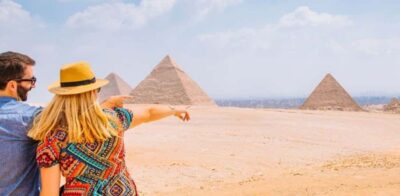
Pyramids & Great Sphinx Private Tour with Camel Ride
Read our review →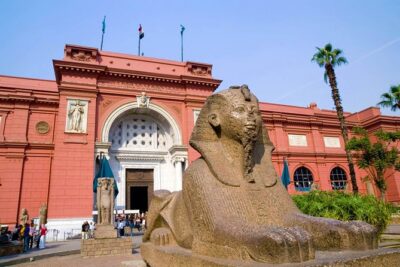
Tour to Giza Pyramids and The Egyptian Museum
Read our review →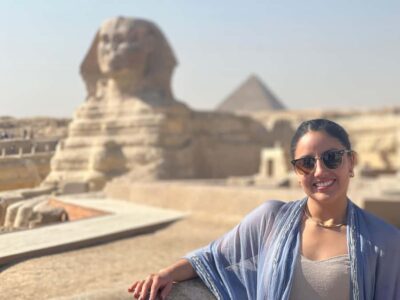
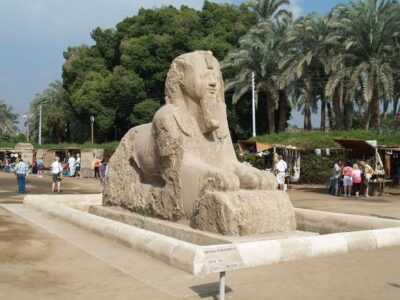
VIP All inclusive Best of the best Giza Pyramids,Sakkara,Memphis
Read our review →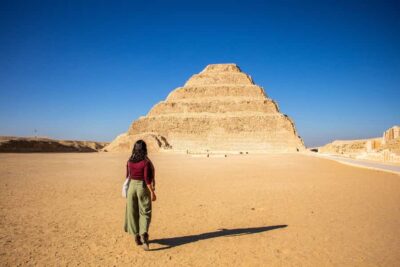
Pyramids of Giza, Sphinx, Saqqara & Memphis Tour
Read our review →
Cairo 8 Hour Private Tour of Pyramids, Egyptian Museum and Bazaar
Read our review →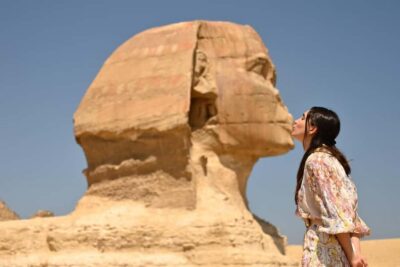
Half-Day Tour to Pyramids of Giza and the Sphinx
Read our review →