
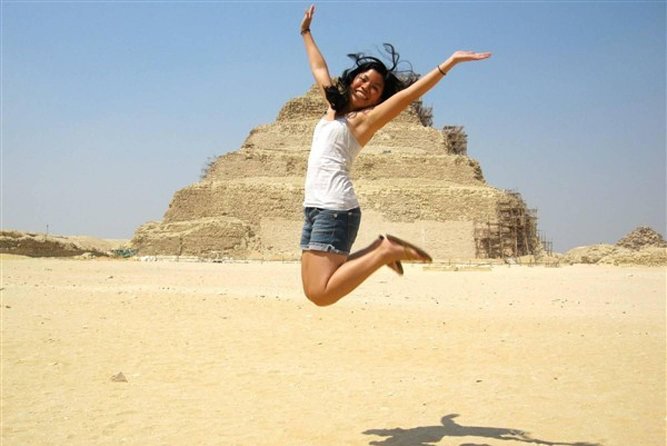
Reviewed · PYRAMIDS & SPHINX TOURS
Full-Day Tour to Giza Pyramids, Memphis, and Sakkara
The most striking thing about this day is the sweep of it: you move from the famous Giza Pyramids to Saqqara’s earlier Step Pyramid, then on to Memphis, the ancient capital. I like the private car and guide, which let you set the pace, and I like that lunch, bottled water, hotel pickup, and drop-off are included. The main drawback is the possible detour to papyrus, perfume, cotton, and carpet shops, which can eat into your sightseeing time.
This is a strong value at $45 per person if you want to cover the main pyramid sites in one day without arranging several taxis. Ask clearly for the route you want, confirm which entrance fees are included, and say no to shopping stops if they do not interest you.
Key points to know before booking
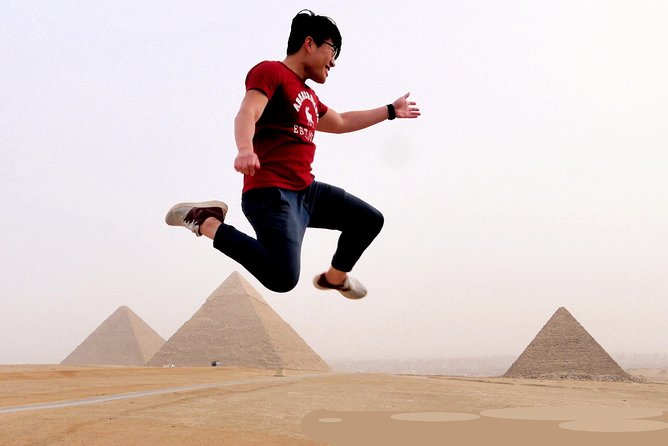
- Three major archaeological areas in one day: Giza, Saqqara, and Memphis give you a broad view of ancient Egyptian building and burial traditions.
- Private guiding: Your group travels alone, so you can ask questions, slow down, or adjust the order of stops.
- The Step Pyramid adds real context: Saqqara shows how Egyptian pyramids developed from earlier mastaba tombs.
- Optional pyramid entry costs extra: Basic area admission is included, but entering the pyramids is not part of the standard package.
- Shopping stops may appear: Perfume, cotton, papyrus, and rug workshops are listed as 20-minute stops, and you should state your preference at the start.
- Guide quality matters: Past guides named Ehab, Rawan, Marwa, Tonsi, Mohamed, Osama, and Samir received especially warm praise, but assignments vary.
Why this private Cairo day works
Giza gets the headlines, but the full route gives you the better story. At Giza, you see the best-known monuments in Egypt. At Saqqara, you see an earlier stage in pyramid design. At Memphis, you connect the monuments to the city that once governed ancient Egypt.
That chronological spread is the tour’s main strength. You are not simply collecting photographs. With a good Egyptologist guide, you can understand why the Step Pyramid looks different from the smooth-sided pyramids at Giza, and why underground tomb inscriptions matter.
The private setup also has practical value. A guide can explain the difference between the Valley Temple and the pyramid temples, help with photographs, and adjust the pace for children or older adults. One guide, Tonsi, was praised for working around mobility needs, while other guide and driver combinations were noted for being patient with families and older couples.
The day begins around 8:00 a.m. and lasts about eight hours. Hotel pickup and drop-off are included, along with air-conditioned transport. That matters in Cairo, where the sites are spread out and a private vehicle saves you from arranging separate rides between Giza, Saqqara, and Memphis.
More Day Trips in Cairo & Giza
- From Hurghada: Cairo and Giza Highlights Full-Day Tour
★ 4.5 · 6,014 reviews - From Cairo: Half-Day Tour to Pyramids of Giza and the Sphinx
★ 4.6 · 2,891 reviews - Hurghada: Full-Day Trip to Cairo by Plane
★ 4.5 · 2,415 reviews
Giza Plateau, where the scale becomes real
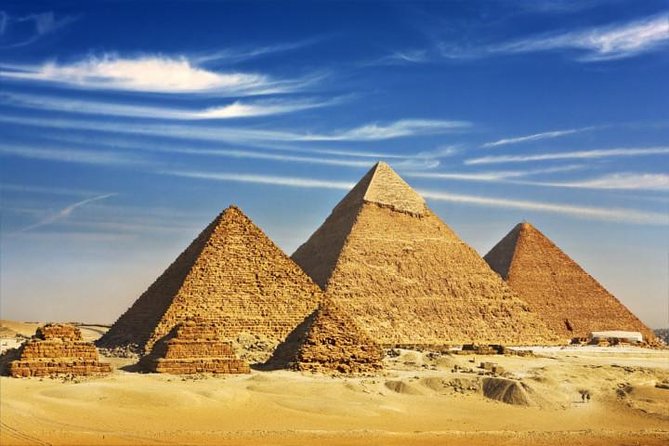
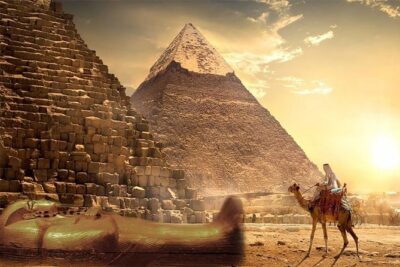
Plan on about three hours around the Giza Plateau. The main sight is the group of pyramids built for Khufu, Khafre, and Menkaure, often called Cheops, Chephren, and Mykerinos.
The approach to the pyramids can feel almost unreal. Photographs flatten their size, but from ground level the blocks, steep faces, and broad courtyards give you a better sense of the work involved. Your guide should explain how each pyramid formed part of a larger funerary complex, not a single isolated monument.
The standard area admission lets you see the outside spaces and main plateau. Entering the interior of a pyramid is optional and is not included in the basic package. Before agreeing to add it, ask about the extra fee and the physical demands. The passage can be hot, cramped, and sharply inclined, with stretches where you need to keep your head low.
The tour description gives separate time blocks of about 30 minutes for each pyramid, though the actual timing can change. That is enough for an explanation and photographs, but not necessarily enough for a long, quiet look at every viewpoint. If you want more time at one pyramid, tell your guide early.
Khufu, Khafre, and Menkaure
Khufu’s pyramid is the largest of the three and usually draws the most attention. The valley temple connected with its complex lies beneath the modern village of Nazlet el-Samman and has not been fully excavated, so the exterior pyramid itself is the main focus here.
Khafre’s pyramid is easy to recognize because some of its original smooth casing remains near the top. Its complex included a valley temple, causeway, mortuary temple, and the Sphinx temple. Ask your guide to point out how these pieces fit together, since the site makes more sense once you understand the ceremonial route.
Menkaure’s pyramid is smaller, but its complex included a valley temple, causeway, mortuary temple, and statues of the king. It is worth seeing all three pyramids rather than spending the whole visit at Khufu. The comparison helps you read the plateau as a sequence of royal projects, not three identical monuments.
A private guide can also help manage the sales pitches around the plateau. The area is known for persistent offers involving camel and horse rides, photographs, and tips. You do not have to accept them. If you want a camel ride, arrange the cost and duration before starting, rather than relying on a vague verbal offer.
The Valley Temple and Great Sphinx
The Valley Temple is where the priests carried out parts of the mummification and funerary rituals connected with Khafre. Its large stone blocks and restrained interior are less instantly dramatic than the pyramids, but the building explains how the complex functioned.
The nearby Great Sphinx combines a lion’s body with the head of a king, generally associated with Khafre. The monument dates to his reign, and later rulers gave it renewed religious meaning. During the New Kingdom, Amenhotep II dedicated a temple to Hauron-Haremakhet at the Sphinx.
Allow about 30 minutes for the Sphinx area, although the guide may combine this with the Valley Temple visit. This is one of the best places for a close view of the monument’s face and paws. It is also a busy photo stop, so stay aware of your meeting point and do not let photographs consume the whole visit.
More Day Trips in Egypt
- Hurghada: Cairo Pyramids, Sphinx & Egyptian Museum Day Trip
★ 4.7 · 2,271 reviews - Half Day Tour Giza Pyramids &Great Sphinx with Private Tour Guide
★ 5.0 · 1,608 reviews - From Cairo Alexandria Catacombs, Citadel Day Trip with Lunch
★ 4.6 · 1,312 reviews - 1-day trip to Cairo with flight from Hurghada / Makadi Bay / Soma Bay / El Gouna
★ 5.0 · 1,193 reviews
Saqqara and the Step Pyramid of Djoser
Saqqara lies about 27 kilometers southwest of Cairo and offers a different mood from Giza. The site covers a large area, and the monuments are less familiar to many first-time visitors. That makes the explanation from your guide especially useful.
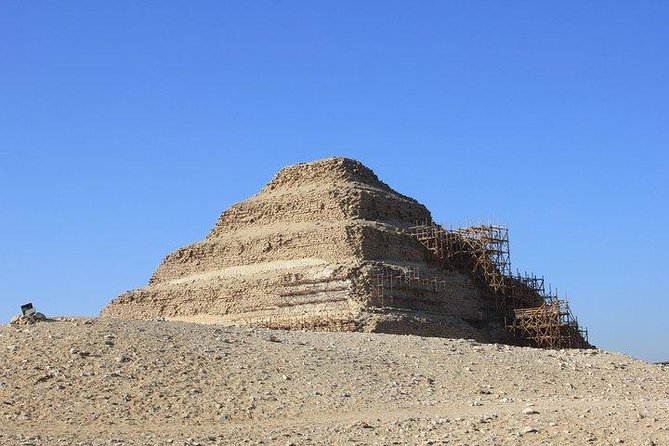
The Step Pyramid was built for King Djoser and is central to the story of pyramid development. Earlier royal tombs used the simple mastaba form, with a flat roof and sloping sides. Djoser’s monument built upward in stages, creating the stepped form that came before the smooth-sided pyramids.
You have about an hour for the main Saqqara visit. That is enough to see the Step Pyramid and selected nearby areas, but the site rewards an unhurried pace. Some guides arrange the route so Saqqara comes first, followed by Memphis and Giza. This order can work well because the older monuments prepare you for the later pyramids.
If Giza is your priority, you may prefer ending there. Several guides have used a Memphis, Saqqara, then Giza sequence, finishing with the Sphinx and the large pyramids. Ask about the order when you meet your guide, especially if you want the day to build toward Giza.
Pyramid Texts inside Unas’s pyramid
The Pyramid of Unas is smaller than the great pyramids, but its importance is not based on size. Its underground chambers contain Pyramid Texts, spells intended to help the king in the afterlife.
These inscriptions were first recorded in a pyramid at Unas’s burial complex. The tradition continued in later royal tombs and helped shape the funerary writings that eventually included the Coffin Texts and material associated with the Book of the Dead.
The scheduled visit lasts about 30 minutes. Ask your guide to explain what you are looking at before entering, since the significance of the inscriptions is easy to miss when you are focused on the narrow passages and dark chambers. Entry conditions can vary by the ticket option selected, so confirm what your admission covers.
Teti’s pyramid and the Mastaba of Ti
The Pyramid of Teti receives a shorter visit of about 15 minutes. It is another chance to see Saqqara’s burial architecture and compare it with Unas’s pyramid. The visit is brief, but it adds depth to the site if you want more than the Step Pyramid.
The Mastaba of Ti is particularly worthwhile for its wall scenes. The tomb contains two serdabs, concealed chambers associated with statues, while the decorated walls show ordinary work and daily activities. These scenes bring ancient Egypt closer to everyday life than the royal monuments do.
The scheduled visit is also about 15 minutes. If tomb art interests you, ask your guide to spend the available time explaining the scenes instead of rushing to the next stop. If you prefer major monuments, you may find this part less urgent than the Step Pyramid or Unas’s chambers.
Memphis and the fallen Ramses II statue
Memphis was the ancient capital of Egypt, dating back to about 3100 BC. The modern archaeological area is smaller and more compact than Giza or Saqqara, with the colossal statue of Ramses II and a large alabaster sphinx as its main attractions.
The Ramses II statue is displayed lying down, which allows you to see details that would be difficult to notice from ground level if it were upright. Your guide can help place Memphis in the wider story of Egyptian government, religion, and royal power.
The stop lasts about an hour. It is a good counterpoint to Giza because Memphis focuses less on a huge skyline and more on individual objects and fragments. Do not skip it simply because the site is smaller. It gives you a direct connection to the city that once directed much of the country.
Lunch, transport, and the shopping question
Lunch at a local restaurant, described as koshari, is included. Koshari is a filling Egyptian dish made with ingredients such as rice, pasta, lentils, chickpeas, tomato sauce, and fried onions. Bottled water and snacks are also included, which is useful during a long day in the heat.
The food is a practical benefit rather than the main reason to book. It keeps you from losing time arranging lunch between sites, and several guides have been praised for making the day comfortable and well organized.
The less welcome part for some people is the commercial circuit. The experience includes possible 20-minute stops at a perfume and natural oils shop, an Egyptian cotton and flower cotton shop, a papyrus workshop, and a handmade carpet school. These are presented as places to find government-approved souvenirs, but shopping is not sightseeing.
Some guides have handled these stops lightly, while other tours have involved strong pressure to buy or to pay tips to people offering photographs and extra services. Say plainly at the start that you want to focus on the monuments. If you do visit a shop, compare prices and bargain carefully. Never feel obliged to purchase anything.
Is $45 a good value?
At $45 per person, the tour offers a lot for one day: private transport, a guide, admission to the basic areas, lunch, water, snacks, and hotel pickup and drop-off. Buying separate transport and arranging explanations at each site could cost more, especially if you are traveling as a small group.
The price is most attractive if you want to see all three areas in a single day. It is less ideal if you prefer to sit quietly at one monument or spend a long time inside several tombs. Ten stops sound generous, but the eight-hour schedule includes driving, lunch, photographs, and possible shopping.
Also check the meaning of entrance fees before you go. Basic area entry is included, but entering the pyramids and other optional attractions can require additional payment. Ask for the complete cost before committing to any add-on.
Guides, drivers, and the quality gap
The best part of this experience depends heavily on your assigned guide. Strong guides such as Ehab, Rawan, Marwa, Tonsi, Mohamed, Osama, and Samir have been associated with clear explanations, humor, patient pacing, good photography help, and calm handling of vendors.
A good guide does more than recite dates. You want someone who can explain how the monuments connect, tell you where to stand for a useful view, warn you about aggressive sellers, and answer questions without rushing. Drivers also matter. A clean, air-conditioned vehicle and careful driving make a long day far easier.
The quality is not perfectly uniform. Some guide assignments have resulted in basic explanations or communication problems. Since you cannot guarantee a particular person, arrive with a short list of priorities and ask direct questions. If you want Saqqara first, no shopping, or extra time at the Sphinx, say so at pickup.
Who should book this tour?
You should consider it if you have only one free day in Cairo, want private transport, and prefer a guide to explain the sites. Families can benefit from the flexible pacing, and older adults may appreciate the ability to request breaks. The route also suits first-time visitors who want the essential monuments without managing Cairo’s traffic themselves.
It is less suitable if your goal is slow archaeology. The schedule is full, and the stops at Unas, Teti, and the Mastaba of Ti are short. You may also dislike the possibility of shopping stops or the extra cost of entering a pyramid.
Free cancellation is available up to 24 hours before the 8:00 a.m. start time. Changes or cancellations made later are not accepted for a refund.
Should you book it?
I would book this tour if I wanted a broad, affordable introduction to the pyramids and nearby ancient sites, especially with limited time in Cairo. The combination of a private vehicle, Egyptologist guide, lunch, and three major areas gives you good value.
Before the car leaves, confirm three things: the order of Giza, Saqqara, and Memphis, the cost of any optional pyramid entry, and whether shopping stops are part of your day. If your guide respects those choices, this can be an excellent first look at Egypt’s Old Kingdom monuments. If you want long visits and no commercial detours, arrange a shorter private itinerary built around fewer sites instead.
FAQ
What is included in the tour price?
The package includes entrance fees for the basic areas, hotel pickup and drop-off, private transport, a tour guide, lunch at a local restaurant, bottled water, and snacks.
Are hotel pickup and drop-off included?
Yes. Hotel pickup and drop-off are included, and the activity begins at about 8:00 a.m.
How long does the tour last?
The tour lasts approximately eight hours.
Is this a private tour?
Yes. Only your group participates in the private activity.
Can I enter the pyramids?
You can ask about entering the pyramids, but this is an optional activity and is not included in the basic package. Additional entrance fees may apply.
Is lunch included?
Yes. Lunch at a local restaurant is included, with koshari listed as the meal.
Which places are visited?
The route includes the Giza Plateau, the pyramids of Khufu, Khafre, and Menkaure, the Great Sphinx, Memphis, the Step Pyramid of Djoser at Saqqara, the Pyramid of Unas, the Pyramid of Teti, and the Mastaba of Ti.
Are shopping stops part of the experience?
The tour information lists 20-minute stops at perfume and cotton shops, a papyrus workshop, and a handmade carpet school. Tell your guide if you do not want these stops.
Is transportation air-conditioned?
Yes. The tour uses air-conditioned transport.
Can I cancel for a refund?
You can cancel at least 24 hours before the local start time for a full refund. Cancellations or changes made less than 24 hours before the start are not accepted for a refund.
More Full-Day Trips in Cairo & Giza
- From Hurghada: Full-Day Trip to Cairo by Plane
★ 4.5 · 1,186 reviews - From Cairo: Private Full-Day Tour of Historical Alexandria
★ 4.1 · 1,155 reviews - From Sharm El-Sheikh: Cairo’s Pyramids: Full-Day By Flight
★ 4.7 · 720 reviews - Old Cairo: Full-Day Islamic and Coptic Cairo Tour with Lunch
★ 4.6 · 688 reviews
More Pyramid Tours in Cairo & Giza
- Cairo: Pyramids & Great Sphinx Private Tour with Camel Ride
★ 4.9 · 6,335 reviews - Tour to Giza Pyramids and The Egyptian Museum
★ 5.0 · 6,016 reviews - VIP All inclusive Best of the best Giza Pyramids,Sakkara,Memphis
★ 5.0 · 3,164 reviews - From Cairo: Pyramids of Giza, Sphinx, Saqqara & Memphis Tour
★ 4.7 · 3,110 reviews
Just added for Cairo & Giza
- Private Full-Day Tour to Giza Pyramids,Sphinx,Memphis, and Saqqara★ 5.0 · 626 reviews
- Best Two-Day Private Guided City Tour of Cairo Giza and Saqqara★ 5.0 · 85 reviews
- Giza Pyramids, Camel Ride, ATV and Shopping Tour w/ Dinner Cruise★ 5.0 · 280 reviews
- Round-Trip Airport Transfer in Cairo or Giza★ 4.5 · 94 reviews
- Luxury Private Egyptian Museum and Khan el Khalili Bazar Tour★ 5.0 · 123 reviews
- Overnight White Desert Safari Camping from Cairo★ 4.5 · 87 reviews
- Cairo Food Tour in local places & Egyptian Mint Tea★ 4.5 · 102 reviews
- White Desert & Bahariya oasis 3 days 2 nights Tour from Cairo★ 5.0 · 135 reviews
Pyramids & Sphinx Tours, compared.
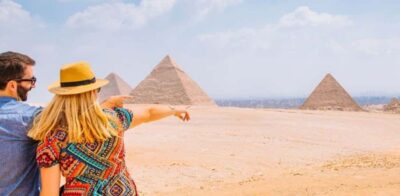
Pyramids & Great Sphinx Private Tour with Camel Ride
Read our review →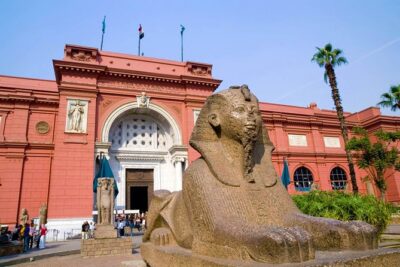
Tour to Giza Pyramids and The Egyptian Museum
Read our review →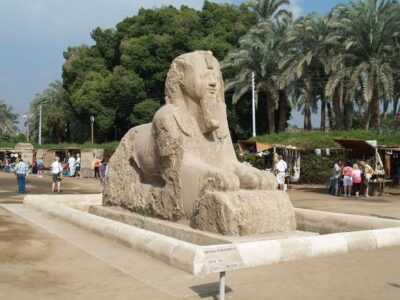
VIP All inclusive Best of the best Giza Pyramids,Sakkara,Memphis
Read our review →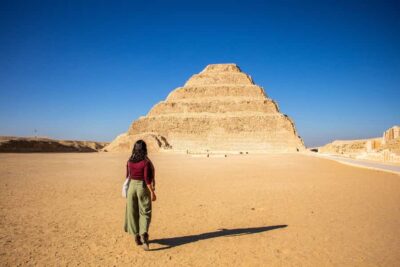
Pyramids of Giza, Sphinx, Saqqara & Memphis Tour
Read our review →
Cairo 8 Hour Private Tour of Pyramids, Egyptian Museum and Bazaar
Read our review →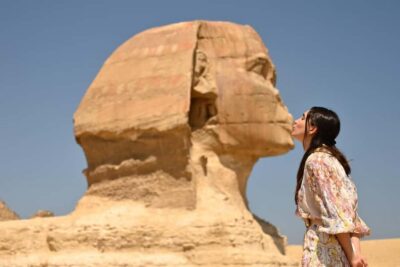
Half-Day Tour to Pyramids of Giza and the Sphinx
Read our review →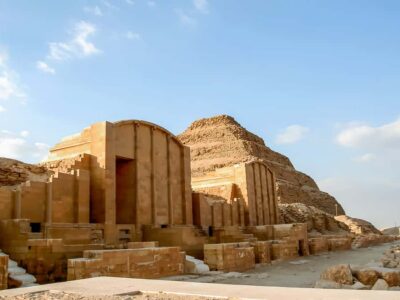
Private ViP all-inclusive Giza Pyramids,Sphinx,Inside Pyramid
Read our review →Browse the lists this tour appears in