
Reviewed · HISTORICAL TOURS
Marrakech Historical and Cultural Tour – Half Day City Tour
Marrakech comes at you in layers: palace tiles, quiet tombs, mosque towers, crowded lanes, and Jemaa el-Fna’s performers. This three-hour walking tour gives you a useful first look at the old city, with guides such as Abdul, Ali, Mohamed, Hassan, and Jaouad adding stories about local customs, architecture, and daily life.
I like the route’s variety, especially the chance to move from major sights into souks and working workshops for tinsmiths, dyers, and herbalists. I also like the friendly care many guides bring to crowded crossings and palace courtyards. The catch is simple: entrance fees are extra, queues at the Saadian Tombs can be long, and a busy group may need to change the plan.
What makes this half-day walk useful
- Jemaa el-Fna sets the scene: Begin among storytellers, musicians, snake charmers, acrobats, and other performers.
- Bahia Palace shows royal luxury: Spend about an hour among tiled rooms, carved details, and gardens.
- The Saadian Tombs can be difficult to enter: Lines may stretch to an hour, so the group may vote to continue without a visit.
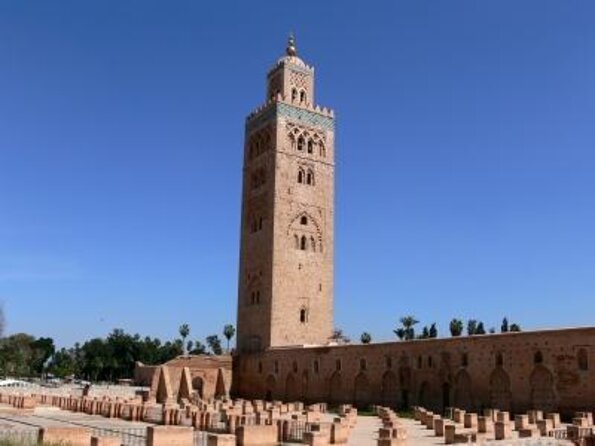
- Koutoubia Mosque anchors the route: See Marrakech’s largest mosque from outside and learn about its place in the city.
- The souks reveal daily work: Your guide can help you navigate lanes and point out less-visited workshops.
- A small group keeps things manageable: The maximum is 15 people, with a private upgrade available.
Start at Jemaa el-Fna, Marrakech’s great meeting place
The tour begins at Hôtel Restaurant Café de France on Rue des Banques, beside Jemaa el-Fna. This is a practical meeting point, but it can be chaotic because several tours gather there. Give yourself time to find the guide, and look for the tour’s meeting instructions rather than assuming the first guide you see is yours.
Jemaa el-Fna is more than an open square. It is Marrakech’s public stage, where storytellers, musicians, jugglers, acrobats, snake charmers, and other performers gather. The tour allows about 10 minutes here, so think of this stop as an introduction rather than a full visit.
I like beginning here because it gives you a quick sense of how the medina works. The square changes with the hour, and your guide can explain what you are seeing before leading you into the narrower streets. You can return later on your own, which is one reason this tour works well near the start of a Marrakech stay.
Keep your group close. The square and nearby streets can be crowded, and the guide’s job is partly to keep everyone together before the route tightens into the souks.
More City Tours in Marrakech
- Marrakech: Private Guided Half-Day City Tour
★ 5.0 · 1,249 reviews - Marrakech City Tour: Private Custom-Made
★ 4.5 · 596 reviews - Marrakech: Guided City and Gardens Highlights Tour
★ 3.4 · 446 reviews
Bahia Palace and the art of royal space
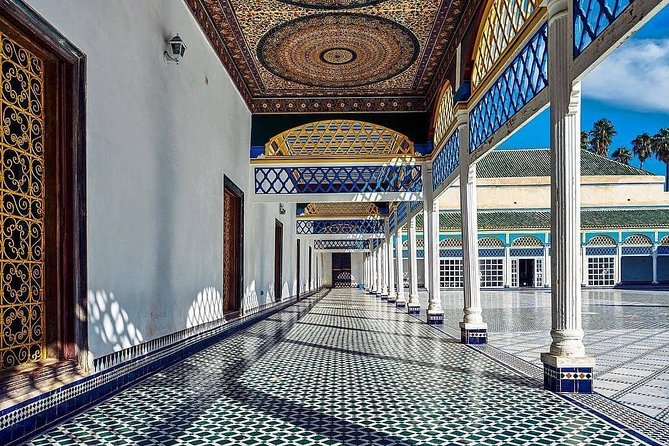
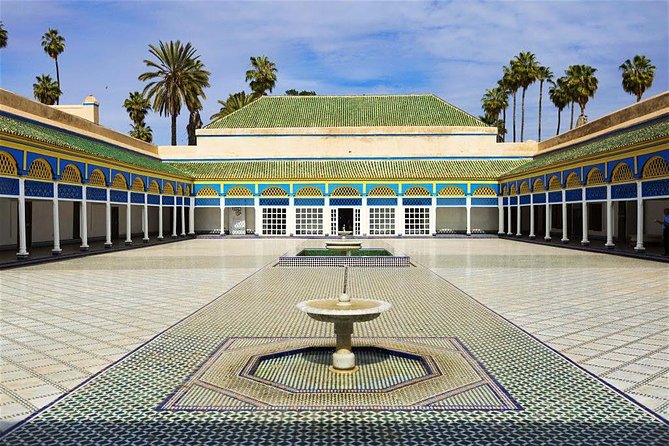
Bahia Palace receives about an hour, making it the longest formal stop on the route. The palace was built in the late 19th century with the aim of creating the finest palace of its time. Its name means brilliance, an apt description for the tiled surfaces, carved decoration, painted ceilings, courtyards, and gardens.
The palace is best understood through its details. A guide can explain the patterns in the tilework, the meaning associated with eight-pointed stars, and the way colors and architectural styles connect to Moroccan traditions. One particularly good guide, Abdul, is praised for explaining these details clearly while keeping the group entertained.
The entrance charge is not included. The listed information notes that many monuments cost about $10 each, though the exact amount can vary. Since the palace is a major part of the tour, include this extra cost when you compare the total price with a self-guided visit.
Crowds matter here. The courtyards can fill quickly, and a group guide is useful for keeping track of everyone. Abdul and other guides have been praised for making sure people do not get separated, even when the palace is packed.
You will have time for photographs, but do not expect a slow, private palace visit. The tour has several more stops, so the guide must keep an eye on the clock.
Through the Jewish quarter and toward the Kasbah
From Bahia Palace, the route continues through historic parts of the medina, including Marrakech’s Jewish quarter. This district has seen a revival and gives the walk a wider cultural frame. It helps you see Marrakech as a city shaped by several communities, not simply a collection of monuments.
The route then reaches the Kasbah, the royal palace district in the southern part of the medina. Here the streets feel more local and less focused on headline sights. Traditional shops remain part of the area, and the pace becomes quieter when the Saadian Tombs are closed.
This is where a guide adds real value. The medina can be difficult to read at first. Alleys twist, shops blend into one another, and motorbikes may move through spaces that seem too narrow for them. You will need to stay alert and walk close to the group.
Several guides receive praise for their personal connection to the medina. Ali is described as a local resident whose familiarity with the area adds depth. Hassan is praised for keeping a group together in crowded streets and for making room for photographs. Those qualities matter more here than a memorized list of dates.
The Saadian Tombs and the problem of the queue

The Saadian Tombs date from the Saadian dynasty and are linked to Sultan Ahmad al-Mansur. Located beside the Kasbah Mosque, they were abandoned for centuries and rediscovered in 1917 through aerial photography. The site was later restored by Morocco’s Beaux-Arts service.
The tombs are one of the tour’s main advertised stops, but they are also the most uncertain. A line can stretch to an hour. When that happens, the guide may ask the group to decide whether to wait or use the time for the souks and other parts of the Kasbah.
That flexibility is practical, but it creates a clear tradeoff. If you book mainly to see the tombs, you may feel disappointed if the group chooses not to wait. The entrance fee is also extra, and some people find the site less rewarding than Bahia Palace for the price.
I would treat the tombs as a possible highlight, not a guarantee. If you have a strong interest in them, ask about the queue at the start and be ready to make your own decision. If the wait is too long, the nearby souks can offer a better use of limited time.
More City Tours in Morocco
- Marrakech : Electric Bicycle City Tour
★ 4.8 · 363 reviews - Marrakech: Tailor-Made City Tour With Your Own Private Guide
★ 4.9 · 236 reviews - Marrakech:Guided City Cycling Tour – Culture, Colors & Charm
★ 4.7 · 231 reviews - Marrakech: Private Half-Day City Highlights Tour
★ 4.7 · 178 reviews
Bab Agnaou and the royal entrance
The walk passes Bab Agnaou, one of Marrakech’s historic gates. Built in the 12th century during the Almohad period, it gave access to the royal Kasbah. It is one of 19 gates associated with Marrakech.
Bab Agnaou helps connect the separate parts of the tour. You have seen royal rooms at Bahia Palace, moved through the Kasbah, and now encounter the monumental entrance that once marked the way into the royal district.
This is a viewing stop rather than a major interior visit. Your guide can explain the gate’s role and its place in the city’s defensive and royal layout. It is also a useful photography point, though the tour’s short duration means you should not expect a long pause.
Koutoubia Mosque, seen from outside
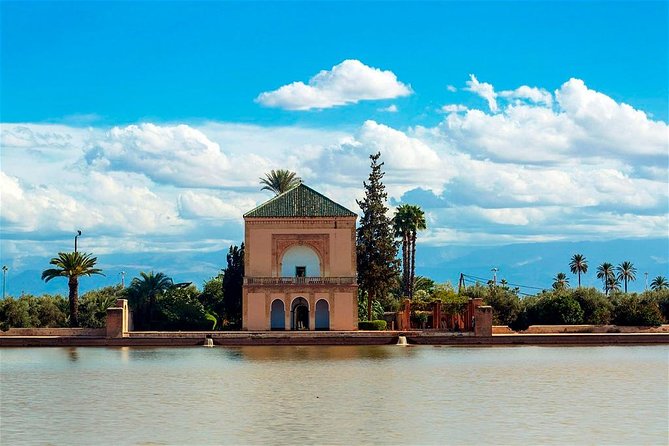
Koutoubia Mosque is Marrakech’s largest mosque and one of the city’s most recognizable landmarks. Its name is linked to booksellers, reflecting the commercial and scholarly life that once surrounded it.
The tour allows about 30 minutes here. Admission is listed as free, but this is an exterior visit. Non-Muslim visitors should not expect to enter the mosque as part of this experience.
The mosque’s minaret helps you get your bearings in the medina. After winding through the souks and Kasbah, the open area around Koutoubia provides a clearer sense of direction. A guide can also place the building within the city’s religious and architectural story.
The stop is not designed as a long architectural study. It works best as a final landmark and a chance to ask questions before returning to the starting point.
The souks, workshops, and a possible sales stop
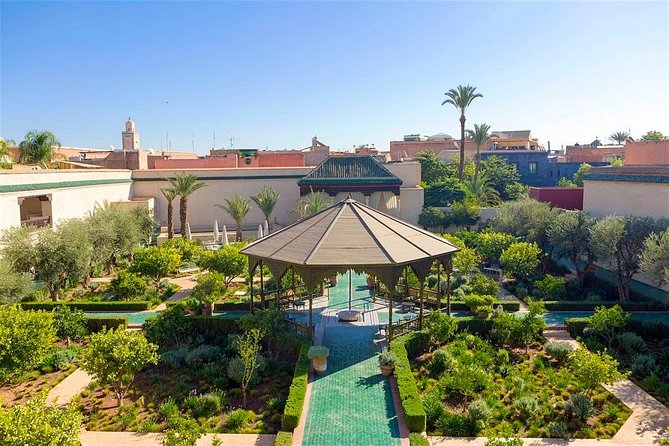
The souks are a major reason to choose a guided walk instead of going alone. The guide leads you through lanes that can be confusing at first and points out workshops connected with tinsmiths, dyers, and herbalists. These working spaces give the medina a more useful character than a simple shopping street.
A guide can also explain what you are seeing and help you move through the crowd without losing the group. This is especially helpful for a first visit, when every lane can look alike.
There is one point to handle with care. Some versions of the walk may finish with an invitation to visit a shop or workshop where products are offered for sale. This can include a demonstration of argan processing and a presentation of local goods. The stop may be interesting, but it can also feel like a sales pitch.
You are not required to buy anything. If you are not interested, say so politely and clearly. It is worth asking at the beginning if the route includes a shopping stop, especially if you want a strictly sightseeing-focused walk.
What the $30.94 price really covers
At $30.94 per person, the tour is priced as an affordable introduction rather than an all-inclusive sightseeing package. You pay for a local or professional guide, group organization, and help finding your way through the medina. The group limit is 15 people, which is small enough for questions but not the same as a private walk.
Entrance fees are not included. Bahia Palace and the Saadian Tombs each require separate admission, with many monument fees around $10. Drinks, hotel pickup, and hotel drop-off are also excluded.
That changes the final cost. If you enter both major paid sites, your total will be noticeably higher than the advertised price. Still, the guide can make the fee worthwhile if you value context, navigation, and local explanations more than simply checking off buildings.
You also get several departure times, morning or afternoon, and a private upgrade is available. The half-day format leaves room for a meal, a rest, or another attraction later. I consider that a real advantage in Marrakech, where the heat, traffic, and crowds can make a full day on foot tiring.
Guide quality makes the biggest difference
The strongest part of this experience is the guide. Names that receive especially warm attention include Abdul, Ali, Mohamed, Hassan, Jaouad, Abdorahim, and Oussama. Their styles differ, but the useful qualities are similar: clear explanations, humor, cultural context, and care in crowded places.
Abdul is praised for stories about history, architecture, Muslim culture, tile patterns, and local products. Ali brings the perspective of someone who lives in the medina. Hassan is noted for helping groups cross streets and stay together. Mohamed is described as both informed and personable, while Jaouad is associated with an enjoyable three-hour introduction to Marrakech.
Do not expect every departure to feel identical. A group tour depends on the individual guide, group size, queues, and the day’s conditions. The overall rating is 4.6 from 1,180 ratings, with 91 percent recommending it, but the mixed experiences make the limitations worth knowing.
Timing, comfort, and who should book
The walk lasts about three hours, though some groups run longer. Wear comfortable shoes and bring water. Much of the route is outside, and one person specifically wished for a short café break, so do not count on a built-in rest stop.
The tour suits first-time visitors who want a quick orientation before exploring alone. It is also useful for solo visitors, since guides may help with group photos and make it easier to navigate crowded streets. Families can join, but children must be accompanied by an adult.
The activity is near public transportation, starts and ends at Café de France, and does not include transport from your hotel. Most people can participate, but the walking, heat, narrow lanes, and motorbike traffic require ordinary city awareness.
Book the morning if you want a cooler start, or choose the afternoon if you prefer to sleep late and continue into the evening. Since the tour often sells about 19 days ahead, reserve early if your schedule is fixed.
Should you book this Marrakech tour?
Book it if you want a well-organized first look at the medina, especially if palace details, local stories, and souk navigation matter to you. The price is fair for a guided introduction, but only after you add monument admission and any drinks.
Do not book it expecting guaranteed entry to every listed site. The Saadian Tombs may have a long queue, Koutoubia is an exterior visit, and the souk route can include a commercial stop. If you accept those conditions, the tour gives you a useful map of Marrakech and leaves you with time to return to the places you liked best.
FAQ
How long is the Marrakech Historical and Cultural Tour?
The tour lasts about three hours, though some departures may run longer.
Where does the tour start and end?
It starts at Hôtel Restaurant Café de France beside Jemaa el-Fna on Rue des Banques. The activity ends back at the meeting point.
Are entrance fees included?
No. Entrance fees are extra. Many monuments cost about $10 each, according to the tour information.
Is hotel pickup or drop-off included?
No. Pickup and drop-off are not included. The tour begins and ends at the stated meeting point.
Is Koutoubia Mosque visited inside?
No. The tour includes a visit to Koutoubia Mosque from the outside. Admission is listed as free.
Can I book a private tour?
Yes. You can upgrade from the group tour to a private option. The standard group has a maximum of 15 participants.
More Historical Tours in Morocco
- Marrakech: Bahia Palace Guided Tour with Skip-the-Line Entry
★ 4.7 · 811 reviews - Marrakech: Palace, Museum, Madrasa & Medina Highlights Tour
★ 4.7 · 706 reviews - Marrakech: Saadian Tombs, Bahia Palace, Medina and Souk Tour
★ 4.7 · 673 reviews - Marrakech: Bahia Palace, Ben Youssef Medersa, & Souks Tour
★ 4.3 · 554 reviews
More Historical Tours in Marrakech
- Marrakech: Bahia Palace, Saadian Tombs, Souk and Medina Tour
★ 4.7 · 4,974 reviews - Marrakech: Bahia Palace, Saadian Tombs, & Koutoubia Mosque
★ 4.5 · 2,529 reviews - Marrakech: Saadian Tombs & Bahia Palace, Medina Guided Tour
★ 4.6 · 1,989 reviews - Marrakech: Bahia Palace, Madrasa Ben Youssef and Medina Tour
★ 4.7 · 1,347 reviews
Just added for Marrakech
- Marrakech: Tailor-Made City Tour With Your Own Private Guide★ 4.9 · 236 reviews
- Marrakech palm grove: Sunset camel ride★ 4.8 · 194 reviews
- Sparkling Marrakech through the eyes of your local Guide★ 4.7 · 247 reviews
- Quad Bike Activity in Marrakech Palmeraie★ 4.2 · 123 reviews
- Marrakech: Historical Discovery Tour★ 4.1 · 87 reviews
- Marrakech: Palm Grove Horseback Riding Tour★ 4.6 · 163 reviews
- Moroccan Food Cooking Class with a Local Chef in Marrakech★ 4.7 · 90 reviews
- Marrakech: Babouch Making Workshop in the Medina★ 4.9 · 117 reviews
Historical Tours, compared.
Luxor Valley of the Kings & Tutankhamun Tomb Trip
Read our review →
Luxor Day Trip from Hurghada Small Group & Tutankhamun Tomb
Read our review →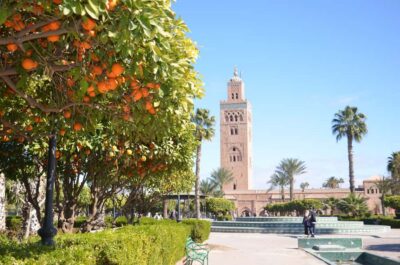
Bahia Palace, Saadian Tombs, Souk and Medina Tour
Read our review →
Hassan II Mosque Premium Tour with Entry Ticket
Read our review →
Bahia Palace, Saadian Tombs, & Koutoubia Mosque
Read our review →
Casablanca City Tour with Hassan II mosque ticket
Read our review →Browse the lists this tour appears in