
Reviewed · TUNIS & CARTHAGE TOURS
Private Tour to Kairouan, El Jem & Monastir from Tunis_hammamet
The Roman amphitheater at El Jem is the star of this long Tunisian day, but the route gives you three very different places in one sweep: holy Kairouan, ancient El Jem, and seaside Monastir. You move from Islamic architecture to Roman spectacle, then finish in a fortress with wide views over the coast.
I like the private format, since your guide can adjust the pace and help with photo stops or a lunch suggestion. I also like the mix of major monuments and ordinary local detail, including Kairouan’s pastries and carpet craft. The tradeoff is simple: this is a full day in the car, usually eight to ten hours, and the sights are spread far apart.
Key points to know before booking
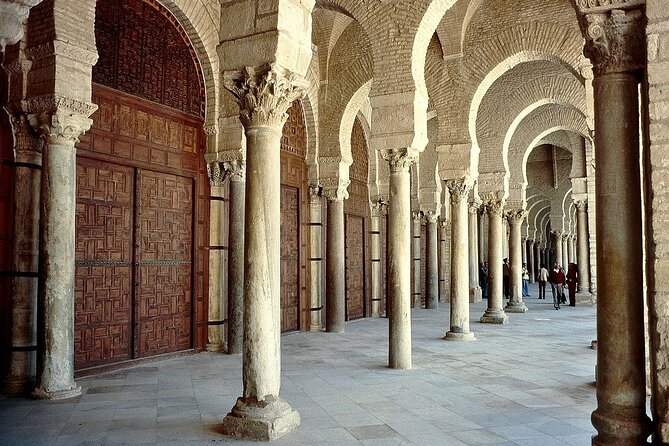
- Kairouan’s Great Mosque gives you one of the most important Islamic monuments in North Africa, with a huge courtyard, an imposing minaret, and marble-columned prayer halls.
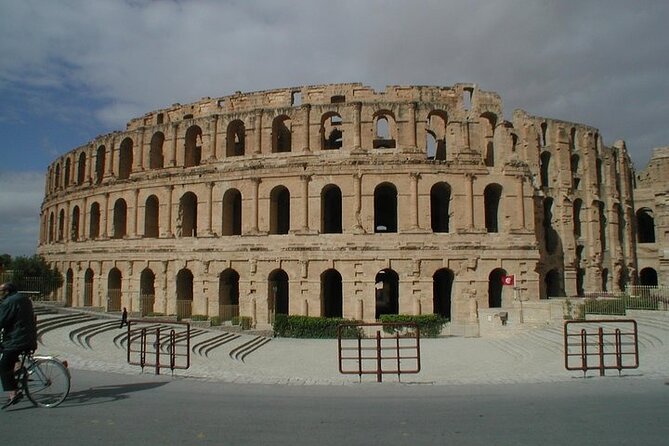
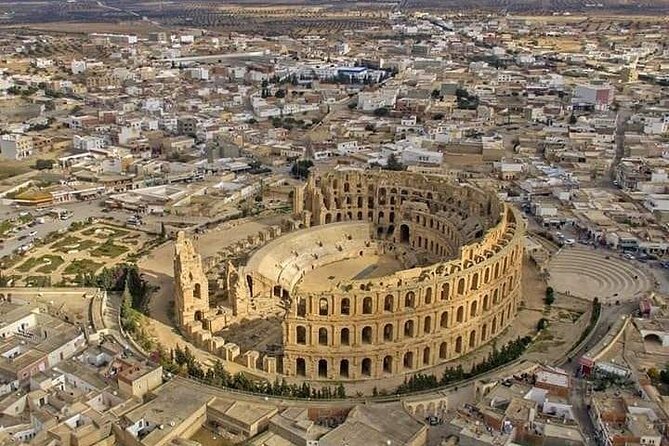
- El Jem’s amphitheater could hold about 30,000 spectators and is often the most memorable stop of the day.
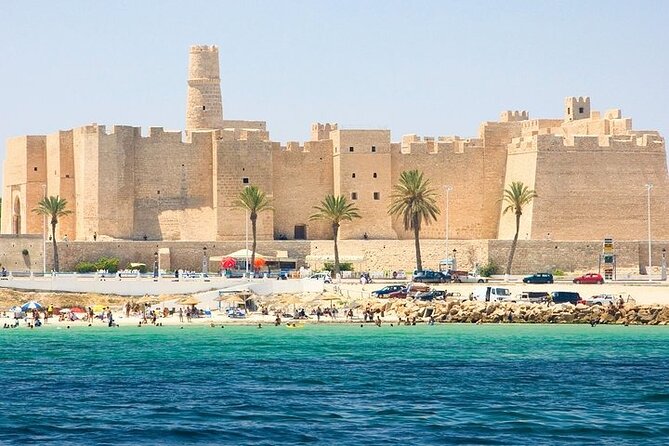
- Monastir’s Ribat rewards you with medieval defensive architecture and a climb to its watchtower.
- The private vehicle and guide make the route easier than arranging three distant towns on your own.
- Lunch costs extra, so ask your guide for a suitable stop or plan to pay separately.
- Allow for a long day, with driving between each major site and only about 20 to 40 minutes listed at most stops.
Three major Tunisian sights in one long day
This excursion is built for you if you want to see beyond Tunis or Hammamet without changing hotels. The route forms a broad southern circuit through central Tunisia, linking Kairouan, El Jem, and Monastir.
At $98.48 per person, the value depends on your group size. A private air-conditioned vehicle, a certified guide, and admission to five listed attractions are included. For a small group, that can be a sensible way to cover ground without sorting out separate transport, entrance fees, and local guides.
The price does not include lunch. That is not a major problem, but it means you should treat the quoted fare as the cost of sightseeing and transport, not a fully paid day. Since the excursion lasts eight to ten hours, ask early about the planned meal stop and keep some money available.
The guide makes a real difference here. Names connected with particularly strong service include Yaya, Bilal, Ahmed, Kimos, Bilel, Chaouki, Beligh, and Balagh. Assignments can change, so you should not book on the expectation of one particular person unless the provider confirms it. The strongest accounts describe guides who explain history clearly, answer questions, suggest photo spots, and adjust the day when a site closes early.
A few more Tunisia trips worth putting side by side
- VIP Tour: Tunis Medina/Bardo, Sidi Bou Said, Carthage |PICKUP ALL
★ 5.0 · 512 reviews - Fun VIP Tour: El Jem, Kairouan, Monastir/Sousse (PICKUP ALL City)
★ 5.0 · 451 reviews - Private tour: Medina,Carthage ,Sidi Bou Said, Bardo Museum+lunch
★ 5.0 · 230 reviews
Kairouan’s Great Mosque and its fortress-like shape
Kairouan is the spiritual center of Tunisia and the fourth holy city of Islam. The Great Mosque, founded in 670, is the main reason to come. Even from outside, its heavy walls and square minaret give it the look of a fortified structure rather than a delicate place of worship.
Inside, the large courtyard is the visual heart of the visit. Arcades frame the open space, while a sundial and carefully arranged lines of stone give the area a calm, measured feel. The high cedar doors lead toward prayer rooms lined with dozens of marble columns.
The listed visit lasts about 40 minutes, with admission included. That is enough for an overview and basic explanation, though you will not have unlimited time to study every architectural detail. If religious or architectural sites matter to you, this is the stop where a good guide earns the fee. Ask about the mosque’s influence on later buildings across the Maghreb.
Dress and conduct should be respectful at a major religious monument. The supplied information does not specify a separate dress code or interior access rule, so follow the guide’s instructions on arrival. The tour description refers to visiting the mosque and viewing its prayer spaces, but exact access can depend on local conditions.
A short walk through Kairouan’s medina
After the mosque, you get free time in Kairouan’s medina. The planned stop is about 30 minutes, so think of it as a quick taste rather than a long shopping session.
The medina is described as one of Tunisia’s best-preserved and most authentic old quarters. You can look through the souks, sample mekroudhs, the city’s famous pastry, and see local carpet making. Those details give the stop more life than a quick monument photograph. Kairouan is not only a place of sacred buildings; it is also a working town with food and craft traditions.
Here, I would keep your pace relaxed but your buying judgment sharp. One serious complaint involved a carpet purchase made after a guide took the group to a shop presented as an official government store. The buyer later had the carpet checked and believed it was not authentic. The tour provider replied that the guide was an independent guide registered with Tunisia’s national tourism office, rather than a direct employee, and expressed regret.
That does not mean every carpet stop is a problem. It does mean you should never feel pushed into buying. If you want a carpet, ask about the weave, origin, size, written receipt, and return terms. Compare prices and take time to check the item independently. The medina is worth seeing even if you buy nothing.
The Aghlabid basins and Kairouan’s water system
The Aghlabid basins are another Kairouan stop, with about 20 minutes allotted. They sit outside the medina walls and date from the second half of the ninth century.
These great water reservoirs show how much engineering was needed to support Kairouan. They are described as among the most important hydraulic works in the history of the Muslim world. You will not get the same enclosed architectural drama as at the mosque, but the basins add useful context. They help explain how a major inland religious and political center could function in a dry region.
Because the visit is short, listen closely to the explanation before moving on. This is a place where the guide’s commentary matters more than the amount of time spent walking around.
Same corner of the map, a completely different outing:
- Private tour: Medina,Carthage ,Sidi Bou Said, Bardo Museum+lunch
★ 5.0 · 194 reviews - Discovery ride on horseback or camel 2h30
★ 5.0 · 153 reviews - Carthage, Bardo Museum, Sidi Bou Said and Medina Private Day Tour
★ 4.5 · 153 reviews - Cook and Connect: Tunisian Culinary Adventure with a Local Family
★ 5.0 · 109 reviews
Entering El Jem’s enormous Roman amphitheater
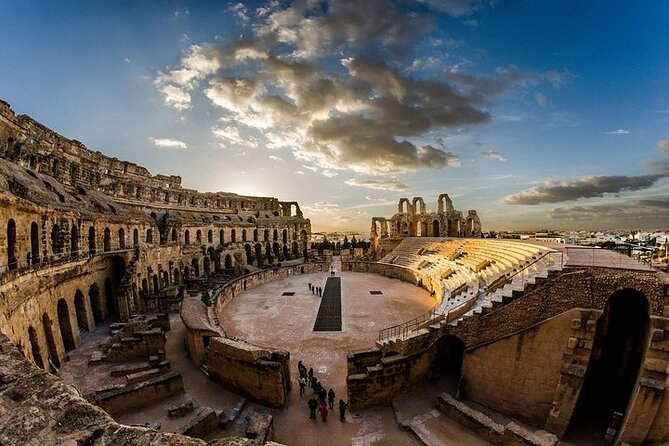
El Jem is the day’s most powerful stop for many people. The ancient city was called Thysdrus and grew prosperous during the Roman period. Its amphitheater, built in the third century AD, could hold around 30,000 spectators.
The structure is ranked third in size in the Roman world after Rome’s Colosseum and the amphitheater at Capua. That comparison is useful, but El Jem has its own character. It is not merely a smaller copy of Rome. You can appreciate its broad seating levels, massive stonework, and underground areas, which give the building unusual depth.
The visit lasts about 40 minutes and admission is included. That is enough to walk through the main spaces and understand how the arena worked. If you enjoy ancient engineering, you will want to use every minute. The underground structures are especially important because they make the building feel more extensive than its exterior first suggests.
The amphitheater is also the clearest reason to accept the driving time. One traveler described the Roman monument as worth the entire journey, and that judgment makes sense even if you are not a specialist in ancient history. The scale is immediate. You do not need a long lecture to understand that this was built for a large public spectacle.
Monastir’s Ribat and the view from the tower
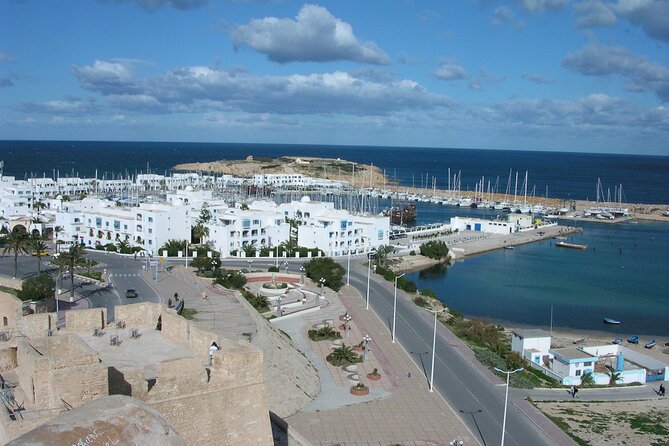
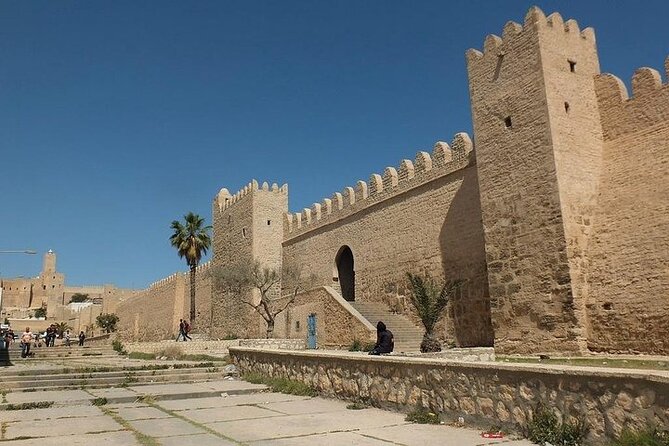
The final major stop is Monastir’s Ribat, a defensive complex founded in 796. It was one of the earliest and most important fortifications built along the Maghreb coast after the Arab conquest.
The building began as a quadrilateral complex with four main sections and two courtyards. Small cells housed warrior monks who combined military duty with prayer and contemplation. The Ribat also contains two prayer rooms, with one now displaying religious and medieval craft objects.
The listed visit lasts about 40 minutes. A hundred spiral steps lead to the watchtower, so this stop requires some physical effort. In return, you get a broad view of Monastir and the sea, plus a clear sense of how the ribat network communicated. At night, signal messages could be exchanged between neighboring towers.
I would not rush the climb. The tower is the payoff, but the courtyards and small rooms explain how the place worked. If you have limited mobility, ask the provider about the stairs before booking. The tour information says most people can participate, but it does not provide detailed accessibility information for the tower.
Monastir also gives the day a change of mood. Kairouan feels inland and religious, El Jem feels archaeological, and Monastir brings you back to the coast. That contrast makes the route more satisfying than three similar monuments would be.
How the private format affects the day
The private arrangement means only your group participates. Pickup is offered, and the vehicle is air-conditioned. Those details matter when you are covering three towns and spending much of the day on the road.
A private guide can also make the schedule less rigid. Chaouki, for example, was praised for asking what the group wanted to see, pointing out sights along the way, and helping choose a lunch spot. Another guide, Belir, reportedly worked to preserve as much of the planned visit as possible when one location closed early.
The driver matters just as much as the guide. One particularly useful account noted that the sites are widely separated and that careful driving becomes important during the many hours in the car. Another account described a flat tire caused by a worn tire, with concern that the vehicle should have been checked more carefully before departure. The provider responded that its vehicles receive regular maintenance and that the tire had been checked before departure.
These two points can both be true: the company may maintain its vehicles, and an occasional breakdown can still disrupt a day. I would confirm the pickup time, vehicle details, and emergency contact before departure. It is also sensible to keep water, a phone charger, and a little flexibility in your schedule.
Timing, lunch, and the rhythm of the route
The advertised duration is approximately eight to ten hours. That is a realistic way to think about the experience: not a leisurely visit to each town, but a concentrated day with several major stops.
The listed sightseeing times add up to about 170 minutes, or just under three hours. The rest of the day is transport, pickup, meals, short transitions, and time around the sites. That explains why the schedule can feel efficient rather than slow.
Lunch is not included. Several guides have suggested a restaurant or joined a solo customer for lunch so the person would not have to eat alone, but that kind of help depends on the guide and is not part of the formal inclusions. Ask where lunch fits into the route. You should not expect an elaborate meal break if the schedule is running late.
The route suits people who prefer seeing a lot in one day. It is less suitable if you want long, unhurried time in one medina or museum. The practical benefit is that you avoid spending another day arranging transport to El Jem and Kairouan.
Who will get the most from this tour
I would choose this trip if you want major Islamic, Roman, and medieval sites in one outing. It is a strong match for first-time visitors based in Tunis or Hammamet who have limited time and want a guide to handle the route.
It also works well for a small family or group of friends. The private vehicle lets you share the cost while keeping the day focused on your own schedule. Older people can benefit from the door-to-door pickup and air-conditioned transport, though the spiral stairs at Monastir deserve advance thought.
History fans will find plenty to hold their attention, especially at the Great Mosque, the Aghlabid basins, and El Jem. Food and craft enthusiasts will appreciate the chance to try mekroudhs and see carpet work in Kairouan, but the brief medina visit will not satisfy someone seeking a full shopping day.
I would hesitate only if you dislike long road days, want guaranteed free time for shopping, or prefer to explore each place without a schedule. You should also be cautious about unsolicited shopping recommendations and never buy an expensive carpet under pressure.
Cancellation and booking details worth knowing
Confirmation is received at booking, and mobile tickets are available. Group discounts are offered, although the amount is not specified. Service animals are allowed, and the experience is listed as suitable for most people.
You can cancel for a full refund if you do so at least 24 hours before the start time. Changes made within 24 hours are not accepted, and late cancellations are not refunded. If poor weather causes the operator to cancel, you are offered another date or a full refund.
Should you book the Kairouan, El Jem, and Monastir tour?
Book it if your priority is coverage and convenience. The Great Mosque, El Jem amphitheater, Aghlabid basins, Kairouan medina, and Monastir Ribat give you a strong cross-section of Tunisia in one day. At $98.48 per person, the combination of private transport, guide service, and admissions can be good value for a small group.
Skip it if you want a slow day or dislike long drives. Before departure, confirm pickup, ask how lunch will work, and agree that shopping is optional. With those points clear, this is a practical way to reach three important sites that are awkward to connect on your own.
FAQ
How long does the tour last?
The tour lasts approximately eight to ten hours.
Where does the tour depart from?
Pickup is offered from hotels in the Tunis and Hammamet area, based on the experience title and description. The exact pickup details should be confirmed when booking.
Is the tour private?
Yes. Only your group participates in the private tour or activity.
Is lunch included?
No. Lunch is not included in the price.
Which entrances are included?
Admission is included for the Great Mosque of Kairouan, the Medina of Kairouan, the El Jem amphitheater, the Ribat of Monastir, and the Aghlabid basins.
Can I cancel for a full refund?
Yes. You must cancel at least 24 hours before the experience start time for a full refund. Cancellations made less than 24 hours in advance are not refunded.
Is the tour suitable for most people?
The activity states that most people can participate and that service animals are allowed. The Ribat includes about 100 spiral steps to the watchtower, so anyone concerned about stairs should ask about this before booking.
Just added for Tunisia
- Discovery ride on horseback or camel 2h30★ 5.0 · 153 reviews
- Djerba Flamingo Island Pirate Boatrip – Trip, Lunch & Pick-up★ 3.5 · 84 reviews
- Quad ride on the hills of Hammamet★ 4.0 · 104 reviews
- Cook and Connect: Tunisian Culinary Adventure with a Local Family★ 5.0 · 109 reviews
- Private tour: Medina,Carthage ,Sidi Bou Said, Bardo Museum+lunch★ 5.0 · 194 reviews
- 1 day excursion Tunis Sidi Bousaid Carthage departure from Sousse★ 5.0 · 87 reviews
- Fun VIP Tour: El Jem, Kairouan, Monastir/Sousse (PICKUP ALL City)★ 5.0 · 451 reviews
- VIP Tour: Tunis Medina/Bardo, Sidi Bou Said, Carthage |PICKUP ALL★ 5.0 · 512 reviews
Tunis & Carthage Tours, compared.
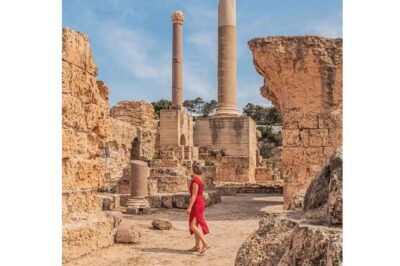
VIP Tour: Tunis Medina/Bardo, Sidi Bou Said, Carthage |Pickup ALL
Read our review →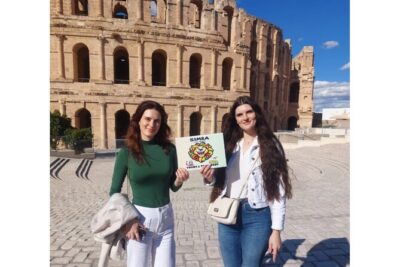
Fun VIP Tour: El Jem, Kairouan, Monastir/Sousse (Pickup ALL City)
Read our review →
Private tour: Medina,Carthage ,Sidi Bou Said, Bardo Museum+lunch
Read our review →Private tour: Medina,Carthage ,Sidi Bou Said, Bardo Museum+lunch
Read our review →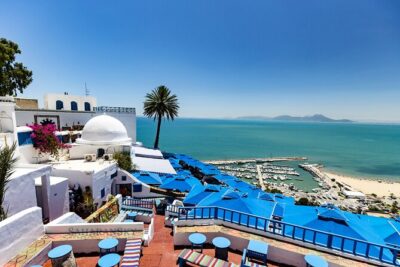
Carthage, Bardo Museum, Sidi Bou Said and Medina Private Day Tour
Read our review →
Private Excursion to Testour, Dougga and Bulla Regia from Tunis.
Read our review →
Guided Bike Tour of Carthage Archeological Site in Tunisia
Read our review →
1 day excursion Tunis Sidi Bousaid Carthage departure from Sousse
Read our review →Browse the lists this tour appears in