
Reviewed · WALKING TOURS
Bo-Kaap: Walk with a local
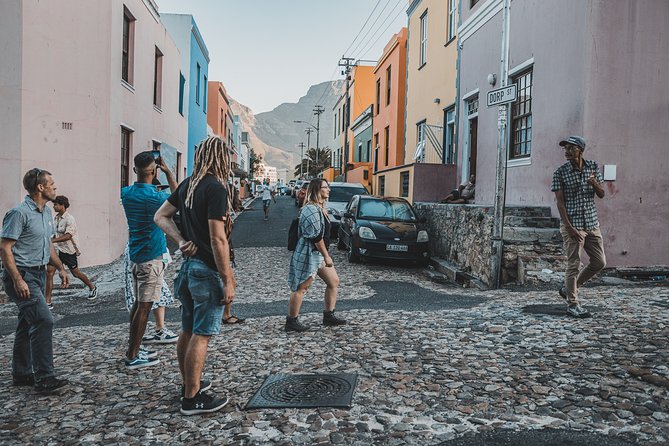
Bo-Kaap is far more than a row of pretty painted houses. On this one-hour walk, a local guide such as Ilyas, Rafiq, Sadiq, or Siddiq connects the bright streets to the area’s past as a home for enslaved people, artisans, political exiles, and Cape Malay families. The most memorable moments come when the guide greets neighbors, shares family stories, or brings you into the everyday life of the community.
I like the personal connection and the stop at Atlas Trading Company, where the smell of spices adds a strong sense of place. I also like the homemade treat and cup of rooibos tea or coffee, which turn a history walk into a warm local visit. The main consideration is the terrain: you will walk on uneven cobblestones and up and down hills, so solid shoes are a must.
Key points
- Local family stories: Guides live in Bo-Kaap or have deep family ties to the neighborhood.
- Auwal Mosque: See one of South Africa’s oldest mosques and learn about Bo-Kaap’s role in the spread of Islam at the Cape.
- Atlas Trading Company: Smell the spices used in Cape Malay cooking and hear how food became an expression of freedom.
- Homemade Cape Malay snack: A stop for a koe’sister or another local treat may take place in a resident’s home.
- Small-group feel: The maximum group size is 20, with many departures feeling much smaller.
- Easy planning: The walk starts and ends at 71 Wale Street, costs about $25.31 per person, and allows free cancellation up to 24 hours ahead.
Seeing Bo-Kaap beyond the colorful houses
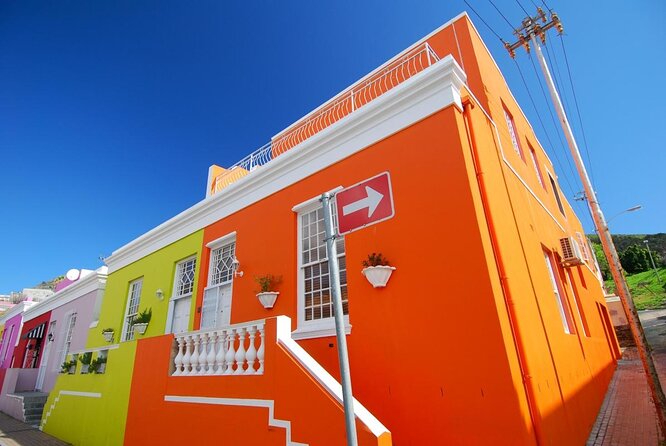
The painted homes of Bo-Kaap make an instant photograph, but the color is only the front door to the story. The neighborhood sits at the foot of Signal Hill in Cape Town’s City Bowl and is closely tied to the history of Islam and Cape Malay culture in the city.
I like this tour because it does not treat Bo-Kaap as a photo backdrop. You hear about the people brought to the Cape from Africa, India, Sri Lanka, Indonesia, Malaysia, and other places by the early Dutch settlers. Their descendants helped shape the food, faith, language, and traditions that still give the area its identity.
A local guide changes the tone of the walk. Guides named Ilyas, Rafiq, Sadiq, and Siddiq have led this experience, and the guide for your departure may be different. The important point is that the walk is led by someone connected to the neighborhood, not simply someone reciting dates from a script.
You might stop to greet friends of the guide, hear about a community garden, or visit a relative’s home for a homemade snack. These moments are valuable because they show Bo-Kaap as a living neighborhood. People still live here, work here, worship here, and worry about what the future will bring.
More Tours with a Local in South Africa
- Hike Table Mountain or Lions Head in Cape Town Like a Local
★ 5.0 · 266 reviews - Cape Town: Private Walking Tour with a Local
★ 4.6 · 243 reviews - Authentic African Cuisine Cooking Experience
★ 5.0 · 236 reviews
Meeting at 71 Wale Street
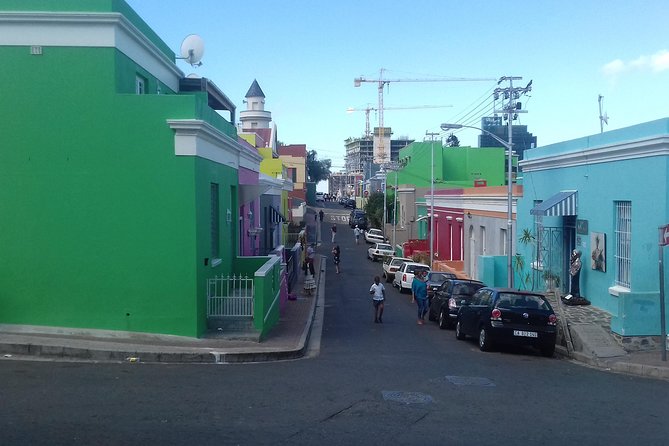
The walk begins at 71 Wale Street in Schotsche Kloof. This gives you a clear starting point in Bo-Kaap and avoids the confusion that can come with a large tour meeting at an unnamed street corner.
The opening section sets out the history of Cape Town and Bo-Kaap. You will get the basic framework first: who came to the area, how slavery shaped Cape Town, and why Bo-Kaap became such an important center of Islam at the Cape.
That introduction matters. Without it, the painted buildings can seem like a collection of cheerful façades. With it, you begin to see the neighborhood as a place shaped by forced migration, faith, family, and resistance.
The meeting point is near public transportation, and the tour ends back there. Since the activity lasts about an hour, it fits neatly into a morning or afternoon in central Cape Town. You can pair it with other City Bowl sights, but leave enough time to arrive at Wale Street without rushing.
A short walk with a serious history
The first part of the route explores Bo-Kaap itself. The pace is designed for looking and listening rather than covering a large distance. You will have chances to take photographs, but the guide also explains what lies behind the architecture.
Bo-Kaap’s history includes enslaved people, artisans, and political exiles brought to the Cape from several parts of Africa and Asia. Calling the area the Malay Quarter reflects part of its past, but the neighborhood’s roots are wider than that label suggests.
The walk also gives context to the community’s Islamic identity. Bo-Kaap is often described as the birthplace of Islam in the Cape, and the neighborhood’s mosques and families are central to that story. A guide with family ties to the area can explain this in a more direct way than a quick photograph or a guidebook paragraph.
The bright colors are worth seeing, but do not expect every moment to be staged for a camera. The best parts may be quieter streets, side areas, and ordinary encounters with people who know the guide. You can still photograph the famous houses, but the walk encourages you to look past the obvious picture.
Auwal Mosque and the birth of Islam at the Cape
Auwal Mosque is one of the key stops. It is recognized as one of the oldest mosques in South Africa and helps explain why Bo-Kaap matters far beyond its appearance.
The mosque gives the history a physical center. Instead of hearing only about Islam’s role in the Cape, you see a place connected to that tradition. Your guide can place the mosque within the story of the enslaved people and exiles who brought their beliefs and practices to the area.
The stop is especially useful if you are new to Cape Town’s colonial history. It shows how people who arrived under harsh and unjust conditions still preserved faith, family, food traditions, and community ties.
The provided details do not promise a long interior visit or a formal religious tour, so treat Auwal Mosque as an important sight and teaching point rather than a separate museum-style attraction. Dress and behave respectfully around the mosque, and follow your guide’s instructions if access is limited during your visit.
More Walking Tours in Cape Town
- Cape Town: Nathi Langa Township Walking Tour
★ 4.9 · 493 reviews - Cape Town: Art, Culture & History Walking Tour
★ 4.9 · 392 reviews - Cape Town: Street Art Walking Tour in Woodstock
★ 4.8 · 293 reviews - Cape Town: Langa Township Walking Tour
★ 4.8 · 272 reviews
Spices at Atlas Trading Company
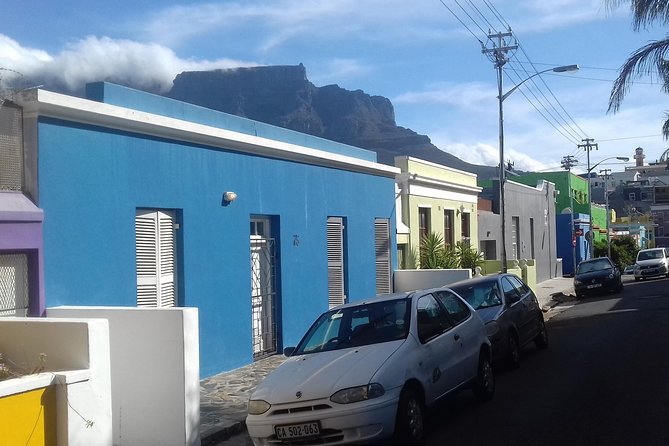
Atlas Trading Company adds a sensory stop to the walk. Here, you smell the spices used in Cape Malay cooking, including the kinds of ingredients that give local food its warm, fragrant character.
This is more than a quick shopping stop. Your guide explains how enslaved people used spices in their masters’ kitchens as an expression of freedom. That detail connects food to power and identity. A spice blend becomes part of a much larger story about people keeping hold of their culture under difficult conditions.
I like this part because it gives you something concrete to remember. You may forget a date, but the scent of spices and the explanation of how they were used can stay with you.
If you enjoy cooking, Atlas is also a useful place to slow down and pay attention. The tour does not promise a shopping allowance or a cooking lesson, so any purchases are separate. Still, the stop adds flavor to the walk in the most literal way.
Tea, coffee, and a homemade Cape Malay treat
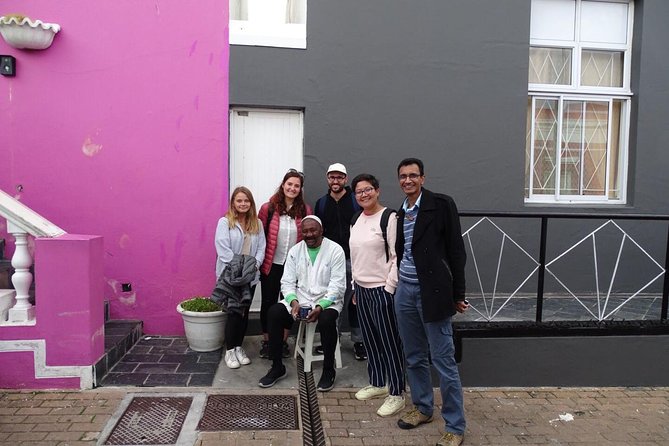
A cup of rooibos tea or coffee and a snack are included. The refreshment helps break up the walking, but its real value is cultural.
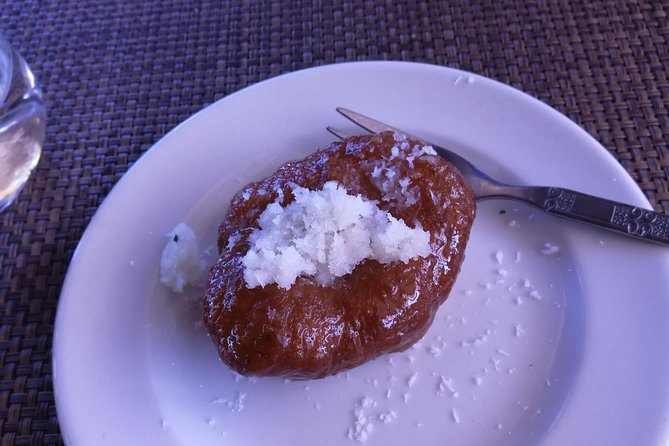
Some departures include a homemade koe’sister, a Cape Malay sweet that has become closely associated with the community. The most personal version of the stop may take place at a resident’s home, including the home of a guide’s aunt. A fresh treat served in a family setting gives you a glimpse of hospitality that a restaurant meal cannot quite match.
This part can vary with the guide and the day, so you should not assume every departure will follow exactly the same pattern. The included refreshment is useful, but the main attraction remains the local setting and the story attached to it.
The stop also makes the tour feel less rushed. A one-hour walk can otherwise become a string of facts and photographs. Tea, coffee, and a snack give you a moment to ask questions and talk with the guide.
Why a local guide makes the difference
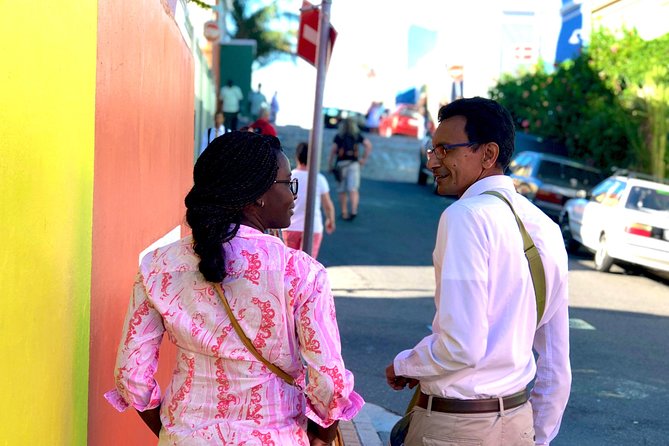
The strongest feature of this experience is the guide’s connection to Bo-Kaap. Ilyas is described as born and raised in the area, while Rafiq, Sadiq, and Siddiq are also presented as local figures with strong family or community ties. Your guide may be one of these people or another member of the local team.
That connection can open doors to details you would miss walking alone. You might hear how daily life has changed, learn about concerns for the neighborhood’s future, or meet people who know the guide personally. You may also walk through quieter sections rather than staying only on the most photographed streets.
The guide’s personality matters here. This is a story-led walk, not a large bus tour. A warm and engaging guide can make the history easy to follow, while a more formal guide may focus on facts and landmarks. Either way, the small format gives you a chance to ask questions.
The maximum group size is 20, but the experience may feel more intimate when fewer people book. A small group is helpful in narrow streets, during photo stops, and when the guide is explaining a personal story.
Walking conditions, safety, and what to wear
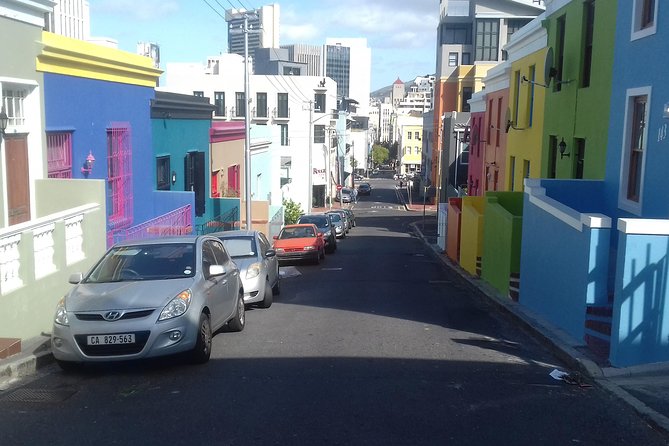
The walk lasts about an hour, but do not interpret that as a completely flat or effortless stroll. You will encounter hills, uneven cobblestones, and changes in elevation. Wear shoes with a firm sole and good grip.
Bring water, even though tea, coffee, or a snack is included. Cape Town weather can change, and one departure took place on a cool, overcast October morning, when a light jacket proved useful. The experience requires good weather, so poor conditions can lead to a new date or a refund.
The tone of the walk is community-focused, and people have felt safe with local guides. Still, Bo-Kaap is a real urban neighborhood, not a closed attraction. One account noted an encounter with someone panhandling. Keep your belongings secure, stay with the group, and listen to your guide about where to walk.
Solo women can book the walk, but arranging transport to and from the meeting point may make the day easier. The supplied guidance specifically recommends using Uber before and after the experience. That is practical advice if you do not know Cape Town well or prefer not to walk alone between nearby areas.
Is $25.31 good value?
At about $25.31 per person, this is fairly priced for a guided cultural walk with a local guide, a tea or coffee, and a snack. You are paying less for the distance covered than for the quality of the explanation and the access to local stories.
A self-guided walk costs less, of course. You can photograph the houses and visit the area on your own. What you cannot easily reproduce is the connection with residents, the family history, the interpretation of Auwal Mosque, or the explanation of spices from someone rooted in the neighborhood.
The one-hour length keeps the cost and time commitment modest. That makes this a good choice if you want an introduction before deciding how much more time to spend in Bo-Kaap. It may feel too short if you want a full food tour, a long mosque visit, or a detailed architectural study.
Because the group can include up to 20 people, the value depends partly on the size of your departure. The tour remains useful in a larger group, but the personal exchanges and home visit are likely to feel more special when the group is small.
Who should book this Bo-Kaap walk?
I would choose this experience if you want context for your photographs and prefer meeting a local guide rather than following a standard city route. It suits first-time visitors to Cape Town, people interested in slavery and colonial history, and anyone curious about Islam and Cape Malay culture.
It is also a good fit for photographers who want the famous streets but do not want to spend the whole visit taking pictures without understanding the place. The guide can point out quieter areas and allow time for photographs.
Families with older children may find the one-hour format manageable, although the historical subject matter is serious. Food lovers will enjoy the spice stop and the chance to taste a homemade treat.
I would think twice if you need a fully accessible route, because the walk includes uneven surfaces and hills. I would also skip it if your only goal is a fast photo stop. The real value comes from listening, asking questions, and giving the neighborhood more than a few minutes.
Booking, cancellation, and final advice
Confirmation is provided when you book, and most people can take part. The tour requires a minimum number of participants, so a departure can be canceled if that number is not reached. In that case, you can choose another date or experience, or receive a full refund.
You can cancel for a full refund up to 24 hours before the start time. Changes or cancellations inside that 24-hour window are not accepted for a refund. The same 24-hour rule uses Cape Town local time, so check the clock carefully if your plans are changing.
Should you book it?
Yes, if you want Bo-Kaap’s people and history, not only its paintwork. The local guide, Auwal Mosque, Atlas Trading Company, and homemade snack create a varied hour with real cultural value.
Book it early if your schedule is fixed, since the experience is commonly reserved about three weeks ahead. Choose comfortable shoes, bring a light layer and water, and allow yourself time to listen. If you do that, this short walk can give the colorful streets a meaning you would not get from photographs alone.
FAQ
Where does the Bo-Kaap walking tour start?
The tour starts at 71 Wale Street, Schotsche Kloof, Cape Town, 8001, South Africa.
Where does the tour end?
The activity ends back at the meeting point at 71 Wale Street.
How long does the experience last?
The walk lasts approximately one hour.
How much does the tour cost?
The listed price is about $25.31 per person.
What is included with the walk?
A cup of rooibos tea or coffee and a snack are included.
Will I visit Auwal Mosque?
Auwal Mosque is included as a stop on the route. It is one of the oldest mosques in South Africa.
Will I visit Atlas Trading Company?
Yes. The walk includes a stop at Atlas Trading Company to smell spices used in Cape Malay cooking.
Who leads the tour?
The walk is led by a local guide connected to Bo-Kaap. Guides associated with the experience include Ilyas, Rafiq, Sadiq, and Siddiq, though the guide can vary by departure.
How large can the group be?
The maximum group size is 20 people.
Can I cancel for a refund?
Yes. You can cancel at least 24 hours before the start time for a full refund. Poor weather or failure to meet the minimum number of participants can also lead to a new date or a full refund.
More Tours with a Local in Cape Town
- Cape Town: Authentic 3–4 Hour Cultural Township Experience
★ 4.7 · 151 reviews - From Tangier: Chefchaouen Day Trip with Local Guide
★ 4.8 · 3,287 reviews - Sal: Island Experience Tour with a Certified Local Guide
★ 4.8 · 3,249 reviews - Marrakech: Street Food Tour with a Local Guide
★ 4.9 · 3,119 reviews
More Walking Tours in South Africa
- Cape Town Walking Tour: Bo-Kaap & City Highlights
★ 4.8 · 161 reviews - Cape Town: Bo-Kapp Walking Tour and Malay Cooking Class
★ 4.7 · 105 reviews - Soweto: Walking Tour with a Local Guide and Lunch
★ 4.9 · 648 reviews - Plettenberg Bay: Bungee Jumping with Zipline and Sky Walk
★ 5.0 · 506 reviews
Just added for Cape Town
- Best of Cape Town Full-Day Private Tour with Table Mountain★ 5.0 · 195 reviews
- Full Day Cape Point Sightseeing Tour★ 4.5 · 84 reviews
- Drumstruck at Silvermist. Live African Drum Show & Wine tasting★ 5.0 · 137 reviews
- Cruise and Dine Lunch / Cape Town: Coastal Motor Cruise and 2-Course Lunch★ 4.5 · 151 reviews
- Cruise and Dine Dinner / Cape Town: Sunset Champagne Cruise and 3-Course Dinner★ 4.0 · 128 reviews
- Cheetah Outreach Tour Somerset West, Gordon’s Bay and Strand Beaches★ 4.5 · 94 reviews
- 1 Hour Coastal Catamaran Cruise from Cape Town★ 4.5 · 258 reviews
- Champagne Cruise (Pre-Sunset) from Cape Town★ 4.5 · 152 reviews
Walking Tours, compared.
Ben Youssef, Secret Garden, & Souks Walking Tour
Read our review →
Explore Fes: Unforgettable Guided Walking Tour of the Medina
Read our review →
Old Cairo Guided Walk Tour: History, Culture & Street Bites
Read our review →

Plettenberg Bay: Bungee Jumping with Zipline and Sky Walk
Read our review →
Walking Tour Through Old Town Mombasa and Fort Jesus
Read our review →Browse the lists this tour appears in