

Reviewed · PYRAMIDS & SPHINX TOURS
Cairo: Giza Pyramids, Sakkara & Dahshur All-Inclusive Tour
The best thing about this tour is its order of attack: you begin with the quieter pyramid fields at Saqqara and Dahshur, then finish at Giza, where the scale and fame build to a grand finale. I like that you see how Egyptian pyramid design changed over time, not just the three famous monuments.
I also like the private car and guide, which let you adjust the pace, and the included lunch, a useful break after several hours outdoors. The drawback is the packed seven-hour schedule. Add hot weather, long walks, and the steep, cramped passages inside some pyramids, and you will want good shoes, water, and realistic energy levels.
Key points

- Compare three stages of pyramid design: See Saqqara’s Step Pyramid, Dahshur’s Bent Pyramid, and the Red Pyramid before reaching Giza.
- Private touring helps: Guides such as Hadeer, Hazem, Nada, and Anna have been praised for clear explanations, photo help, and flexible pacing.
- Giza comes last: The Great Pyramid, the other two royal pyramids, the Sphinx, and the panoramic viewpoint provide a powerful finish.
- The price covers the basics: At $70 per person, you get hotel transfers, transport, entry fees, an English guide, and lunch.
- Prepare for physical effort: There is plenty of walking, and the pyramid interiors can be hot, narrow, and difficult for anyone with weak legs or claustrophobia.
- Small practical details matter: Carry water, sun protection, comfortable shoes, and Egyptian pound change for toilets.
Why Saqqara is the right first stop

Saqqara gives you the clearest lesson in pyramid development. The Step Pyramid of Djoser, built around 2630 BC during Egypt’s Third Dynasty, is made from stacked levels rather than the smooth-sided form you associate with Giza.
That unusual shape is what makes it so valuable as a first stop. Your guide can explain that this was an early major stone monument, built for King Djoser, and help you see it as an experiment in royal tomb design rather than simply another pyramid.
The site is often a calmer place to begin than Giza. You have room to look, listen, and get used to the scale of ancient Egypt before the crowds and vendors around the most famous monuments. The quiet also gives the guide more space to explain details such as hieroglyphs, religious beliefs, and burial customs.
The stop is not just about viewing the pyramid from outside. Depending on the day and the arrangements at the site, your guide may help you understand the surrounding necropolis and any available interior visits. One person on this tour specifically described entering the Pyramid of Unas as a memorable part of the day, but interior access should be treated as an option rather than a guaranteed feature.
More pyramid and Sphinx mornings you can book:
- Cairo: Pyramids & Great Sphinx Private Tour with Camel Ride
★ 4.9 · 6,335 reviews - Tour to Giza Pyramids and The Egyptian Museum
★ 5.0 · 6,016 reviews - VIP All inclusive Best of the best Giza Pyramids,Sakkara,Memphis
★ 5.0 · 3,164 reviews
Dahshur shows the engineering problem
Dahshur is the most revealing stop for anyone curious about how the Egyptians learned to build true pyramids. The Bent Pyramid changes angle partway up, creating its distinctive shape and offering an obvious clue that the builders adjusted their plan during construction.
The tour also includes the Red Pyramid, generally described here as the first successful smooth-sided pyramid. Together, these two monuments turn a history lesson into something you can see with your own eyes: the Bent Pyramid shows the problem, while the Red Pyramid shows a successful solution.
The Red Pyramid can be physically demanding inside. The route includes a long internal passage, and you should expect bending, climbing, and limited space. One review specifically warned that entering it is hard work, so I would skip the interior if you dislike confined spaces, have weak legs, or are already worn out from the heat.
Dahshur is a strong reason to choose this tour instead of a basic Giza-only outing. The monuments are less famous, but they give you a more complete picture of pyramid construction. You also get a quieter setting, although the tour still involves walking over exposed ground with little shade.
Giza delivers the famous monuments

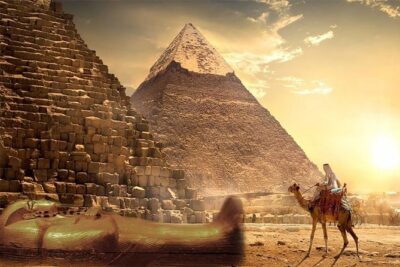
The final major stop is the Giza Plateau, home to the pyramids of Khufu, Khafre, and Menkaure. This is the part most people picture before arriving in Egypt, and it can feel almost unreal when the stones finally fill your view.
The Great Pyramid of Khufu is the largest of the three and the only surviving monument from the traditional Seven Wonders of the Ancient World. Your guide will explain the basic history and purpose of the pyramid, but the main experience is physical: standing near the enormous stone blocks and taking in how much ground the structure occupies.
Khafre’s pyramid is slightly smaller, though its position and remaining cap of original limestone can make it appear taller. That surviving casing near the top helps you imagine how smoother and brighter the pyramids once looked.
Menkaure is the smallest of the three main pyramids. The contrast is useful. Instead of seeing one repeated monument, you see a royal complex with different sizes, positions, and construction choices.
The tour includes a panoramic viewpoint where you can photograph all three pyramids together. This is one of the most useful photo stops because the monuments are spread across the plateau, and the broad view puts their relationship into focus.
The Sphinx is more than a photo stop

You then walk down toward the Great Sphinx, the human-headed, lion-bodied statue associated with King Khafre. The Sphinx is positioned at the foot of the pyramid area, so it works naturally as the final monument before lunch.
Your guide can explain the standard interpretation of the pharaoh’s head and lion’s body, while also noting that the statue’s full meaning remains debated. I like this part of the visit because it gives you a change of scale. After the massive geometric pyramids, you are looking at a single carved figure with a face, body, and symbolic purpose.
Allow time for photographs, but do not let the photo routine replace the explanation. Guides such as Hadeer, Omar, Hesham, and Nada have been praised for helping with pictures while still giving visitors room to explore. That can be especially useful at Giza, where the best angle is not always the first one you see.
A few more Cairo & Giza trips worth putting side by side
- From Hurghada: Cairo and Giza Highlights Full-Day Tour
★ 4.5 · 6,014 reviews - From Cairo: Pyramids of Giza, Sphinx, Saqqara & Memphis Tour
★ 4.7 · 3,110 reviews - Cairo 8 Hour Private Tour of Pyramids, Egyptian Museum and Bazaar
★ 5.0 · 2,931 reviews - From Cairo: Half-Day Tour to Pyramids of Giza and the Sphinx
★ 4.6 · 2,891 reviews
What the private format changes

This is a private tour, so you are not tied to a large group’s slowest walker or fixed conversation. The driver takes you between the separate sites in an air-conditioned vehicle, and the guide stays with your party.
That matters because Saqqara, Dahshur, and Giza are not one compact archaeological site. You need road transfers between them, and the car gives you a place to cool down between walks. Several guides and drivers have been praised for being on time, courteous, and flexible, while one pickup was late but communicated clearly. I would confirm the pickup details and keep your phone available on the morning of the tour.
The guide is a major part of the value. Names praised in the supplied feedback include Hazem, Hadeer, Nada, Anna, Christine, Fatima, Mustafa, Tamer, and Miriam. The strongest pattern is not one particular personality, but the service itself: clear historical explanations, answers to questions, help with photos, and occasional changes to the order when a family needed a different pace.
English guiding and transport are included. Arabic, English, French, German, and Spanish are listed as available languages, but the information also says Spanish, German, and French guiding may cost extra. Check the language option before paying if you do not want an English guide.
Lunch and the rhythm of seven hours

Lunch at a local restaurant is included after the pyramid visits. This is a practical feature, not just a bonus. After walking around exposed sites, sitting down for a freshly cooked meal gives you a proper pause before returning to your hotel.
The exact restaurant and menu are not specified. Several people described the food as authentic or pleasant, and one lunch location had a rooftop view of the pyramids. Treat the rooftop as a possible feature rather than a guaranteed part of every departure.
Seven hours is enough to cover the listed sites, but it is not a leisurely archaeological study day. You will get an overview of each place, with some time for photos and independent looking, yet extended interior visits or a very slow pace may require choices.
A private guide can often help you decide what matters most. If the inside of a pyramid is your priority, say so early. If you are traveling with a child, an older relative, or anyone recovering from illness, ask for more rest time and accept that you may not see every interior space.
The real value at $70 per person

At $70 per person, this is strong value if you want the full pyramid circuit in one day. The price includes hotel pickup and drop-off, an air-conditioned vehicle, a private English guide, entry fees, and lunch. Paying separately for transport, admissions, guiding, and food would make a self-arranged day less simple, even if it might look cheaper at first.
The value is highest for first-time visitors with limited time in Cairo. You get the major Giza sights plus the less familiar monuments at Saqqara and Dahshur, and you do not need to work out the order of sites or negotiate transport between them.
The price is less compelling if you want a slow, specialist archaeology visit. Seven hours and several sites mean the day favors breadth over close study. You are paying for a well-organized overview, not an unhurried excavation-style experience.
The free cancellation up to 24 hours before the tour and reserve-now, pay-later option also reduce the risk when your Cairo plans may change. Pickup is from your hotel lobby, so be ready there at the agreed time.
Heat, walking, and pyramid interiors

The biggest practical issue is the sun. A June review described conditions severe enough to risk heat illness, and the tour involves walking at open-air sites. Water is essential. One person suggested receiving a bottle at the start, but you should not rely on that being automatic.
Bring:
- Water and a refill if possible
- A hat, scarf, and sun protection
- Comfortable shoes with a firm sole
- A small fan if you visit in hot weather
- Egyptian pound change for toilets, including possible 20-pound charges
- A phone or camera with enough battery for photos
The interior routes can be more demanding than the exterior sightseeing. The Red Pyramid has a long passage, and other pyramid entries may involve steep or cramped sections. If you are claustrophobic, have breathing problems, weak knees, or simply dislike tight spaces, ask your guide what is involved before entering.
Families can still enjoy the tour. A guide named Christine was praised for helping a family traveling with a two-year-old and an older mother, and another guide adjusted the day when a teenager became ill. Those examples show the benefit of a private format, but they do not remove the heat or walking. Plan around the least mobile person in your group.
Who will enjoy this Cairo pyramid day

I would choose this tour if you want to see the key pyramid sites around Cairo without arranging several separate visits. It suits first-time visitors, couples, families, photographers, and anyone who prefers a private guide to a large coach group.
It is also a good fit if you care about context. Saqqara and Dahshur explain how pyramid building developed, while Giza provides the famous monuments. The three locations work better together than as isolated attractions.
I would hesitate if you want to spend most of the day inside one pyramid, avoid all walking, or visit only during the hottest part of summer. In that case, a shorter Giza visit may be kinder to your legs and attention span.
The guide can make a real difference. Hazem was praised for his historical detail and humor, Hadeer for warm explanations and practical help, Anna for an easygoing approach, and Nada for allowing a relaxed pace. You cannot usually select a specific guide, so book this for the structure and coverage first, with the guide’s personality as an important bonus.
Should you book it?
Book this tour if you want Saqqara, Dahshur, and Giza in one organized day, especially if you have limited time in Cairo and value hotel transfers, a private car, entry fees, lunch, and a guide.
The strongest reason to choose it is the range. You see the Step Pyramid, the Bent and Red Pyramids, the three Giza pyramids, the panoramic viewpoint, and the Sphinx. The main caution is the pace and physical effort. Bring water, protect yourself from the sun, wear proper shoes, and be selective about entering cramped pyramid passages.
At $70 per person, I consider it a sensible buy for a first Cairo visit, provided you want a broad, active day rather than a slow specialist tour.
FAQ
How long does the tour last?
The tour lasts seven hours.
What sites are included?
You visit Saqqara, Dahshur, and Giza. The listed sights include Saqqara’s Step Pyramid, Dahshur’s Bent Pyramid and Red Pyramid, the three main pyramids at Giza, the Great Sphinx, and a panoramic viewpoint.
Is hotel pickup included?
Yes. Hotel pickup and drop-off are included, and you should wait in the hotel lobby for your guide.
Is this a private tour?
Yes. The experience is described as a private guided tour with private transportation.
Is transportation air-conditioned?
Yes. Transport is provided in an air-conditioned vehicle.
Is lunch included?
Yes. Lunch at a local restaurant is included.
Are entrance fees included?
Yes. Entrance fees are included in the tour price.
Which guide language is included?
English guiding is included. Arabic, English, French, German, and Spanish are listed as available languages, with Spanish, German, and French guide options noted as possible add-ons.
Is entering a pyramid included?
The tour visits the pyramid sites, but entry into specific pyramid interiors is not clearly guaranteed. Interior visits may involve extra physical effort, including narrow passages and long internal routes.
Can I cancel the tour for a refund?
Yes. You can cancel up to 24 hours in advance for a full refund.
Can I reserve before paying?
Yes. The reserve-now, pay-later option lets you book without paying immediately.
Just added for Cairo & Giza
- Private Full-Day Tour to Giza Pyramids,Sphinx,Memphis, and Saqqara★ 5.0 · 626 reviews
- Best Two-Day Private Guided City Tour of Cairo Giza and Saqqara★ 5.0 · 85 reviews
- Giza Pyramids, Camel Ride, ATV and Shopping Tour w/ Dinner Cruise★ 5.0 · 280 reviews
- Round-Trip Airport Transfer in Cairo or Giza★ 4.5 · 94 reviews
- Luxury Private Egyptian Museum and Khan el Khalili Bazar Tour★ 5.0 · 123 reviews
- Overnight White Desert Safari Camping from Cairo★ 4.5 · 87 reviews
- Cairo Food Tour in local places & Egyptian Mint Tea★ 4.5 · 102 reviews
- White Desert & Bahariya oasis 3 days 2 nights Tour from Cairo★ 5.0 · 135 reviews
Pyramids & Sphinx Tours, compared.
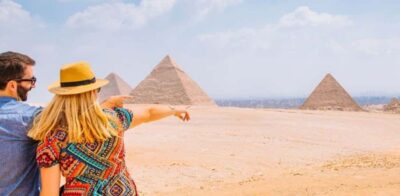
Pyramids & Great Sphinx Private Tour with Camel Ride
Read our review →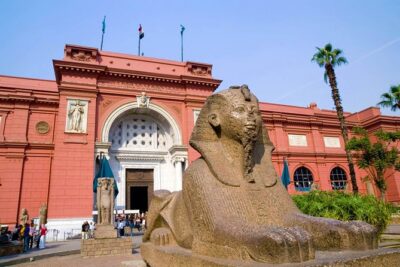
Tour to Giza Pyramids and The Egyptian Museum
Read our review →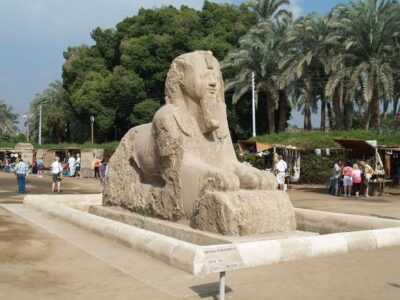
VIP All inclusive Best of the best Giza Pyramids,Sakkara,Memphis
Read our review →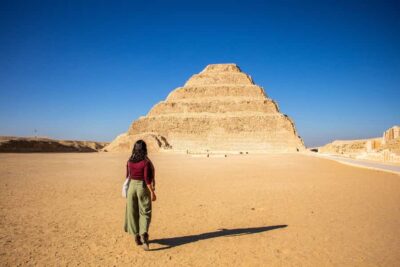
Pyramids of Giza, Sphinx, Saqqara & Memphis Tour
Read our review →
Cairo 8 Hour Private Tour of Pyramids, Egyptian Museum and Bazaar
Read our review →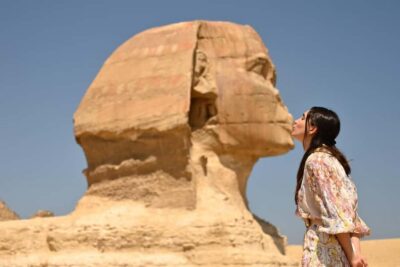
Half-Day Tour to Pyramids of Giza and the Sphinx
Read our review →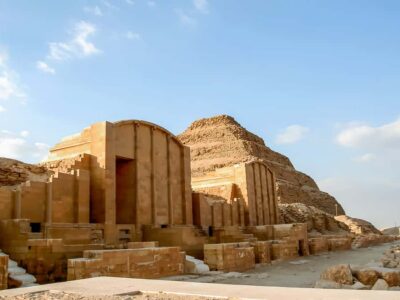
Private ViP all-inclusive Giza Pyramids,Sphinx,Inside Pyramid
Read our review →Browse the lists this tour appears in