
Reviewed · DESERT TOURS
From Swakopmund: Living Dunes Experience
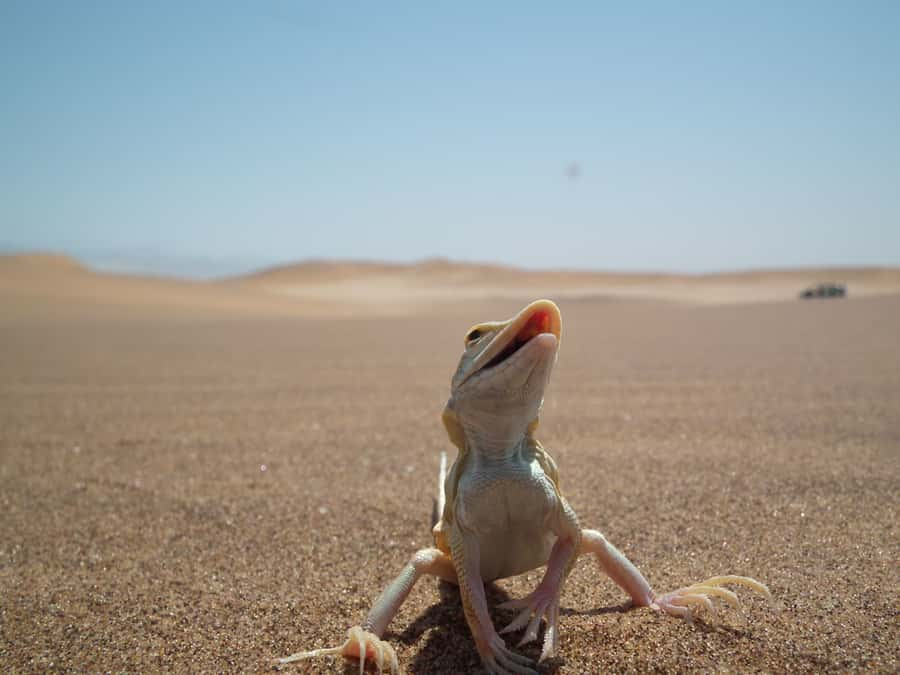
The most surprising thing about this tour is how much life hides in what first looks like bare sand. Your guide reads tiny tracks, spots movement, and explains how creatures such as the Palmato gecko and fog-basking tok-tokkie beetle survive in one of the world’s driest places.
I like two things right away: the tour puts small desert animals at the center, rather than repeating the usual big-game safari, and it gives you a close look at Namibia’s coastal dunes with plenty of photo chances. Guides including Johnny, Björn, and Immanuel are praised for clear explanations, humor, and careful handling of the animals.
The main consideration is physical. You walk on soft sand and search away from the vehicle, so this is not suitable for people with mobility impairments. Bring sunscreen and a hat, and remember that food is not included.
Key points to know before you book
- Search for the desert’s small five: You may look for Palmato geckos, sand-burrowing lizards, tok-tokkie beetles, sidewinder snakes, spiders, scorpions, and chameleons.
- Your guide makes the difference: Johnny, Björn, and Immanuel are among the guides associated with especially clear, funny, and careful explanations.
- The outing lasts 3.5 hours: Most of that time is spent walking, tracking, learning, and taking photographs, followed by a short dune drive.
- Pickup is simple: A driver collects you at your accommodation in Swakopmund and brings you back after the tour.
- The price is $61 per person: That includes transport, a guide, and still mineral water, making it a sensible half-day nature outing.
- Come prepared for sand and sun: Sunscreen and a hat are listed as essentials, while food is not provided.
Why the Namib’s smallest animals are worth your morning
Swakopmund is often treated as a base for larger adventures, but this experience asks you to slow down and look at ground level. The coastal dunes can seem empty at first. Your guide helps you see the marks, holes, tracks, and slight movements that reveal a working desert community.
The Namib is described as having more endemic species than any other desert in the world. That matters because many of the animals you search for are not simply tough creatures found everywhere. They are highly adapted to this particular dry coastal region.
I like the way the tour changes your idea of a desert. Instead of a silent stretch of sand, you begin to notice a place shaped by fog, heat, wind, and careful timing. The animals are small, but their survival tricks are memorable.
This is also a good choice if you have already seen large mammals elsewhere in Namibia. You are not chasing elephants or lions here. You are learning how a beetle gathers moisture, how a lizard moves across loose sand, or how a gecko copes with a harsh night.
More Desert Tours in Namibia
- Swakopmund: Desert Dunes Quad Biking with Optional Sandboard
★ 4.9 · 590 reviews - Walvis Bay: 4×4 Desert Excursion to Sandwich Harbour Bay
★ 4.8 · 446 reviews - Sandwich Harbour Adventure: Seals and Sandwich harbour dune drive
★ 5.0 · 165 reviews
Leaving Swakopmund for the coastal dune belt
Your driver picks you up at your accommodation in Swakopmund. The first drive is short, listed at about five minutes, before you reach the coastal dune belt just beyond the city.
That brief transfer keeps the outing efficient. You do not lose much of your 210 minutes sitting in a vehicle, and the change from town to open sand comes quickly. Along the way, you can begin looking at the scenery, but the important point is that your guide’s trained eye will find far more than you would on your own.
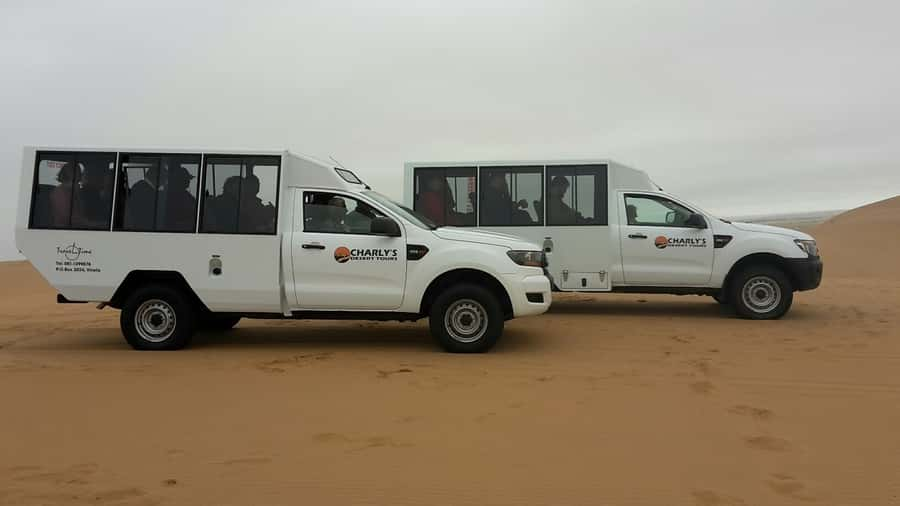
The vehicle used for the transfer is a Jeep or SUV. After the main walking portion, you have another vehicle ride of about 15 minutes back to Swakopmund. Hotel pickup and return transport are included, so you do not need to arrange a separate taxi to reach the dunes.
The tour does not present itself as a long wilderness expedition. It is a focused half-day outing from town, which makes it easy to fit around other activities in Swakopmund.
At the secret stop, the sand starts giving up its clues
The main stop lasts about three hours and 15 minutes. It includes a safety briefing, a guided walk, scenic views, a photo stop, and time to search for animals.
The safety briefing is useful because the tour takes place in a dry, exposed setting. You need to know how to move through the dunes, where to step, and how to behave around animals such as snakes and scorpions. The supplied information does not promise sightings of every species, so approach this as a search rather than a guaranteed checklist.
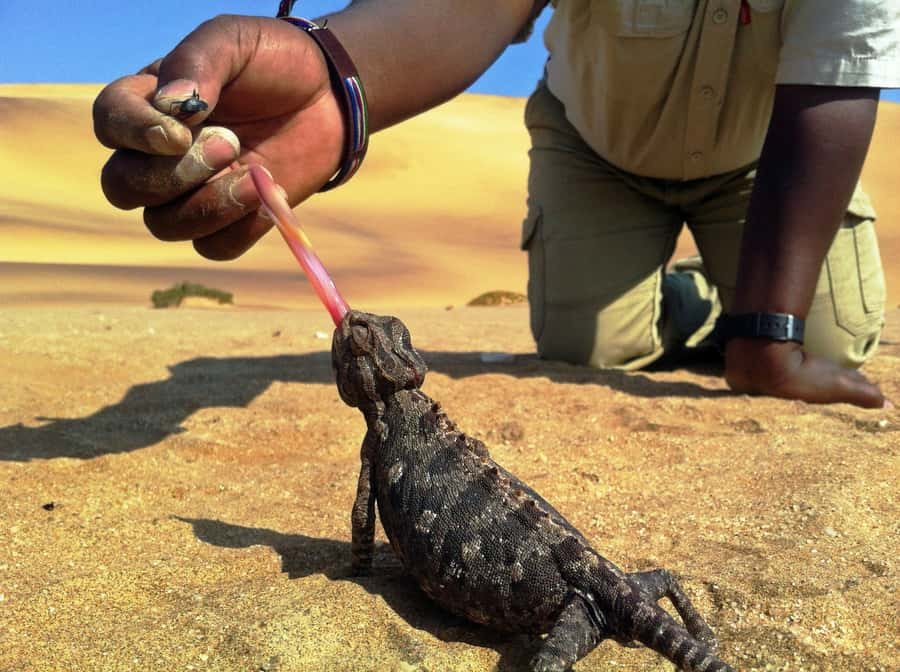
The guides look for tracks and subtle signs. You might see marks left by creatures crossing the sand, or notice an animal only after the guide points it out. This is where the tour earns its value. A self-guided walk could give you fine views, but it would be much less likely to reveal the animals beneath or around the sand.
You may search for Palmato geckos, sand-burrowing lizards, sidewinder snakes, spiders, scorpions, and chameleons. The famous tok-tokkie beetle is another target. Its ability to use coastal fog is one of the details that makes the desert lesson more than a simple animal-spotting exercise.
The phrase small five is useful here. It gives the outing a playful focus, but the real reward is understanding the animals rather than collecting names. You might see several of them, or fewer, depending on conditions and what your guide can locate.
What your guide adds to the experience
The guides are the heart of this tour. Johnny is described as skilled at finding the small five, explaining each animal carefully, treating the creatures gently, and adding humor to the outing. Björn is praised for explaining a great deal and showing a wide range of desert life.
Immanuel is also associated with a lively and capable style. His tour has been described as both funny and highly informative, with a clear sense of care for Namibia’s natural world. These details matter because searching for tiny animals can be frustrating without a guide who knows where to look and how to keep the group interested.
You should expect explanations in English. The quality of the outing depends heavily on the guide’s ability to spot movement and explain adaptations in plain terms. The available feedback is especially strong on this point, with repeated praise for clear information, humor, passion, and careful treatment of the animals.
I would choose this tour for someone who enjoys learning in the field. It is less suitable if you only want a fast scenic ride or a guaranteed parade of wildlife. The guide does not simply point at animals. The aim is to teach you how they function in a dry world.
More Desert Tours in Swakopmund & Walvis Bay
- Scenic Desert Tour by Bike
★ 5.0 · 165 reviews
The animals you may encounter in the dunes

The Palmato gecko is one of the signature targets. Your guide may explain how a small reptile manages life in a place where water is scarce and temperatures can shift sharply.
Sand-burrowing lizards show how movement itself can be an adaptation. Rather than treating the dune surface as a simple road, the tour encourages you to notice how animals use the loose sand to travel and hide.
The tok-tokkie beetle gives the tour one of its most distinctive stories. The beetle is known for fog-basking, a behavior linked to the coastal desert’s regular fog. That detail helps explain why this strip of Namibian sand can support life despite very little rainfall.
Sidewinder snakes, spiders, and scorpions add a different edge to the search. They are part of the desert system, but you should not expect a close encounter on your own terms. Your guide’s experience is important for locating and discussing them safely.
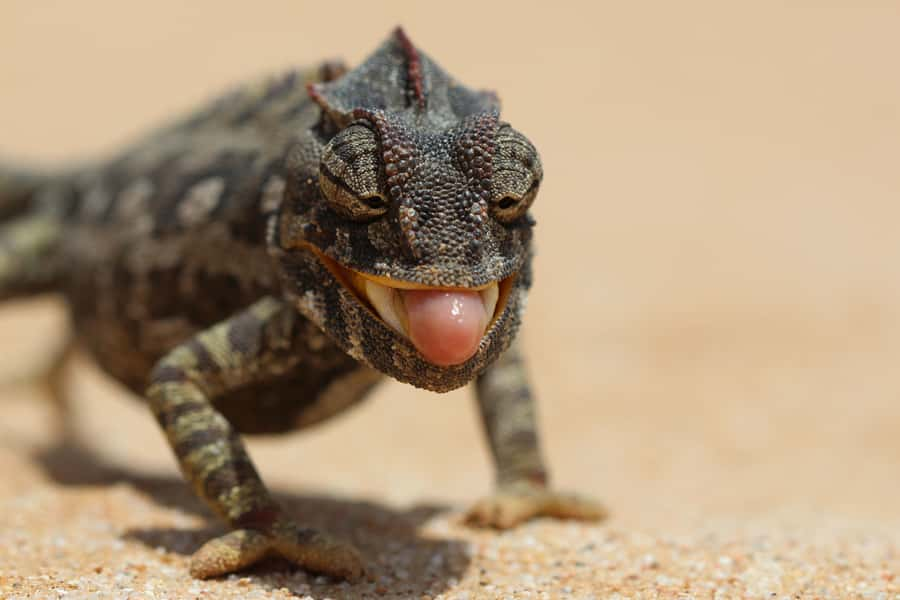
Chameleons round out the list. Again, sightings are not guaranteed for every animal. The pleasure is in watching the search unfold and learning what signs point to hidden life.
A walking tour with real photo opportunities
The dunes offer strong scenery even when an animal refuses to appear. You have broad views of shaped sand, open sky, and the coastal desert around Swakopmund.
The photo stop gives you a chance to capture more than animal portraits. Textures in the sand, tracks, curves in the dunes, and the contrast between a tiny creature and a huge setting can all make effective images.
Bring a camera or phone if you enjoy nature photography, but keep your expectations sensible. Small animals may move quickly, blend into the sand, or appear in awkward light. Your guide’s help is valuable because finding the subject is often harder than taking the picture.
The tour also rewards patience. You may spend time looking at an apparently empty patch before the guide identifies a track or movement. That slower pace is part of the experience, not wasted time.
The short dune drive at the end
After the wildlife search, the outing finishes with a short drive over the dunes. This adds movement after the walking section and gives you another way to experience the sand.
The supplied schedule describes this as a short dune drive rather than a long off-road adventure. Keep that distinction in mind. If your main goal is a high-speed vehicle ride, this may feel like a modest extra. If you want the wildlife search to end with a little more motion and scenery, it is a pleasant finish.
The drive also breaks up the return journey. You then travel back to Swakopmund by Jeep or SUV, with the return transfer taking about 15 minutes.
Is $61 a fair price?
At $61 per person, this is a reasonable price for a 210-minute guided outing. The cost covers hotel pickup and drop-off, an English-speaking guide, and still mineral water.
The value comes from the guide’s specialist skill. You are not paying only for a ride into the dunes. You are paying for someone who can identify tracks, find small reptiles and insects, explain desert adaptations, and manage encounters with creatures you may not want to approach without help.
It is also efficient. Since the tour begins and ends in Swakopmund, you do not need to commit to a full day or add a separate transport plan. The price is less attractive if you want a meal included, since food is not provided, but a half-day outing leaves you free to eat back in town.
For a visitor who has already booked larger wildlife trips, this makes a good contrast. For a family or group focused only on big animals, the value may depend on patience and curiosity. The creatures are small, and the experience rewards attention.
Who should book this experience?
I would recommend it to anyone interested in reptiles, insects, desert ecology, photography, or unusual wildlife. It suits you particularly well if you like guides who teach as they go and if you want an activity that feels specific to the Namib rather than interchangeable with a standard safari.
It is also a strong option for repeat visitors to Namibia. You may already understand the appeal of big animals. This tour shows the less obvious side of the country, where a beetle or gecko can be as interesting as a much larger species.
You should think twice if walking on soft sand is difficult for you. The activity is listed as unsuitable for people with mobility impairments, and the central section involves walking and searching in the dunes.
Bring sunscreen and a hat. Water is supplied, but food is not, so plan your meals around the 3.5-hour schedule.
Should you book the Living Dunes Experience?
Book it if you want a close look at the Namib’s small creatures and appreciate a guide who can turn tracks and sand into a story. The strongest reason to go is the combination of expert searching, clear explanations, careful handling of animals, and easy pickup from Swakopmund.
Skip it if you want a large-animal safari or a long dune-driving session. For the right audience, though, this is one of the more distinctive half-day activities in the area. It shows you that the desert is not empty at all. You simply need someone like Johnny, Björn, or Immanuel to point out where the life is hiding.
FAQ
How long does the Living Dunes Experience last?
The experience lasts 210 minutes, or about 3.5 hours.
Where does the tour begin and end?
Pickup and drop-off are provided at your accommodation in Swakopmund.
What animals might I see?
The search may include Palmato geckos, sand-burrowing lizards, tok-tokkie beetles, sidewinder snakes, spiders, scorpions, and chameleons. Sightings of specific animals are not guaranteed.
Is the tour offered in English?
Yes. The live tour guide speaks English.
What is included in the price?
Hotel pickup and drop-off, a guide, and still mineral water are included.
Is food provided?
No. Food is not included.
Is the tour suitable for people with mobility impairments?
No. The activity is listed as unsuitable for people with mobility impairments.
Just added for Swakopmund & Walvis Bay
- Sandwich Harbour Adventure: Seals and Sandwich harbour dune drive★ 5.0 · 165 reviews
- Scenic Desert Tour by Bike★ 5.0 · 165 reviews
- Sandwich Harbour 4×4 guided tours.Join us for an awe inspiring adventure.★ 5.0 · 154 reviews
- Sandwich Harbour Half-Day 4×4 Tour (5 hours) from Walvis Bay★ 5.0 · 169 reviews
- Walvis Bay: Pelican Point Kayaking Tour★ 4.7 · 171 reviews
- From Walvis Bay: Sandwich Harbour World Heritage Site★ 4.8 · 134 reviews
- Walvis Bay and Sandwich Harbour Tour★ 4.8 · 483 reviews
- Swakopmund: Desert Dunes Quad Biking with Optional Sandboard★ 4.9 · 590 reviews
Desert Tours, compared.

Agafay Desert Sunset, Camel Ride, and Dinner Show
Read our review →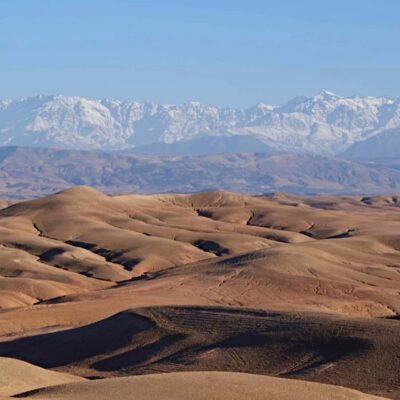
Agafay Desert Quad & Camel Rides with Dinner Show
Read our review →
Agafay Desert Quad Biking Tour with Dinner-Show
Read our review →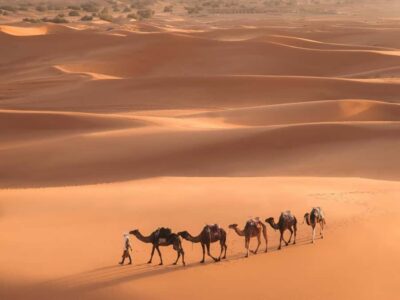
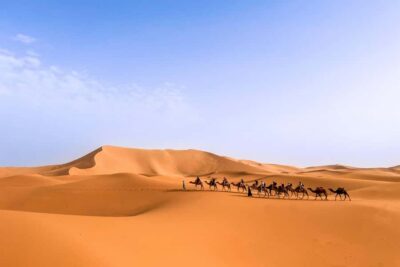
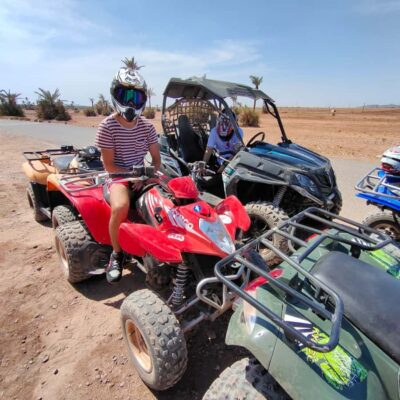
Quad Bike Tour to Palm Oasis and Jbilat Desert
Read our review →Agafay Desert Quad & Camel Rides with Dinner Show
Read our review →
Agafay Desert Quad, Camel Ride & Dinner Show
Read our review →Browse the lists this tour appears in