
Reviewed · PYRAMIDS & SPHINX TOURS
Giza: Sakkara, Memphis & Dahshur (Pyramid & Felucca Options)
The real prize here is not only the famous pyramids. It is seeing how Egyptian pyramid building developed, from Djoser’s Step Pyramid at Sakkara to the experimental Bent Pyramid and the Red Pyramid at Dahshur. Add Memphis and you get a compact lesson in Egypt’s first capitals, royal power, and ancient engineering.
I like the flexible design: you can book a short pyramid visit, combine Sakkara with Memphis, or spend a full day at all four sites. I also like the calm pace and personal care described by guests who toured with guides such as Shereen, Alaa, Mohamed Saleh, and Aya. The main drawback is that the $55 starting price does not cover every possible ticket or add-on, so you need to check exactly what your selected option includes.
Key points
- Sakkara explains the birth of the pyramid: See Djoser’s Step Pyramid and nearby tombs that reveal how royal burial changed.
- Dahshur is quieter and more adventurous: The Bent Pyramid and Red Pyramid offer a better sense of space than crowded Giza.
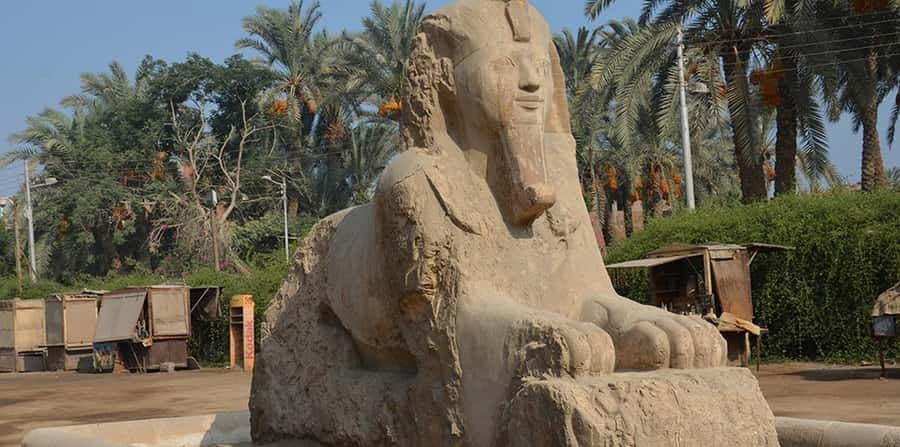
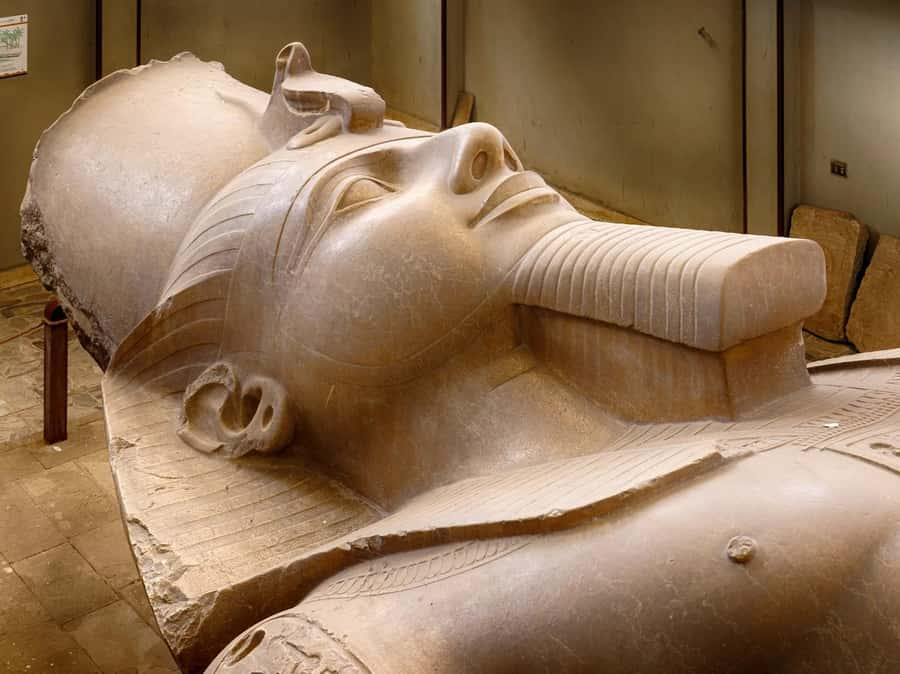
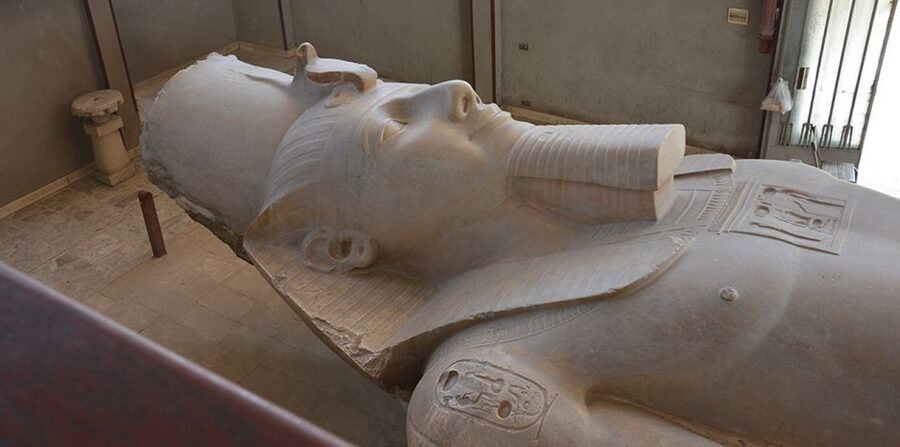
- Memphis adds the capital-city story: The colossal Ramses II statue and alabaster Sphinx bring Egypt’s earliest political center to life.
- You can build the day to suit your budget: Shared, private, VIP, lunch, tickets, Giza, camel rides, and felucca options vary by booking.
- The guides are a major strength: Clear English, patient explanations, photo help, and strong historical detail appear again and again.
- The full version ends gently: The VIP package includes all four sites, lunch, and a felucca ride on the Nile.
Why Sakkara and Dahshur deserve a day of their own
Giza gets the fame, but Sakkara and Dahshur give you the better lesson in how pyramids came to be. At Giza, you see the finished idea. At Sakkara and Dahshur, you see the experiments, changes, and clever solutions that led there.
This tour is built around that story. You can look at ancient monuments as isolated wonders, or you can connect them as steps in a long architectural process. A good guide makes the difference, explaining why one pyramid has a change in angle, why another has a smooth outer face, and how royal burial sites were tied to power and religion.
The experience is also flexible enough for different kinds of days. If you have limited time, choose the pyramids only. If you want the strongest historical sequence, combine Memphis, Sakkara, and Dahshur. If you want the full outing, add Giza and finish with a felucca ride.
More Nile Cruises in Cairo & Giza
- Cairo: Dinner Cruise on the Nile River with Entertainment
★ 4.2 · 2,190 reviews - Luxury Felucca on the Nile with Lunch
★ 5.0 · 994 reviews - Cairo: Nile Dinner Cruise with Belly Dancer Show with Pickup
★ 4.4 · 835 reviews
Dahshur: Egypt’s bold pyramid experiments
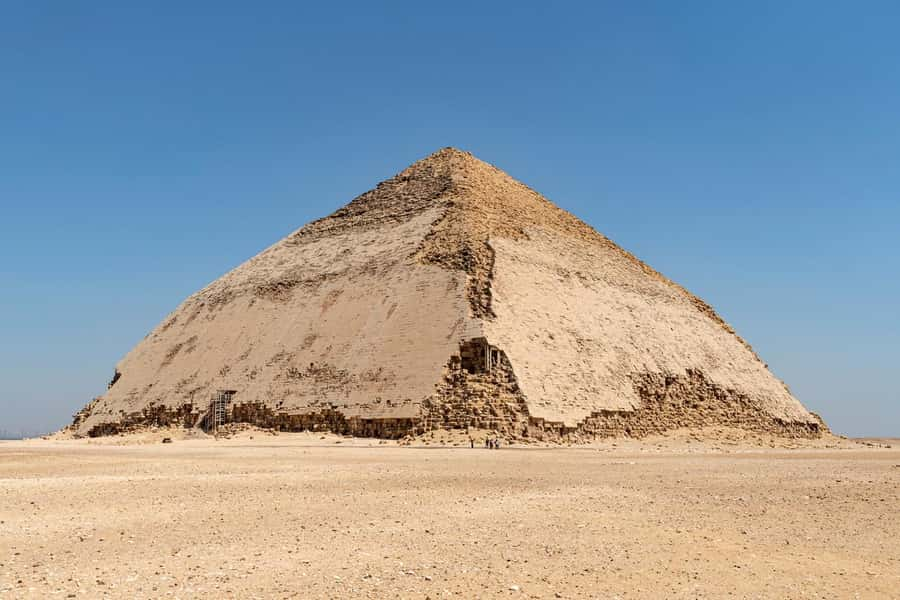
Dahshur usually gives you the most memorable sense of discovery. The Bent Pyramid has an unusual profile because its angle changes partway up. That visible kink is not a design flourish. It shows an important stage in the attempt to build a tall, smooth-sided pyramid.
You may also have the chance to enter the Bent Pyramid or the Red Pyramid, depending on the tickets included with your option. Be ready for a demanding climb and passage. One visitor described the interior of the Bent Pyramid as extremely hard work and advised coming with good knees and a reasonable level of fitness.
The Red Pyramid is one of Egypt’s earliest true pyramids, with straight, smooth sides. It is shorter and wider than the Great Pyramid, and the interior access can feel more manageable than Giza’s most famous monument, though it is still not an easy walk. You should not treat either interior as a casual stroll.
Dahshur’s open setting is part of its appeal. You have more room to look, take photographs, and think about the engineering without the same crowd pressure found around Giza. That does not mean you will have the site entirely to yourself, but the experience can feel calmer.
Your guide may explain the trial-and-error process behind these monuments. That makes Dahshur more than a photo stop. You can see ancient builders working out the problems of weight, height, angles, and stability in stone.
Sakkara and the Step Pyramid of Djoser
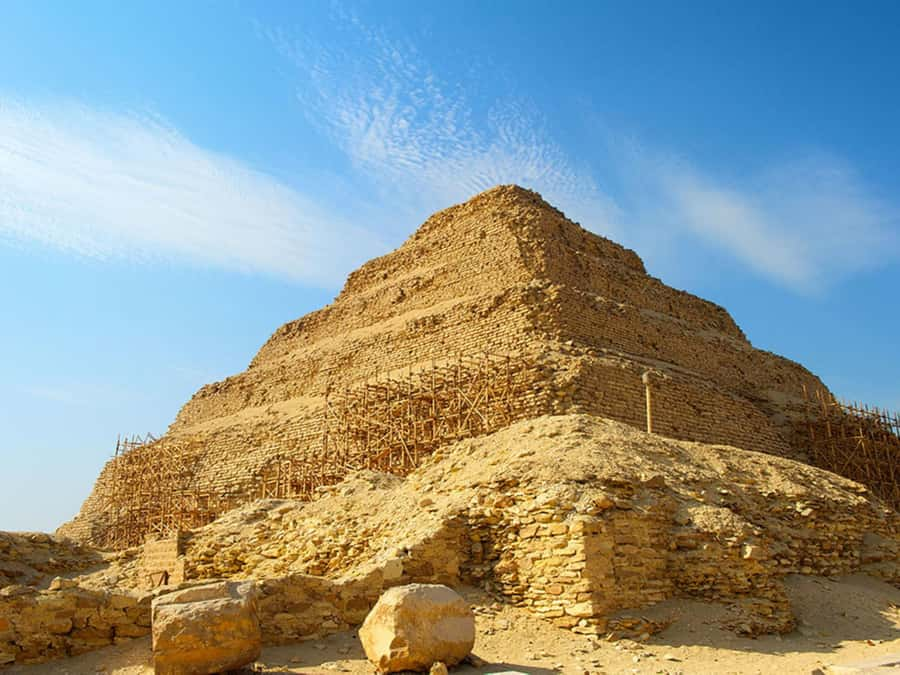
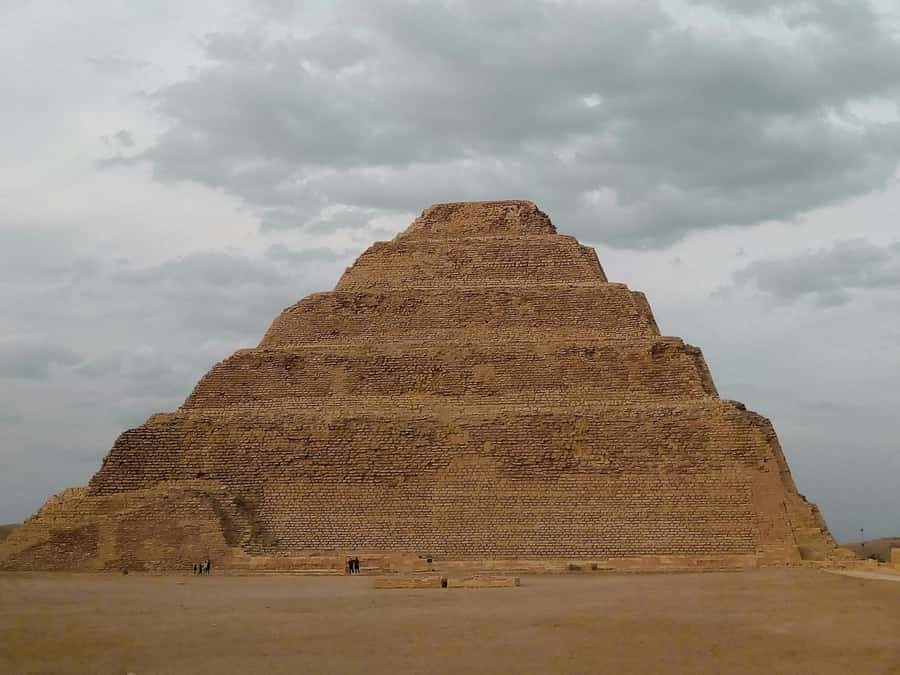
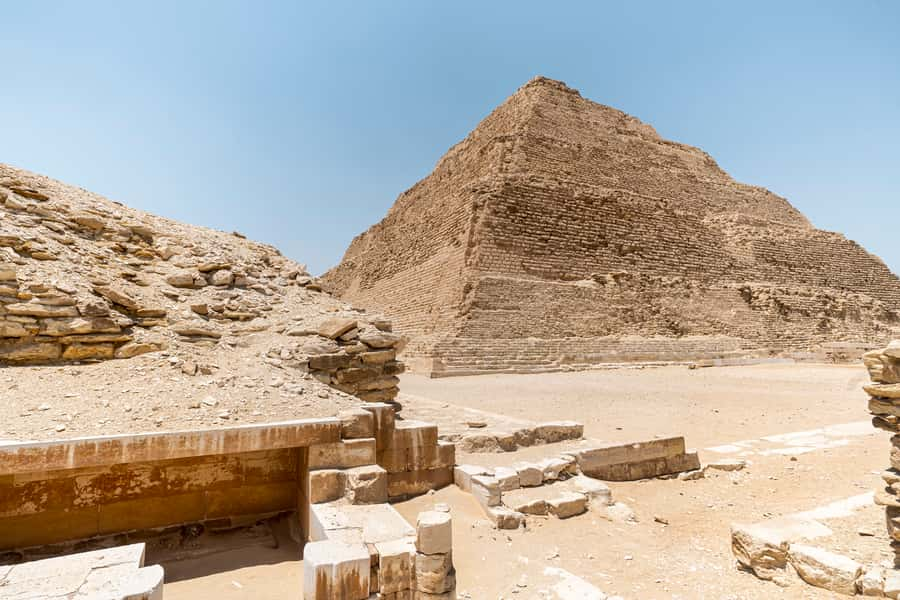
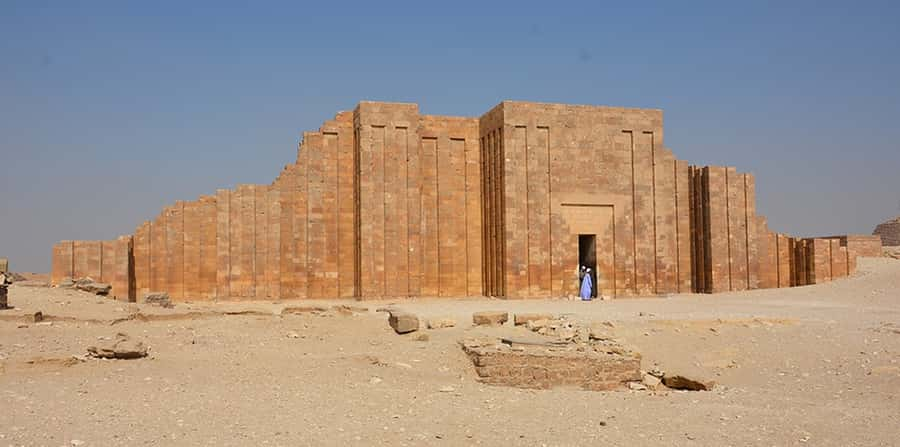
Sakkara is the intellectual heart of the day. The Step Pyramid of Djoser is widely described as the world’s first pyramid, but its importance goes beyond that simple label. It is a stack of rising levels, a bold move away from earlier flat-topped royal tombs.
The monument gives you a clear sense of architectural change. Instead of seeing a perfect pyramid appear from nowhere, you can understand it as an idea being developed. Your guide will connect the pyramid to the larger burial complex and explain the role of the surrounding structures.
Sakkara also contains tombs with painted scenes and hieroglyphs. These details can bring ancient daily life closer than the huge pyramids do. You might see images tied to farming, offerings, rituals, and work, giving you a look at what Egyptians wanted to preserve for the next world.
Allow about an hour and a half here on the standard full-site schedule. That is useful time, but the area contains enough to reward a slower visit. If you care about wall paintings and tomb decoration, ask your guide early how much time you can spend inside.
Sakkara was a favorite stop for several reasons. It combines a major monument with smaller, more human details, and it often feels less pressured than Giza. Guides such as Mohamed Saleh and Esraa have been praised for explaining tomb scenes carefully, answering questions, and leaving enough time for photographs and quiet looking.
There can also be extra ticketed areas at Sakkara. Check your booking choice so you know which entrances are covered. The base price may not include every interior or special monument.
Memphis and the first capital of Egypt
Memphis changes the focus from pyramid engineering to government and royal power. The city was founded more than 5,000 years ago and served as Egypt’s first capital. Today, you see a smaller archaeological area rather than a complete ancient city, but the surviving pieces are striking.
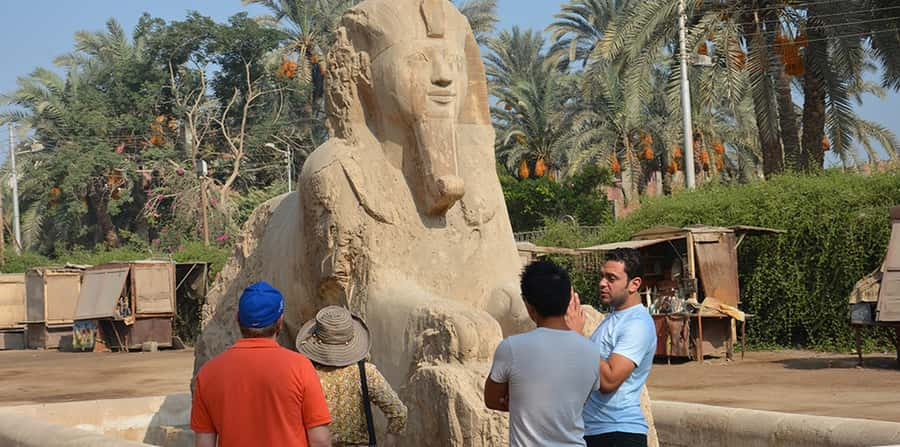
The colossal limestone statue of Ramses II is the main draw. Its size gives you a direct sense of how rulers used sculpture to present themselves as powerful, permanent figures. The alabaster Sphinx adds another royal image, though it is much smaller than the Great Sphinx at Giza.
A guide is particularly useful here because the remaining monuments need context. Without explanation, Memphis can seem like a short museum stop. With a strong guide, it becomes part of the larger story: the capital that organized a unified kingdom, supported monumental building, and linked political power with divine kingship.
The scheduled visit is about an hour. That is enough for the principal sights, but do not expect a full day of ruins. Memphis works best as one piece of the sequence rather than the sole reason to book the tour.
More pyramid and Sphinx mornings you can book:
- Cairo: Pyramids & Great Sphinx Private Tour with Camel Ride
★ 4.9 · 6,335 reviews - Tour to Giza Pyramids and The Egyptian Museum
★ 5.0 · 6,016 reviews - VIP All inclusive Best of the best Giza Pyramids,Sakkara,Memphis
★ 5.0 · 3,164 reviews - From Cairo: Pyramids of Giza, Sphinx, Saqqara & Memphis Tour
★ 4.7 · 3,110 reviews
Giza adds the famous finale, or the famous beginning
Some versions include the Giza Pyramids, while others focus only on Memphis, Sakkara, and Dahshur. Confirm this before booking. The Giza option covers the Great Pyramid of Khufu, the pyramids of Khafre and Menkaure, and the Great Sphinx.
The scale is overwhelming, but Giza is also the busiest part of the experience. One person who visited both areas preferred Dahshur’s Red and Bent Pyramids because the quieter setting allowed more time inside, while Giza involved more waiting. That is useful advice: Giza is essential if you want the classic Egyptian image, but it may not be the most relaxed stop.
If you have already visited Giza, the Sakkara, Memphis, and Dahshur combination may be the smarter choice. If this is your first time in Egypt, adding Giza gives you the complete range, from the world-famous monuments to the earlier and less crowded sites.
Camel rides, horse rides, and a professional photographer can be added in some private packages. These extras may suit you if photographs are a priority, but they are not necessary to understand the monuments.
The VIP felucca finish
The VIP private option covers Giza, Memphis, Sakkara, and Dahshur, then ends with a felucca ride on the Nile. Lunch is included in this version as well.
That closing boat ride changes the rhythm of the day. After several hours of stone, sun, walking, and explanations, sitting on the river gives you a quieter way to finish. It is best understood as a relaxed ending, not as another historical sight.
The felucca is included only with the VIP package. It is not part of the standard shared tour or ordinary private tour unless the booking clearly says so. If the boat ride is important to you, confirm it before paying.
Shared, private, and language choices
The shared tour is the budget option and uses an English-speaking guide. It includes selected entry tickets, transportation, bottled water, and hotel pickup and drop-off from Cairo or Giza, but lunch is not included.
The group may be smaller than a large coach tour. One booking described a group of four in a small van, while another became almost private with only three people. Group size can vary, so do not assume you will receive a private car, but the format appears suited to people who want company without a huge bus.
The private tour gives you more control over timing, questions, photo stops, and optional visits. Private guides can be arranged in English, Italian, Spanish, French, German, and other languages as paid add-ons. You need to specify your preferred language when booking.
Private options can include lunch as an add-on. They may also be expanded with Cairo sites such as Ibn Tulun Mosque, Al-Azhar Mosque, Gayer-Anderson Museum, Muizz Street, the Coptic and Islamic districts, and the Cave Church. These additions create a much longer city day, so use them only if you are comfortable with a packed schedule.
Shopping stops at a papyrus gallery, oils factory, bazaar, cotton store, or carpet school may be offered. They are optional and can be skipped. Tell your guide clearly if you would rather spend that time at the monuments.
Guides, transport, and the practical rhythm
The strongest part of this experience is the guiding. Shereen is repeatedly praised for warmth, clear explanations, photo ideas, and patient pacing. Alaa is noted for good English and detailed answers. Mohamed Saleh is praised for explaining tomb paintings and hieroglyphs, while Aya is described as attentive and willing to adapt the day.
Those names do not guarantee who you will receive. The useful point is the style of service to expect: guides explain the plan, answer questions, help with photographs, and often wait while you explore interiors. Several people also noted calm, careful drivers and smooth hotel pickups.
Transport is by air-conditioned vehicle, though one person found the air conditioning weaker than expected. Egypt’s heat makes that worth remembering. Bring water, sunglasses, a hat, sunscreen, and comfortable clothing. Bottled water is provided, but drinks beyond that are not included.
Pickup is from your hotel in Cairo or Giza. Be ready at the lobby or main entrance at least ten minutes early. If the vehicle cannot reach your hotel, you will be given a nearby meeting point. You should check WhatsApp or email for the car photo, driver details, and final meeting instructions.
The standard full route can take roughly six to eight hours, depending on traffic, site conditions, and how many places you select. Shorter options last about three hours. Traffic can affect the order and length of stops, so keep important evening plans flexible.
This is not a good fit for wheelchair users or people with significant mobility limits. Uneven ground, heat, walking, and pyramid interiors can be demanding. The Bent Pyramid and Red Pyramid require particular caution because of steep or confined passages.
Is the $55 price good value?
At $55 per person, the starting price is appealing, especially for a shared tour with transport, a guide, selected entry tickets, and hotel pickup. The value is strongest if you want several sites in one day and do not want to arrange taxis between widely separated locations.
The price needs careful reading. Some choices include only Giza. Some include Sakkara, Memphis, and Dahshur. Lunch is generally extra on private tours, and the felucca belongs only to the VIP package. Interior tickets and special entrances may also vary.
I would compare the exact package rather than choosing by the headline price. A cheaper option can be fine if you only want the main sights. A private or VIP package costs more, but the extra control, language choice, lunch, and boat ride may be worth it for a special occasion or a small group.
Free cancellation up to 24 hours before the start and reserve-now-pay-later terms make the booking less risky. Airport transfers are not included, though they can be arranged for an additional fee.
Who should book this experience?
I would choose this tour if you want Egypt’s pyramid story rather than only the standard postcard stop. It suits first-time visitors who want Giza plus the earlier monuments, and it is especially good for anyone who has already seen Giza and wants a quieter, more detailed day.
The private version makes sense for families, couples, or small groups with strong preferences about language, food, photographs, or pace. The shared option suits budget-conscious visitors who are comfortable in English and do not need every extra ticket.
You should think twice if you dislike long drives, heat, uneven ground, or confined pyramid passages. You should also skip the VIP upgrade unless you genuinely want the felucca and full four-site day.
Should you book it?
Yes, if you want a flexible introduction to Egypt’s early capitals and pyramid building. I especially recommend the Memphis, Sakkara, and Dahshur combination for its balance of major monuments, tomb art, royal sculpture, and quieter open spaces.
Choose the full VIP version when you want Giza, lunch, and a Nile sail in one long day. Choose the shared tour when value matters most. Before booking, confirm the exact sites, entrance tickets, lunch, language, and felucca terms. That small check prevents the only real disappointment in an otherwise well-planned experience.
FAQ
How much does the tour cost?
The advertised starting price is $55 per person. The final cost depends on the sites, tickets, lunch, private or shared format, language, and optional activities you select.
How long does the experience last?
Options range from about three to eight hours. The full route can take most of a day, while a pyramids-only choice is shorter.
Which sites can I visit?
Depending on your selected option, you can visit Giza, Memphis, Sakkara, and Dahshur. Some choices include one site, while others combine two, three, or all four.
Is lunch included?
Lunch is included with the VIP private tour. It can be added to private tours, while the shared tour does not include lunch.
Is the felucca ride included?
The felucca ride is included only with the VIP private option.
What languages are available?
Shared tours are guided in English. Private tours can be arranged in English, Italian, Spanish, French, and German, with other languages available as paid add-ons.
Does the tour include hotel pickup?
Yes. Pickup and drop-off are available from hotels in Cairo or Giza. If a hotel cannot be reached directly, you will receive a nearby accessible meeting point.
Are all entrance tickets included?
Tickets depend on the option you book. Check the exact package because some interior entrances and additional ticketed sites may cost extra.
Is the tour suitable for wheelchair users?
No. The experience is not suitable for wheelchair users or people with mobility impairments. Pyramid interiors, uneven ground, heat, and walking can be demanding.
Just added for Cairo & Giza
- Private Full-Day Tour to Giza Pyramids,Sphinx,Memphis, and Saqqara★ 5.0 · 626 reviews
- Best Two-Day Private Guided City Tour of Cairo Giza and Saqqara★ 5.0 · 85 reviews
- Giza Pyramids, Camel Ride, ATV and Shopping Tour w/ Dinner Cruise★ 5.0 · 280 reviews
- Round-Trip Airport Transfer in Cairo or Giza★ 4.5 · 94 reviews
- Luxury Private Egyptian Museum and Khan el Khalili Bazar Tour★ 5.0 · 123 reviews
- Overnight White Desert Safari Camping from Cairo★ 4.5 · 87 reviews
- Cairo Food Tour in local places & Egyptian Mint Tea★ 4.5 · 102 reviews
- White Desert & Bahariya oasis 3 days 2 nights Tour from Cairo★ 5.0 · 135 reviews
Pyramids & Sphinx Tours, compared.
Pyramids & Great Sphinx Private Tour with Camel Ride
Read our review →
Tour to Giza Pyramids and The Egyptian Museum
Read our review →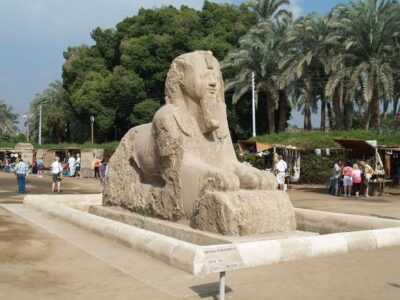
VIP All inclusive Best of the best Giza Pyramids,Sakkara,Memphis
Read our review →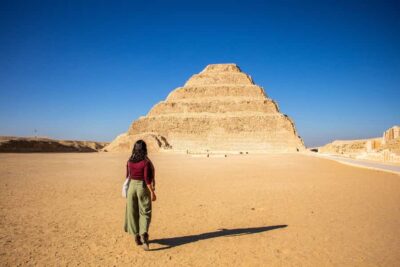
Pyramids of Giza, Sphinx, Saqqara & Memphis Tour
Read our review →
Cairo 8 Hour Private Tour of Pyramids, Egyptian Museum and Bazaar
Read our review →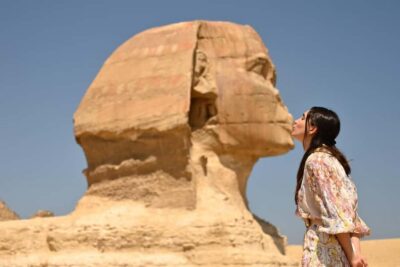
Half-Day Tour to Pyramids of Giza and the Sphinx
Read our review →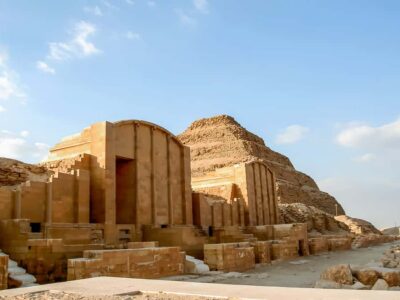
Private ViP all-inclusive Giza Pyramids,Sphinx,Inside Pyramid
Read our review →Browse the lists this tour appears in