
Reviewed · BIKE & E-BIKE TOURS
Marrakech: Cultural Bicycle Tour with Pastry and Tea
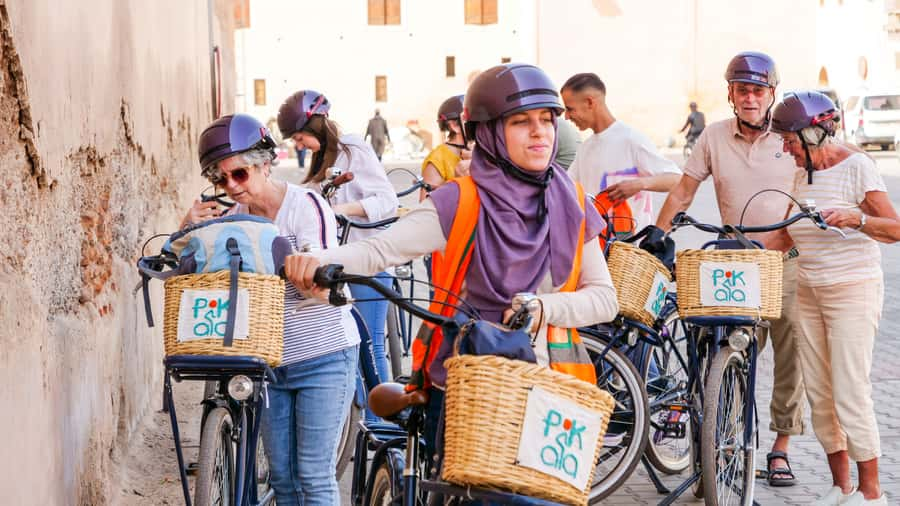
Marrakech reveals itself differently from a bicycle. You slip through narrow lanes, pass donkeys and mopeds, stop at a working bakery, and learn why bread matters in Moroccan homes. Then the route opens into modern Gueliz and Hivernage, where wide roads and smart hotels show another side of the city. The bakery and zellige workshop give you real contact with daily work, while the hammam visit explains a social custom you could easily miss.
I like the small-group feel and young local guides, many of whom bring warmth and a strong sense of pride to their city. I also like the value: $34 covers the bike, water, fruit, local stops, and Moroccan pastries with tea or juice. The catch is traffic. You need to be a confident cyclist, especially during the first hour in crowded lanes shared with mopeds, carts, donkeys, and pedestrians.
Five things to know before you pedal away

- Bread is part of the culture: Watch loaves bake in a clay oven and learn about the neighborhood bakery as a daily service, not just a food stop.
- The zellige workshop is hands-on: See Moroccan mosaic tile craftsmanship up close and understand why these patterns appear in palaces and mosques.
- The route crosses two Marrakechs: Ride from the old medina and souks to the broad boulevards of Gueliz and Hivernage.
- Traffic requires confidence: The cycling is generally gentle and flat, but busy streets and narrow alleys demand attention.
- The social mission adds value: Pikala Bikes trains Moroccan youth as guides and supports local businesses and community work.
Why this bicycle tour feels different
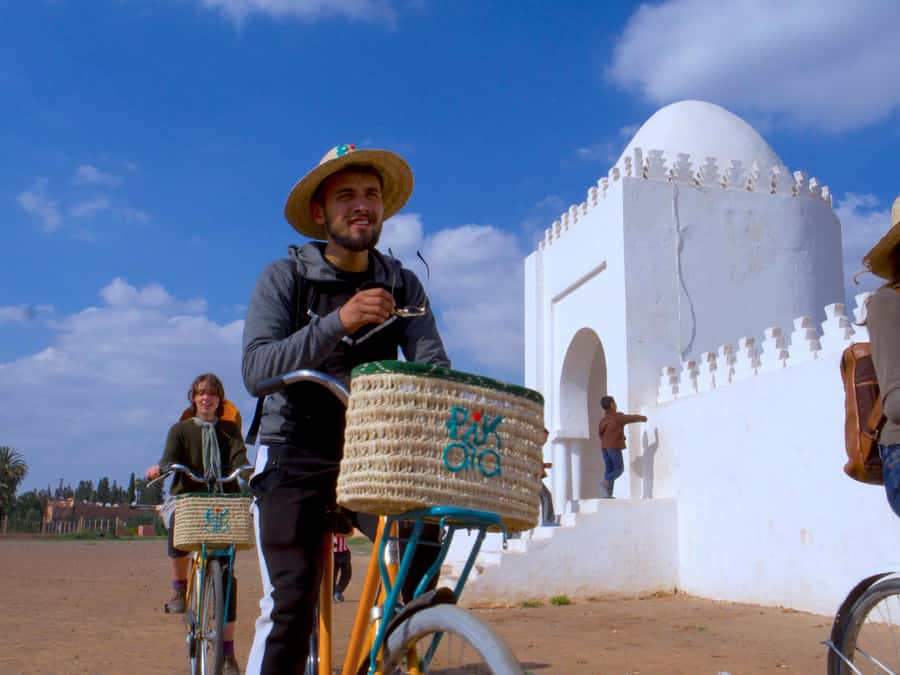
Many city tours show you major monuments from the outside. This one spends much of its time explaining how Marrakech works. You see where bread is baked, how tiles are shaped, how the hammam fits into community life, and how the old city connects with the newer districts.
That makes the experience useful early in a stay. After three hours, you have a clearer sense of the medina, the souks, the Royal Palace area, Koutoubia, and the modern city beyond the walls. You also gain context for things you will notice later on foot.
Pikala Bikes trains Moroccan young people to lead these rides. Guides such as Ayoub, Rabab, Hamid, Sayid, Yassir, Yasmin, Kenza, and Khalil have been praised for being friendly, patient, and easy to understand. The exact guide depends on the departure, but you can expect the tour to be led in English or French.
The style is personal rather than academic. Guides explain history and religion, but they also talk about ordinary life. That balance is one of the strongest reasons to book.
More Bike Tours in Marrakech
- Marrakech: Bicycle Tour with a Local Guide
★ 4.7 · 495 reviews - Marrakech : Electric Bicycle City Tour
★ 4.8 · 363 reviews - Cycling Adventure in Marrakech
★ 5.0 · 289 reviews
Starting at Pikala Bikes and entering the medina
You begin at Pikala Bikes headquarters, where you receive a bicycle and get ready for the ride. The bikes have been described as sturdy, with comfortable saddles, though some riders find them a little heavy.
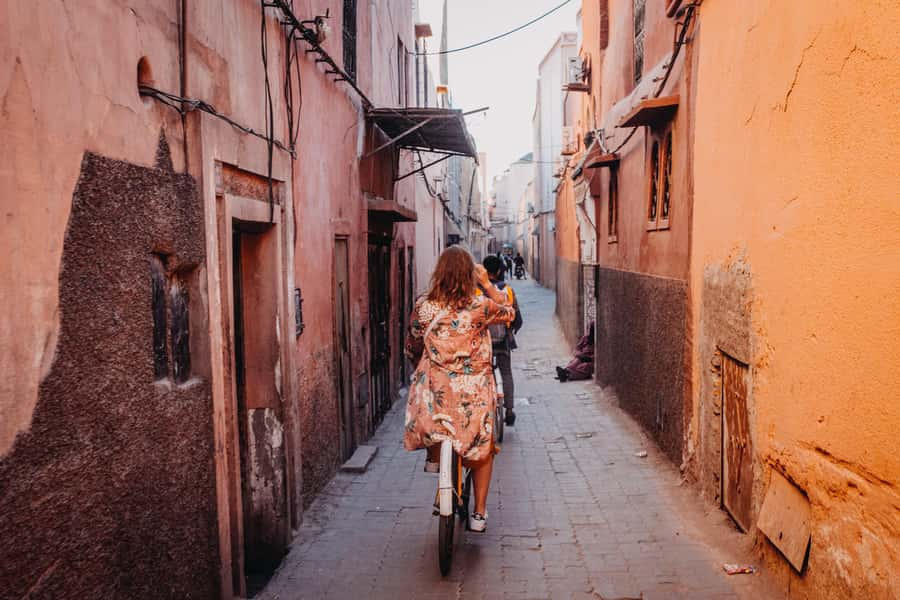
The opening section heads into the old city. At first, this can feel like a lot to process. The lanes are narrow, and you share them with pedestrians, scooters, donkey carts, and other cyclists. Marrakech traffic may look unplanned, but it has its own rhythm. Your guide leads the way and regularly checks that everyone is together.
This is not a fast cycling excursion. The route includes frequent stops, and the ride is largely flat. Still, you need to steer, brake, and make quick decisions in tight spaces. If you rarely ride a bike, this is not the right place to regain your confidence.
The reward is access. A bicycle lets you cover more ground than walking while still moving slowly enough to notice workshops, doorways, local commerce, and daily routines. You are not confined to the main tourist lanes.
Sidi Bel Abbas and the first look at local tradition
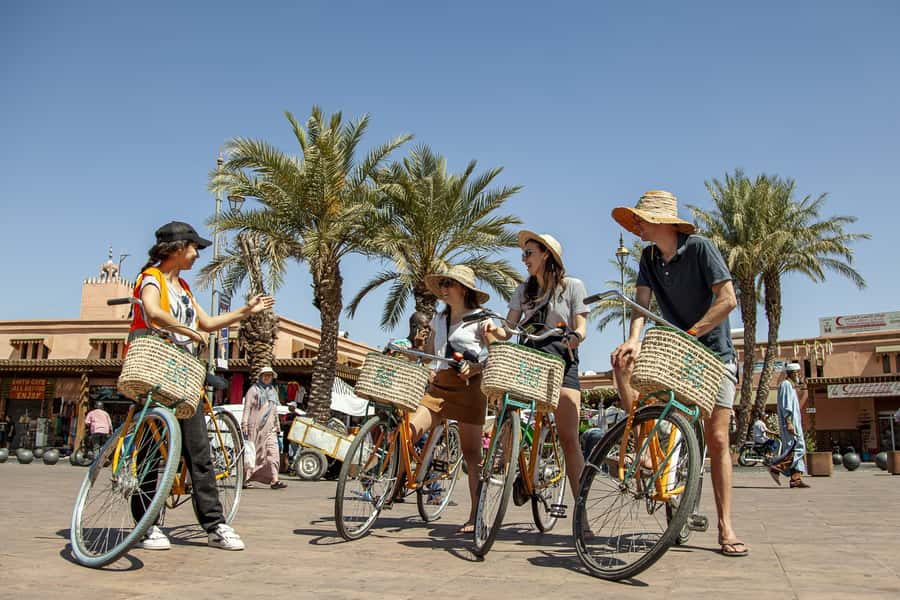
One early stop is the Zawiya of Sidi Bel Abbas. You have time for a photo stop and a short visit or pass-by, depending on how the group moves.
This part of the route helps place Marrakech’s religious and social life in context. The tour does not treat the old city as a row of photo backdrops. Your guide explains what you are seeing and connects the site to the wider traditions of the medina.
The stop is fairly short, so do not expect a long guided visit. Its value comes from the explanation and the way it introduces the character of the old city before the food and craft stops.
Inside a local bakery and the importance of bread

The bakery is one of the most useful stops. You step inside a local working bakery, watch bread bake in a clay oven, and taste fresh Moroccan bread.
Bread is not simply something picked up from a supermarket in this setting. Neighborhood ovens are tied to household routines and community life. Learning this gives you a better understanding of why bakeries appear throughout the medina and why bread has such a practical and cultural role.
The visit lasts around ten minutes, so it is brief but focused. You will not take part in a full baking class. Instead, you see the process, sample the result, and hear why this everyday food matters.
For me, this is exactly the sort of stop that justifies choosing a cultural bicycle tour over a standard city ride. It shows an ordinary business and makes it meaningful.
Same corner of the map, a completely different outing:
- Marrakech: Quad Bike Tour to Palm Oasis and Jbilat Desert
★ 4.8 · 11,831 reviews - Marrakesh: Majorelle Garden Entry Tickets
★ 4.5 · 9,651 reviews - Marrakech Quad Bike Experience: Desert and Palmeraie
★ 4.5 · 9,509 reviews - Marrakech: Balloon Flight, Berber Breakfast & Certificate
★ 4.8 · 8,164 reviews
Zellige tiles and the patience behind Moroccan design
The tile stop introduces zellige, Morocco’s famous geometric mosaic work. You meet artisans and see how the tiles are made, with patterns that have decorated Moroccan religious buildings and royal spaces for centuries.
The craft is easy to admire from a finished wall. It is more interesting when you see the work behind it. The workshop explains the skill and care required to create the small shaped pieces and fit them into repeating designs.
This visit also gives you something to look for during the rest of your trip. After seeing the process, the tilework in courtyards, fountains, mosques, and palaces becomes easier to read. You begin noticing pattern, color, symmetry, and the difference between a handmade surface and a mass-produced decoration.
The stop is another short visit, not a long studio session. You should treat it as an introduction to the craft rather than an opportunity to make your own tile.
Place des Ferblantiers and the rhythm of the souks
The ride continues through lesser-seen corners before reaching Place des Ferblantiers. This is a useful pause point, with time for photographs, free time, and scenic views along the way.
You get a break from the saddle and a chance to take in the movement around the square. The route also includes several brief pass-bys and photo stops at places that are not fully identified in advance. That keeps the ride from becoming a predictable list of major sights.
The trade-off is that the experience can feel less structured than a monument-by-monument walking tour. You may not know every stop beforehand, but the guide’s explanations give the places meaning as you go.
That approach works best if you enjoy discovery and local detail more than a checklist of famous buildings.
The Royal Palace gardens and the city’s royal center
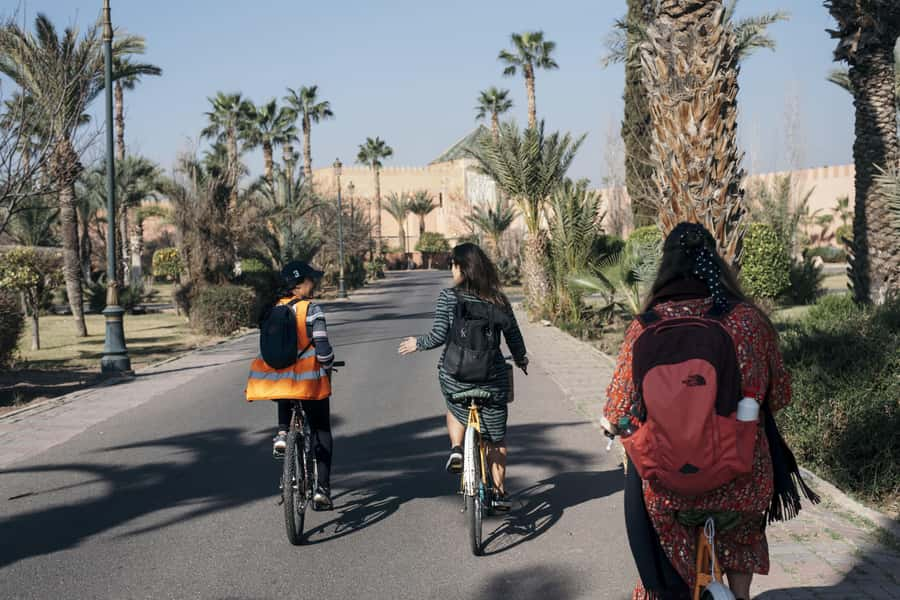
The route passes the public gardens around the Royal Palace, also known as Dar El-Makhzen. You admire the palace from outside and learn about its place in Morocco’s monarchy and political history.
You do not enter the palace. This is an exterior view from public space, so set your expectations accordingly. The stop is about location, scale, and context rather than an interior palace tour.
It is still worthwhile because the palace area helps explain the relationship between Marrakech’s old walls, royal institutions, gardens, and public streets. Your bicycle also lets you approach the area without arranging separate transport.
Hammam customs beyond the spa version
The traditional hammam stop explains the public bathhouse and its place in Moroccan life. You learn about the rituals, routines, and social role connected with hammams.
Many visitors encounter hammams only as booked spa treatments. This stop offers a broader view. It helps you understand the hammam as part of local community life, not merely a scrub and massage offered to visitors.
The visit is cultural rather than a bathing session. You should not expect to use the hammam during this tour. The point is to learn how the tradition works and why it remains important.
This is one of the tour’s best examples of practical cultural context. It gives you a way to understand something you might otherwise treat as just another decorative feature of Moroccan travel.
Koutoubia, the Church of the Holy Martyrs, and changing surroundings
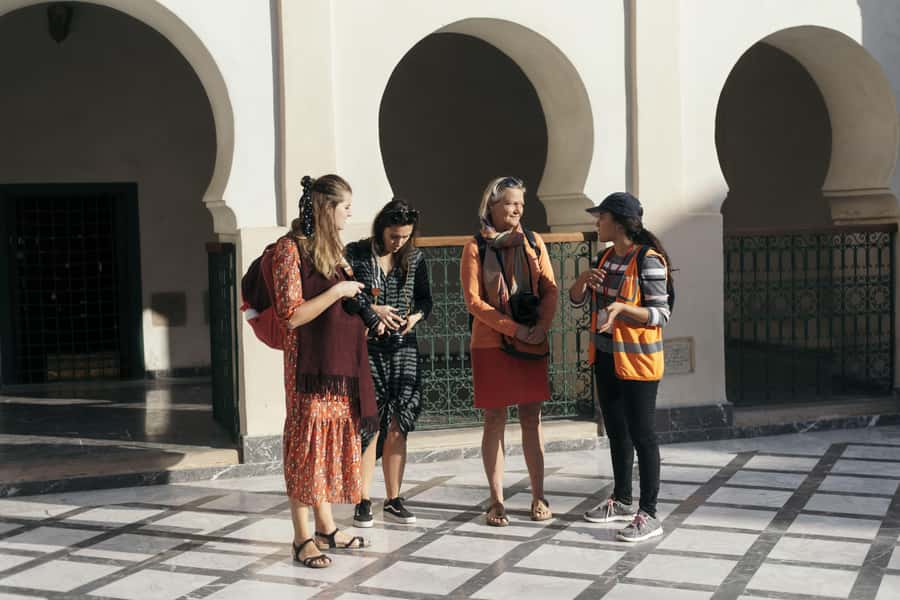
The route passes Koutoubia Mosque, one of Marrakech’s defining landmarks. You stop to take in the building and hear about its place in the city, but this is not an interior mosque visit.
The ride also includes the Church of the Holy Martyrs, with a photo stop and views along the way. Seeing a church on a route centered on Moroccan Muslim culture adds another layer to Marrakech’s religious and civic story.
The pace remains moderate, with the guide bringing the group together at crossings and checking behind for slower riders. Several people have found the traffic nerve-racking at first, especially when leaving the narrow souks. The guides’ attention helps, but it does not remove the need for you to ride carefully.
From the medina to Gueliz and Hivernage
One of the most useful parts of the experience is the change in scenery. After the old city, you cycle through modern Marrakech, including Gueliz and Hivernage.
Here, the streets are wider, and you see cafes, hotels, broad boulevards, and a more contemporary side of the city. The contrast is sharp. Within the same three-hour ride, you move from tight lanes and traditional workshops to districts shaped by modern commerce and tourism.
This section may feel intimidating at first because of cars and open-road traffic. One rider found the transition unsettling but soon felt comfortable. The guide controls the pace and brings the group across roads together, yet road awareness remains essential.
I like this comparison because it keeps Marrakech from being reduced to its old walls. The city is both historic and modern, and the bicycle makes that contrast visible in a single morning or afternoon.
Tea, pastries, and the final stop at Pikala Cafe
The tour ends at Pikala Cafe, where you have around twenty minutes for tea, coffee, local snacks, Moroccan pastries, and juice. Water and fruit are also included during the experience, along with suncream and entrance to the local stops.
The final cafe visit is more than a quick drink. It gives you time to sit down, talk with the guide, and ask questions that may not come up while riding. Moroccan pastries and mint drinks make a fitting finish after the traffic and narrow lanes.
The stop can also help you decide if you want to return to the cafe later. It is part of the Pikala project, so spending time there supports the same local operation connected with the cycling program.
Price, timing, and what you get for $34
At $34 per person, this is good value if you want more than a basic orientation ride. The price covers three hours, a bicycle, water, fruit, suncream, entry to the local stops, and drinks and pastries at the cafe.
You are also paying for access to working places that are not always simple to find independently. A private visit to a bakery, a tile workshop, and a public hammam can be difficult to arrange without local connections.
The experience usually runs about three hours, though one outing took closer to three and a half. Allow a little flexibility if you have a fixed lunch booking or another appointment.
Hotel pickup and drop-off are not included. You need to reach Pikala Bikes headquarters yourself. Free cancellation up to 24 hours before the activity and reserve-now, pay-later booking make it easier to fit into a changing schedule.
Clothing, age, and cycling ability
Wear casual clothing that lets you move freely. Long dresses and skirts can catch on the bicycle, so trousers or practical shorts are easier.
Bring a light layer if you are riding early or if the weather cools. One rider suggested carrying a jumper for a cloudy spell. Suncream is supplied, but comfortable clothing and water remain sensible choices.
The most important requirement is confidence on a bike. You do not need to race, and the route is not described as strenuous, but you must handle a bicycle around pedestrians, mopeds, carts, donkeys, and cars.
Families and older riders can enjoy it if they are comfortable cycling. A tandem was used successfully for a 72-year-old participant, but you should confirm that option with Pikala Bikes before booking because the available equipment is not specified for every departure.
Should you book this Marrakech bicycle tour?
Book it if you want to understand daily life as well as see landmarks. The bakery, zellige workshop, hammam explanation, and old-to-new city route give you a fuller picture than a standard sightseeing ride.
You should also book if you enjoy small groups, direct contact with local guides, and a little controlled chaos. Guides such as Hamid, Rabab, Sayid, and Yassir have been praised for kindness, clear explanations, and careful group handling.
Skip it if you are an uncertain cyclist or dislike traffic. The ride is gentle in pace, but the surroundings are not gentle all the time. For a confident rider, this is one of the better ways to cover Marrakech quickly while learning how the city functions.
FAQ
How long does the cultural bicycle tour last?
The tour lasts three hours, although one outing took about three and a half hours. Check the available start times when booking.
How much does the tour cost?
The listed price is $34 per person.
Where does the tour start and finish?
It starts and finishes at the Pikala Bikes headquarters.
Which languages are available?
The live guides speak English or French.
Is hotel pickup included?
No. Hotel pickup and drop-off are not included, so you need to reach Pikala Bikes yourself.
What food and drinks are included?
The experience includes water and fruit, plus juice and Moroccan pastries at Pikala Cafe. Local snacks, tea, and coffee are available at the cafe stop.
Do you enter the Royal Palace?
No. You pass the public gardens around Dar El-Makhzen and view the Royal Palace from outside.
Do you use the hammam?
The hammam stop explains its rituals, traditions, and social role. The activity does not state that you bathe there.
Do you need to be an experienced cyclist?
You need to be a confident cyclist and remain alert around mopeds, donkeys, carts, pedestrians, and other vehicles. The route is generally gentle and flat, but traffic in the medina can be challenging.
Just added for Marrakech
- Marrakech: Tailor-Made City Tour With Your Own Private Guide★ 4.9 · 236 reviews
- Marrakech palm grove: Sunset camel ride★ 4.8 · 194 reviews
- Sparkling Marrakech through the eyes of your local Guide★ 4.7 · 247 reviews
- Quad Bike Activity in Marrakech Palmeraie★ 4.2 · 123 reviews
- Marrakech: Historical Discovery Tour★ 4.1 · 87 reviews
- Marrakech: Palm Grove Horseback Riding Tour★ 4.6 · 163 reviews
- Moroccan Food Cooking Class with a Local Chef in Marrakech★ 4.7 · 90 reviews
- Marrakech: Babouch Making Workshop in the Medina★ 4.9 · 117 reviews
Bike & E-Bike Tours, compared.
Day Trip: Hell’s Gate Bike Ride & Lake Naivasha Boat Ride
Read our review →
Stellenbosch: Historical Bike Tour & Wine Tasting
Read our review →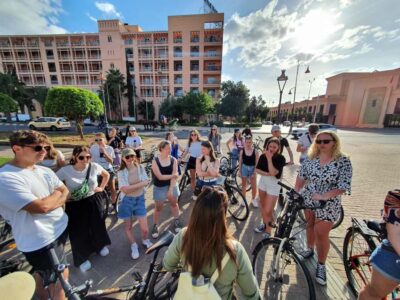
Guided City Cycling Tour – Culture, Colors & Charm
Read our review →
Browse the lists this tour appears in