Reviewed · MEDINA & SOUK TOURS
Marrakech: Colorful Medina Souks Guided Walking Tour
The best part of this tour is not simply seeing Marrakech’s famous market streets. It is getting past the obvious stalls and into the working lanes where shoes are made, thread is dyed, wood is carved, and shopkeepers carry on the daily business of the Medina. A local guide such as Mo, Ali, Ismail, or Yahya can give those narrow streets a useful order.
I like the way the walk combines practical shopping help with local stories. You learn how the souks are divided, how to bargain without making a mess of it, and which crafts are worth a closer look. I also like that the guides often take you to community bakeries, herbalists, women’s cooperatives, and artisan workshops rather than keeping you on the main shopping lanes.
The main consideration is that this is a three-hour walking tour through crowded, winding streets. You will spend time on your feet, and some stops are shops where you may feel encouraged to buy. The shared option may also be less flexible than a private tour, especially if you have a particular shopping list or mobility needs.
Key points at a glance
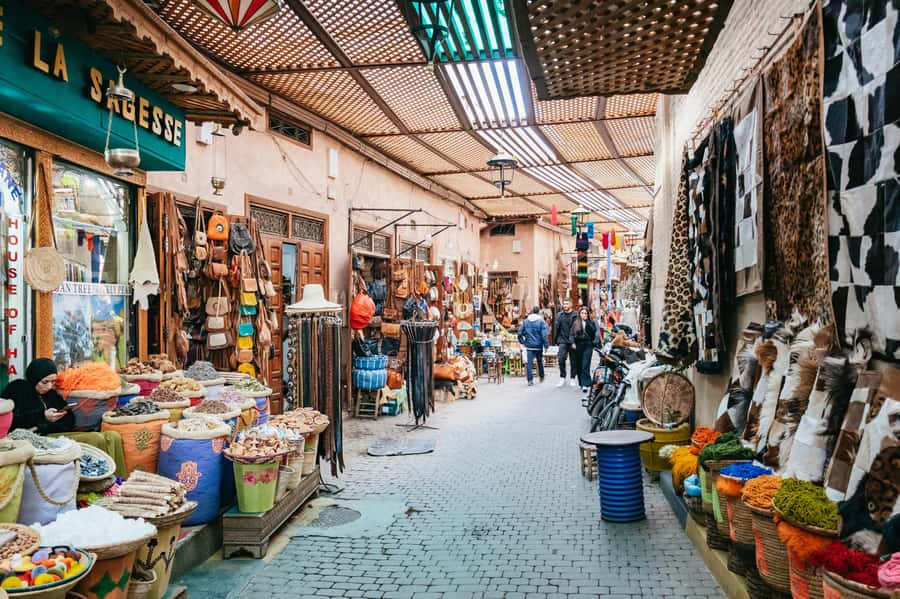
- See the craft quarters behind the main lanes: Visit areas for slippers, metalwork, woodwork, leather, thread, spices, pottery, jewelry, rugs, and more.
- Start at Jemaa el-Fnaa: Meet your guide near Café de France and use the city’s famous square as your entry point into the Medina.
- Learn to bargain with a local guide: Your guide can explain the custom and, in some cases, help you negotiate a fairer price.
- Choose the pace and format: Join a shared group or book a private walk with optional hotel or riad pickup.
- Use it early in your stay: The route can help you get your bearings before returning to the souks alone.
- Expect real walking: The itinerary includes several stops and about three hours in the Medina, with no food or drinks included.
Why a guide changes the Marrakech souk experience
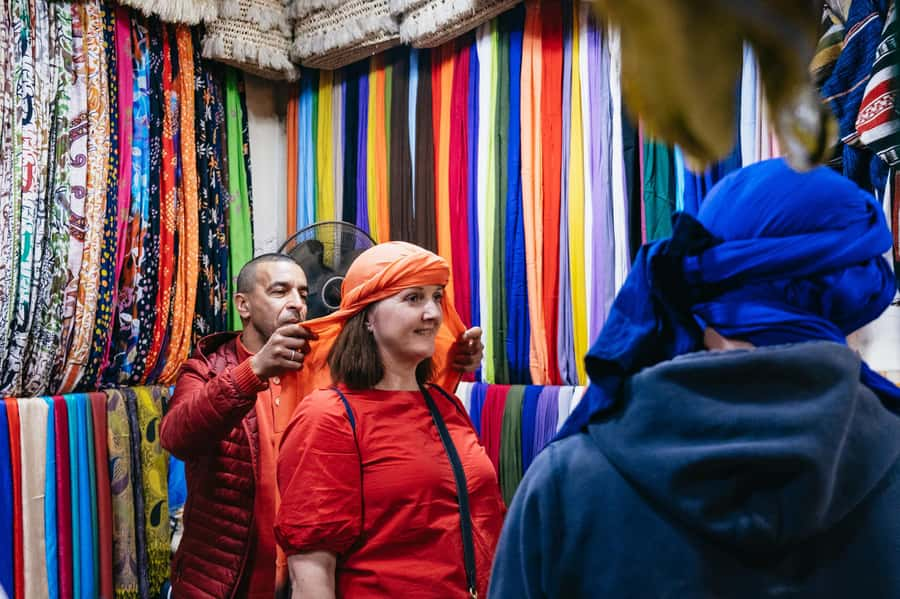
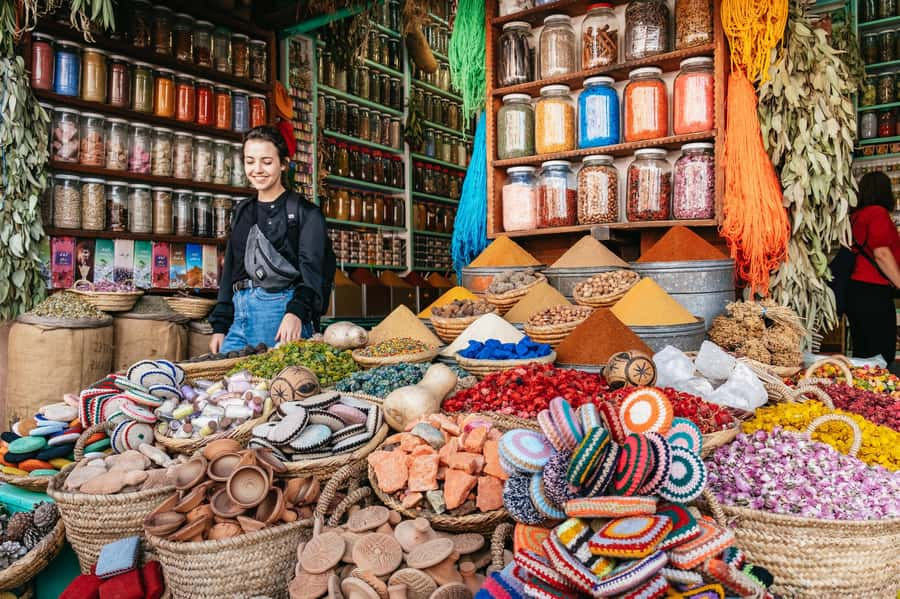
Marrakech’s Medina can look like one enormous market at first: colored slippers, brass lamps, woven bags, spices, rugs, and pottery all competing for your attention. Then you notice that the souks are arranged by trade and neighborhood. One lane may focus on leather goods, another on metalwork, another on wood, and another on food or household items.
That pattern is easy to miss when you are trying not to get lost. A guide helps you see the Medina as a working district rather than a giant souvenir shop. You can ask why a product is made in a certain way, how local people use it, and what separates handwork from mass-produced goods.
The strongest guides add a personal sense of place. Mo grew up in the Medina and uses stories, humor, and local knowledge to explain the streets. Ali is often praised for taking people into the working heart of the souks, while guides such as Ismail, Yahya, Abdel, Mohammed, and Youssef are noted for clear explanations and helpful recommendations.
Names matter less than the guide’s approach, of course, and assignments can change. Still, the pattern is clear: the experience works best when your guide treats the souks as home, not just as a route between shops.
More Medina & Souk Tours in Marrakech
- Marrakech: Bahia Palace, Saadian Tombs, Souk and Medina Tour
★ 4.7 · 4,974 reviews - Marrakech: Ben Youssef, Secret Garden, & Souks Walking Tour
★ 4.6 · 2,802 reviews - Marrakech: Saadian Tombs & Bahia Palace, Medina Guided Tour
★ 4.6 · 1,989 reviews
Café de France and Jemaa el-Fnaa: the right starting point
The meeting area is near Café de France, beside Jemaa el-Fnaa. This is a practical place to begin because the square gives you a broad reference point before the lanes close in around you.
The first part includes a short photo and orientation stop at Café de France, followed by about 20 minutes around Jemaa el-Fnaa. Your guide can explain how the square fits into Marrakech’s daily life and point out the routes leading into the Medina.
Jemaa el-Fnaa is a busy public space, so allow time to find the meeting point. One useful tip is to use Google Maps and arrive early, particularly if you are unfamiliar with the square. The exact meeting or pickup point depends on the option you book.
This opening section is brief, but it helps. Once you move into the souks, the lanes become narrower and the landmarks less obvious. Knowing the square and Café de France as your starting reference makes it easier to understand where you are later.
Souk Semmarine: the main shopping artery
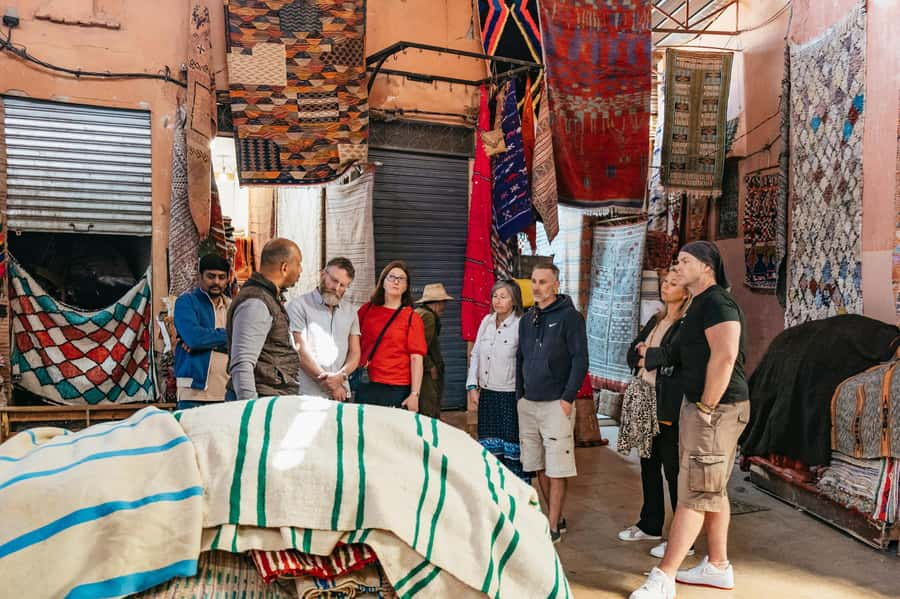
From the square, the walk continues into Souk Semmarine for roughly 30 minutes. This is one of the major market streets, with plenty of color, movement, and sales activity.
You may see hand-crafted slippers, kaftans, jewelry, pottery, woven goods, and other items commonly associated with Moroccan shopping. It is a good place to compare styles and prices, but it can also feel like the most tourist-focused part of the walk.
That is why the guide matters here. Instead of rushing through displays, you can ask about materials, production, and use. Your guide can also explain how bargaining works. In Morocco, the first price is usually part of a conversation, not the final word, but a good negotiation should remain friendly.
Do not treat bargaining as a battle. Ask the price, show interest without promising to buy, and take time to decide. If you are not interested, a polite no thank you and continued walking is usually more useful than prolonged eye contact or debate.
Rahba Kedima and the market’s older character

The next stop is Rahba Kedima, with about 15 minutes for a guided visit and walk. This area provides another look at the commercial structure of the Medina and gives your guide a chance to explain products and customs that may otherwise seem confusing.
Spices and herbal products are part of the shopping experience here, and several routes include a stop at an herbalist. You might be offered Moroccan tea or shown products such as argan oil and other skin or beauty items. This can be interesting, especially if you want to learn how these goods are presented and used.
Keep your buying head switched on. Personal expenses are not included, and a shop visit can turn into a sales pitch. You are free to look, ask questions, and leave without buying. If you do want something, compare prices and ask exactly what you are getting before paying.
The value of the stop is the explanation, not the promise that every product is a bargain. A guide can help you understand the difference between browsing and buying, but you still need to make your own decision.
More Medina & Souk Tours in Morocco
- Marrakech Monuments & Souks 3-Hour Tour
★ 3.8 · 1,540 reviews - Marrakech: Bahia Palace, Madrasa Ben Youssef and Medina Tour
★ 4.7 · 1,347 reviews - Marrakech: Madrassa Ben Youssef, Secret Garden & Medina Tour
★ 4.8 · 1,303 reviews - Marrakech: Palace, Museum, Madrasa & Medina Highlights Tour
★ 4.7 · 706 reviews
Souk Cherifia and the artisan lanes
Souk Cherifia receives about 20 minutes of guided attention. This section is useful for people who want more than a quick look at finished goods. The wider Medina includes small workshops and back streets where local makers produce or finish items sold in the souks.
You might see craftsmen working with metal, wood, leather, thread, or other materials. Specific visits can vary, but the experience often includes closer looks at how shoes are made, how thread is colored, or how traditional objects are shaped and finished.
These working areas are one of the best reasons to book a guided walk. On your own, you could easily pass a small doorway without realizing that it leads to a workshop. A guide can also help you behave appropriately around people at work. Pause, watch, and ask before taking photographs.
Several routes include a community bakery or a small tea break. One stop has been described as a 400-year-old bakery, while another includes time to sit with Moroccan tea at a women’s cooperative. The precise stops can differ, but the idea is valuable: the Medina is not only a place to shop. It is also a place where people work, eat, meet, and maintain old trades.
The Medina section: finding the less obvious corners
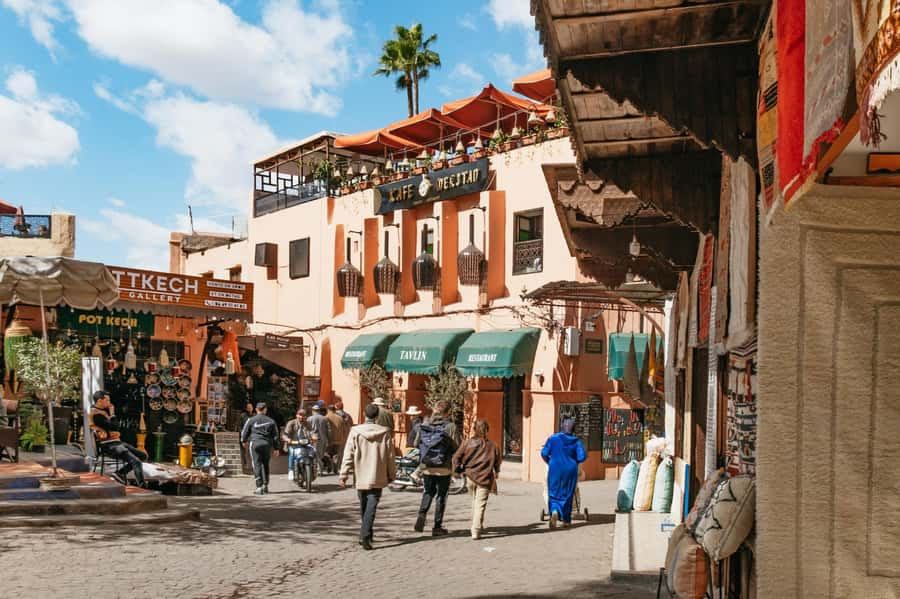
The longer Medina portion lasts about 30 minutes. This is where the walk can feel most useful if you are new to Marrakech.
A guide can lead you into smaller lanes that you might avoid on your own, especially when you do not know which turns lead to workshops and which simply lead to another sales area. People who have taken private walks with Ali, Ismail, or Ya Ya particularly value the chance to ask questions and adjust the route around their interests.
This section is also where the tour’s practical side comes through. You may stop at shops selling carpets, leather, bracelets, wooden boxes, bags, herbal products, or shoes. You may also get suggestions for restaurants or places to return to later.
Do not expect a museum-style tour. The Medina is a living commercial district, and the boundaries between sightseeing and shopping are blurred. If you are hoping for a walk with no shop visits at all, this may not be the right activity. If you want to understand what you are seeing and perhaps buy a few well-chosen items, the format makes sense.
What you can buy, and how to shop sensibly

The range of goods is broad:
- Hand-crafted slippers and leather items
- Traditional woodwork and wooden boxes
- Brass, iron, and bronze objects
- Jewelry and bracelets
- Kaftans and other clothing
- Carpets and woven products
- Spices, tea, and herbal goods
- Pottery and household pieces
A guide can help you recognize the different sections of the souks and may advise you during price discussions. Some guides have helped people bargain, while others have pointed them toward artisans whose work suits their interests.
Still, do not assume that a guide’s introduction guarantees the lowest price. You are paying for access, explanation, and confidence in the market, not a formal shopping guarantee. Take a photograph of an item if permitted, compare similar products, and ask about size, materials, care, and shipping before committing.
If you are buying a carpet, leather item, or oil, slow down. Ask what the item is made from and how it should be used. A little patience is worth more than trying to win every negotiation.
Shared group or private walk?
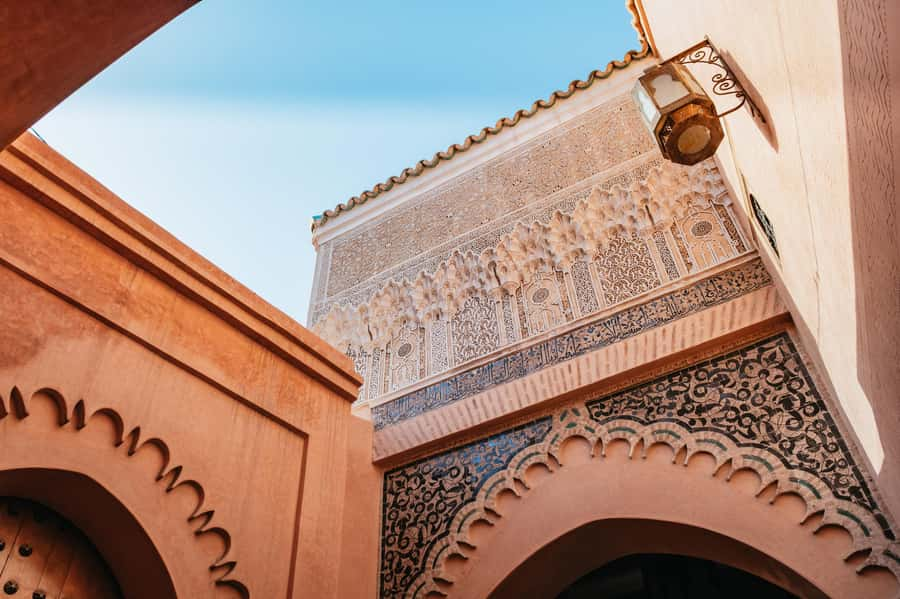
The shared group option costs less per person and gives you the social feel of walking with other visitors. It is a sensible choice if you are happy with a set route and want a low-cost introduction to the Medina.
The private option costs more in many tour arrangements, but the listed price for this activity is $20 per person, making the basic experience unusually accessible. Check the exact price shown for your chosen option, since private arrangements and pickup can differ.
Private tours make the most sense if you have specific interests. You might want to focus on carpets, metalwork, spices, photography, food-related sights, or artisan techniques. A private guide can also adapt the pace. One guest with a disability had the route adjusted so the walk remained comfortable, which is encouraging, though you should explain your needs when booking rather than assume every route will suit every person.
Private bookings can include hotel or riad pickup, with a guide meeting you in the lobby and transport in a private van. The shared version generally centers on the stated meeting point, so confirm the details before you set out.
Is three hours enough?
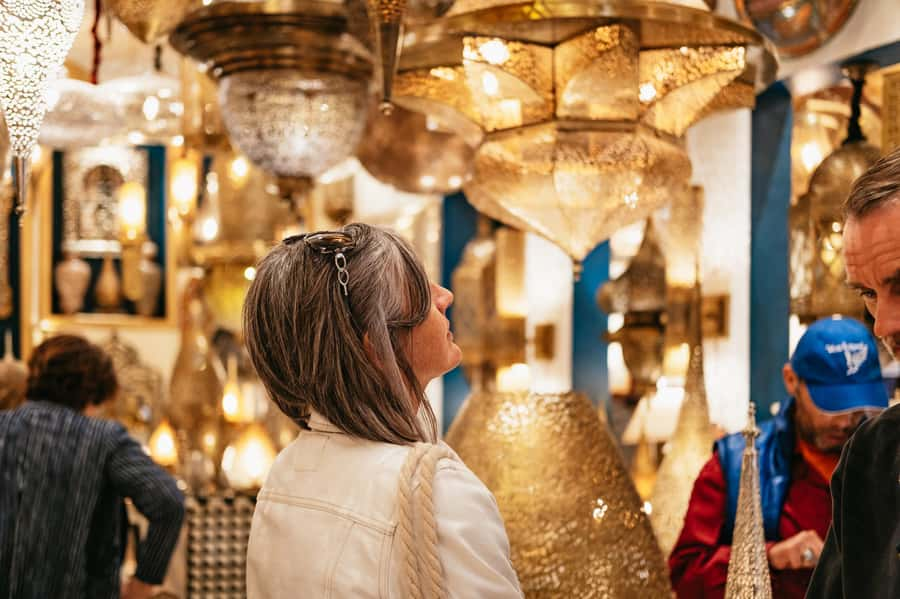
Three hours is long enough to get a useful introduction without turning the Medina into a full-day assignment. You will see the main entry areas, several souks, craft sections, and smaller lanes. You will also have time to ask questions and shop.
It is not long enough to examine every market or spend serious time at each workshop. The pace can also feel different depending on the group. A private walk may give you more room for stops, while a shared group needs to keep moving.
I think the timing works best on your first or second day in Marrakech. You learn the layout, pick up local advice, and gain confidence for later wandering. If you book it late in your stay, you may still enjoy the craft visits, but you will lose some of the practical benefit.
Wear comfortable shoes and expect uneven walking surfaces, tight lanes, and frequent stops. The activity does not include food or drinks, although a guide may arrange a tea stop or take you past food-related places as part of the route. Treat those as possible parts of the experience, not guaranteed inclusions.
Guide languages and the human side of the walk
Live guiding is available in English, French, German, Arabic, Italian, and Spanish. That range is useful in a market where small details and quick exchanges matter.
The strongest guides appear to combine facts with stories. Abdel has been praised for explaining how the souks are divided, while Yahya is noted for stopping for breaks and explaining spices, dyes, leather, and rugs. Hussein is described as speaking Spanish and English fluently, and other guides have been appreciated for humor, patience, and clear English.
You should still tell your guide what interests you at the start. Ask for more time at workshops if craft matters to you. Ask for photo stops if you care about images. Mention if you prefer fewer shopping visits. The more specific you are, the more useful a private tour can become.
Value at $20 per person
At $20 per person, this is good value if you want an orientation rather than simply a walk through shops. You are paying for three hours of local guidance, help with navigation, cultural context, and a chance to see working areas you might miss alone.
The value is strongest for first-time visitors. A guide can help you understand the souk system in one morning or afternoon, then you can return later with a better sense of direction. That can save time and reduce the stress of constantly wondering if you are going the right way.
The price does not cover food, drinks, or purchases. It also does not turn every shop visit into a guaranteed bargain. Think of it as a low-cost introduction to the Medina, with shopping as an optional part of the walk.
Free cancellation is available up to 24 hours before the start time, and you can reserve now and pay later. Those terms are useful if your Marrakech plans are still shifting.
Who should book this Medina walk?
I would choose this tour if you are visiting Marrakech for the first time, feel uncertain about the Medina, or want a local explanation of the crafts and shopping customs. It also suits people who enjoy meeting artisans and seeing how goods are made.
A private booking is the better choice if you have mobility concerns, a focused shopping list, or strong preferences about pace and stops. A shared group is fine if you want the basic route and the chance to meet other people.
I would skip it if you dislike markets, bargaining, or shop visits. You should also think twice if three hours of walking through narrow, busy lanes sounds tiring. This is not a quiet architecture tour or a palace visit. It is a practical look at Marrakech’s working Medina.
Final verdict: book it early if you want confidence
Book this tour early in your Marrakech stay if you want to understand the souks before exploring them alone. The best parts are the artisan lanes, the explanation of how each market section works, and the confidence you gain when bargaining or finding your way back.
For $20, the shared walk offers a lot. Pick private if you want a slower pace or a route shaped around carpets, spices, photography, crafts, or accessibility needs. Just arrive early at the meeting point, keep your expectations clear, and remember that browsing does not require buying.
FAQ
How long is the Marrakech souks walking tour?
The tour lasts three hours.
How much does the tour cost?
The listed price is $20 per person.
Where does the tour begin?
The walking tour meets at Jemaa el-Fnaa, with the meeting point near Café de France. The exact location may vary according to the option booked.
Can I book a private tour?
Yes. You can choose a shared group tour or a private group option.
Is hotel pickup available?
Hotel pickup is available if you select the relevant option. For private bookings, the guide can meet you in the lobby of your hotel or riad, with transport in a private van.
Which languages are available?
The live guide options include English, French, German, Arabic, Italian, and Spanish.
Are food and drinks included?
No. Personal expenses, food, and drinks are not included, although the route may include opportunities for Moroccan tea or visits connected with local food and herbal products.
Can I cancel the tour?
Yes. You can cancel up to 24 hours in advance for a full refund. You can also reserve now and pay later.
More Walking Tours in Morocco
- Marrakech: Souk by Night Medina Guided Walking Tour.
★ 4.3 · 166 reviews - Marrakech: 3-Hour Monuments, Souks & Old Medina Walking Tour
★ 4.7 · 133 reviews - Marrakech 3-Hour Walking Tour
★ 4.3 · 120 reviews - Marrakech: Uncover Hidden Gems on a Half-Day Walking Tour
★ 4.2 · 92 reviews
More Walking Tours in Marrakech
- Marrakech: Medina by Night Walking Tour with Moroccan Tea
★ 4.6 · 586 reviews - Marrakech: Medina Souks Guided Walking Tour
★ 4.5 · 381 reviews - Marrakech: Authentic Moroccan Food Walking Tour & Dinner
★ 4.8 · 261 reviews - Marrakech: Monuments, Souks and Medina Guided Walking Tour
★ 4.8 · 208 reviews
Just added for Marrakech
- Marrakech: Tailor-Made City Tour With Your Own Private Guide★ 4.9 · 236 reviews
- Marrakech palm grove: Sunset camel ride★ 4.8 · 194 reviews
- Sparkling Marrakech through the eyes of your local Guide★ 4.7 · 247 reviews
- Quad Bike Activity in Marrakech Palmeraie★ 4.2 · 123 reviews
- Marrakech: Historical Discovery Tour★ 4.1 · 87 reviews
- Marrakech: Palm Grove Horseback Riding Tour★ 4.6 · 163 reviews
- Moroccan Food Cooking Class with a Local Chef in Marrakech★ 4.7 · 90 reviews
- Marrakech: Babouch Making Workshop in the Medina★ 4.9 · 117 reviews
Medina & Souk Tours, compared.
Bahia Palace, Saadian Tombs, Souk and Medina Tour
Read our review →
Cairo 8 Hour Private Tour of Pyramids, Egyptian Museum and Bazaar
Read our review →
Ben Youssef, Secret Garden, & Souks Walking Tour
Read our review →
Saadian Tombs & Bahia Palace, Medina Guided Tour
Read our review →
Museum, Al Attarine Madrasa & Tannery and Medina Tour
Read our review →