
Reviewed · COOKING CLASSES
Marrakech: Traditional Moroccan Crepes & Bread Cooking Class
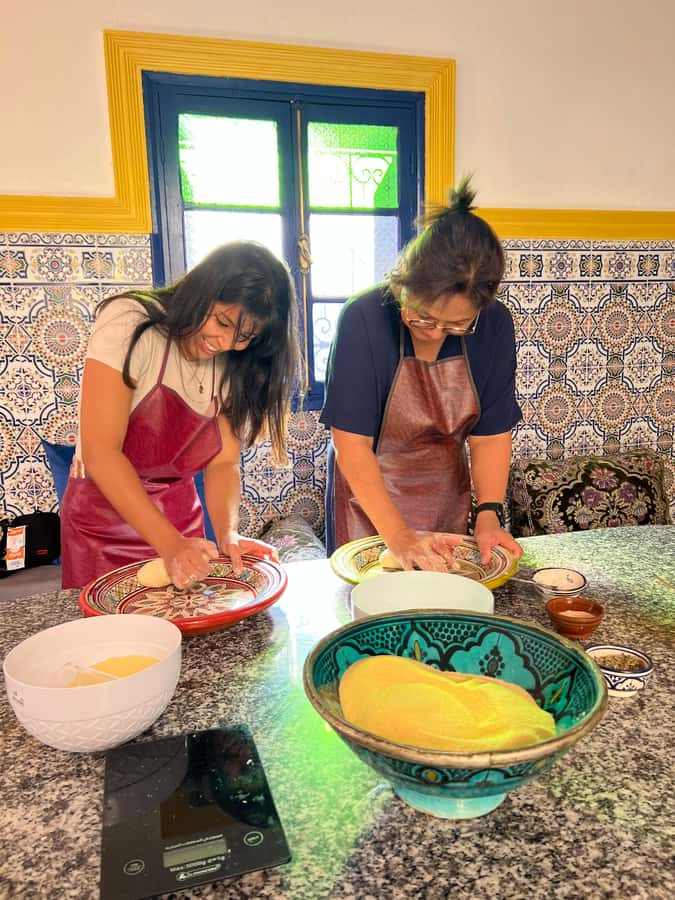
The best part of this Marrakech bread class is that you do not simply watch someone cook. You handle the dough, shape three different Moroccan breads, cook them, and sit down to eat the results with mint tea. Msemen, harcha, and batbout each use a different method, so the lesson gives you a useful look at everyday Moroccan baking.
I like the small groups of up to 10, which leave room for hands-on help. I also like the practical touch of electronic recipes, so you can try the breads at home instead of leaving the techniques in Marrakech. The main caution is communication: the teaching can involve gestures and demonstration, and one participant had difficulty getting questions answered in English.
Key points at a glance
- Three distinct breads: Make layered msemen, crumbly harcha, and soft batbout, rather than repeating one basic recipe.
- A real hands-on lesson: You receive an apron, ingredients, utensils, and direct guidance from the host.
- Mint tea is part of the activity: Prepare, pour, and taste tea alongside the breads.
- A local Bab Doukkala setting: The workshop is at 44 Der Hajra, reached through a food market area used more by locals than tourists.
- Plenty to eat: Your group tastes the baked food with items such as olives, jam, honey, and tea, with boxes sometimes available for leftovers.
- Good value at $37: Two hours of instruction, food, tea, equipment, and recipes make this more than a simple snack stop.
Three Moroccan breads, three different techniques
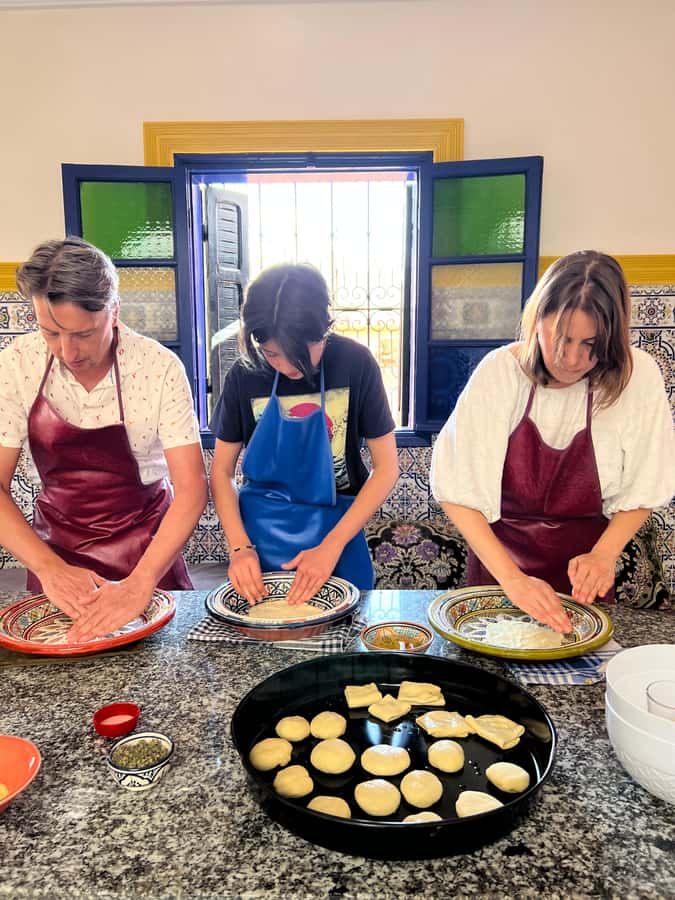
This class works because the breads are not minor variations of the same dough. Each one gives you a different lesson in Moroccan cooking.
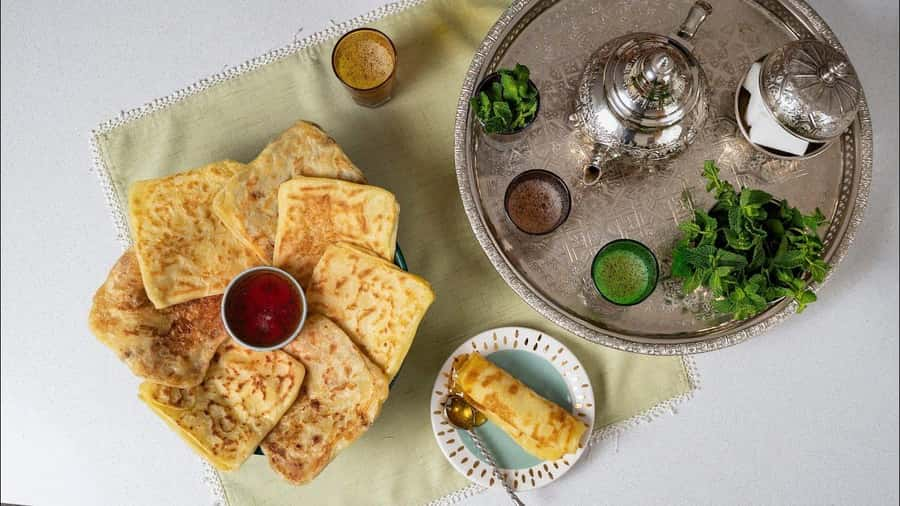
Msemen is the layered square crepe you may have seen at Moroccan breakfasts. The dough is stretched and folded, then cooked until it develops a pleasant mix of crisp edges and tender layers. The technique looks simple once a skilled cook demonstrates it, but your hands need to learn how thin to stretch the dough and how carefully to fold it.
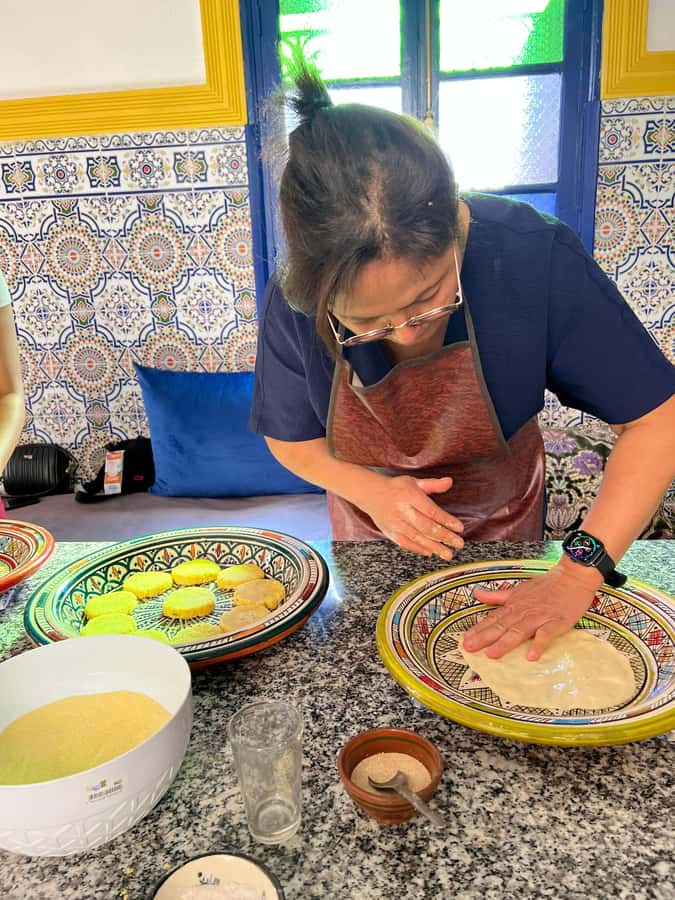
Harcha is a semolina pancake or galette. It has a different texture from msemen and does not depend on the same thin, folded layers. This is a useful comparison because you can see how a change in flour and method produces a completely different bread.
Batbout is a small Moroccan flatbread, often compared with pita. It is cooked differently again, giving you another way to handle and shape the dough. Making all three in one sitting helps you understand that Moroccan bread is not one single thing. It is a family of breads suited to different meals and moods.
You do not need baking experience. The host demonstrates the process and then helps you copy it. The lesson is meant to be practical, not technical. Bring curiosity, comfortable clothes, and an appetite.
More Cooking Classes in Marrakech
- Marrakech: Moroccan Cooking Class with Pickup
★ 4.6 · 1,862 reviews - Marrakech: Traditional Moroccan Cooking Class & Market Visit
★ 4.8 · 1,861 reviews - Marrakesh: Moroccan Dishes Cooking Class with a Local Chef
★ 5.0 · 1,615 reviews
What happens during the two-hour class
The session begins at the workshop on 44 Der Hajra near Bab Doukkala. You are provided with an apron and the ingredients and utensils needed for the lesson. This matters because you can arrive with only water and comfortable clothes, rather than carrying cooking supplies across Marrakech.
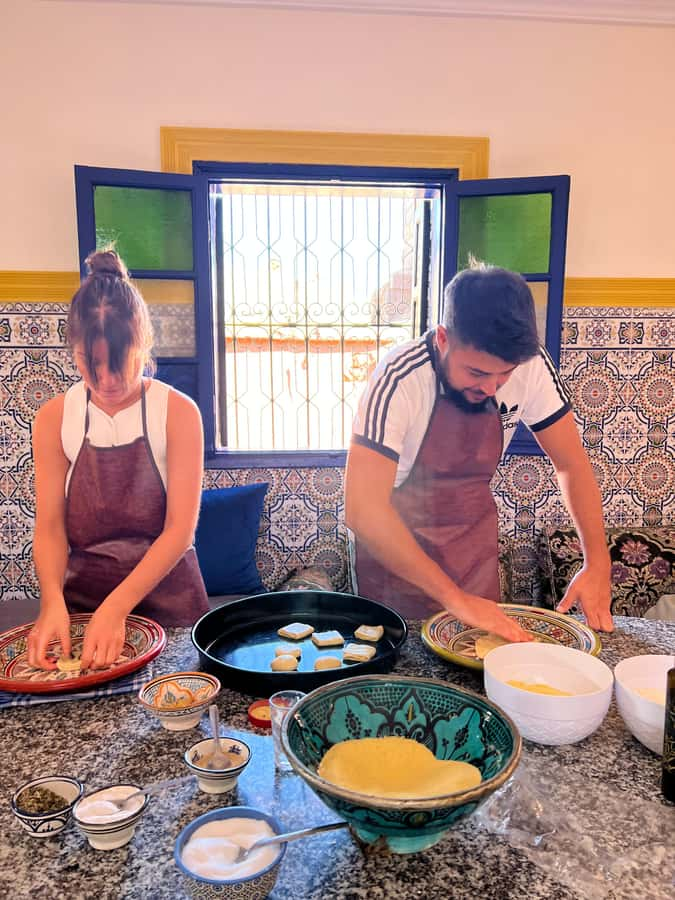
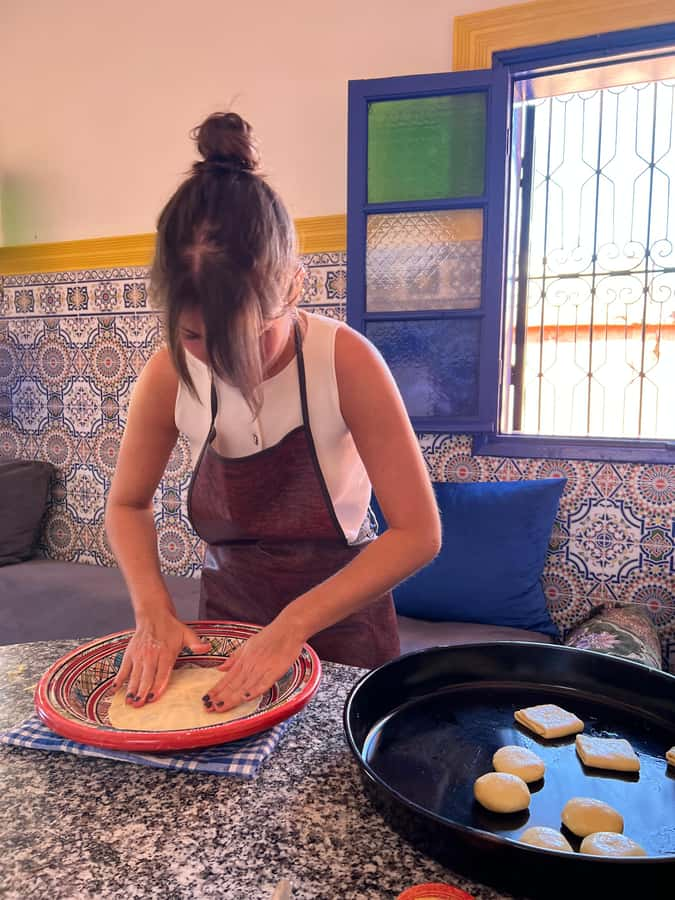
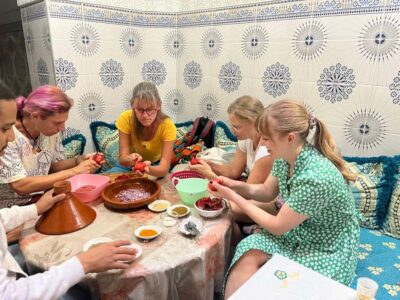
The host first explains the ingredients and basic methods. Then you work through the dough preparation and shaping. The teaching is hands-on, with demonstrations followed by your own attempt. If you are cooking with children, the activity can be engaging because there is something to touch and do at each stage, though children under four are not accepted.
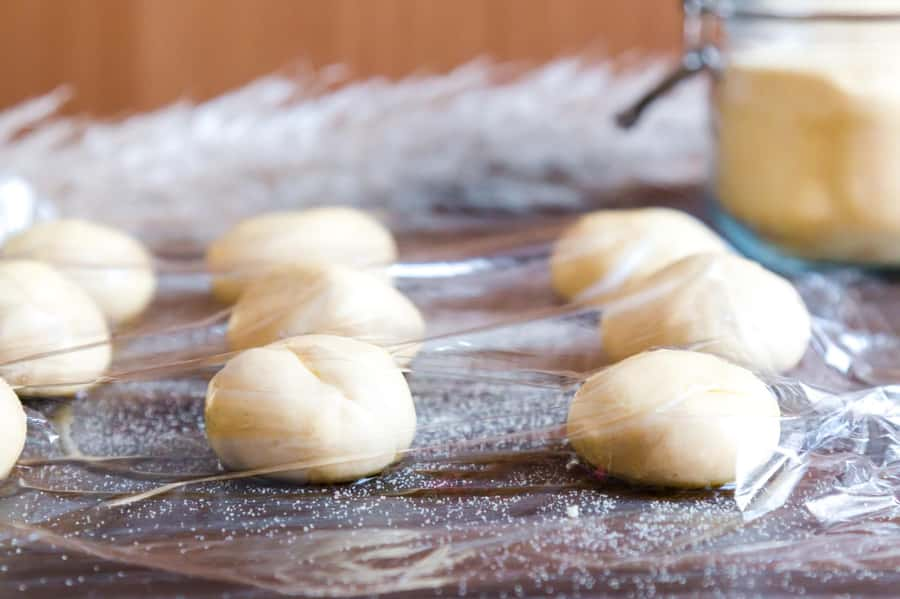
The three breads are prepared and cooked under supervision. You get to see the dough change from a loose mixture into something ready for the pan. The cooking stage is part of the fun, but it also requires patience. Not every first piece will have the same shape or finish as the instructor’s. That is normal, and the point is to learn the technique well enough to repeat it at home.
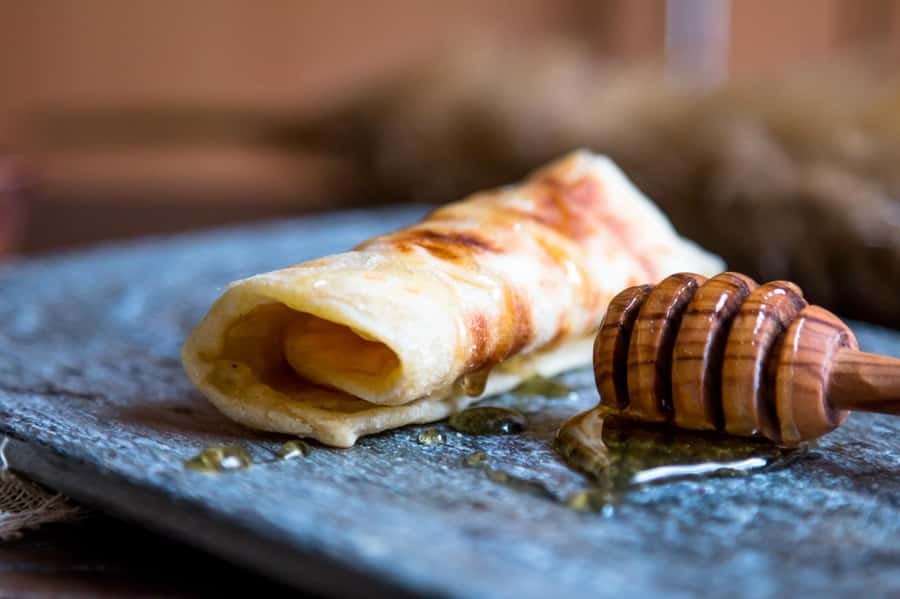
Once the breads are ready, the pace slows. You sit down and taste what you made. Some sessions include olives, jam, and honey with the breads. The food is not merely a sample handed to you at the end. It is the result of your work, which makes the final snack feel deserved.
Mint tea is part of the lesson, not an afterthought
Moroccan mint tea is woven into the class. After the dough is prepared and cooked, you help make the tea and learn the basic ritual of preparing and pouring it.
This adds a social side to the lesson. You are not just learning how to feed yourself. You are learning how food and drink are shared in a Moroccan home. The tea gives the group a reason to sit together, compare the breads, and talk about your time in Morocco.
The pouring is also a small performance. It takes practice to control the stream and serve the tea in the traditional way. Even if your first pour is less graceful than the host’s, you will understand more about why mint tea is treated as a ritual rather than a quick cup.
The tea comes with your baked creations. That pairing is especially useful if you have been eating Moroccan bread during your stay and want to understand how the familiar breakfast items are made.
The Bab Doukkala setting adds local flavor
The workshop address is 44 Der Hajra, Bab Doukkala, in Marrakech. Transportation is not included, so you need to make your own way there. The area is described as being reached through food markets used more by local residents than by tourists, which can make the walk part of the experience.
That also means you should allow time to find the entrance. The provider has sent directions by WhatsApp before some sessions, and clear communication before arrival can make the meeting point easier to locate. Check the directions you receive rather than assuming the workshop will be obvious from a main road.
The setting is described as a beautiful Moroccan home or workshop, with a feel closer to cooking at home than attending a formal culinary school. That is a strength if you want a personal cultural activity. It may be less suitable if you expect polished demonstrations, restaurant-style service, or a professional teaching kitchen.
The route through market streets gives you a useful glimpse of daily food shopping in Marrakech. Keep your attention on the meeting instructions and your surroundings, particularly if you are walking there for the first time.
Same corner of the map, a completely different outing:
- Marrakech: Quad Bike Tour to Palm Oasis and Jbilat Desert
★ 4.8 · 11,831 reviews - Marrakesh: Majorelle Garden Entry Tickets
★ 4.5 · 9,651 reviews - Marrakech Quad Bike Experience: Desert and Palmeraie
★ 4.5 · 9,509 reviews - Marrakech: Balloon Flight, Berber Breakfast & Certificate
★ 4.8 · 8,164 reviews
Small groups make the cooking more personal
The maximum group size is 10. Actual sessions can be smaller. One class had only two people, while another had three, and a group of nine still found it easy to ask for help.
That range matters. With a small group, you can usually get closer to the demonstration and receive help when dough sticks, folds poorly, or needs reshaping. You are not left at the back of a large room trying to copy a movement from several meters away.
A small group also makes the tasting more social. You can compare the different shapes and results without the class becoming noisy or impersonal. If you are traveling as a couple, family, or small group of friends, this format should feel comfortable.
The class uses Arabic, French, and English. The exact amount of English assistance may vary. Some sessions have included a translator, while another participant found that the person demonstrating spoke no English and could not answer questions. The recipes and techniques are visual, so you can still follow much of the process, but you should be prepared to learn partly by watching.
What the food and recipes mean for value
At $37 per person, this is not the cheapest way to eat bread in Marrakech. It is a fair price if you want instruction, participation, a meal-sized tasting, tea, and recipes rather than a plate of food alone.
The value comes from the combination. You receive the ingredients, utensils, apron, teaching, cooked food, mint tea preparation, and electronic recipes. The recipes extend the experience beyond the two-hour visit. You can make the breads again at home, which gives the class more staying power than a one-time food tasting.
The amount of bread can be generous. Some participants have had enough to take leftovers away in a box, while one person felt there was too much bread to carry back. If you are cooking in a small group, expect a substantial tasting and possibly extra food.
The class is also a good choice for people who have been eating msemen at hotels or cafes and want to understand how it is made. You leave with more than a new dish. You leave with a technique you can recognize and attempt again.
Communication and teaching style
The strongest teaching comes through demonstration. The hosts show you how to mix, shape, fold, and cook, then help you repeat the steps. One participant specifically praised Fatima and her team, while Jamila was named as a warm and hands-on teacher in another session.
Do not expect a long lecture about Moroccan food. This is a working class. Your hands are occupied, and the host’s attention is focused on getting the dough right.
The language mix can be part of the charm, but it is also the clearest weakness. If you want detailed explanations of flour types, regional variations, or the history of each bread, you may find the lesson limited when translation is not available. If you are happy to watch closely and learn by copying, the language issue is less serious.
The electronic recipes are meant to help bridge that gap. Make sure you receive them after the class. One participant had not received the promised recipes and needed to follow up, so keep the digital recipe information until it arrives.
Who will enjoy this class most
I would choose this for anyone who likes food, wants a low-key activity in Marrakech, or prefers doing something practical over another sightseeing stop. It suits couples, solo visitors, families with older children, and small groups of friends.
Families should note the age restriction. Children under four are not accepted, and young children need to be comfortable around ingredients, utensils, hot cooking surfaces, and a two-hour lesson.
This is also a good rainy-day or midday activity because the focus is indoors and the result is lunch or a substantial snack. The duration is short enough to fit around other plans, but long enough to learn three recipes.
I would hesitate if you have a food allergy or gluten intolerance. The class is not suitable for people with food allergies or gluten intolerance, and all three featured breads are wheat-based Moroccan staples.
It may also be a poor fit if you dislike touching dough, waiting for food to cook, or learning through demonstration. This is not a show where you sit back while someone else does the work.
Practical details before you book
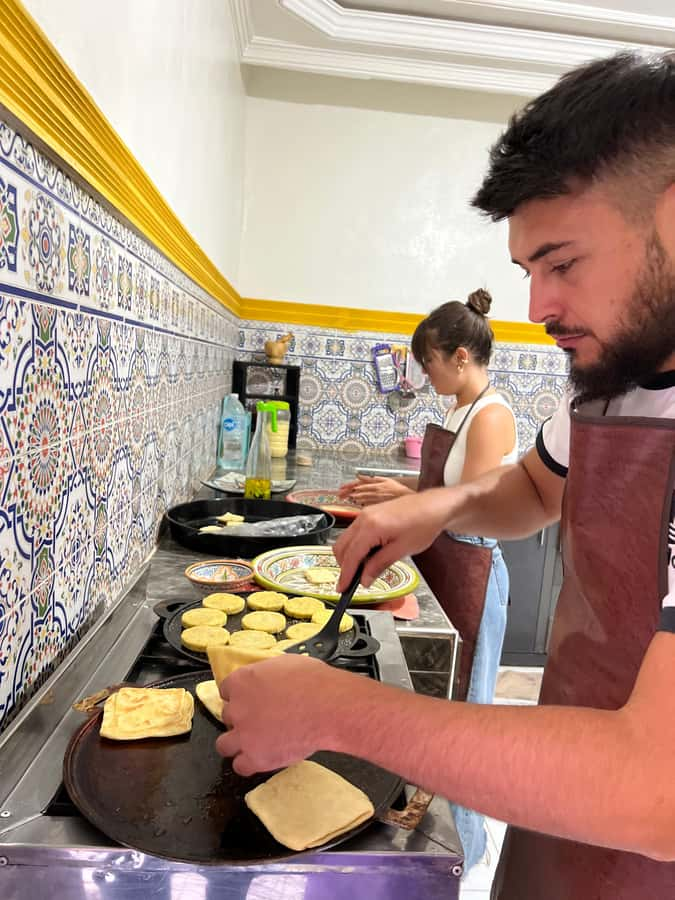
The activity lasts two hours, with starting times available according to the date you choose. You can cancel up to 24 hours in advance for a full refund, and the reserve-now, pay-later option keeps your plans flexible.
Wear clothes suitable for baking. Loose flour, oil, and dough are part of the process, so choose comfort over dress clothes. Bring water, and arrive ready to eat.
No transportation is included. Plan your route to Bab Doukkala and read the meeting directions carefully. If you have questions about the class language or the electronic recipes, ask before arrival rather than waiting until the dough is on the table.
Should you book the Marrakech bread class?
Book it if you want a personal, useful food activity with a local feel. The three breads give you enough variety to keep the class interesting, the mint tea ritual adds cultural context, and the small group size gives you a fair chance to get help.
At $37, the package is good value for a two-hour lesson that includes food, tea, equipment, and recipes. The main tradeoff is the variable language support. You may learn through a translator and clear explanations, or you may rely more heavily on watching the demonstration.
If you are comfortable with that, this is an easy recommendation for bread lovers. If you need strict allergy control, detailed English instruction, or a polished culinary school setting, choose another activity.
FAQ
How long does the Moroccan bread class last?
The class lasts two hours.
How much does the activity cost?
The listed price is $37 per person.
Where does the class take place?
The workshop is at 44 Der Hajra, Bab Doukkala, Marrakech.
Which breads will I make?
You will make msemen, harcha, and batbout.
Is mint tea included?
Yes. You will help prepare traditional Moroccan mint tea and taste it with the baked breads.
Are ingredients and cooking equipment provided?
Yes. The class includes the ingredients, utensils, and an apron.
What languages are available?
The listed languages are Arabic, French, and English.
How large is the group?
The class is limited to 10 participants.
Is the class suitable for people with food allergies or gluten intolerance?
No. The activity is not suitable for people with food allergies or gluten intolerance.
Just added for Marrakech
- Marrakech: Tailor-Made City Tour With Your Own Private Guide★ 4.9 · 236 reviews
- Marrakech palm grove: Sunset camel ride★ 4.8 · 194 reviews
- Sparkling Marrakech through the eyes of your local Guide★ 4.7 · 247 reviews
- Quad Bike Activity in Marrakech Palmeraie★ 4.2 · 123 reviews
- Marrakech: Historical Discovery Tour★ 4.1 · 87 reviews
- Marrakech: Palm Grove Horseback Riding Tour★ 4.6 · 163 reviews
- Moroccan Food Cooking Class with a Local Chef in Marrakech★ 4.7 · 90 reviews
- Marrakech: Babouch Making Workshop in the Medina★ 4.9 · 117 reviews
Cooking Classes, compared.
Traditional Moroccan Cooking Class & Market Visit
Read our review →
Moroccan Dishes Cooking Class with a Local Chef
Read our review →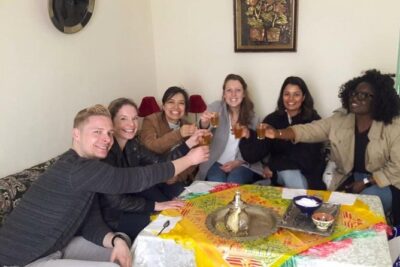
Moroccan Cooking Class & Marrakech Market Visit with Chef Khmisa
Read our review →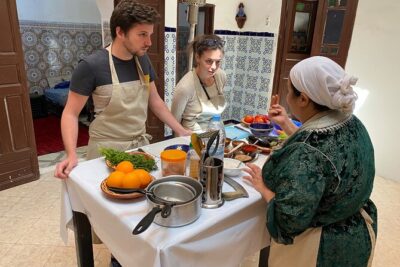
Half-Day Cooking Class with Local Chef Laila in Marrakech
Read our review →
Browse the lists this tour appears in