
Reviewed · COOKING CLASSES
Marrakech: Moroccan Cooking Class for vegetarians and vegan
Moroccan food makes the most sense when you prepare it slowly, season it carefully, and eat it with the people who taught you. This four-hour class brings you into a family home in the Medina, where Yasser or Chef Fatima guides you through spices, salads, vegetable tagine, couscous, and dessert.
I like the hands-on format, since you take part in chopping and cooking rather than watching a chef work. I also like the welcome into a Moroccan home, with tea, coffee, juice, and conversation with the family. The main consideration is meeting your guide near Andalusia Restaurant, as the Medina lanes can be confusing and the final walk to the house may require help.
Key points to know before booking
- Four hours of real cooking: You prepare a starter, main dish, side dishes, and dessert before sitting down to eat.
- Strong choice for plant-based diets: Vegetarian, vegan, and allergy needs are accommodated, with separate food preparation when meat is included.
- Family-home setting: The lesson takes place in an authentic Moroccan house in the Medina, often on a terrace or rooftop.
- Yasser and Chef Fatima lead the class: Both are praised for clear explanations, patience, humor, and language skills in English and French.
- Meeting point matters: Find Andalusia Restaurant first, then allow time for the guide to lead you through the back streets.
- Good value at $30: The fee includes the lesson, drinks, cookies, and the meal, but not transport.
A Moroccan cooking class built around participation
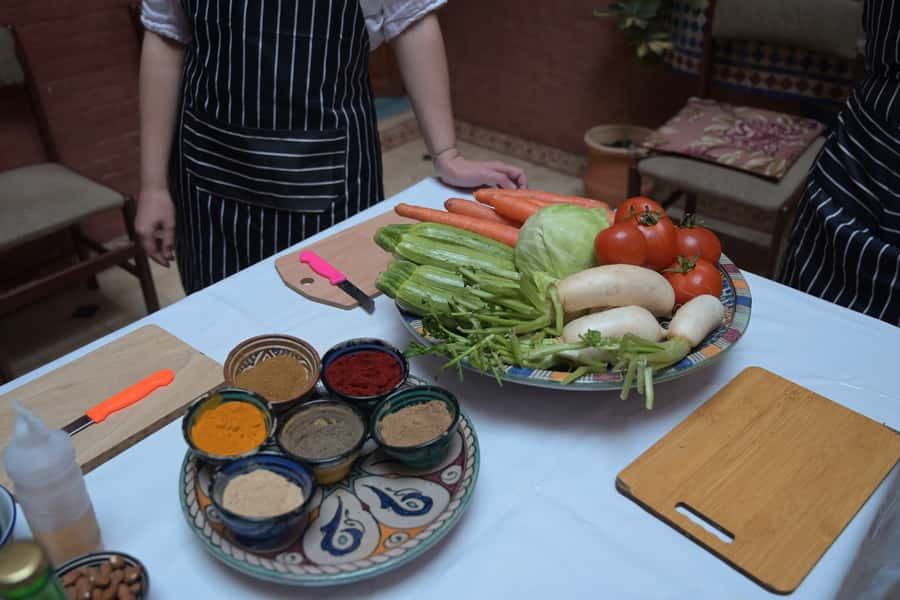
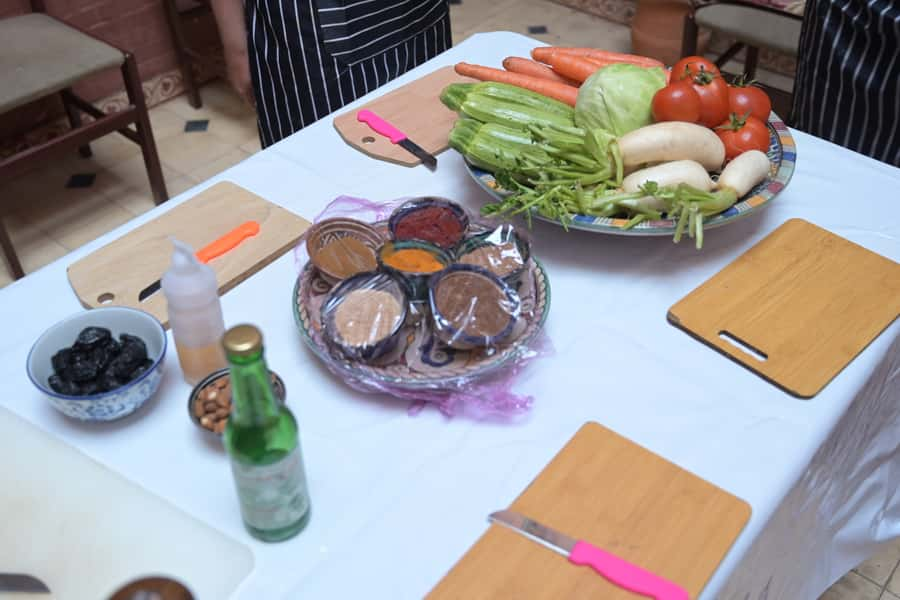
The best part of this experience is that you are not simply handed a plate of food and told a story about it. You help make the meal from start to finish.
The class begins at a meeting point near Andalusia Restaurant. The chef is expected to wait there 30 minutes before the scheduled start, which gives you a useful safety margin if you are unsure of the Medina streets. This is worth taking seriously. The old city can be a maze, and one participant found the meeting point and final approach difficult even with a taxi driver.
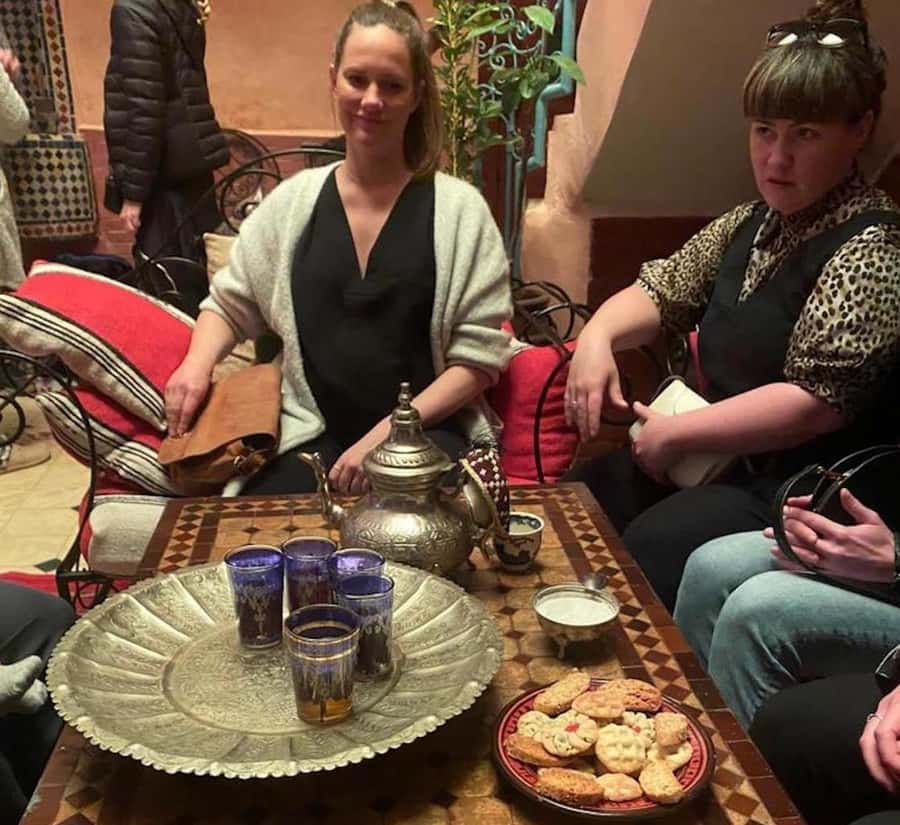
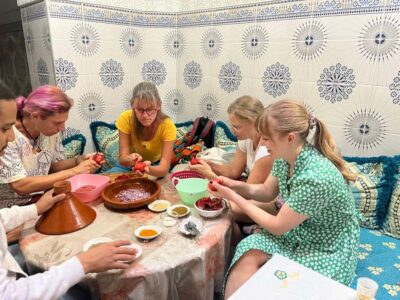
Once your group is together, the guide suggests the menu and explains the ingredients. You can take photographs as you go. The class then moves to an authentic Moroccan home in the heart of the Medina, where the family welcomes you with Moroccan tea, coffee, or juice, along with cookies and informal conversation.
That opening matters. You get a look at everyday hospitality rather than a cooking lesson in a polished restaurant kitchen. The setting may be a terrace or rooftop patio, depending on the host and location. It is a relaxed place to talk, watch the preparation, and share the meal afterward.
More Cooking Classes in Marrakech
- Marrakech: Moroccan Cooking Class with Pickup
★ 4.6 · 1,862 reviews - Marrakech: Traditional Moroccan Cooking Class & Market Visit
★ 4.8 · 1,861 reviews - Marrakesh: Moroccan Dishes Cooking Class with a Local Chef
★ 5.0 · 1,615 reviews
Meeting Yasser and Chef Fatima
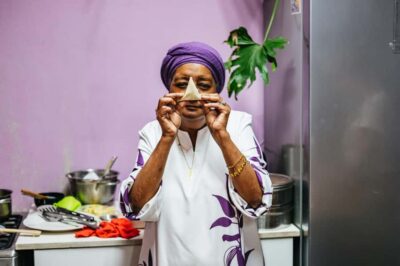
The activity is led by Chef Fatima and Yasser, who may teach the class together or separately. Yasser is praised for speaking English well and for his ability to move between several languages. He is also described as friendly, patient, funny, and good at keeping everyone involved.
Chef Fatima brings a warm family touch to the lesson. She explains cutting skills, spices, and cooking methods while keeping the pace comfortable. The family connection is part of the appeal, and the tone is closer to being welcomed into a home than attending a formal culinary school.
The instructors do more than list ingredients. They explain why particular spices are used and how Moroccan dishes develop their flavor. You may also get general cooking tips that apply beyond Moroccan food, such as cutting methods and the order in which ingredients are added.
The class is conducted in English and French. An English and French audio guide is also included. That gives you extra support, though the live instruction is the heart of the activity.
Learning Moroccan spices before cooking
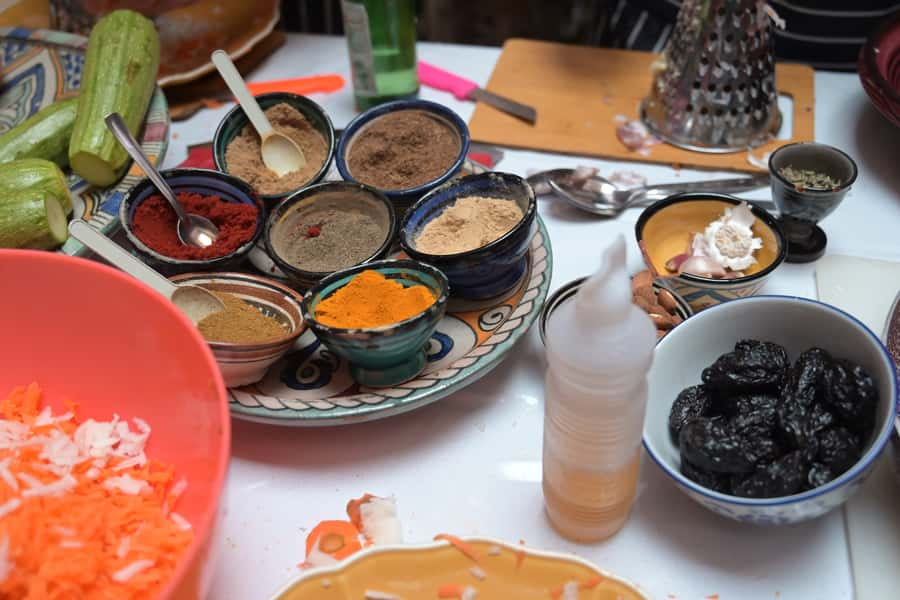
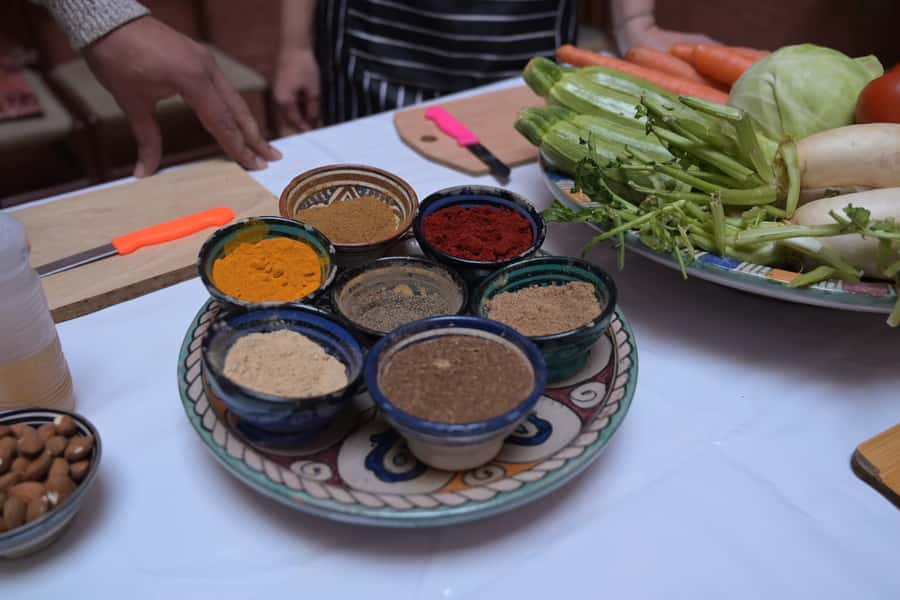
The spice lesson is one of the most useful parts for anyone planning to shop in Marrakech. You are shown the spices used in Moroccan cooking and given advice on how to choose them in the souks.
This is practical information, not just a tasting exercise. Moroccan dishes can look simple on the plate, but their character depends on the balance of spices, herbs, oil, vegetables, and slow cooking. The guide explains the blends and homemade ingredients used by the family, helping you understand why the food tastes different from a basic vegetable stew.
Yasser’s family also makes fresh spice mixes, and some people choose to buy spices, tea, or saffron at the end. That purchase is optional, so you can treat it as a souvenir rather than an obligation. If you do buy something, the class has already given you useful context about what you are choosing.
The lesson also includes time for photographs. You can capture the ingredients, the cooking process, and the terrace setting without having to rush from one dish to the next.
Cooking the starter, main dish, and dessert
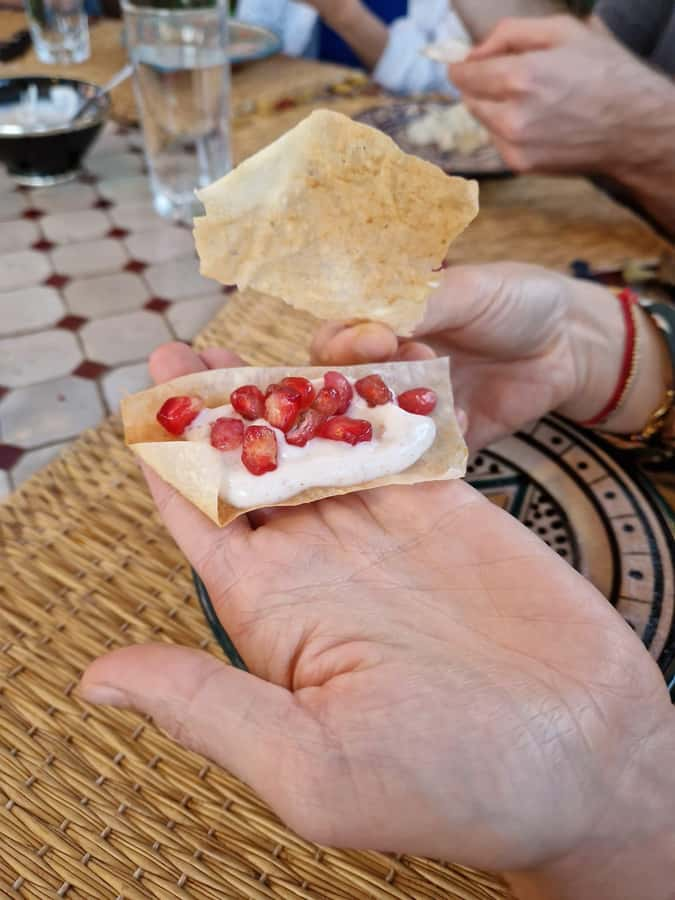
The menu can include Moroccan salads or briwat as a starter. Moroccan salads are often vegetable-based and seasoned rather than treated as a plain side dish. Briwat adds a pastry element, with the exact preparation depending on the menu selected for your group.
The main course may be a tagine, couscous, tanjia, or another Moroccan dish. For vegetarian and vegan participants, the vegetable tagine is the key preparation. You take part in seasoning and assembling the dish, then wait as the cooking brings the ingredients together.
Some classes are mixed, with meat-eating participants preparing a chicken tagine while vegetarian or vegan participants make a vegetable tagine. This is not presented as a problem, but it is worth knowing in advance. Separate cooking areas and ingredients are used, and plant-based participants can focus on their own dish and shared sides.
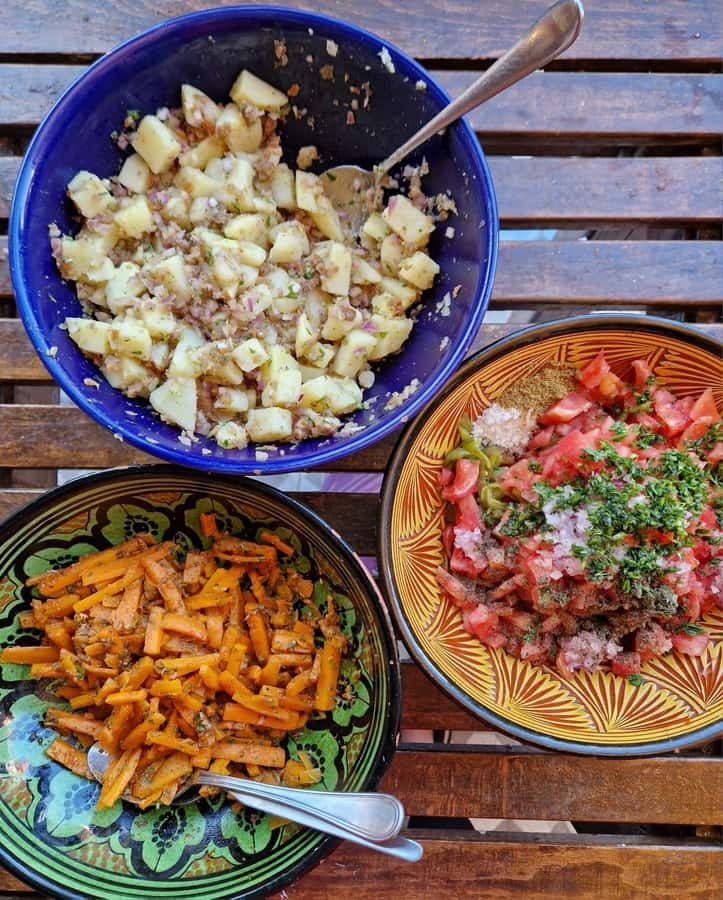
One important detail is that many of the side dishes and the dessert can be vegan. A plant-based visitor described having a vegetable tagine, three side dishes, and dessert, which made the meal feel varied rather than like a reduced version of the main menu.
Dessert is included, though expectations should be sensible. One participant found it more basic than the other dishes. That is a small point, but useful if you are booking mainly for pastry technique rather than for the full Moroccan meal.
Same corner of the map, a completely different outing:
- Marrakech: Quad Bike Tour to Palm Oasis and Jbilat Desert
★ 4.8 · 11,831 reviews - Marrakesh: Majorelle Garden Entry Tickets
★ 4.5 · 9,651 reviews - Marrakech Quad Bike Experience: Desert and Palmeraie
★ 4.5 · 9,509 reviews - Marrakech: Balloon Flight, Berber Breakfast & Certificate
★ 4.8 · 8,164 reviews
Eating together in a family home
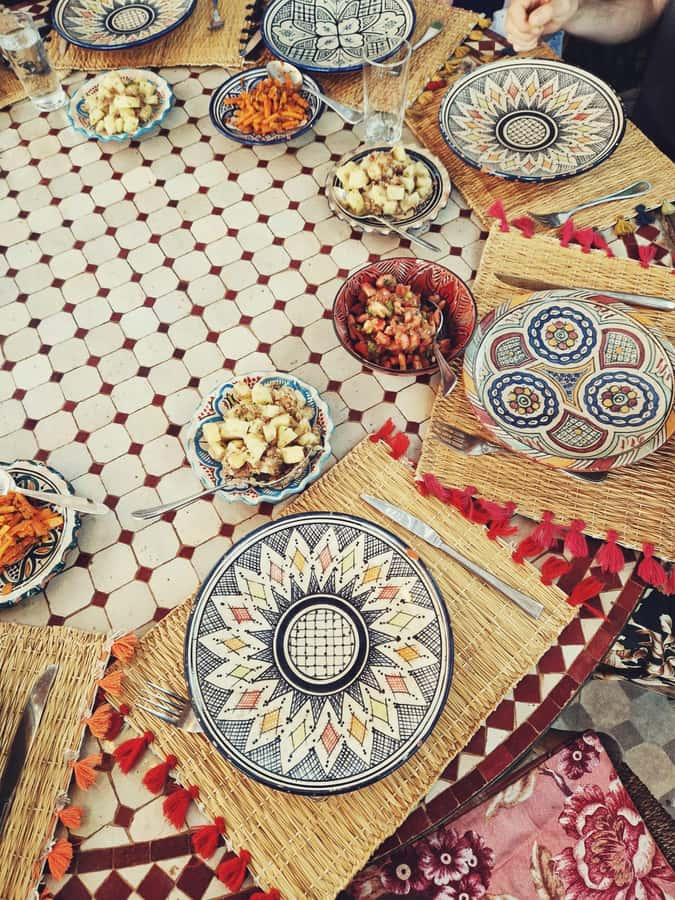
After the preparation, you sit down and eat what the group has made. This is where the four-hour length earns its keep. A shorter class might show you one dish and send you away, but this format gives you time to prepare several courses, talk with the hosts, and enjoy the result without racing through lunch.
The meal is served as a shared experience. You can compare the starter, tagine, sides, and dessert while discussing the methods you have just learned. The food feels more satisfying because you know how much work went into it, but the appeal is not only the novelty of eating your own cooking. The ingredients, spice mixes, and family recipes give the dishes a clear local connection.
This can also be a good activity for families. A parent and 12-year-old daughter found it easy to enjoy together, and the group format allows everyone to take part in chopping and cooking. The pace is not designed as a rushed demonstration, which helps younger cooks and beginners keep up.
At the end, you receive a gift from the family. Some participants also buy spices, tea, or saffron to take home. Recipes may be shared afterward as well, including through WhatsApp, which makes it easier to recreate the dishes in your own kitchen.
How well does it work for vegans and vegetarians?
This class is specifically suited to vegetarian and vegan diners, but you should still state your needs clearly when booking and again at the start. The hosts have accommodated vegan diets, vegetarian diets, and allergies, and the plant-based menu can include several separate dishes.
You should know that the class may be mixed. Other members of the group may prepare meat, usually in a separate dish. If you prefer a fully vegan cooking environment, this may not be the right fit. If you are comfortable sharing a kitchen while keeping your own food separate, the arrangement has worked well.
The strongest point is variety. You are not limited to vegetables placed beside someone else’s meal. You may prepare a vegetable tagine, salads or other side dishes, and dessert. Ask the guide about the exact menu and separation arrangements if you have a serious allergy or strict cross-contact concerns.
Price, timing, and practical value
At $30 per person, this is a strong value for a four-hour experience. The price includes the cooking lesson, drinks, cookies, and the meal. You are also paying for an introduction to Moroccan home cooking, advice on spices, time with a local family, and the chance to take recipes home.
Transport is not included. You need to reach the meeting point near Andalusia Restaurant yourself, and the guide then leads you to the house. Build in extra time for the Medina, especially if you are unfamiliar with the narrow lanes.
You can cancel up to 24 hours before the activity for a full refund, and you can reserve now while paying later. The experience is listed as wheelchair accessible, but the route through the Medina and the private-home layout may still be worth confirming directly if you use a wheelchair. The supplied information does not give details about the exact access route.
The class lasts four hours, with start times based on availability. That length suits you if you want a proper meal and plenty of instruction. It may feel too long if you only want a quick food activity between sightseeing stops.
Who should book this class?
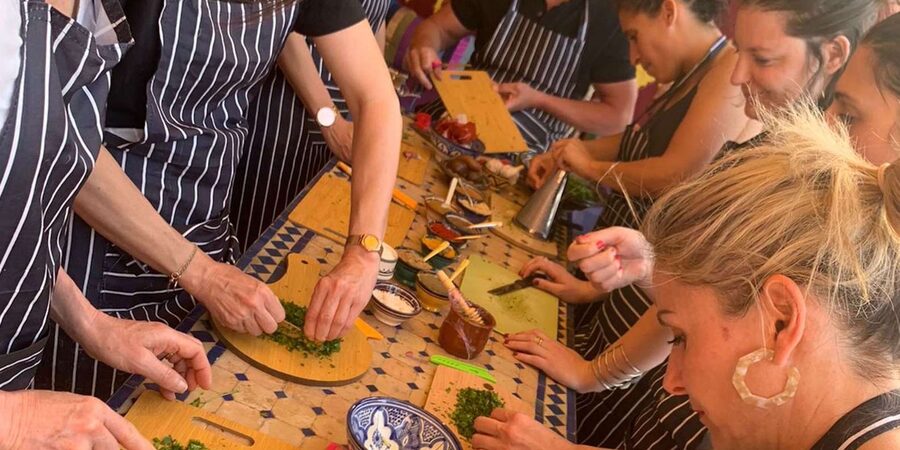
I would choose this experience if you are vegetarian or vegan and want more than a restaurant meal. It gives you a practical way to understand Moroccan flavor, and the menu is designed to provide enough food and variety for plant-based diners.
It also suits first-time visitors who want a cultural activity with a personal setting. You get conversation with the family, food preparation, spice advice, and a shared meal in one outing. Families with older children can enjoy it too, since everyone has a task and the meal gives the activity a clear finish.
You may want to think twice if you dislike group activities, cannot tolerate any nearby meat preparation, or prefer a highly polished professional kitchen. The class is intentionally informal and home-based. The meeting point can also be tricky, so do not treat it as a place to arrive at the last second.
Should you book it?
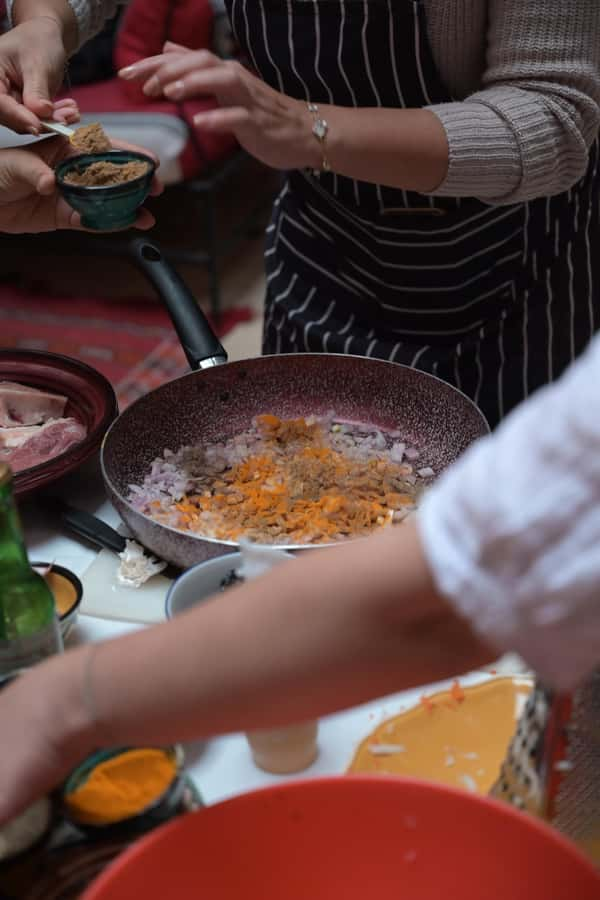
Book it if you want to cook several Moroccan dishes, eat in a family home, and leave with practical spice and recipe knowledge. The strongest reasons are the hands-on format, the generous four-hour schedule, and the careful accommodation of vegan and vegetarian diets.
Skip it if you want a private class with no meat anywhere in the kitchen, or if you only have time for a short demonstration. For most plant-based visitors, families, and curious food lovers, the $30 price gives you a full afternoon of cooking, conversation, and lunch rather than a quick tourist stop.
FAQ
Where does the cooking class meet?
The meeting point is next to Andalusia Restaurant in Marrakech.
How long does the activity last?
The cooking class lasts four hours. Starting times depend on availability.
What does the price include?
The $30 price includes the cooking lesson, drinks, cookies, and the meal you prepare.
Is transport included?
No. Transport is not included, so you must make your own way to the meeting point.
Is the class suitable for vegans?
Yes. Vegan participants can be accommodated, with plant-based dishes such as vegetable tagine, side dishes, and dessert.
Is the class suitable for vegetarians?
Yes. Vegetarian menus are available, and participants can prepare a vegetable tagine and other meat-free dishes.
Can the class accommodate food allergies?
Yes. The activity information says allergies can be accommodated. Tell the chef about your needs when booking and at the start of the class.
Will meat be prepared during the class?
Some sessions are mixed, so other participants may prepare meat. Plant-based ingredients and dishes are kept separate.
Which languages are available?
The instructors speak English and French. An English and French audio guide is included.
Can I cancel for a refund?
Yes. You can cancel up to 24 hours in advance for a full refund.
Is the activity wheelchair accessible?
The activity is listed as wheelchair accessible. Since the class takes place in the Medina and a private home, confirm the exact route and layout if you need specific access arrangements.
Just added for Marrakech
- Marrakech: Tailor-Made City Tour With Your Own Private Guide★ 4.9 · 236 reviews
- Marrakech palm grove: Sunset camel ride★ 4.8 · 194 reviews
- Sparkling Marrakech through the eyes of your local Guide★ 4.7 · 247 reviews
- Quad Bike Activity in Marrakech Palmeraie★ 4.2 · 123 reviews
- Marrakech: Historical Discovery Tour★ 4.1 · 87 reviews
- Marrakech: Palm Grove Horseback Riding Tour★ 4.6 · 163 reviews
- Moroccan Food Cooking Class with a Local Chef in Marrakech★ 4.7 · 90 reviews
- Marrakech: Babouch Making Workshop in the Medina★ 4.9 · 117 reviews
Cooking Classes, compared.
Traditional Moroccan Cooking Class & Market Visit
Read our review →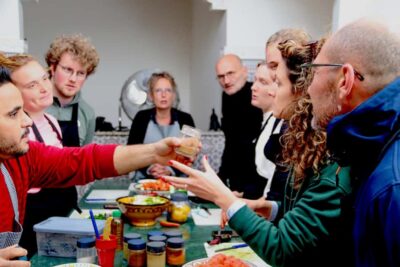
Moroccan Dishes Cooking Class with a Local Chef
Read our review →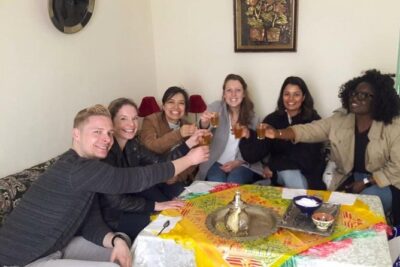
Moroccan Cooking Class & Marrakech Market Visit with Chef Khmisa
Read our review →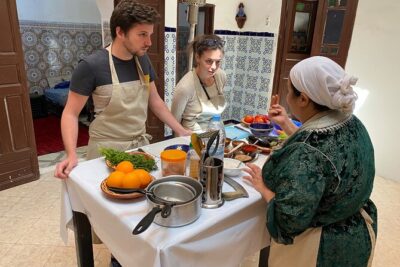
Half-Day Cooking Class with Local Chef Laila in Marrakech
Read our review →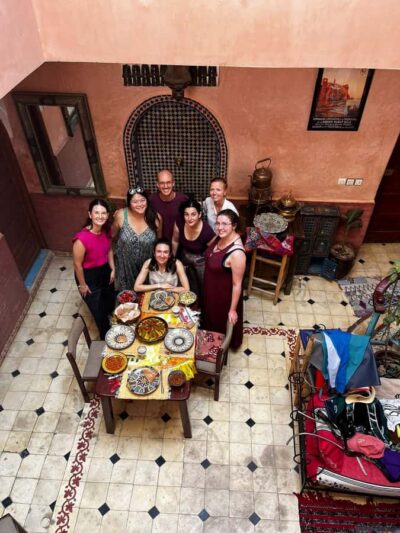
Browse the lists this tour appears in