
Reviewed · COOKING CLASSES
Marrakech: Traditional Moroccan Cooking Class & Market Visit
Marrakech’s best food lesson begins before you reach the kitchen. You walk through a local souk with the cooking team, choose fresh produce, and see the everyday ingredients behind Moroccan food. Back at an intimate riad workshop, Kawtar and the chefs guide you through tea, salads, tagines, and dessert.
I especially like the market shopping and the way the class gets everyone involved. I also like that the recipes are sent afterward, so the experience does not end when you leave Morocco. The main drawback is that the class is not suitable for wheelchair users, and the meeting point near a mosque can be too broad unless you confirm the exact entrance.
- Shop before cooking: Pick out fresh ingredients in a less tourist-focused part of the Medina.
- Learn the tea ritual: Moroccan mint tea involves more than pouring hot water over mint.
- Cook a full meal: The menu can include three to six dishes, with starters, tagines, and a milk pastilla dessert.
- Work as a team: Shared preparation keeps the class social and hands-on.
- Take Morocco home: Electronic recipes and optional homemade spices make the lessons practical.
- Expect a warm family setting: The riad workshop and local women create a personal atmosphere rather than a formal culinary school.
A souk-first introduction to Moroccan cooking
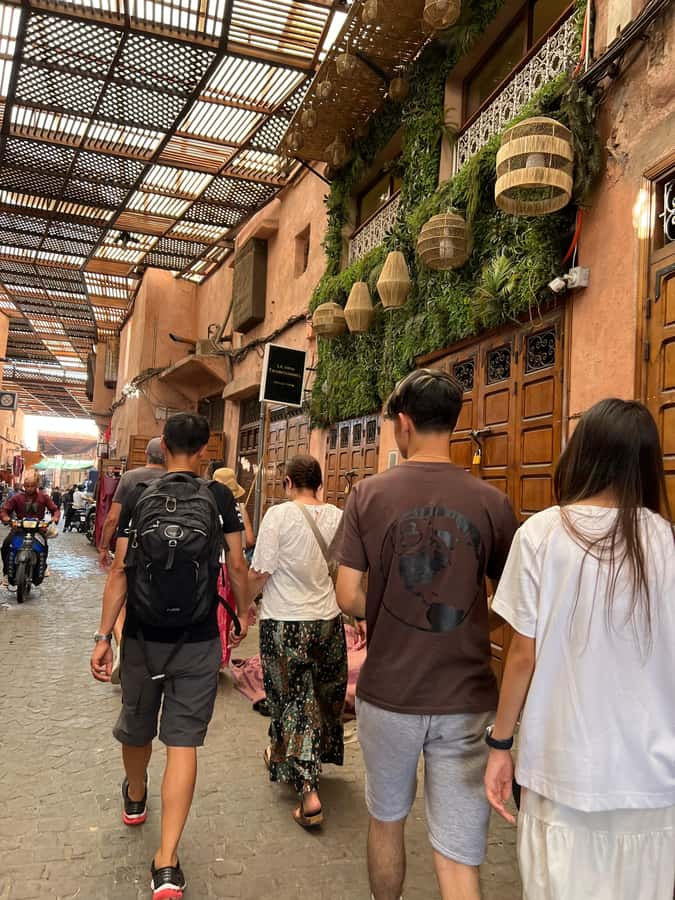
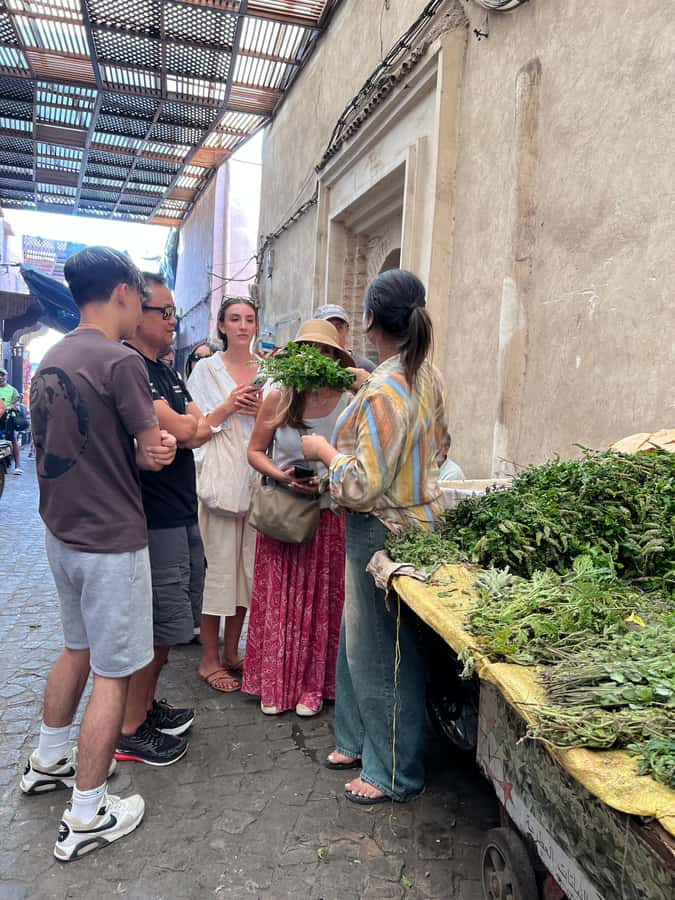
This experience works because it follows the natural path of a Moroccan meal: buy the food, prepare it, eat it together. Instead of meeting in a polished demonstration kitchen with ingredients already lined up, you begin among market stalls filled with vegetables, herbs, spices, and other local products.
The market walk is short, but it gives the class useful context. You can see the fresh ingredients before they are chopped and seasoned. The hosts also use this time to discuss food allergies and restrictions, which is important because the menu is prepared as a shared meal.
The market is described as away from the most tourist-focused side of Marrakech. That does not make it a private market visit or a long guided souk tour. Think of it as a practical shopping trip with a local cooking purpose. You help select what will go into lunch or dinner.
The meeting point deserves a little care. One person found the mosque easy to identify but too large as a reference point, especially without a precise entrance. I would confirm the exact meeting location before setting out, and allow extra time for the Medina’s maze of lanes.
Entering Khmisa’s riad workshop
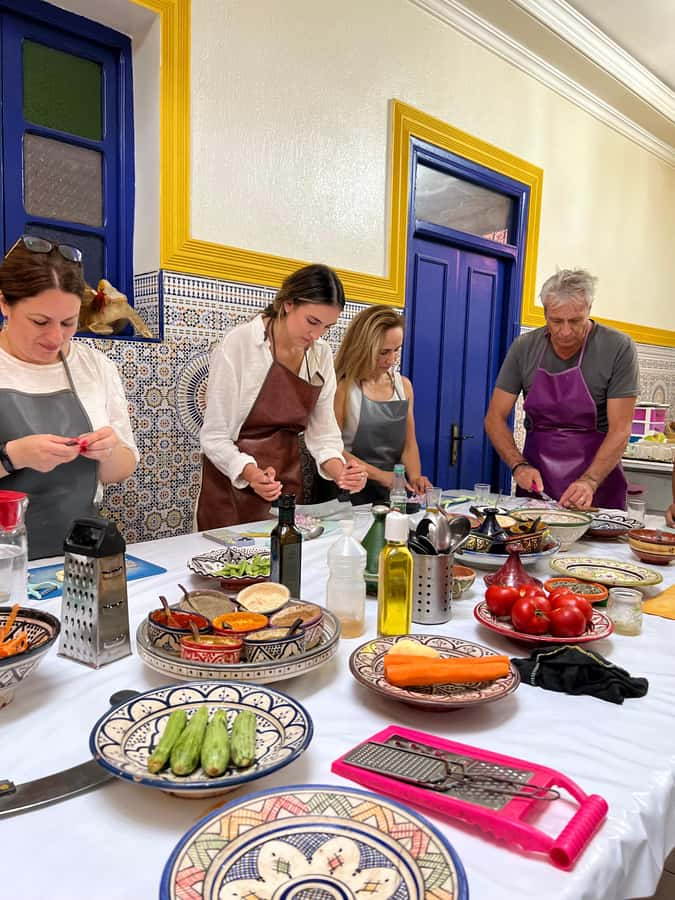
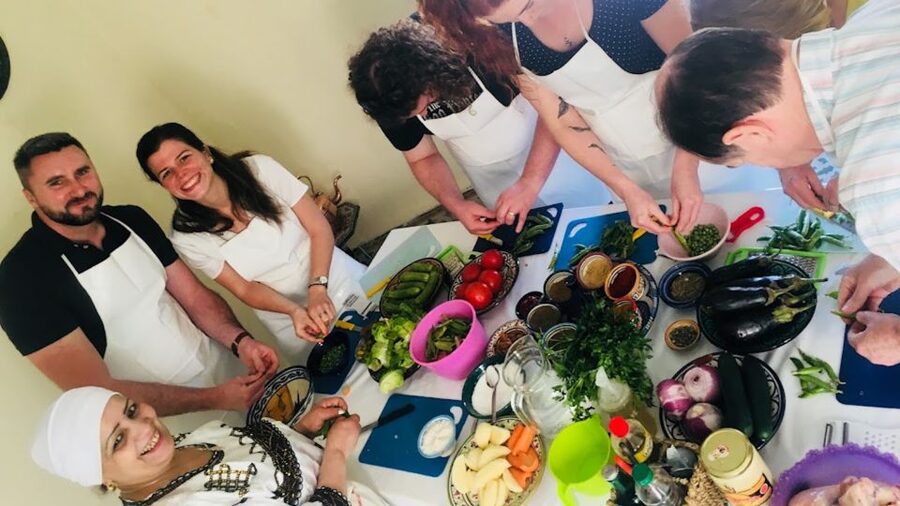
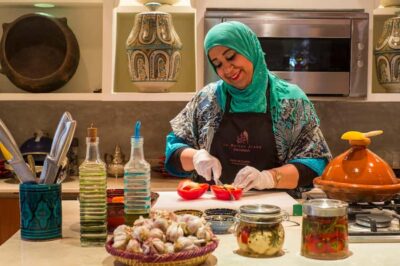
After the market, you walk to Khmisa’s workshop, an intimate riad in the heart of the Medina. The setting is part of the lesson. You are not simply learning a recipe; you are cooking in a Moroccan home-style environment, with local women leading the session and sharing food traditions.
The workshop has air conditioning, a useful detail during Marrakech’s hotter months. The class is shared, with a group size listed as 12 people, although smaller groups also occur. A group of six, for example, allows plenty of room for people to chop, season, stir, and ask questions.
Kawtar is one of the hosts named in the experience, and several classes are also led with Khmisa and other members of the cooking team. Ilham has helped translate for the chef in English, while the wider team can work in English, French, and Arabic. The exact combination of hosts may vary, so do not expect the same teacher at every session.
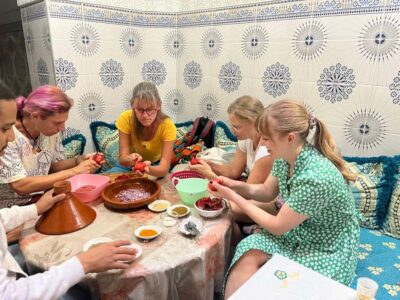
The tone is informal and family-like. The chef may use humor, and the hosts make a point of giving each person a task. That matters if you are booking with children or teenagers. An eight-year-old has taken part successfully, and families with older children have found enough practical work to keep everyone involved.
More Cooking Classes in Marrakech
- Marrakech: Moroccan Cooking Class with Pickup
★ 4.6 · 1,862 reviews - Marrakesh: Moroccan Dishes Cooking Class with a Local Chef
★ 5.0 · 1,615 reviews - Moroccan Cooking Class & Marrakech Market Visit with Chef Khmisa
★ 5.0 · 1,504 reviews
The Moroccan mint tea lesson
Your first kitchen lesson is the Moroccan mint tea ritual. This is more involved than dropping mint leaves into a mug and adding sugar. The hosts explain the steps, and you see how tea fits into Moroccan hospitality and daily life.
Tea is a smart opening lesson because it gives everyone a simple way to participate before the more involved cooking begins. You also get a useful skill to repeat at home, especially if you have become used to Moroccan tea during your stay.
The class does not treat tea as a quick welcome drink. It is presented as part of the culture, with attention to the preparation ceremony. You will drink tea during the session, and it sets the relaxed pace for the meal that follows.
Preparing salads, tagines, and dessert
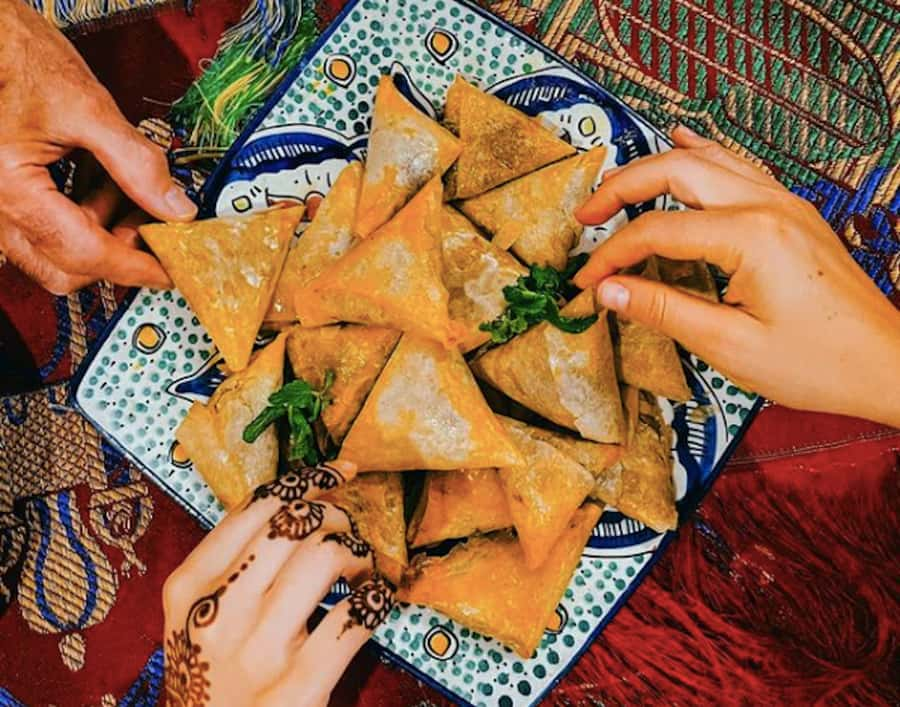
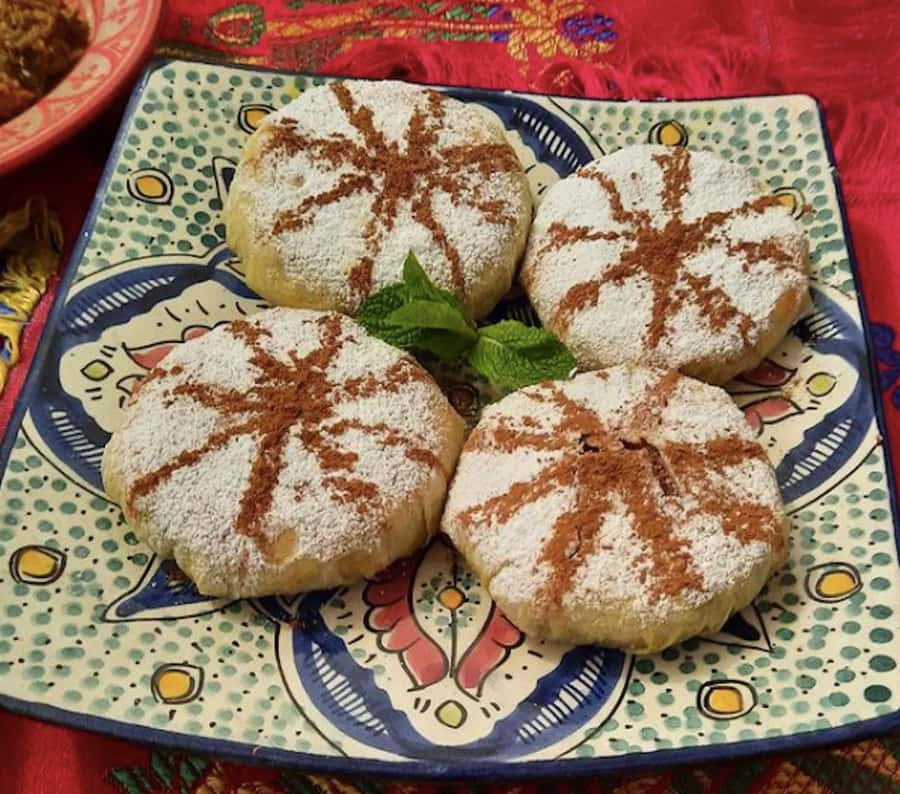
The menu varies, but you can expect several typical Moroccan dishes. The stated range is three to six dishes, usually including starters, a main course, and a dessert called pastilla of milk.
Past sessions have included four Moroccan salads or vegetable starters, a vegetarian tagine, a chicken tagine, and a small dessert. The exact menu depends on the class, ingredients, and dietary needs. The combination gives you a useful picture of Moroccan cooking: fresh vegetables, layered seasoning, slow cooking, and sweet elements often scented with ingredients such as orange blossom water.
Tagine preparation is one of the main attractions. You help add ingredients and spices rather than only watching a chef work. Chicken with preserved lemon is one version mentioned by participants, while vegetarian tagine is also available in the broader menu examples.
The class is especially helpful if you want recipes you can repeat outside Morocco. You are not being shown a restaurant-only dish that requires specialist equipment or hard-to-find products. The hosts send electronic recipes after the class, and homemade spices, orange blossom water, and saffron used during cooking may be available to buy before you leave.
The method is team-based. One person may chop while another measures spices, and another helps with the tagine. The chef directs the process and may adjust quantities by instinct. That can be entertaining, but it also means the lesson is not a laboratory-style class with every measurement written on a board.
If you prefer exact weights and strict timing, you may need to ask questions and take notes. If you like learning by watching, tasting, and joining in, the relaxed format is a better fit.
Eating the meal you helped create
The final meal is lunch or dinner, depending on the booking. It is served after the cooking, with the group sitting down to share what it has made.
Expect plenty of food. The format can include multiple starters, one or two tagines, dessert, and tea. That makes the $40 price look strong, since it covers the market walk, instruction, ingredients, meal, tea, and recipes. You are paying for a cultural activity and a substantial meal, not just a short cooking demonstration.
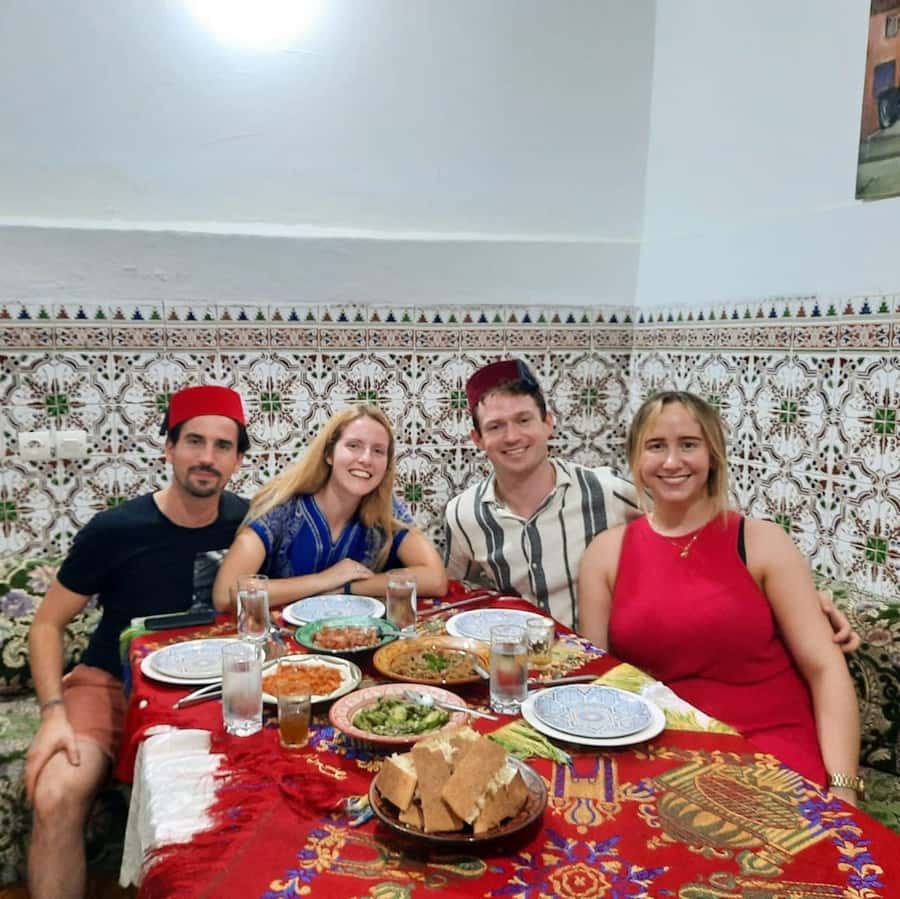
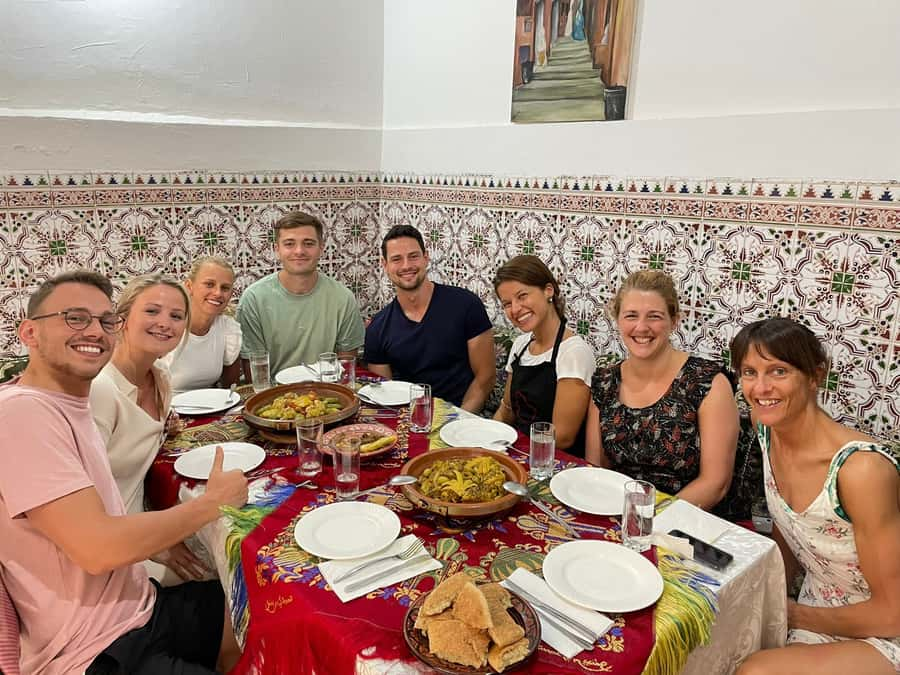
The shared meal is also the social center of the experience. Groups can include people from different countries, and the table gives you time to talk after the busy preparation. The food is not an extra tasting portion. It is the main lunch or dinner you have prepared together.
I would avoid scheduling another large meal immediately afterward. The portions can be filling, especially when several salads, tagines, and dessert are served. If you are booking in the evening, treat the class as your dinner plan.
Same corner of the map, a completely different outing:
- Marrakech: Quad Bike Tour to Palm Oasis and Jbilat Desert
★ 4.8 · 11,831 reviews - Marrakesh: Majorelle Garden Entry Tickets
★ 4.5 · 9,651 reviews - Marrakech Quad Bike Experience: Desert and Palmeraie
★ 4.5 · 9,509 reviews - Marrakech: Balloon Flight, Berber Breakfast & Certificate
★ 4.8 · 8,164 reviews
What the $40 price really covers
At $40 per person, this is a good-value choice for someone who wants several parts of Marrakech in one outing. You get a market visit, a local guide, a Moroccan chef, all ingredients, tea, a prepared meal, and recipes afterward.
The price does not include hotel pickup or drop-off. You need to make your own way to the meeting point in the Medina, and that is the main extra effort. It is also not a private class by default. The standard session is shared, with groups listed at up to 12 people. Private sessions are available only on request.
A small group will feel more personal and gives you more chances to handle the food. A full group can be livelier, but you may need to speak up if you want a particular task. The hosts aim to involve everyone, so the activity is not designed as a sit-back demonstration.
The value is strongest for people who care about food and culture rather than luxury surroundings. This is a practical home-style lesson in a riad, not a high-end restaurant course. Its appeal comes from the local setting, the family atmosphere, and the fact that you help make a full meal.
Who will enjoy this class most
I would choose this for first-time visitors who want more than a standard restaurant meal. It gives you useful background on spices, market produce, tea, and Moroccan cooking methods in a single session.
It also suits families. Children and teenagers can help with simple preparation, and the hosts make an effort to keep the work shared. Adults who do not cook often can participate without needing advanced skills.
Vegetarians should find the format flexible. Previous menus have included several vegetarian starters and a vegetarian tagine, and food restrictions are discussed before the market visit. Still, you should state your needs clearly when booking, since the menu is prepared for the whole group.
This may not suit you if you need step-free access. The experience is not suitable for wheelchair users. It is also not a good match if you want a long market tour, a private chef, or a tightly timed professional kitchen lesson.
Wear comfortable shoes because you will walk through the souk and work in the kitchen. Bring a hair tie. Smoking, alcohol, drugs, and pets are not allowed.
Practical timing and language notes
The experience itself is commonly described as lasting around two and a half hours, though the pace can vary with the group and the menu. Allow more time around it for finding the meeting point and getting through the Medina.
English, French, and Arabic are available. English support has included translation between the chef and the group, so you can ask for clarification if a cooking step moves quickly.
The class may begin at a different time than originally expected. One session shifted from 10 a.m. to 11 a.m., with notice given the night before. Keep some flexibility in your schedule and check any time change carefully.
You can reserve and pay later, which is useful if your Marrakech plans are still moving around. Cancellation is allowed up to 24 hours in advance for a full refund.
Why the local market matters
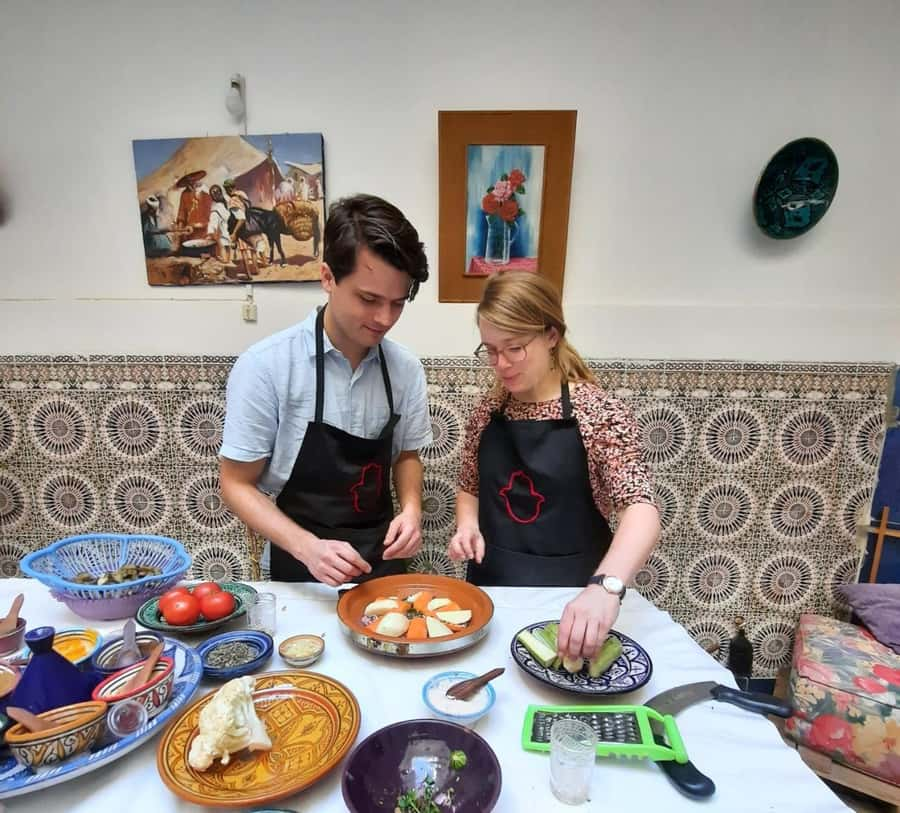
The market stop is not just a shopping errand. It shows you that Moroccan cooking starts with choosing good produce and balancing simple ingredients with strong seasoning.
You see the raw form of foods that later appear on the table. That makes the cooking lesson easier to understand. A tagine becomes less mysterious when you have just selected the vegetables, chicken, herbs, or spices that will go into it.
It also gives you a small connection to everyday Marrakech. The visit is short and focused, so you should not expect a full explanation of every souk trade or neighborhood. Its value is in linking the market to the meal.
Should you book the Khmisa cooking class?
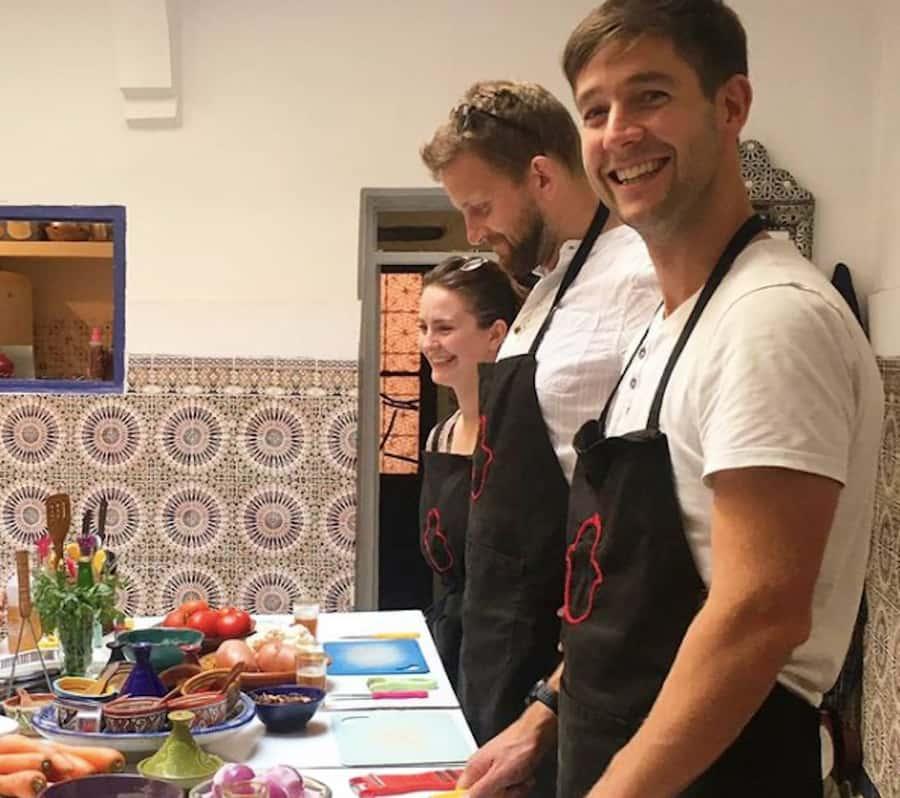
Book it if you want a hands-on introduction to Moroccan food, especially if you like shared meals, local markets, and recipes you can try at home. The combination of fresh market shopping, tea instruction, several dishes, a full meal, and electronic recipes offers a lot for $40.
I would be more cautious if accessibility, a private setting, or exact culinary measurements matter most to you. Confirm the meeting-point entrance, explain dietary needs early, and remember that the menu and host team can vary.
For most food-minded visitors to Marrakech, this is a smart half-day-sized activity with real participation rather than a passive show. You leave with a full stomach, a better sense of Moroccan flavors, and practical recipes that can bring the Medina kitchen to your own home.
FAQ
How much does the Marrakech cooking class cost?
The experience costs $40 per person.
What is included in the price?
The price includes lunch or dinner, a local guide, a Moroccan chef, all ingredients, a short market walk, Moroccan tea, and electronic recipes.
Is hotel pickup and drop-off included?
No. Hotel pickup and drop-off are not included, so you need to reach the meeting point yourself.
What languages are available?
The experience is offered in English, French, and Arabic.
How many people are in the cooking group?
The listed group size is 12 people, although the number can vary. Smaller groups are possible.
What food is prepared during the class?
The menu can include three to six Moroccan dishes, with starters, a main course, and milk pastilla for dessert. Examples include Moroccan salads, chicken tagine, and vegetarian tagine.
Are private classes available?
Yes. Private sessions are available on request. The standard class is shared.
Is the experience suitable for wheelchair users?
No. The experience is not suitable for wheelchair users. Comfortable shoes and a hair tie are recommended.
Just added for Marrakech
- Marrakech: Tailor-Made City Tour With Your Own Private Guide★ 4.9 · 236 reviews
- Marrakech palm grove: Sunset camel ride★ 4.8 · 194 reviews
- Sparkling Marrakech through the eyes of your local Guide★ 4.7 · 247 reviews
- Quad Bike Activity in Marrakech Palmeraie★ 4.2 · 123 reviews
- Marrakech: Historical Discovery Tour★ 4.1 · 87 reviews
- Marrakech: Palm Grove Horseback Riding Tour★ 4.6 · 163 reviews
- Moroccan Food Cooking Class with a Local Chef in Marrakech★ 4.7 · 90 reviews
- Marrakech: Babouch Making Workshop in the Medina★ 4.9 · 117 reviews
Cooking Classes, compared.
Moroccan Dishes Cooking Class with a Local Chef
Read our review →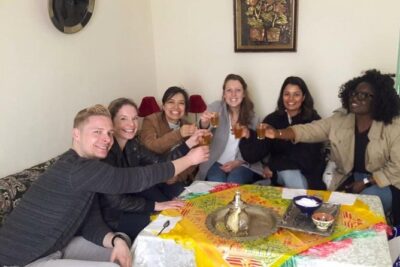
Moroccan Cooking Class & Marrakech Market Visit with Chef Khmisa
Read our review →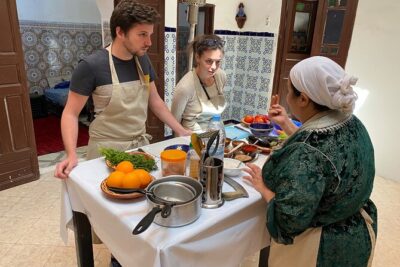
Half-Day Cooking Class with Local Chef Laila in Marrakech
Read our review →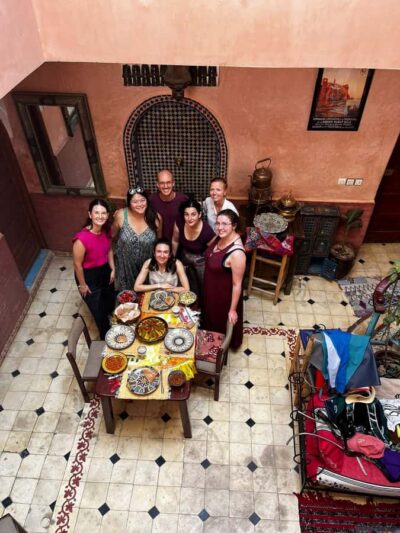
Browse the lists this tour appears in