
Reviewed · 4-DAY EXPERIENCES
Aswan to Luxor: 4-Day Private Nile Journey
The magic here is the steady rhythm of ancient temples by day and Nile sailing by night. You move from Aswan’s island sanctuary of Philae to Kom Ombo, Edfu, Karnak, Luxor Temple, and the Valley of the Kings without repeatedly packing and unpacking. I especially like the combination of a three-night full-board cruise and a small group capped at 10 people. You also get a useful one-way route, starting in Aswan and finishing near Luxor Airport.
The main caution is the pace. Abu Simbel takes about three and a half hours each way by car, and the sightseeing days are full. At $840 per person, the package can be good value because it includes the cruise, meals, guides, transport, and listed excursions, but confirm exactly which entrance tickets are covered before paying.
Key points to know before booking
- Three nights on the Nile: You sail from Aswan toward Luxor, with meals and excursions built into the schedule.
- A strong ancient-Egypt route: Philae, Kom Ombo, Edfu, Karnak, Luxor Temple, Hatshepsut, and the Valley of the Kings are all included.
- Abu Simbel is optional: The temples are remarkable, but the road journey takes roughly seven hours round trip from Aswan.
- Small-group format: The maximum group size is 10, which should make guide contact and transfers easier.
- Guide quality matters: Tamer is one named guide associated with the experience and was praised for excellent organization and service.
- One-way convenience: The tour begins in Aswan and ends at Luxor Airport, saving you from retracing the route.
Three nights between Aswan and Luxor
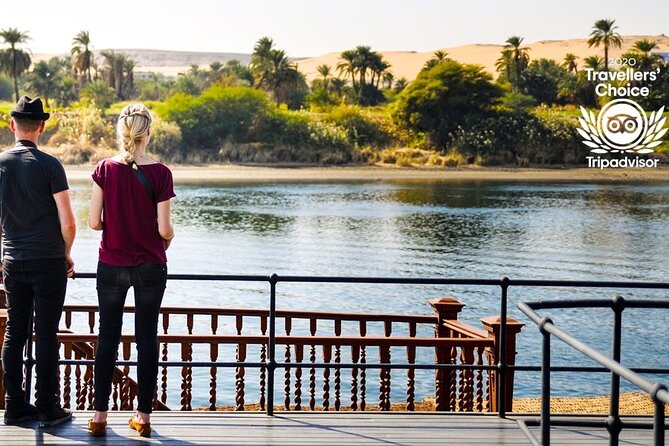
A Nile cruise gives this trip its shape. Instead of treating each temple as an isolated day trip, you travel through the same river corridor that made ancient Egypt possible. The desert banks slide past while the boat handles the long movement between sites.
The cruise operates on Fridays, Mondays, and Wednesdays, so your arrival in Aswan needs to match the sailing schedule. This is not a flexible daily departure. Plan that first flight, train journey, or hotel night carefully.
The boat is described as a standard five-star cruise vessel, with breakfast, lunch, and dinner included for all three nights. Drinks are extra, and tipping for the cruise crew, guides, and drivers is not included. Those exclusions are normal for this kind of trip, but they affect your final budget.
The small maximum group of 10 is a real advantage. You are less likely to disappear at the back of a large coach, and it should be easier to hear explanations at crowded monuments. The experience still depends on the guide and the daily schedule, but the format is more personal than a large group cruise.
More four-day routes from Aswan & Abu Simbel:
- 4-Day 3-Night Nile Cruise from Aswan to Luxor&Abu Simbel+Balloon
★ 5.0 · 2,023 reviews - 4-Day 3-Night Nile Cruise from Aswan to Luxor including Abu Simbel, Air Balloon
★ 4.5 · 612 reviews - From Aswan: 4-Day Nile Cruise from Aswan to Luxor with Guide
★ 4.1 · 593 reviews
Day one: Philae, the quarry, and Aswan
Your guide meets you at Aswan Airport at the exit door, holding a sign with your name. That is a useful arrival arrangement, especially if this is your first time in Egypt and you are arriving after a long flight.
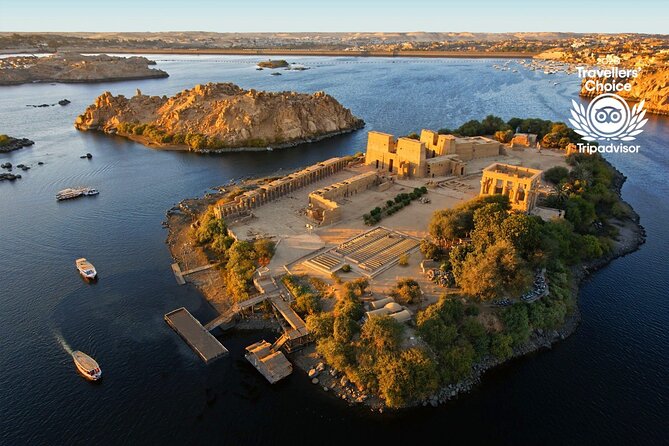
The first major stop is Philae Temple, reached by motorized boat to Agilika Island. The boat ride is part of the charm. The temple was dedicated to Isis, an important goddess linked with motherhood, magic, and kingship, and the site carries Egyptian, Greek, and Roman layers.
Philae’s present location is also a lesson in modern Egyptian engineering. When the Aswan High Dam threatened the original island with flooding, the temple complex was dismantled and rebuilt on Agilika. I find that context makes the visit more meaningful. You are not simply looking at old columns. You are seeing both an ancient sanctuary and a major rescue project from the modern era.
The visit lasts about two hours. The official information says admission tickets are included among the tour inclusions, while individual itinerary entries label admission as not included. That wording deserves clarification before departure. Ask the operator to confirm whether Philae, the Unfinished Obelisk, and every other listed site are covered in the $840 price.
You also visit the granite quarries and the Unfinished Obelisk. This giant stone gives you a practical look at how ancient stoneworkers shaped monuments. Because the obelisk was abandoned before completion, cracks in the granite reveal the limits of the material and the risks of working on such a huge block.
The first day is fairly compact compared with the days ahead, but it gives you two important ideas: Egypt’s temples were active religious places, and modern dams have changed the setting of ancient monuments.
Day two: Abu Simbel or Kom Ombo
Abu Simbel is an optional add-on from Aswan by car. The journey takes about three and a half hours each way, so this is a very long day. You should choose it because the temples matter to you, not because you think it will be a quick extra stop.
The great temple of Ramses II has four colossal statues on its façade, each about 70 feet high. Nearby, the temple of Queen Nefertari adds a second royal monument and gives the visit a different focus. Like Philae, Abu Simbel was dismantled and moved to protect it from the waters created by the Aswan High Dam.
That rescue story makes Abu Simbel especially valuable. You see an ancient monument, but you also see the result of an enormous international effort to preserve it. The drawback is simple: the road time is substantial, and the optional cost is not included.
If you skip Abu Simbel, the cruise continues toward Kom Ombo. You go ashore at this unusual riverside temple, whose name is often translated as Hill of Gold. The Greco-Roman complex was dedicated to Haroeris, the sun god, and Sobek, the crocodile god.
Kom Ombo is memorable because the temple has a double dedication. Its paired design reflects the worship of two divine figures and gives your guide plenty to explain. Sobek was linked with the Nile, fertility, and creation, while the crocodile imagery reminds you that the river was both a source of life and a force to respect.
The temple visit lasts about two hours. You return to the boat afterward, and the cruise becomes part of the experience rather than merely transportation.
Day three: Edfu, Karnak, and Luxor Temple
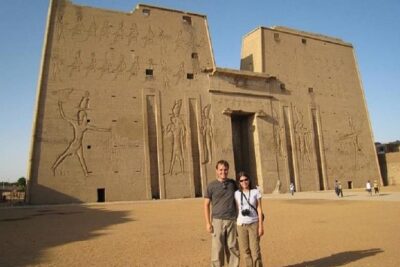
The schedule includes a visit to the Temple of Horus, the falcon-headed sky god. This is the temple at Edfu, built in the Ptolemaic period, with construction beginning under Ptolemy III in 237 BC. It is one of Egypt’s best-preserved temple complexes, and its walls retain much of the detail that makes ancient Egyptian worship easier to picture.
Edfu works well in the middle of a Nile cruise because the building still feels like a complete temple rather than a scattered collection of ruins. You can follow the approach through the monumental entrance and see how courtyards, halls, and sanctuaries were arranged.
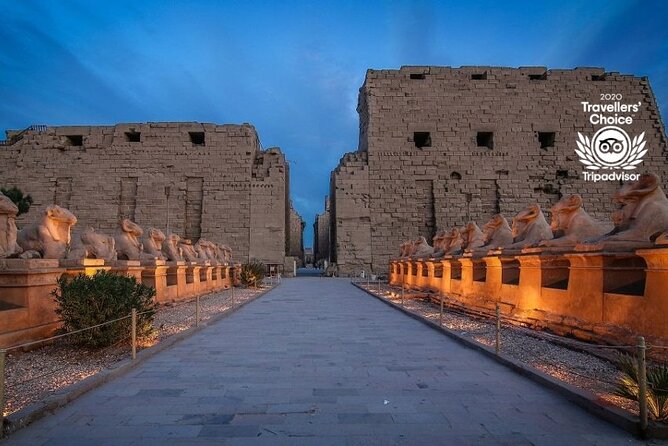
Later, the boat reaches Luxor and you cross to the east bank for Karnak Temple. Karnak is not one building. It is a huge sacred complex expanded by many pharaohs over centuries, each adding halls, gateways, statues, and inscriptions.
The Great Hypostyle Hall is the great showpiece. Its forest of columns rises to about 80 feet, and the scale can make you feel very small. Take time to look up at the capitals and across the carved surfaces. Your guide’s explanations are important here because the site can otherwise become a blur of names and stone.
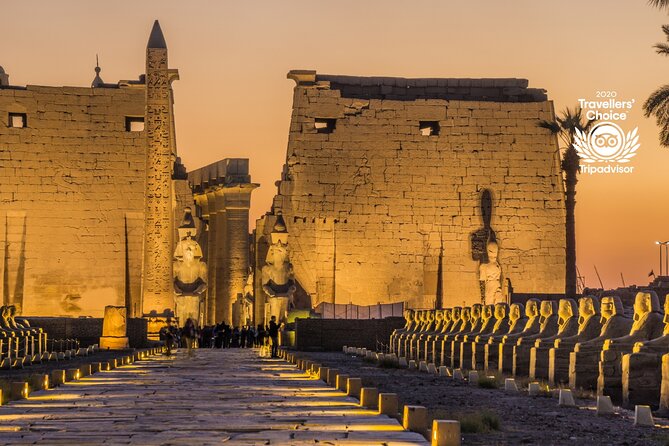
You then continue to Luxor Temple, where the front pylons are associated with Ramses II and the courtyard and colonnade reflect later building campaigns. Luxor Temple was tied to royal ceremonies and the annual Opet festival, when the sacred images of the gods were carried from Karnak.
This east-bank evening is one of the strongest parts of the trip. Karnak gives you scale, while Luxor Temple gives you a more focused sequence of courtyards, statues, and columns. The day is also demanding. Expect several hours on your feet, with heat and uneven surfaces possible at archaeological sites. Comfortable shoes, water, and a hat are sensible.
A guide named Tamer is specifically associated with the experience and was praised for organization and service. That matters most at Karnak, where a good explanation helps you understand what you are seeing instead of simply taking photographs of large stones.
A few more Aswan & Abu Simbel trips worth putting side by side
- 4-Days Nile Cruise From Aswan To Luxor including Abu Simbel and Hot Air Balloon
★ 5.0 · 3,142 reviews - From Aswan: Abu Simbel Temple Day Trip with Hotel Pickup
★ 4.4 · 2,807 reviews - From Aswan: 3-Day Cruise to Luxor with Hot Air Balloon
★ 4.3 · 598 reviews - Luxor: Abu Simbel Temple Private Guided Day Trip with Lunch
★ 4.6 · 546 reviews
Day four: Hatshepsut and the Valley of the Kings
The final morning takes you to Luxor’s west bank, the ancient Necropolis of Thebes. You begin near the Colossi of Memnon, two huge seated figures that once guarded the entrance to a temple complex built for Amenhotep III.
You continue to the Temple of Hatshepsut, a striking terraced monument set against the cliffs. Hatshepsut ruled as pharaoh and is remembered as one of Egypt’s most successful leaders. The temple gives you a chance to consider royal power from a different angle, since much of the route focuses on male kings such as Ramses II.
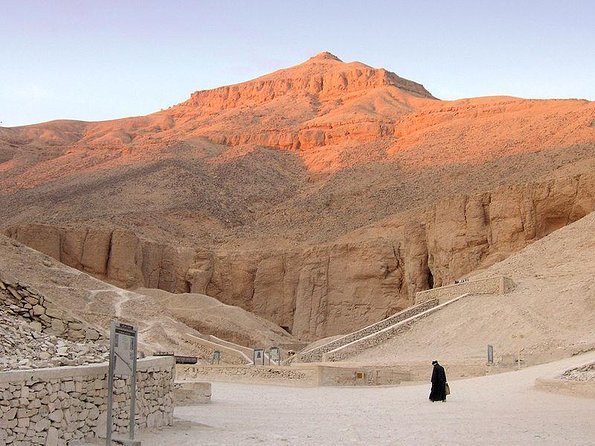
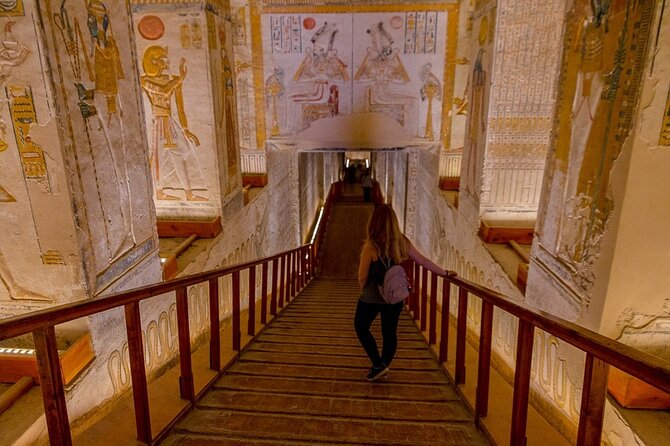
The main event is the Valley of the Kings, where pharaohs and nobles were buried for roughly 500 years beginning in the 16th century BC. The valley is a UNESCO World Heritage Site, but its importance is not only the designation. The tombs show how burial chambers were decorated with scenes and texts intended to guide the dead through the afterlife.
Tutankhamun’s tomb is available with an extra ticket purchased on the spot. The chamber is famous because Howard Carter found it in 1922, but it is not the largest or most richly decorated tomb in the valley. You are paying for the connection to one of archaeology’s most famous discoveries, along with the chance to see the boy king’s burial chamber.
The west-bank visit lasts about four hours. The timing is useful for a flight from Luxor Airport, since the tour ends with a transfer there, but do not book a dangerously tight onward connection. The schedule includes several major sites, and the exact transfer time can vary.
What the $840 price really covers
At $840 per person, this is not a budget Nile trip. It becomes more appealing when you count what is bundled: three nights aboard the cruise, three breakfasts, three lunches, three dinners, an Egyptologist guide, arrival and departure assistance, private air-conditioned vehicle transfers, and the excursions listed in the program.
The cruise is described as five-star standard rather than luxury. That distinction matters. You should expect a comfortable organized vessel, not necessarily an ultra-luxury ship with highly personalized service. The strongest practical benefit is having accommodation, transport, meals, and sightseeing arranged in one package.
The price does not include domestic flights, drinks on board, tipping, or optional activities such as Abu Simbel and a Luxor hot-air balloon ride. You also need to clarify the entrance-fee wording. The inclusion section says site entrance fees are covered, but the individual stop descriptions say admission tickets are not included. Get that answer in writing.
The boat staff received particular praise for being polite, attentive, and helpful, and the food was described as a buffet with plenty of choice. That suggests a dependable, easy meal setup, though you should not book this solely for fine dining.
Who this Nile journey suits best
I would choose this trip if you want Egypt’s classic sights in a structured four-day route and prefer not to arrange several drivers, hotels, and site tickets yourself. It is especially suited to first-time visitors who want an expert guide and a clear route from Aswan to Luxor.
It also suits you if unpacking once and sailing between destinations sounds better than long daily road transfers. The full-board arrangement keeps the days simple, and the small group limit should help with questions and timing.
I would hesitate if you dislike early starts, hot archaeological sites, or fixed departure dates. Abu Simbel is a major extra commitment, not a casual side trip. You should also allow enough time around your Luxor flight, since the final west-bank visit comes before the airport transfer.
Confirmation is issued at booking, most people can participate, and the experience is offered with free cancellation up to 24 hours before the start time. Changes or cancellations inside that window are not accepted for a refund.
Should you book this Aswan to Luxor cruise?
Book it if you want a well-organized Nile route with the major temples, a small group, full-board cruise accommodation, and airport-to-airport support at the far ends. The combination of Philae, Kom Ombo, Edfu, Karnak, Luxor Temple, Hatshepsut, and the Valley of the Kings gives you an excellent first look at Upper Egypt.
Before committing, confirm the ship name, the exact entrance-fee policy, the price of Abu Simbel, and the timing of your onward flight. If those details suit you, $840 can be fair value for the amount of transport, guiding, accommodation, meals, and sightseeing included.
FAQ
How long is the Aswan to Luxor Nile journey?
The experience lasts approximately four days and includes three nights on board the Nile cruise.
Where does the tour begin?
It begins in Aswan, in Aswan Governorate, Egypt. Airport pickup is offered, with a guide meeting you at the exit door holding a sign with your name.
Where does the tour end?
The tour ends in Luxor, with a transfer to Luxor Airport.
Which days does the cruise depart?
Cruises operate every Friday, Monday, or Wednesday.
Is Abu Simbel included?
No. Abu Simbel is an optional excursion from Aswan by car and is not included in the tour price. The drive takes about three and a half hours each way.
Are meals included?
Yes. The package includes three breakfasts, three lunches, and three dinners during the three-night cruise. Drinks on board are not included.
Are entrance fees included?
The tour information says entrance fees to listed sites are included, but individual stop descriptions also say admission tickets are not included. Confirm this point with Journey To Egypt before booking.
How large is the group?
The experience has a maximum of 10 travelers.
Can I cancel for a full refund?
Yes, if you cancel at least 24 hours before the experience start time. Cancellations or changes made less than 24 hours before the start are not accepted for a refund.
Just added for Aswan & Abu Simbel
- Egypt 8 Days Cairo,Nile cruise,Luxor,Aswan from Cairo airport★ 5.0 · 79 reviews
- Egypt on Budget – 8 Days ( Cairo , Aswan , Nile Cruise – Luxor ) Sleeper Train★ 4.5 · 121 reviews
- 5 days 4 night Nile Cruise: Luxor to Aswan with Flight from Cairo★ 4.5 · 96 reviews
- Our Exceptional 5 days Cairo, Luxor and Abu Simbel Tour Package★ 5.0 · 212 reviews
- Full Day Tour to Abu Simbel Temples from Aswan★ 4.5 · 218 reviews
- Abu Simbel Private Full-Day Tour from Aswan★ 5.0 · 114 reviews
- Sailing Nile Cruise from Aswan to Luxor for 2 Nights★ 4.5 · 139 reviews
- Amazing 3-Nights Cruise From Aswan To Luxor including Abu Simbel&Hot Air Balloon★ 5.0 · 160 reviews
4-Day Experiences, compared.
4-Day 3-Night Nile Cruise from Aswan to Luxor&Abu Simbel+Balloon
Read our review →
4-Day 3-Night Nile Cruise from Aswan to Luxor including Abu Simbel, Air Balloon
Read our review →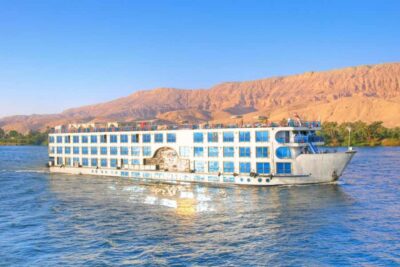
4-Day Nile Cruise from Aswan to Luxor with Guide
Read our review →
Agadir/Taghazout/Port: Sahara Desert 4×4 Day Trip with Lunch
Read our review →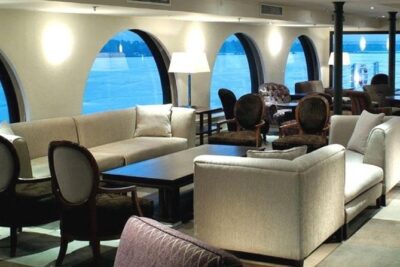
4-Day 3-Night Nile Cruise from Aswan to Luxor – Private Tour
Read our review →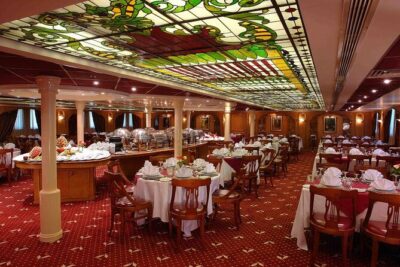
4 Days Nile Cruise from Aswan to Luxor including Abu Simbel and Hot Air Balloon
Read our review →
Browse the lists this tour appears in