

Reviewed · WALKING TOURS
Stone Town Private Walking Tour
Stone Town makes a poor first-date partner if you expect it to explain itself. Its narrow lanes twist past carved doors, markets, mosques, cathedrals, old palaces, and walls with little warning. This private two-hour walk gives you a local guide to sort out the maze and connect the sights.
I like the personal format, which lets you ask questions and adjust the pace. I also like the practical local advice, from where to eat and drink to how to find your way back later. The main drawback is time: two hours gives you a strong introduction, not a full study of Stone Town, and some visitors feel the walk includes too many shopping stops.
Key points to know before you book

- Old Fort makes a useful starting point: You begin with an easy introduction to Zanzibar’s past, religion, and position in the Indian Ocean world.
- The route covers major sights: Expect the former slave market and Anglican Cathedral, House of Wonders, Palace Museum, Darajani Market, Hamamni Baths, Catholic Cathedral, and Freddie Mercury’s house.
- A private guide helps in the maze: Only your group takes part, so you can ask for slower explanations or spend more time where your interest lies.
- The doors deserve attention: Carved wooden doors reveal layers of African, Arab, Indian, Persian, and European influence.
- Hotel pickup is limited: Pickup is available from Stone Town hotels if you request it in advance. Transport from other parts of Zanzibar is not included.
- The price is modest for private guiding: At $26.23 per person, the value improves with a small group, but you should confirm the meeting details before setting out.
Why Stone Town is better with a guide

Stone Town covers about 50 hectares and contains more than 2,000 limestone buildings. Its lanes can look similar, and the most interesting details are easy to miss when you are busy checking a map.
The city was designated a UNESCO World Heritage Site in 2000. That label matters here because Stone Town is not just a collection of old buildings. Its architecture reflects African, Arab, Indian, Persian, and European influences built up over centuries of trade, faith, migration, and colonial rule.
A guide gives those layers a human scale. Instead of simply passing an ornate doorway, you can ask why it looks that way. Instead of seeing the Old Fort as a weathered stone enclosure, you get a starting point for understanding Zanzibar’s political and religious past.
The private setup is especially useful on a first day. Your guide can explain the layout, point out useful streets, and help you feel less lost when you return on your own. Guides named in the feedback include Mohammed, Muhammad, Imran, and Ally Jape. The strongest descriptions of the experience consistently focus on clear English, patience, humor, and a willingness to answer questions in detail.
More Walking Tours in Tanzania
- Zanzibar: 3 Hours Private Stone Town walking Tour with Guide
★ 4.6 · 301 reviews - Zanzibar: Stone Town Historical Cultural Walking Guided Tour
★ 4.5 · 179 reviews - Stonetown: Food Markets and Street Food Walking Tour
★ 4.7 · 151 reviews
Starting at the Tourist Information Center
The listed meeting point is the Zanzibar Tourist Information Center on Mizingani Road. The walk ends back there, which gives you a fixed reference point in a part of town that can otherwise feel like a puzzle.
Some Stone Town hotels can arrange pickup, but you need to request it and send a message in advance. This is worth doing if you have just arrived, are carrying luggage, or are staying in a lane that is difficult to identify on a map. Pickup does not extend to hotels elsewhere on the island, and transport from those areas is not part of the experience.
I would book this near the beginning of your stay. You will learn the basic geography first, then recognize places later when you return for a meal, shopping, or a second look at the market. The two-hour length also fits neatly after checking into a hotel or before an evening plan.
The Old Fort and Stone Town’s first lesson
The Old Fort is a sensible place to begin because it gives the guide room to explain the broad story of Zanzibar before the walk turns into a series of smaller details. The tour uses the fort area to introduce the island’s history and religion, then connects those subjects to the streets around it.
Do not expect an extended archaeological visit. The focus is orientation. You are learning how Stone Town developed and why different communities left their mark on the city.
This is also where a private tour can be more useful than a large group outing. If you want more detail about religion, architecture, or the island’s past, you can ask immediately. If you prefer to keep moving, you can do that too.
The former slave market and Anglican Cathedral
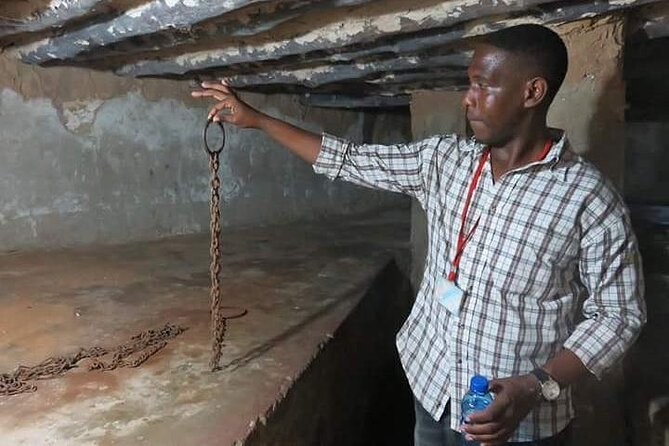
The Anglican Cathedral occupies the site of the former slave market, making this one of the most serious stops on the walk. You can expect an introduction to the slave trade and the role Zanzibar played in that system, followed by a visit to the museum area.
The subject is difficult, and the interpretation may feel simplified to some visitors. One criticism is that the museum gives too much attention to the British role in ending the trade while giving less weight to the larger and more complicated network that sustained it. That does not make the stop unimportant, but it means you may want to do additional reading if this part of the island’s past matters especially to you.
The value here is not only the information. Seeing the site in the middle of modern Stone Town gives the subject a physical presence. It links the city’s grand buildings and trading past to the suffering that also shaped its economy.
More Walking Tours in Zanzibar
- Stone Town’s Hidden History: Private Guided Walking Tour
★ 4.6 · 94 reviews
Carved doors and the language of architecture

The doors are one of the most memorable parts of the walk. They are easy to pass without a guide, but the carving, size, and ornament often reflect the owner’s status, taste, and cultural background.
The guide can point out the meaning behind door designs and explain how African, Arab, Indian, Persian, and European influences appear in Stone Town’s buildings. You might find that this is the point when the city begins to make sense as more than a maze of old walls.
This is a good example of why the walk works best with questions. Ask your guide to stop at doors that catch your eye. The pace is adjustable, and several people specifically valued being able to slow down or move faster in certain areas.
House of Wonders, Palace Museum, and the city’s public face

The House of Wonders is identified as the national museum, while the Palace Museum offers another look at Zanzibar’s ruling families and public life. The itinerary includes both, though the walk is designed as a broad introduction rather than a long museum study.
You should think of these stops as visual anchors. They help explain how power was displayed in Stone Town, how the ruling elite lived, and how the city connected local life with wider Indian Ocean trade.
The tour is strongest when the guide adds context to what you are seeing. Mohammed O. Mohamed, for example, is praised for answering detailed questions and sharing small facts that make the buildings easier to understand. The quality of your experience will depend partly on the guide assigned that day, so a private format gives you a better chance to shape the conversation.
Darajani Market and the everyday city

Darajani Market brings the tour down from palaces and formal buildings to daily commerce. You may see spices and other goods, and the market gives you a better sense of how Stone Town functions beyond its historic façades.
A fish-market auction has also been singled out as an interesting moment along the way. Market visits can be crowded and noisy, so this is not a polished sightseeing stop. That is part of its value, but it also means you should watch your footing and keep your belongings secure.
The market is useful for practical advice. Your guide can point out places to eat, explain products, and help you understand what you are seeing. One guide even helped with souvenir bargaining, arranged a tuk-tuk ride, and directed the group to Lukmaan for lunch. Those extras are not guaranteed, but they show the kind of local help a private walk can provide.
Hamamni Baths and the religious landmarks
The route includes Hamamni Baths, the Catholic Cathedral, and the Anglican Cathedral. Together, these sites show how public life in Stone Town was shaped by religion, community, and social customs.
The Hamamni Baths are particularly useful for understanding how residents once used shared facilities. The cathedrals add another layer to a city often described only through its Islamic and Arab connections. Stone Town’s identity is broader than any single tradition.
You should not expect long interior visits at every landmark. The tour covers many places in two hours, so some stops will be brief. I would treat this portion as a guided city portrait, then return independently to the buildings that interest you most.
Freddie Mercury’s house and modern Stone Town
Freddie Mercury’s house adds a modern cultural note to an otherwise strongly historical route. It reminds you that Stone Town is not frozen in the past. The city remains tied to contemporary music, local residents, commerce, and ordinary life.
The stop may be brief, but it is useful for travelers who know Zanzibar mainly through its beaches or through the singer’s connection to the island. It also breaks up the heavier material at the former slave market and the older political sites.
Because the tour is private, you can tell your guide what interests you most. A music fan may want more time around this stop, while another visitor may prefer to focus on architecture, religion, or the market.
What the two-hour format really gives you
Two hours is enough to get oriented, learn the main story, and identify places to revisit. It is not enough to study every museum, linger at every market stall, and explore each lane at leisure.
That short format is a strength if you have limited time or want an introduction before making your own plans. It is less suitable if you want a specialist architectural tour or a full day devoted to Stone Town.
The pace can vary. One guide may provide a fast-moving overview, while another may stop often to explain details. You can improve the experience by stating your priorities at the start. Say if you care most about slavery and religion, carved doors and architecture, markets and food, or modern local life.
Guide quality and the private format
The most praised guides are described as friendly, patient, professional, and able to explain Zanzibar in clear English. Mohammed is repeatedly singled out for humor, detailed answers, and a good pace. Imran is praised for combining the city’s long story with current challenges involving its buildings and livability. Ally Jape is described as especially engaging and willing to share informed opinions.
That said, guide quality can vary, and one person found the tour too focused on shopping with too little historical explanation. This is a fair warning. Tell your guide early that you want the balance to favor history and culture if that is your priority.
The private arrangement gives you more control than a standard group walk. A solo visitor can ask questions without holding up strangers, and a family or small group can adjust the pace. The listing also allows group discounts, so the per-person price may make more sense when shared across a small party.
Is $26.23 good value?
At $26.23 per person, this is a reasonable price for a private introduction to Stone Town, especially if you are alone or traveling with a few companions. You are paying for a professional guide, not for meals, drinks, museum extras, or island-wide transport.
The value comes from saved time and better orientation. Stone Town is walkable, but wandering alone can mean missing the meaning behind the doors, passing important buildings without understanding them, or spending too long trying to find the next sight.
The value is weaker if you dislike guided shopping stops or prefer to explore without a planned route. It is also less useful for someone who already knows Stone Town well. For a first visit, though, the low price and private format make this a practical way to get started.
Wear comfortable walking shoes and plan for a full two hours on foot. The route includes narrow streets, market areas, and historic sites. The activity requires good weather, and a cancellation caused by poor weather should result in another date or a full refund.
Booking, communication, and cancellation
Confirmation is provided at booking. Since hotel pickup requires an advance request, send your accommodation details and confirm where you will meet before the day of the walk.
Communication matters. One booking had a poor start when no one appeared at the agreed time and the supplied phone number did not work. An email response did eventually bring guide Imran to the hotel within minutes, but this is a useful reason to recheck the meeting point and contact details ahead of time.
You can cancel for a full refund up to 24 hours before the local start time. Cancellations or changes made within 24 hours are not refunded or accepted. If bad weather cancels the walk, you should be offered another date or a full refund.
Who should book this Stone Town walk?
I would book it for a first-time visitor who wants a clear introduction without committing to a full-day tour. It suits solo visitors especially well, since a guide makes the maze less intimidating and gives you someone to ask about food, transport, and local customs.
It also suits couples, families, and small groups who want a private pace. History fans will appreciate the former slave market, religious sites, and architectural details, though anyone seeking specialist-level depth should plan additional museum time or research.
I would think twice if you want a completely unstructured walk, dislike markets, or are already comfortable navigating Stone Town. The tour can also feel rushed if you expect to enter and study every landmark.
Should you book it?
Book this tour if you want to get your bearings quickly, understand why Stone Town looks the way it does, and ask a local guide direct questions. The route covers an impressive number of landmarks for two hours, and the private format makes the walk more personal than a standard group outing.
Keep your expectations realistic. This is an introduction, not an exhaustive study, and the experience may include shopping-oriented stops. Ask for a history and culture focus from the start, confirm your meeting details, and use the walk to decide which places deserve a longer visit later.
FAQ
How long does the Stone Town Private Walking Tour last?
The tour lasts approximately two hours.
Where does the tour start?
It starts at the Zanzibar Tourist Information Center on Mizingani Road in Zanzibar, Tanzania.
Where does the tour end?
The activity ends back at the meeting point.
Is hotel pickup included?
Pickup is available from hotels in Stone Town, but you must request it and send a message in advance.
Is transport from other parts of Zanzibar included?
No. The tour starts in Stone Town, and transfers from other parts of the island are not included.
Is this a private activity?
Yes. Only your group participates in the activity.
What landmarks are included?
The route includes Stone Town, the Anglican Cathedral and former slave market, House of Wonders, Palace Museum, Old Fort, Darajani Market, Hamamni Baths, Catholic Cathedral, and Freddie Mercury’s house.
Are food and drinks included?
No. Food and drinks are not included.
Are guide gratuities included?
No. Tips and gratuities for the guide are not included.
What is the cancellation policy?
You can cancel at least 24 hours before the local start time for a full refund. Cancellations or changes within 24 hours are not accepted or refunded. If poor weather cancels the activity, you will be offered another date or a full refund.
Just added for Zanzibar
- SWIMMING WITH TURTLES AT SALAAM CAVE AT KIZIMKAZI ZANZIBAR★ 4.2 · 112 reviews
- Stone Town: Stone Town and Prison Island Private Day Trip★ 4.5 · 104 reviews
- Stone Town’s Hidden History: Private Guided Walking Tour★ 4.6 · 94 reviews
- Zanzibar: Mnemba Island, Prison Island and Salaam Cave Tour★ 4.5 · 150 reviews
- Mnemba from Kendwa & nungwi half day★ 4.5 · 94 reviews
- Matemwe: Mnemba Island Dolphin & Snorkeling Boat Trip★ 4.3 · 152 reviews
- Stonetown: Food Markets and Street Food Walking Tour★ 4.7 · 151 reviews
- 12 days Luxury Tanzania Honeymoon Safari and Zanzibar★ 5.0 · 105 reviews
Walking Tours, compared.

Ben Youssef, Secret Garden, & Souks Walking Tour
Read our review →
Explore Fes: Unforgettable Guided Walking Tour of the Medina
Read our review →
Old Cairo Guided Walk Tour: History, Culture & Street Bites
Read our review →

Plettenberg Bay: Bungee Jumping with Zipline and Sky Walk
Read our review →
Walking Tour Through Old Town Mombasa and Fort Jesus
Read our review →Browse the lists this tour appears in