
Reviewed · WILDLIFE SAFARIS
From Johannesburg: Pilanesberg Nature Reserve Game Safari
Pilanesberg gives you a proper taste of the African bush without requiring a lodge stay or a second flight. Two open vehicle drives put you close to elephants, rhinos, giraffes, zebras, hippos, and plenty of smaller animals, while guides such as Petrus, Martin, and Desmond work hard to find the elusive cats. I especially like the hotel pickup and the generous amount of time spent inside the reserve. The main drawback is simple: the drive from Johannesburg takes about two hours each way, making this a very long day.
I also like the mix of dry Kalahari country and wetter Lowveld vegetation, plus the chance to stop near a dam where fish eagles, kingfishers, and cormorants gather. Lunch is included, but it is usually a basic meal rather than a special South African feast, and the park conservation fee is extra.
Key points to know before you book
- Expect a 12-hour day: Pickup can be around 5:45 or 6 a.m., with a return to Johannesburg before or around sunset.
- You get 4.5 to 5 hours of safari time: The day is divided into a morning drive of about 2.5 hours and an afternoon drive of about 2 hours.
- Big Five sightings are possible, not promised: Elephants, rhinos, buffalos, lions, and leopards live in the reserve, but animal sightings depend on luck, timing, and your guide’s tracking.
- The open vehicle is exciting but exposed: Bring warm layers for the early drive, then switch to light clothing, sunscreen, and a hat as the day heats up.
- Budget for the conservation fee: International visitors pay R500 at the gate, in addition to the tour price of $186 per person.
- Solo visitors can join: The shared format works well for single travelers, couples, and small groups who want a safari without booking a private vehicle.
Why Pilanesberg works as a Johannesburg safari
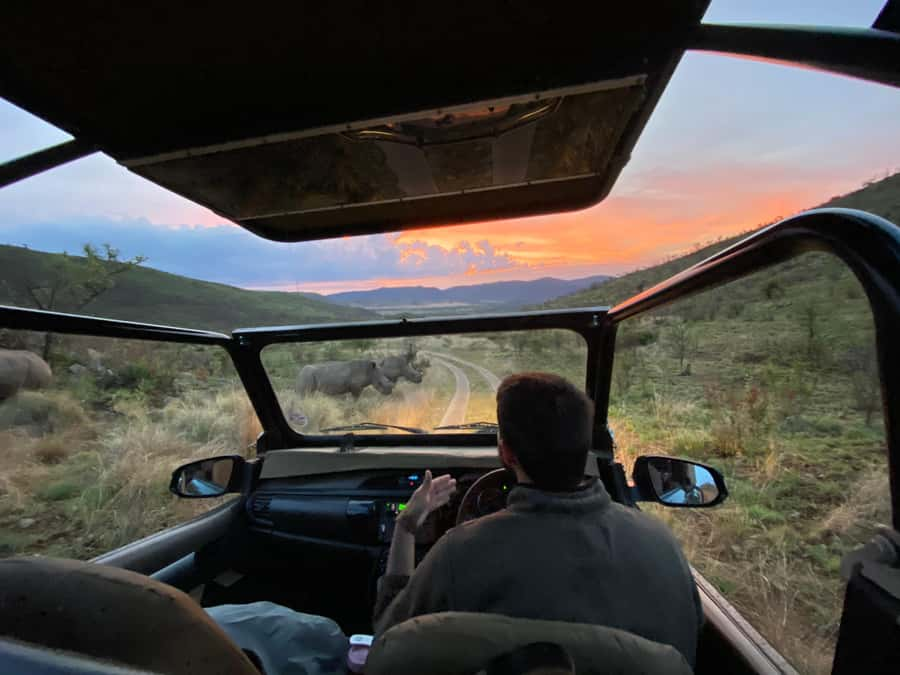
Johannesburg is a major city, but Pilanesberg quickly changes the mood. After the early hotel pickup and the long road west, the city fades and the bush takes over. The reserve is close enough for a day trip, yet large enough to feel far removed from traffic, towers, and city lights.
Pilanesberg is especially useful if you have only one spare day in the Johannesburg area. A private lodge safari usually gives you more time at the reserve, especially at dawn and dusk, but it also requires more money and planning. This tour gives you a practical middle ground: shared transport, a ranger-led vehicle, lunch, and nearly five hours looking for animals.
The reserve holds more than 7,000 animals, including the Big Five: elephant, rhino, buffalo, lion, and leopard. That sounds promising, but you should treat it as a chance rather than a guarantee. You might see three or four of the five, or you might miss the big cats and still have a fine day with elephants, giraffes, rhinos, zebras, hippos, antelope, and birds.
More Wildlife Safaris in Johannesburg & Pretoria
- Full Day Ultimate Pilanesberg National Park Safari from Johannesburg or Pretoria
★ 4.5 · 718 reviews - Early Morning Balloon Safari with Breakfast from Magaliesburg
★ 5.0 · 418 reviews - Full Day Pilanesberg Experience in Open Vehicle
★ 4.5 · 414 reviews
The early pickup and two-hour road journey
The day begins early. Hotel pickup in Johannesburg is included, and departure times can be close to 5:45 a.m. This is useful if you are staying in an area such as Sandton and do not want to arrange a taxi before dawn. It also helps the operator gather the group and reach Pilanesberg in time for the morning drive.
The road trip takes roughly two hours, though the full schedule can vary. Your transport is a bus or coach rather than the open safari vehicle. Some drivers, including Thomas, Nikki, Simon, Sunny, and Mdu, have been praised for punctual pickups, careful driving, and useful commentary along the way.
A few practical details matter here. The bus may have strong air conditioning, and some trips include Wi-Fi. Bring a neck pillow if you hope to sleep, plus a power bank if you plan to use your phone. There can be a refreshment or comfort stop, but you should not count on frequent bathroom breaks. Keep a small snack with you, since the first proper meal comes later at the reserve.
Entering Pilanesberg in an open safari vehicle
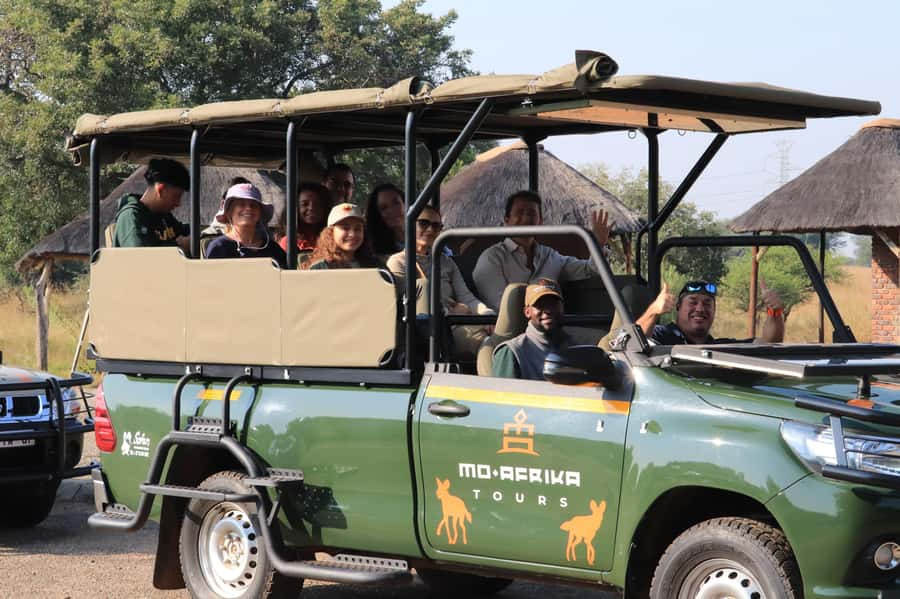
Once you reach Pilanesberg, you switch to an open safari vehicle for the first game drive. This is the part that makes the trip feel like a safari rather than a wildlife park visit. You are exposed to the air, the smell of the bush, and the changing temperature. You also get a better view than you would from a closed coach.
The morning drive lasts about 2.5 hours. Early starts can be cold, especially in winter, and the wind is strongest toward the back of the vehicle. Pack a jumper or fleece, and consider a windproof jacket, hat, and gloves during the colder months. Blankets may be available, but I would still bring your own warm layer.
As the sun rises, the temperature can change quickly. By midday, you may want light clothing, sunglasses, sunscreen, and a hat. Covering your shoulders and arms is sensible because the open vehicle offers little shade. Binoculars are also worth packing, especially for birds and distant animals.
The surroundings are one of Pilanesberg’s pleasures. You move between dry Kalahari-style vegetation and greener Lowveld growth, with hills, water, and open bush creating different places for animals to feed or rest. Near dams, you may spot hippos, crocodiles, fish eagles, kingfishers, and cormorants. The reserve offers more than a hunt for lions.
What you might see on the morning drive
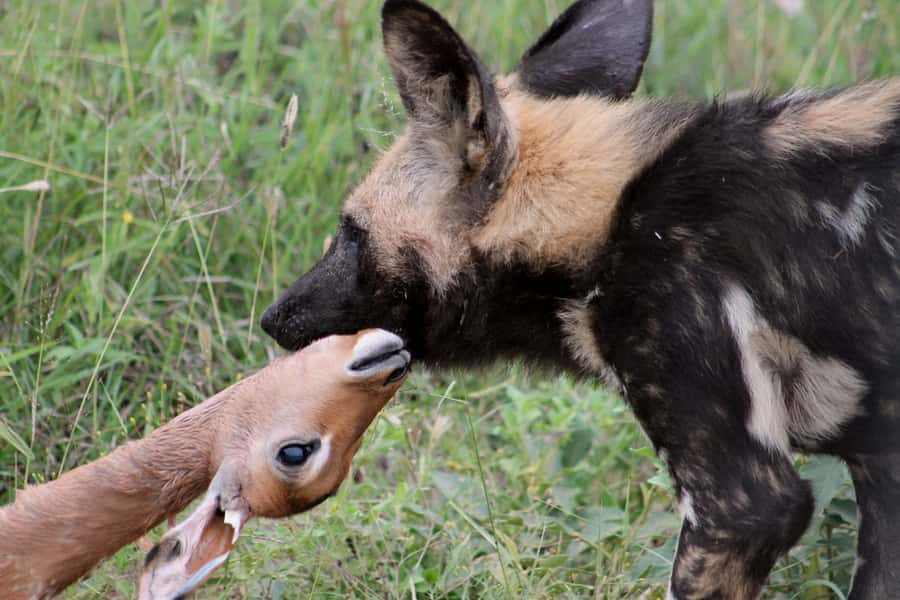
Your guide will look for tracks, movement, birds, and the telltale gathering of other safari vehicles. Guides such as Petrus, Martin, Desmond, Wisdom, Michael, Solly, and Doreen have been praised for explaining animal behavior and positioning the vehicle carefully for photographs.
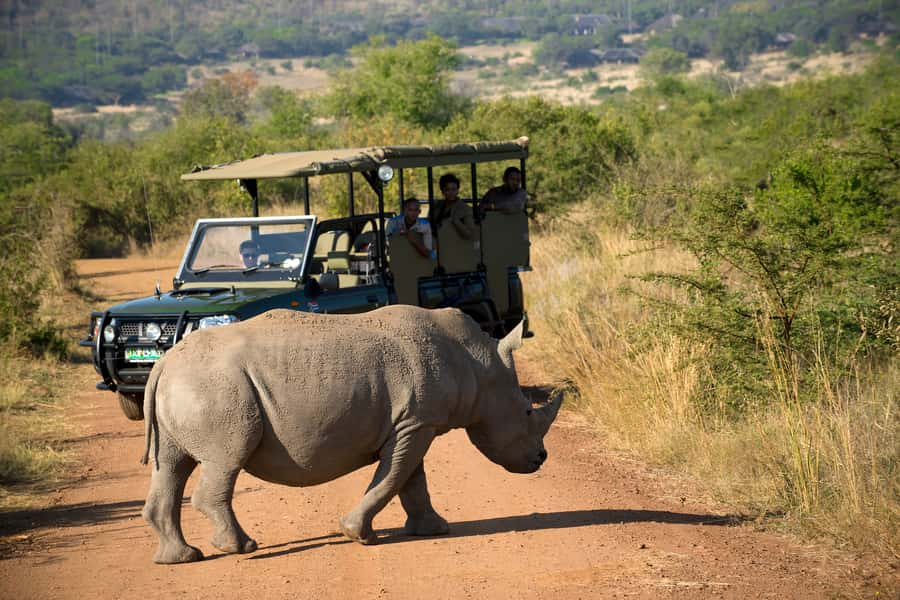
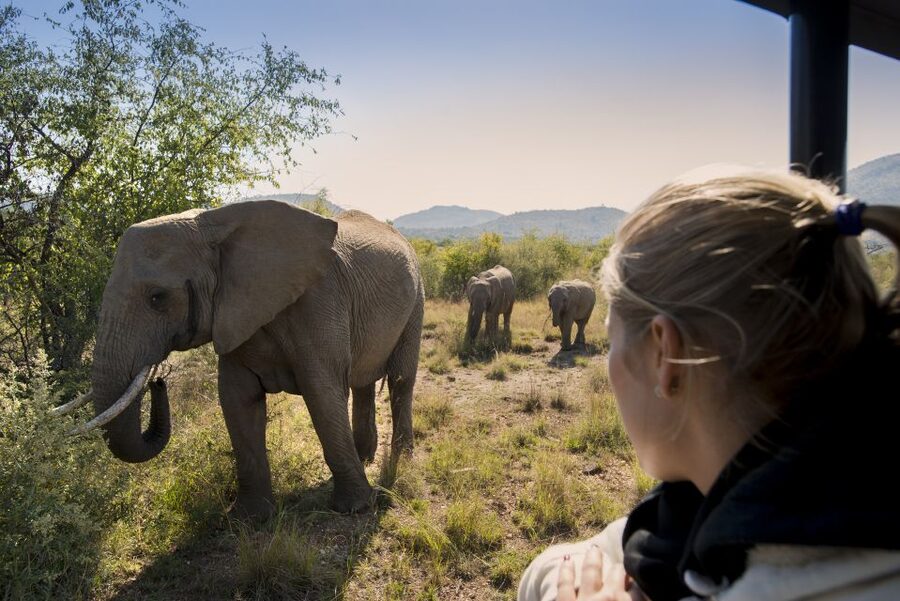
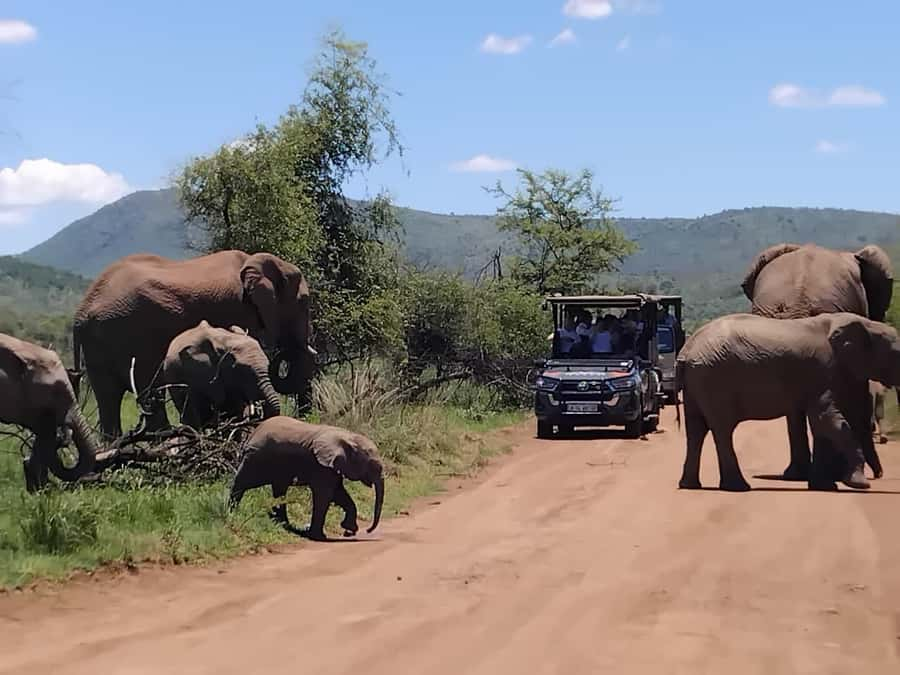
Elephants are among the most reliable highlights. The reserve can offer close views of herds, including young animals, but your guide should always keep a safe distance. Rhinos are another strong possibility, and several visitors have seen them at close range, sometimes with a very young calf nearby.
Giraffes, zebras, impalas, kudus, wildebeests, warthogs, baboons, jackals, and hippos add variety. These sightings matter because they keep the drive rewarding even when the predators are hiding. You may also see a cheetah or leopard, though those are less predictable. One guide estimated that a cheetah sighting can be very unusual, so consider it a lucky bonus rather than part of the basic promise.
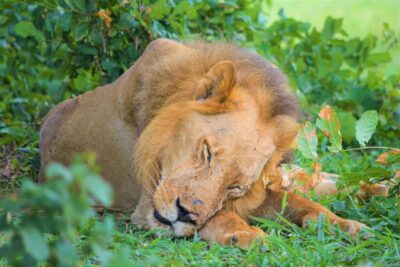
The lions may be the animals you most want to see. They can also be the animals you miss. Some groups see a lioness, while others see only part of a lion through tall grass or find signs of a recent kill. That is normal safari luck, not a failure of the trip.
More Wildlife Safaris in South Africa
- From Johannesburg: Lion & Safari Park Half-Day Tour
★ 4.6 · 384 reviews - Hartbeespoort: Predator Safari with a Guide
★ 4.8 · 267 reviews - From Sun City: Pilanesberg National Park 3-Hour Game Drive
★ 4.5 · 216 reviews - Hartbeespoort: Lion and Safari Park Tour
★ 4.8 · 103 reviews
Lunch beside the reserve’s water holes
After the morning drive, you stop for about 50 minutes to an hour at one of the reserve’s rest camps. Lunch is included, which keeps the day simple and avoids sending you back onto the road during the hottest part of the afternoon.
The meal is generally described as good and convenient, but you should set your expectations correctly. It may be a wrap, burger, or similar straightforward meal rather than a traditional braai or broad South African buffet. Portions can feel small if you arrive hungry after an early start, so bringing a snack is sensible. Extra food and drinks are not included.
The rest stop also gives you a chance to use the facilities, stretch your legs, refill water, and compare notes with the people in your vehicle. If you have been sitting in the wind all morning, this quiet pause is welcome. The setting near a water hole can add its own wildlife sightings, although animal activity is never guaranteed.
The afternoon drive and the search for predators
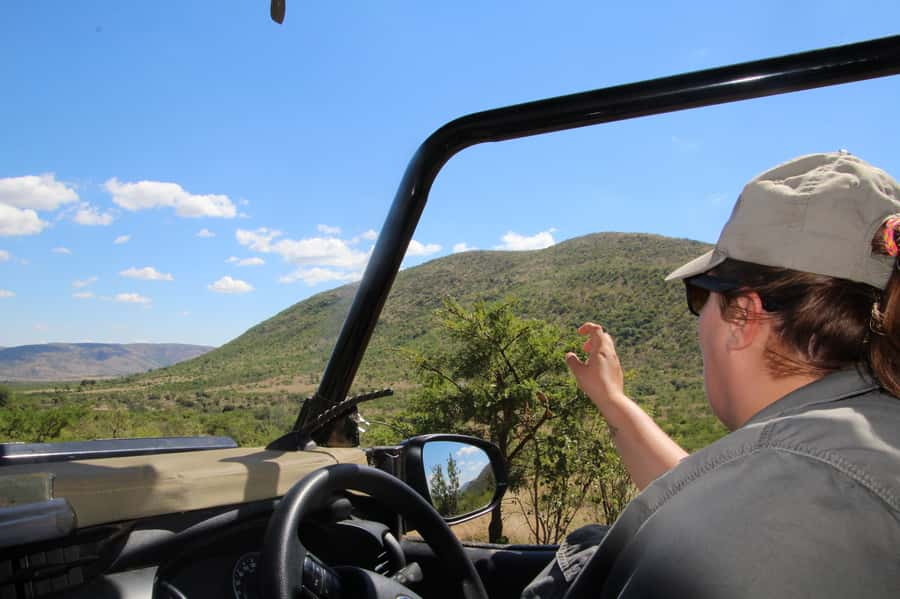
The second drive lasts about two hours. By then, the light is stronger and the heat may have changed animal behavior. Some animals settle under trees, while others move toward water. Your guide will again search for elephants, rhinos, giraffes, antelope, hippos, crocodiles, and birds, while keeping an eye out for lions, leopards, cheetahs, and hyenas.
This is where an experienced guide can make a real difference. Petrus is often praised for his humor and persistence, while Martin is described as attentive and well informed about wildlife. Desmond has been singled out for finding animals and helping with photographs. Names and assignments can change, but the operator uses local guides who know the reserve and can explain what you are seeing.
Do not expect a nonstop parade of large animals. A good safari has quiet stretches. Your guide may stop to point out tracks, explain a bird call, or describe why an animal is standing in a particular place. Those moments help you understand the reserve rather than simply collect photographs.
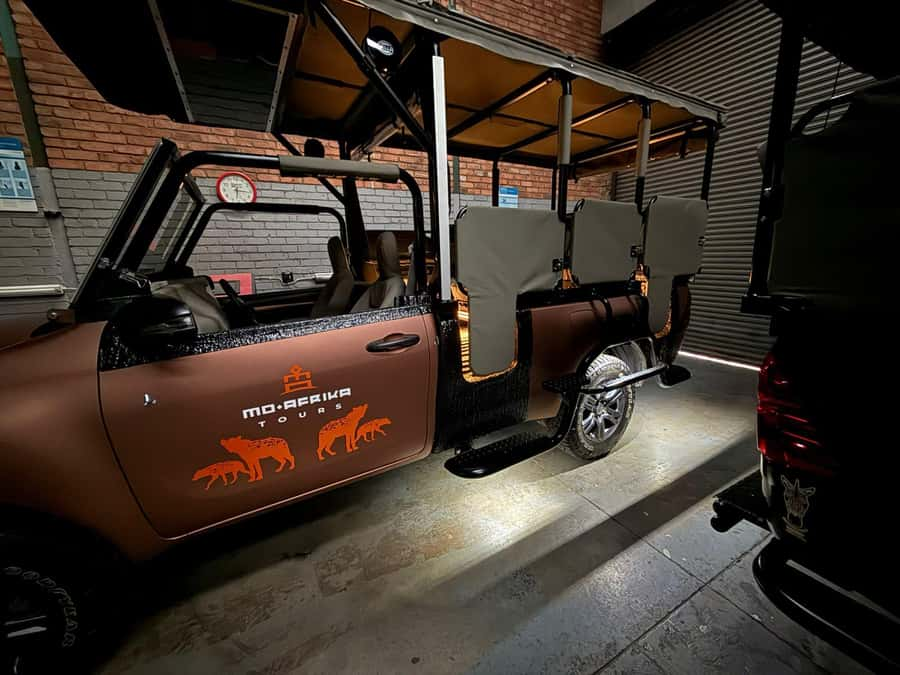
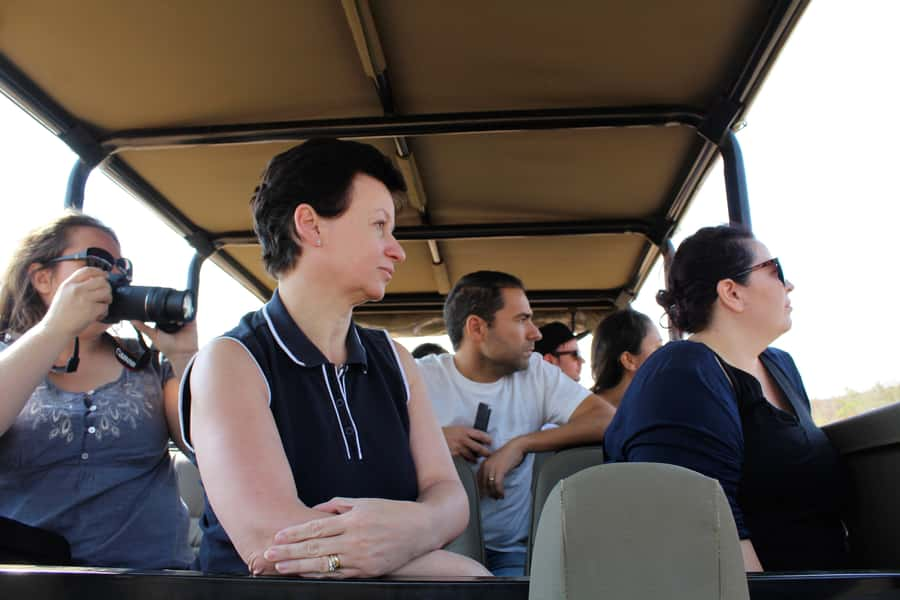
The vehicle itself is usually a Land Cruiser or similar open safari vehicle. Group size can be around 10 people, which is small enough to keep the experience social without turning it into a crowded bus ride. Ask questions as you go. The guides are there to explain the animals, plants, water sources, and natural patterns around you.
The long return to Johannesburg
After the afternoon drive, you leave Pilanesberg in the late afternoon and return to Johannesburg by road. The ride back can take about two hours, and some schedules bring you to your hotel around 6:30 p.m. You may be tired enough to sleep most of the way.
This is the tour’s clearest weakness. The day is long, and the drive represents roughly four hours of total road time. If you dislike long transfers, staying near Pilanesberg for a night or booking a lodge-based safari would give you more time in the reserve and better access to the cooler early morning and evening hours.
Still, the transport adds real value for a first-time visitor to Johannesburg. You do not need to rent a car, work out park directions, or manage the return after a full day in the sun. Drivers have also been praised for keeping to time and communicating through WhatsApp, which can make the pickup process less stressful.
What the $186 price really includes
At $186 per person, the tour is not a budget bus ride, but it covers several costly and useful parts of the day. You get hotel pickup and drop-off, transport from Johannesburg, two open safari drives, a live English-speaking guide, and lunch.
The important extra is the Pilanesberg conservation fee. International visitors pay R500 per person at the gate. SADC nationals pay R275, and South African residents pay R168. Add this charge to your spending plan before deciding that the advertised price is the full cost.
For the money, I see this as good value if you have only one day available. You get close to five hours inside the reserve, which is the main reason to book. The value is weaker if your main goal is a guaranteed lion or leopard sighting, since no ethical wildlife tour can promise that.
The tour also offers free cancellation up to 24 hours before departure and a reserve-now, pay-later option. It is wheelchair accessible, though you should still confirm that the vehicle arrangement suits your needs before booking.
Who will enjoy this safari most
I would recommend this trip to first-time safari visitors based in Johannesburg, solo visitors who do not want to arrange a private tour, couples with one free day, and families with older children. The shared vehicle creates a social atmosphere, and several guides are praised for making solo visitors feel comfortable and included.
It suits you if you want practical transport, plenty of animal-viewing time, and a guide who can explain what you are seeing. It also works well as a first safari before deciding if you want a longer lodge stay.
It is less suitable if you need a relaxed schedule, dislike early mornings, or want a luxury food experience. Children under four are not suitable for the standard tour, and children from zero to five require a private tour booking according to the operator’s instructions.
Pack your passport or ID, camera, sun protection, warm layers, and binoculars if you have them. Pets and smoking are not allowed.
Should you book the Pilanesberg day trip?
I would book it if you have one free day in Johannesburg and want a real chance to see African wildlife without committing to an overnight safari. The strongest points are the easy hotel transfer, the two open vehicle drives, the amount of time inside Pilanesberg, and the guides’ clear enthusiasm for finding animals.
Go in with sensible expectations. You may see elephants, rhinos, giraffes, hippos, zebras, and many birds, yet miss the lions or leopards. The long road journey and basic lunch are the prices you pay for convenience.
For a single day, this is a solid choice. Bring layers for the cold morning, snacks for the road, and patience for the cats. The elephants and rhinos may end up being the stars anyway.
FAQ
How long does the Pilanesberg safari from Johannesburg last?
The full experience lasts about 12 hours, including hotel pickup, the journey to and from Pilanesberg, two game drives, and lunch.
How long is the drive from Johannesburg to Pilanesberg?
The bus or coach journey takes about two hours each way, though the exact time can vary with pickup arrangements and road conditions.
How much time is spent on safari drives?
You get two open vehicle drives lasting about 4.5 to 5 hours in total. The first drive lasts about 2.5 hours, followed by a second drive of about two hours.
Is lunch included?
Yes. Lunch is included and takes about 50 minutes to one hour at a rest camp in the reserve. Additional food and drinks are not included.
Is the Pilanesberg conservation fee included?
No. The fee is paid at the gate. International visitors pay R500 per person, SADC nationals pay R275, and South African residents pay R168.
Can I see the Big Five?
You have the chance to see elephants, rhinos, buffalos, lions, and leopards, but sightings are not guaranteed. Animal activity and visibility depend on conditions, timing, and luck.
What should I wear and bring?
Bring a passport or ID card, camera, sun hat, sunscreen, and light clothing for the heat. Pack a jumper or warm jacket because the open vehicle can be chilly in the morning.
Can young children join the tour?
Children under four are not suitable for this tour. If you have a child aged zero to five, you need to book a private tour.
More National Parks near Johannesburg & Pretoria
- Nairobi National Park Half-Day Tour; Free Wi-Fi connection
★ 5.0 · 878 reviews - Nairobi: National Park & Optional Elephants & Giraffe Center
★ 4.8 · 874 reviews - Addo Elephant National Park All Inclusive Full-Day Safari
★ 4.8 · 872 reviews - Kruger National Park Full Day Private safari
★ 5.0 · 799 reviews
Just added for Johannesburg & Pretoria
- Soweto: Bike Tour with a Local Tour Guide★ 4.7 · 114 reviews
- From Johannesburg: Lion & Safari Park Half-Day Tour★ 4.6 · 384 reviews
- Johannesburg: Soweto Half-Day Tour★ 4.7 · 196 reviews
- Johannesburg: Street Art and Culture in Maboneng!★ 4.8 · 107 reviews
- Johannesburg: Maboneng Street Art & Culture Tour★ 4.9 · 257 reviews
- Johannesburg: Soweto & Apartheid Museum Half-Day Tour★ 4.9 · 99 reviews
- Johannesburg: Soweto Apartheid & Township Tour with Lunch★ 4.8 · 80 reviews
- Johannesburg and Soweto Apartheid Full Day Tour w/Lunch★ 4.9 · 219 reviews
Wildlife Safaris, compared.
Serengeti Balloon Safari and authentic bush breakfast
Read our review →
Balloon Safari & Bush Breakfast in Serengeti – Miracle Experience
Read our review →
From Zanzibar: Mikumi Safari Day Trip with Flights and Meal
Read our review →
From Zanzibar: Day Selous Game Reserve Safari with Flights
Read our review →
Browse the lists this tour appears in