
Reviewed · TOWNSHIP & VILLAGE TOURS
Johannesburg: Street Art and Culture in Maboneng!
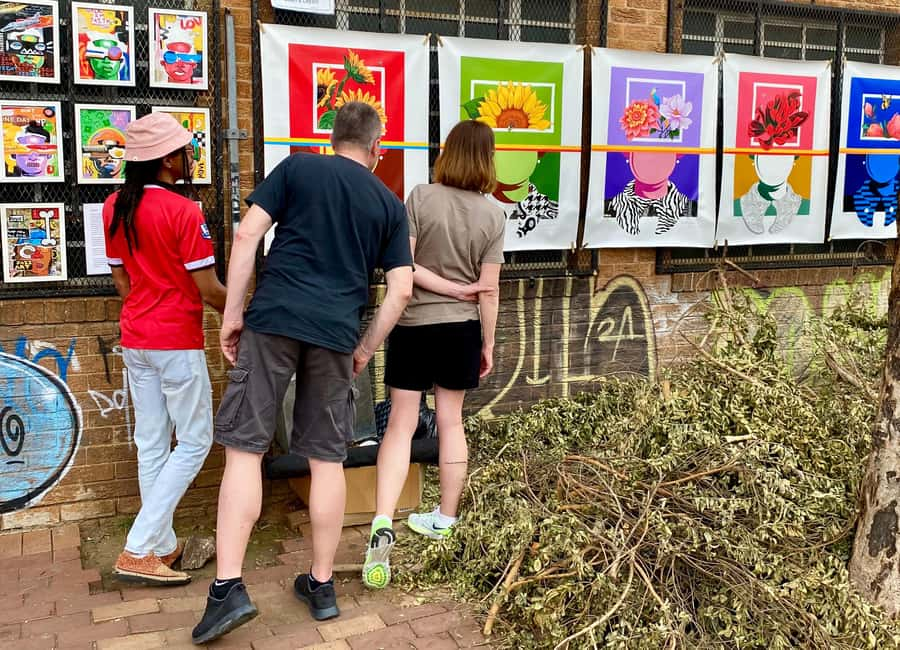
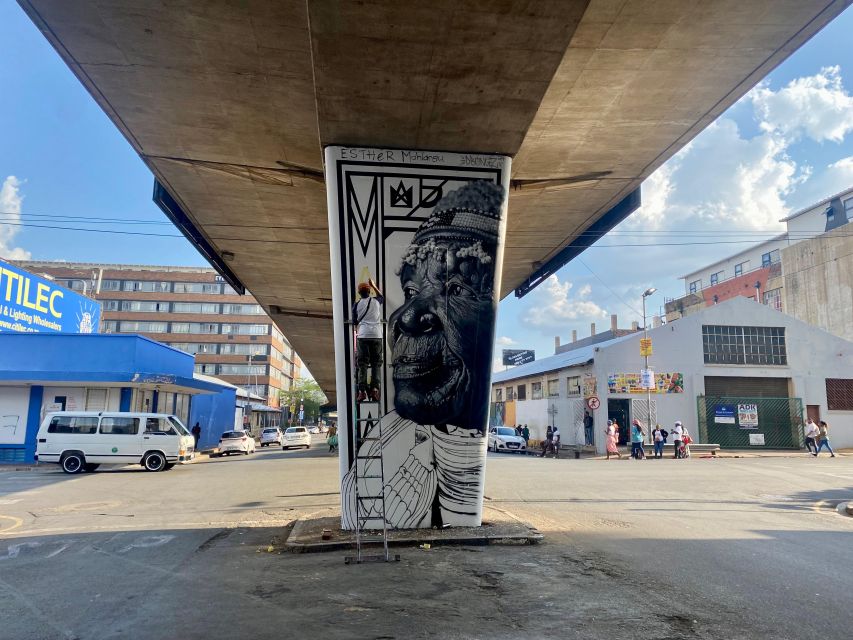
Maboneng’s best stories are painted on its walls. This two-hour walk links major murals by artists such as ESPO Powers and DBongz with the people, politics, and creative energy of Johannesburg’s inner city. You get more than photo stops: the art becomes a way to understand the area’s past and present.
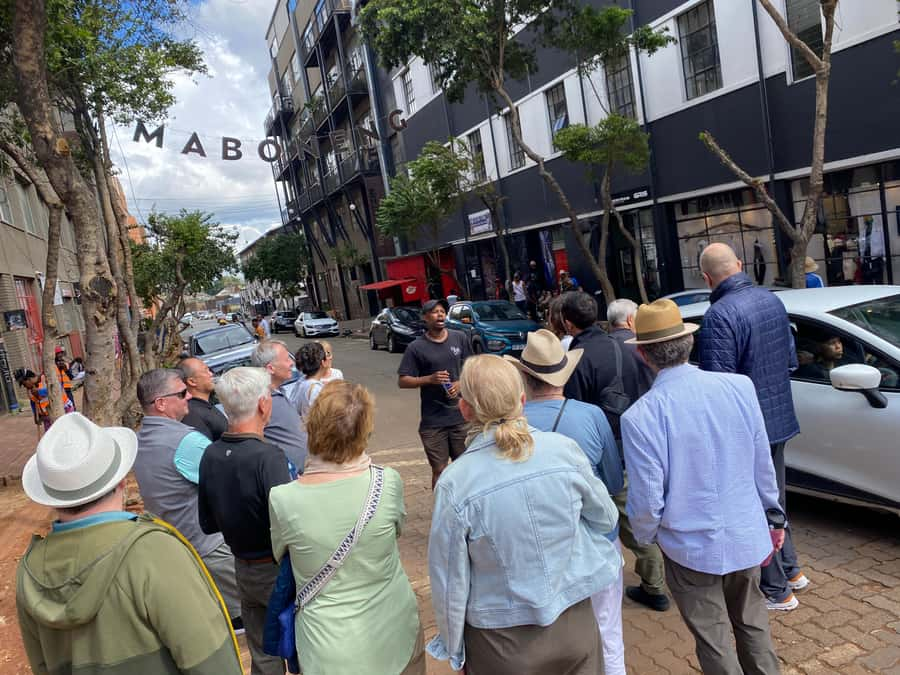
I like the personal feel. Guides such as Ayanda know the streets well and can explain both the artists and the changing neighborhood. I also like the stop at the Hideout Bar, an alleged meeting place for Mandela and other anti-apartheid activists. The main drawback is pace: two hours goes quickly, so you will see a useful slice of Maboneng rather than every gallery, shop, and mural.
Key points
- Meet at Home of the Bean: Start with a café setting at Fox and Berea Streets, under the bridge.
- See art with context: Learn about local and international artists, including ESPO Powers and DBongz.
- Visit the Hideout Bar: Hear the story of an alleged safe place for anti-apartheid activists.
- Understand Maboneng’s change: Follow its shift from an industrial district in 2009 to a creative neighborhood today.
- Walk with a local guide: Ayanda has been especially praised for his local knowledge, personal experience, and friendly manner.
- Plan for small purchases: Bring cash or a card if you want to buy work from street artists or local informal traders.
Why Maboneng works best on foot
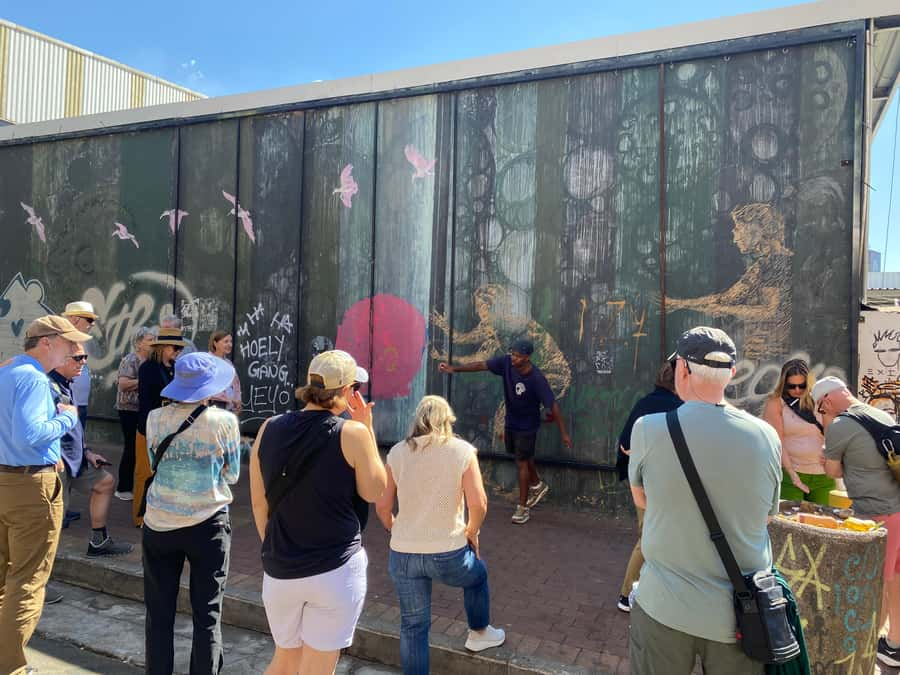
Maboneng means Place of Light, and the name fits the area’s public art and creative businesses. But the appeal is not just colorful walls. The neighborhood brings together art spaces, food, shops, informal traders, old industrial buildings, and a community that continues to change.
That mix is hard to understand from a car window. On foot, you can stop beside a mural, look at the details, and hear why it matters. You can also notice how a former industrial zone has been given a new identity through art, food, design, and small businesses.
The walk is short enough to fit into a Johannesburg schedule. At two hours, it works well as an introduction to Maboneng, especially if you want something more focused than a broad city tour. You will not cover every corner, but you should come away with a clearer sense of how this part of inner-city Johannesburg developed.
I would treat this as a walking conversation rather than a simple mural checklist. The art provides the visual hook, while the guide supplies the local setting and political background.
More Village Tours in Johannesburg & Pretoria
- Johannesburg: Hop-On Hop-Off Bus with Optional Soweto Tour
★ 4.6 · 985 reviews - Soweto /Johannesburg and Apartheid Museum Guided Full Day Tour
★ 5.0 · 932 reviews - Johannesburg Hop-On Hop-Off City Tour with Soweto Option
★ 4.5 · 768 reviews
Starting with coffee at Home of the Bean
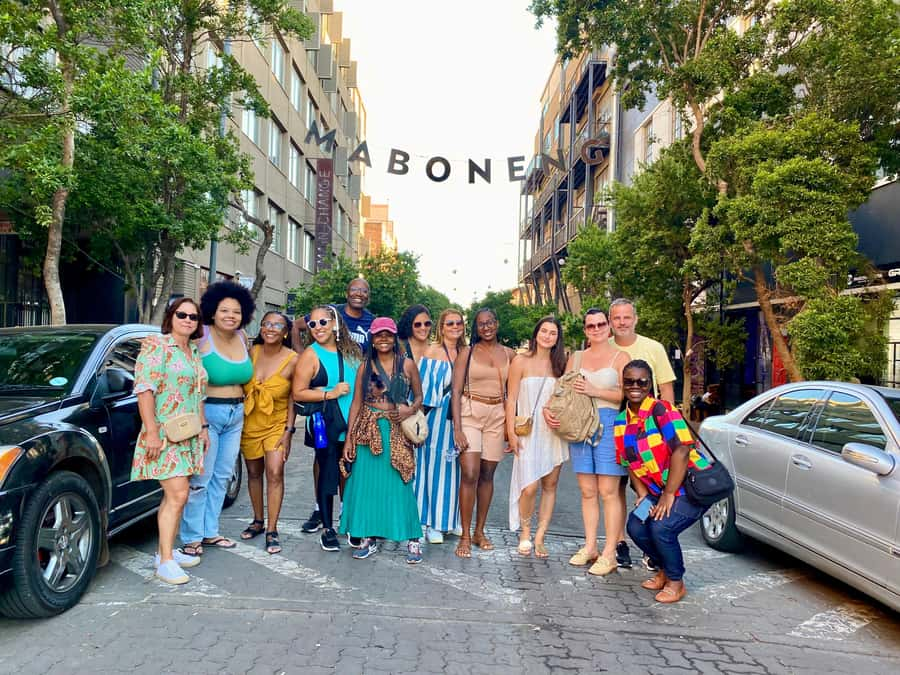
The meeting point is Home of the Bean, a coffee shop at the corner of Fox and Berea Streets, under the bridge. From the outside, the building may look like an old industrial structure, so it is worth going inside if you arrive early rather than waiting on the pavement.
The tour begins with a 15-minute safety briefing. That may sound routine, but it is useful in an inner-city district where you want clear advice about walking routes, personal belongings, and moving through public spaces. The guide also gives you a chance to ask questions before the walk begins.
You can buy coffee here, but food and drinks are not included in the tour price. That makes the opening flexible: order something if you want it, or simply use the café as a comfortable place to meet your guide.
The operator usually contacts you by WhatsApp or message around 30 minutes before the start, including if there are changes to the booking. Keep your phone available on the morning of the tour.
Murals by ESPO Powers, DBongz, and local artists
Once you leave the café, the focus shifts to Maboneng’s street art. The strongest part of the experience is not simply seeing large paintings. It is learning how the work connects to identity, social issues, public space, and the changing image of Johannesburg.
The tour includes art by international and local artists, with ESPO Powers and DBongz among the names highlighted. Your guide explains the artists and the meaning behind selected pieces, so you are not left guessing at every image. This is particularly helpful for visitors who enjoy street art but do not know much about Johannesburg’s art scene.
Mural conditions can change. Paint fades, buildings are altered, and new work appears. That is part of public art, but it also means your exact collection of works may differ from photographs or from a previous visit. The value lies in the guide’s current reading of the area, not in checking off a fixed gallery display.
I like this approach because it gives you a better way to look. Instead of asking only if a mural is attractive, you start asking who made it, why it is here, and what it says about the neighborhood. You also see how art can make an industrial district feel newly claimed and newly noticed.
Bring a phone or camera if you want photos, but remember that the guide’s explanations are the part you cannot recreate later. Pause, listen, and then take the picture.
Maboneng Arts Village and the creative economy
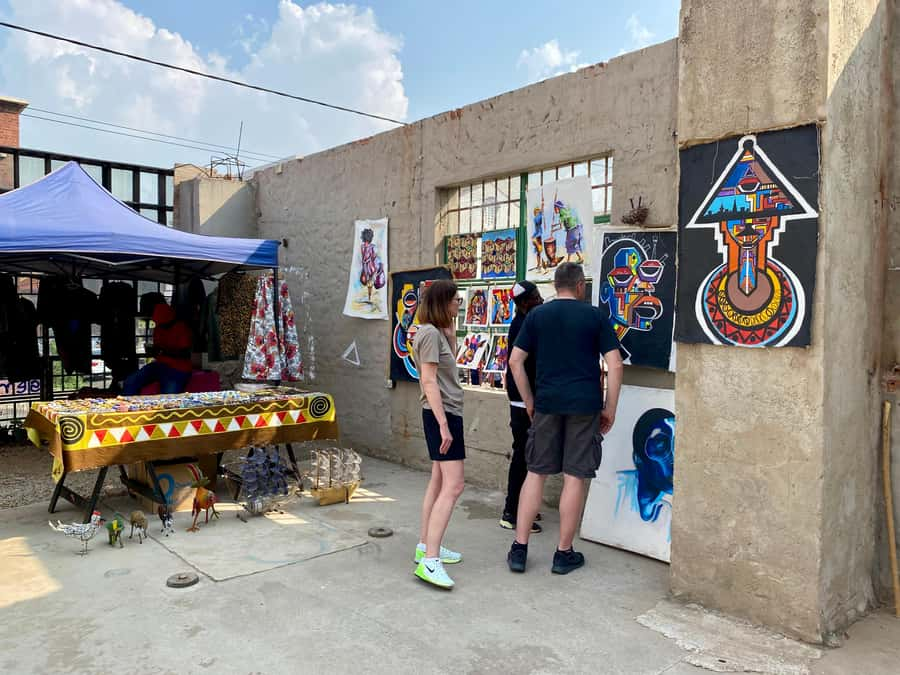
Maboneng Arts Village is one of the stops along the route. It gives local artists and creatives a place to sell their work, adding a commercial side to the public art you see outdoors.
This matters because Maboneng is not just a collection of murals placed on empty walls. Art supports a wider network of studios, shops, galleries, food businesses, and makers. The Arts Village helps show how creative work can become part of a neighborhood’s daily economy.
You may find something to buy from artists or informal traders during the walk. Purchases are not included, so carry some cash or a card. If you see something you like, ask the guide about the seller and the practical details before buying.
There is also a question beneath the colorful redevelopment. New businesses and creative spaces can bring attention and investment, but they can also change who can afford to live or trade in an area. The tour addresses Maboneng’s redevelopment and the funding and vision behind it, giving you a more useful picture than the simple claim that the district has become trendy.
That balance is important. You can appreciate the art while still asking who benefits from the neighborhood’s new image. Maboneng is presented as a possible model for city life in the future, but it remains a real community rather than a finished urban design project.
More Village Tours in South Africa
- Half-Day Tour of Soweto Tour
★ 4.5 · 712 reviews - Soweto: Walking Tour with a Local Guide and Lunch
★ 4.9 · 648 reviews - Jo’berg in 1 Day: Soweto, Apartheid Museum & City Tour
★ 4.8 · 524 reviews - Johannesburg: Full-Day Tour with Soweto and Apartheid Museum
★ 4.8 · 478 reviews
The Hideout Bar and Johannesburg’s political past
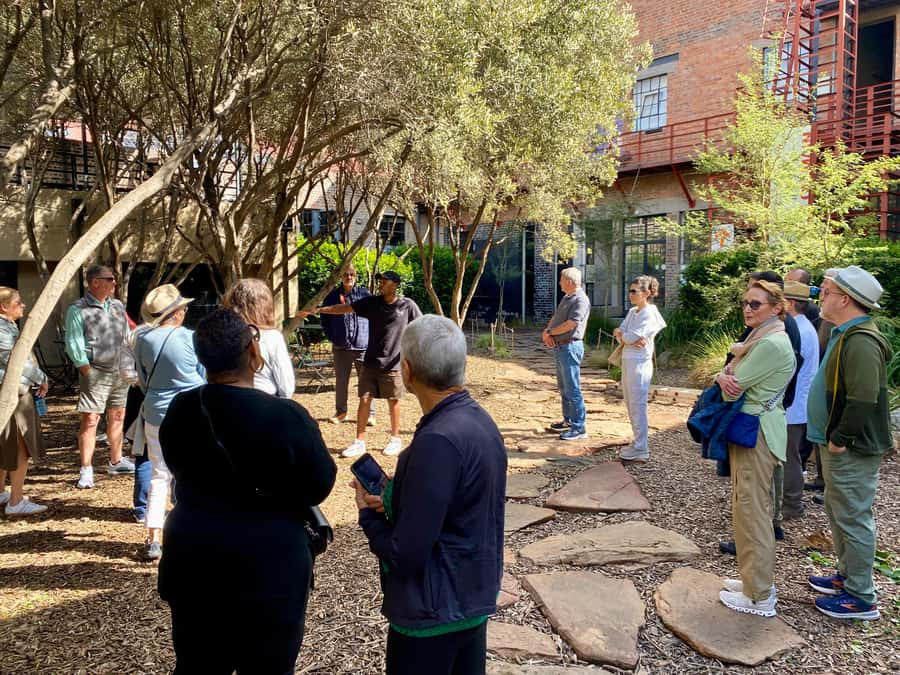
The visit to the Hideout Bar at Curiocity Backpackers adds a different layer. The site is described as an alleged hideout for Nelson Mandela and other anti-apartheid activists.
The word alleged matters. Treat the story as local history and oral tradition rather than a formally proven museum exhibit. Your guide can explain the claim and place it within the wider story of apartheid-era resistance.
This stop helps prevent the tour from becoming a surface-level art walk. Johannesburg’s buildings have often carried several lives: industrial, residential, political, artistic, and commercial. A bar that is now part of a backpacker property can also be linked to an earlier period of secrecy and political danger.
For me, this is the kind of stop that makes a short tour worthwhile. It connects Maboneng’s present-day creative identity with the difficult history of South Africa. The neighborhood’s current energy did not appear from nowhere, and the walk makes that connection easier to see.
The stop is brief, around 15 minutes in the planned route. If you want a long museum-style explanation of apartheid, this is not the right tour. If you want a concise local story tied to a physical place, it fits well.
From industrial district to creative neighborhood
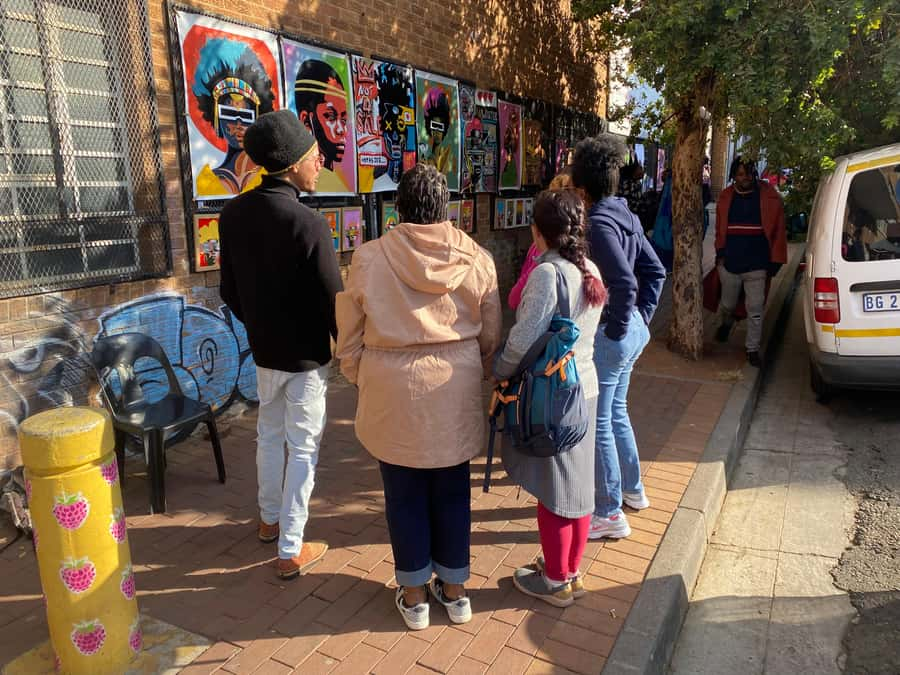
A central theme of the walk is Maboneng’s evolution from 2009 to today. The area had strong links to Johannesburg’s mining and industrial past before redevelopment gave it a new public identity.
Your guide explains how art, restaurants, galleries, gift shops, and other creative businesses helped change the way people use and view the precinct. You also hear about the funding and ideas behind that redevelopment, rather than only seeing its finished results.
The word regeneration can sound neat and tidy. Maboneng is more complicated than that. New investment may improve buildings and draw people into the district, while the area’s social character continues to shift. The tour is useful because it places those changes beside everyday street life.
Guides have also explained what it is like for people who call the area home. That local angle keeps the experience from turning Maboneng into a backdrop for photographs. You see the style of the people on the streets, the work of informal traders, and the way creative businesses sit beside older buildings.
This is where a local guide makes a real difference. Ayanda has been singled out for his personal experience of the area, his sense of humor, and his ability to answer questions about Johannesburg and South Africa more broadly. Other guides, including Bonny, Kaiser, and Michael, have also led the experience, so the exact guide may vary.
A viewpoint and a compact walking route
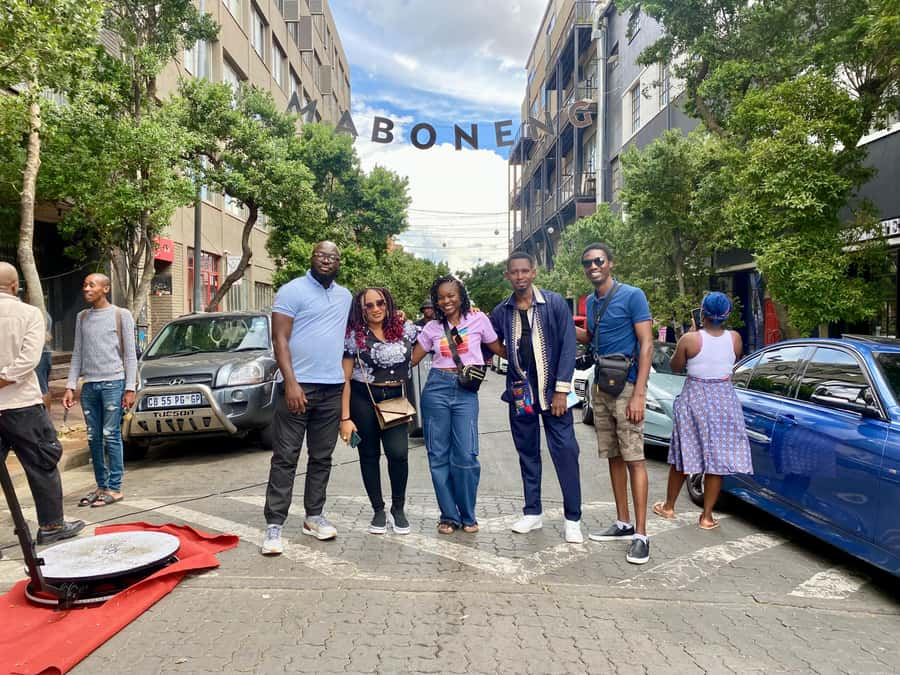
The planned route includes a scenic viewpoint, with about 15 minutes for views along the way. It is a welcome change from looking closely at walls and shopfronts. You get a chance to place Maboneng within the larger city and see how the district fits into Johannesburg’s inner-city setting.
The route is divided into several short sections, with walking and sightseeing spread across the two hours. That structure keeps the pace moving, but it also means you should wear comfortable shoes and arrive ready to walk for most of the experience.
The tour returns to Home of the Bean at the end. Since it begins and ends at the same café, you can make a simple plan around it. You might continue with a coffee, browse nearby businesses, or use the finishing point as your next meeting place.
The compact timing can be a real advantage. One person used the tour as a quick way to see Maboneng before heading to the airport, and the guide was able to cover the main sights efficiently. I would still avoid treating it as an airport transfer. Allow your own extra time for traffic and luggage plans.
Safety, group feel, and practical comfort
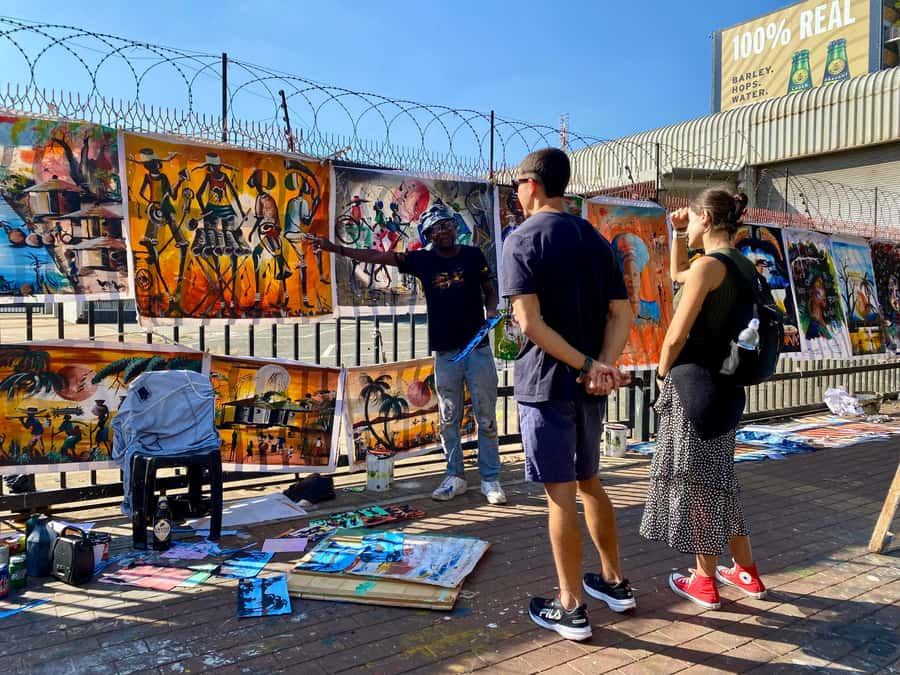
Safety is a reasonable concern when you are exploring an unfamiliar part of Johannesburg. The tour begins with a safety briefing, and the guide stays with you through the route. Several people have found the walk reassuring, including those who would not have explored Maboneng alone.
That does not mean you should switch off common sense. Keep valuables secure, stay with the group, and follow the guide’s advice. The streets include informal traders and other public activity, so pay attention to your surroundings and avoid displaying more cash or equipment than necessary.
The experience has often felt small, with groups of two to four people reported by one participant. Group size can vary, but a smaller group allows more questions and makes it easier to stop at a mural without blocking the route.
The activity is wheelchair accessible. Since it takes place on city streets and includes walking, you should still contact the operator in advance if you need specific assistance. The tour is offered in English only.
Is $40 good value for two hours?
At $40 per person, this is not the cheapest way to take a walk in Johannesburg. You could see some public art independently for no charge. The price becomes easier to justify if you want the stories, local background, and a guide who can help you move through the area with confidence.
Entry to the sites visited is included, but food and drinks are not. You should also budget separately for art, crafts, or other purchases from local sellers.
The best value comes from the interpretation. You are paying to connect murals to artists, connect buildings to political stories, and connect redevelopment to the wider city. If you only want photographs, the price may feel high. If you want an informed introduction to Maboneng and present-day Johannesburg, it is fair.
The tour also saves research time. You do not need to identify artists, work out which spaces are open, or piece together the area’s development alone. A good guide can show you more in two hours than you would likely find by wandering without context.
Who should book this Maboneng walk?
I would recommend it to first-time visitors to Johannesburg who want an introduction to the inner city through art and local stories. It also suits people who have already seen the major tourist sights and want a closer look at urban culture.
Art lovers will get the most from the discussion of artists and mural meanings. History-minded visitors will appreciate the anti-apartheid connection and the mining and industrial background. People interested in city planning will find the redevelopment story especially useful.
Families and mixed-age groups can manage the short duration, provided everyone is comfortable walking in an urban setting. The English-only format makes it less suitable if you need another language.
You should also book it if you prefer a human guide to a self-guided route. Ayanda’s strongest qualities are described as warmth, local experience, humor, and the ability to answer broad questions about Johannesburg. Those traits matter more here than a memorized list of dates.
Final call: book it for context, not just color
Book this tour if you want Maboneng explained as a living neighborhood, not just photographed as a colorful art district. The murals, Arts Village, Hideout Bar, viewpoint, and café create a good two-hour framework, while the guide adds the personal and political context.
Skip it if you want a long museum visit, a food tour, or several hours of free time for shopping. For most people, though, $40 buys a focused introduction to one of Johannesburg’s more creative inner-city areas. Bring comfortable shoes, keep your phone available for the operator’s message, and carry a card or cash if you may buy local art.
Free cancellation is available up to 24 hours before the start, and you can reserve now and pay later. That flexibility makes it easier to fit the walk into a changing Johannesburg schedule.
FAQ
Where does the Maboneng street art tour meet?
The meeting point is Home of the Bean coffee shop at the corner of Fox and Berea Streets, under the bridge. If you arrive early, wait inside the coffee shop.
How long does the tour last?
The walking experience lasts two hours and returns to Home of the Bean at the end.
Which language is the tour offered in?
The tour is offered in English only, with a live English-speaking guide.
Is food or coffee included?
No. Food and drinks are at your own expense, although you can buy coffee at Home of the Bean before the walk.
Is the tour wheelchair accessible?
Yes, the activity is listed as wheelchair accessible.
Can I cancel or pay later?
You can cancel up to 24 hours before the tour for a full refund. Reserve now and pay later is also available.
More Street Art Walks in Johannesburg & Pretoria
- Johannesburg: Maboneng Street Art & Culture Tour
★ 4.9 · 257 reviews - Santiago: Landscapes, Street Art, and Markets Day Trip
★ 4.8 · 316 reviews - Cape Town: Street Art Walking Tour in Woodstock
★ 4.8 · 293 reviews
Just added for Johannesburg & Pretoria
- Soweto: Bike Tour with a Local Tour Guide★ 4.7 · 114 reviews
- From Johannesburg: Lion & Safari Park Half-Day Tour★ 4.6 · 384 reviews
- Johannesburg: Soweto Half-Day Tour★ 4.7 · 196 reviews
- Johannesburg: Soweto & Apartheid Museum Half-Day Tour★ 4.9 · 99 reviews
- Johannesburg: Soweto Apartheid & Township Tour with Lunch★ 4.8 · 80 reviews
- Johannesburg: Maboneng Street Art & Culture Tour★ 4.9 · 257 reviews
- Johannesburg and Soweto Apartheid Full Day Tour w/Lunch★ 4.9 · 219 reviews
- Johannesburg: City Centre Walking Tour★ 4.8 · 152 reviews
Township & Village Tours, compared.

Berber villages : Atlas Mountains Day Hike from Marrakech
Read our review →
Atlas Mountains, Berber Villages and Three Valleys all inclusive
Read our review →
Quad Bike, Buggy, and Camel Ride & Bedouin Village
Read our review →
Atlas Mountains, Berber Villages, Agafay & Camel Ride
Read our review →
Paragliding, Camel Ride & Berber Villages Trip
Read our review →

Atlas Mountains and Three Valleys & Waterfalls – Villages Marrakech Day Trip
Read our review →
Agafay Desert & Berber villages & Atlas Mountains, Full Day Trip From Marrakech
Read our review →Browse the lists this tour appears in