

Reviewed · ISLAND TRIPS
Cape Town: Robben Island Ferry Ticket and Guided Prison Tour
Robben Island is not just a museum stop. It is the place where South Africa’s apartheid-era struggle becomes physical: a ferry crossing, prison walls, narrow cells, and a former political prisoner explaining what life was like inside. I like that the experience puts a real witness at the center of the prison tour, rather than relying only on signs and display cases.
I also like the practical setup. Your ferry ticket and museum entry are arranged in advance, and the four-hour schedule covers the boat crossing, a bus trip around the island, and the prison. The main drawback is that skip-the-line does not mean walk straight onto the boat. You avoid the ticket-selling queue, but you still queue for boarding, and the ferry and buses can feel crowded.
Key points to know before you book
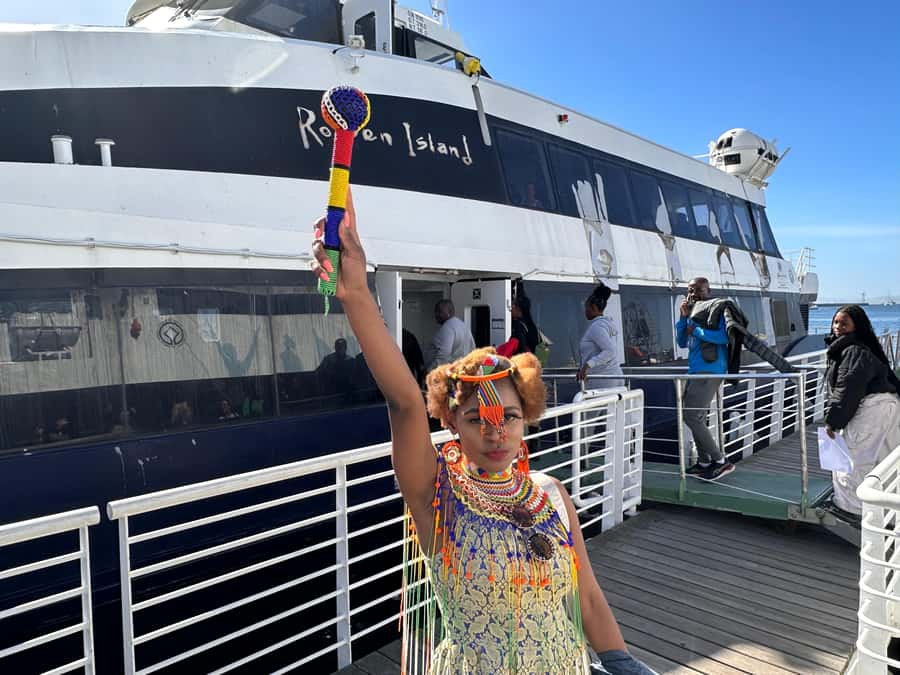
- A former political prisoner leads the prison visit: This is the most powerful part of the day, with personal accounts of prison conditions and apartheid-era repression.
- The ferry leaves from the Nelson Mandela Gateway: The tour starts and ends at the V&A Waterfront area, with no hotel pickup or drop-off.
- The ticket-line shortcut saves time, not every queue: You still need to find the departure line and wait to board the ferry.
- The visit has two distinct tours: A bus guide covers the wider island, followed by a walking tour inside the prison.
- Nelson Mandela’s cell is the emotional center: You see the small cell where he spent more than 25 years of his 27-year imprisonment.
- The crossing can be rough and chilly: Bring identification, and consider a coat or seasickness precautions if boat travel bothers you.
Why Robben Island matters beyond Nelson Mandela

Most people first hear about Robben Island because Nelson Mandela was imprisoned there for 27 years. That is a good reason to visit, but the island’s story is larger than one cell.
It was used as a prison for political opponents during apartheid, when the government tried to silence people who opposed racial segregation. The prison held many Black political prisoners under harsh conditions, and the island became a symbol of resistance, endurance, and the long fight for democracy.
The visit helps connect Mandela’s personal story with the wider struggle. You hear about the treatment of political prisoners, the routines of prison life, and the people who spent years fighting a system designed to strip them of freedom. You may also learn about figures such as Robert Sobukwe, whose story is less familiar to many international visitors.
That broader context matters. If you come expecting only a short stop at Mandela’s cell, you may miss the point. The cell is important, but the bus tour and the prison guide show that many people suffered and resisted here.
More Island Trips in Cape Town
- Cape Town: Robben Island Ferry Tour with 1-Way Hotel Pickup
★ 4.2 · 1,380 reviews - Cape Town: Robben Island Ferry Ticket and Townships Tour
★ 4.5 · 400 reviews - Cape Town: Robben Island Ferry with Prison Ticket and Tour
★ 4.0 · 324 reviews
Starting at the Nelson Mandela Gateway
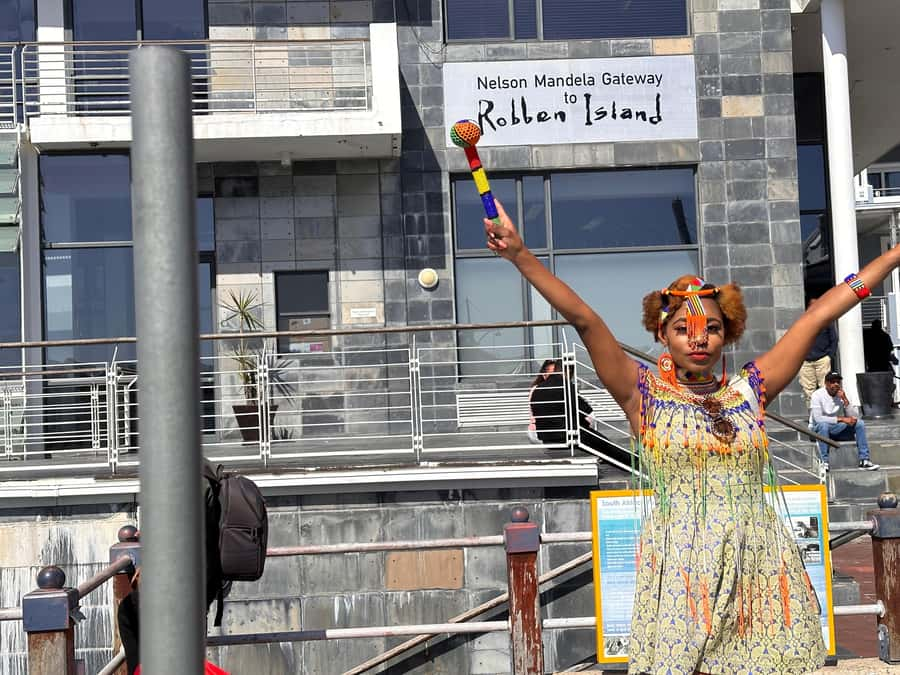
You meet at the Nelson Mandela Gateway to Robben Island, the departure point at the V&A Waterfront. The activity does not include hotel pickup, so you need to make your own way there and allow time to find the correct departure area.
The meeting instructions tell you to proceed directly to the boat departures line. This is where some visitors have found the directions less clear than they should be. Look for the route toward the swing bridge and the gray and burgundy building, then ask staff or security if you are unsure.
Your ticket is normally sent by WhatsApp, iMessage, or email. Enter your correct country code and mobile number when booking, and check that you can access the message before you arrive. One visitor nearly missed the ferry while a voucher was being checked, so do not leave the ticket confirmation buried in your inbox.
Bring a passport or identity card. A copy is accepted according to the tour information. The activity is intended for international visitors, meaning non-South African citizens. South African citizens are encouraged to buy tickets directly from Robben Island.
The ticket-line advantage is useful, especially at busy times. Just keep your expectations straight: you skip the ticket-purchase line, not the line to board the vessel.
The ferry crossing to Robben Island

The ferry ride is part of the experience, not just a transfer. You leave Cape Town behind and cross the water to an island that once felt deliberately cut off from the rest of the country.
The scheduled boat trip is described as roughly 30 minutes, though some accounts describe the crossing as closer to 45 minutes. Conditions, loading, and the vessel in use can affect the actual timing. The ferry is enclosed, and it may be crowded, while the outside deck can be windy and cold even when Cape Town feels warm.
Take a coat if you want to sit outside. The view gives you a useful sense of distance, but the sea can be rough. If you are prone to seasickness, sit where you can look toward the horizon and prepare accordingly. One visitor advised keeping your eyes on the horizon, and that is sensible advice for this crossing.
There can be wildlife along the route. Visitors have reported seeing seals, birds, and even a whale. These sightings are not promised, so treat them as a bonus rather than a reason to book.
The ferry returns you to Cape Town at the end of the visit. Food and drinks are not included, so plan around the four-hour outing. The available information does not promise a meal stop, though one tour included a short coffee break on the island.
The bus tour across the island
After docking at the Robben Island Museum, you join a guided bus tour. This first section helps you understand the island as a whole before you enter the prison.
The bus guide explains important buildings, the prison complex, and the way the island functioned. Guides have included people such as Yasien Mohammed and Troyer on recent tours, though the guide assigned to you can vary. The strongest guides turn the drive into a clear story, linking the buildings and locations to the people who lived, worked, and were imprisoned there.
The bus ride also gives you a wider view of the island’s former facilities and surroundings. Stops can include time to see animals such as penguins and other birds. One visitor felt a 10-minute stop was too short because several buses were moving through the same area, so do not expect a long wildlife visit or an unhurried walk at every stop.
This part can feel more rushed than the prison tour. Transport and staffing issues have occasionally cost a few minutes, and bus groups can be large. Some buses are older, with small windows, and one visitor reported that the sound system was difficult to hear from the rear. If clear commentary matters to you, try to sit where you can hear the guide.
Even with those limits, the bus tour earns its place. It gives you the setting and the historical frame before the more personal prison visit. Without it, the cell could seem like an isolated memorial rather than one part of a much larger system.
Same corner of the map, a completely different outing:
- Cape Town: Hop-On Hop-Off Bus Tour with Optional Cruise
★ 4.8 · 3,929 reviews - Cape Town: Cape of Good Hope & Penguins Day Tour with Pickup
★ 4.7 · 3,362 reviews - Zipline Cape Town – From Foot of Table Mountain Reserve
★ 5.0 · 3,179 reviews - Cape Town: Table Mountain Cable Car, Hop-On Hop-Off Bus Tour
★ 4.6 · 3,157 reviews
Inside the prison with a former inmate

The prison tour is the heart of the experience. After the bus section, you join a former political prisoner for a walking tour through the main prison area.
This guide does not speak as a distant historian. He explains what prison life was like from personal experience, including the treatment of Black political prisoners and the harsh conditions imposed on them. The result is direct and often painful, but it also gives the visit a human scale.
Guides have included former inmates such as Monde, Terrence, and Sipho on recent tours. Their style will differ. Some use humor to help a group listen; others focus on the suffering and discipline of prison life. One guide, Sipho, was praised for answering questions with patience and warmth. Terrence was described as especially effective at showing the prison through his own eyes.
The accounts can be emotional. You may hear about attempts to silence political opponents, the daily limits placed on prisoners, and the conditions endured by people who challenged apartheid. The tour is not entertainment, and it should not be treated as a quick photo opportunity.
Sound can be an issue in a group setting. One visitor found the former inmate’s commentary hard to hear, while others found the presentation clear and compelling. Stay close to the guide when possible, and do not be shy about moving forward if the group spreads out.
You may also notice that some historical points are repeated. That is partly the nature of a guided group tour, where people are joining and listening from different positions. The personal testimony remains the reason to take this option.
Seeing Nelson Mandela’s cell
The visit to Nelson Mandela’s cell is the moment most people anticipate. It is a small, plain space, and its simplicity is the point. There is no grand monument inside the room to soften the reality of more than 25 years spent there.
Standing outside the cell gives you a concrete image of Mandela’s imprisonment. It also reminds you that he was one of many political prisoners held on the island. The tour connects his long confinement to the wider campaign against apartheid and the eventual creation of a democratic South Africa.
I find this part most meaningful when you resist the urge to rush through it. The cell itself takes only a moment to see, but the setting asks you to think about time, isolation, and the determination required to keep working toward freedom under those conditions.
The phrase long walk to freedom is often linked with Mandela’s life. Here, it becomes more than a slogan. The ferry, the prison buildings, the guided walk, and the small cell create a clear physical route through a major chapter of South African history.
How the four-hour schedule works

The full outing takes about four hours. That includes the return ferry, the bus tour around Robben Island, and the prison visit. The island portion is listed as roughly three and a half hours, though exact timing can shift with sea conditions, loading, staffing, and the number of buses operating.
The pace is generally purposeful rather than leisurely. You move from the ferry to the bus, from the bus to the prison, and then back toward the boat. This works well if you want a strong half-day visit, but it leaves limited room for wandering independently.
The tour is shared, not private. You join other people on the ferry, bus, and walking tour. That keeps the price lower than a private arrangement, but it also means you cannot set the pace or choose how long to spend at each stop.
At $79 per person, the value depends on what you want from the visit. The price includes return ferry tickets, museum entry, the bus tour, and the former inmate guide. It does not include transport from your hotel, food, or drinks.
For an international visitor who wants the main Robben Island experience without arranging ferry tickets separately, that package is reasonably practical. The strongest value comes from the former prisoner’s account, which would be difficult to reproduce through a self-guided visit. If you are already staying near the departure point and can buy directly, compare the cost with direct Robben Island tickets before booking.
Who will get the most from this visit
I would put Robben Island high on the list for anyone interested in South African history, apartheid, human rights, or Nelson Mandela’s life. It is also a good choice for families with older children and teenagers who can engage with a serious subject. One family found the visit meaningful for a nine-year-old and teenage daughters, but parents should be ready to explain the difficult parts.
This is less suited to someone who wants a relaxed boat ride, a flexible island walk, or a small private group. The ferry may be crowded, the buses may be old, and the day follows a set schedule.
You should also be comfortable with a moving historical visit. The prison guide’s stories can be heartbreaking. That emotional weight is part of the value, but it is worth knowing before you go.
The tour is offered in English. If you do not follow spoken English easily in a moving bus or crowded prison corridor, you may miss some of the commentary. Sit near the guide when possible and ask questions during the prison stop.
Practical advice for a smoother visit

- Arrive with your digital ticket ready: Tickets may be sent the night before by WhatsApp, iMessage, or email.
- Use the right meeting point: Go to the Nelson Mandela Gateway and follow signs toward the boat departures line.
- Allow extra time to find the queue: Skip-the-line entry removes ticket purchase, but boarding still involves a queue.
- Bring a coat: The ferry can be windy, especially outside.
- Plan for sea movement: Look at the horizon if you feel queasy.
- Carry identification: A passport or ID card is required, and a copy is accepted.
- Bring food or plan ahead: Food and drinks are not included.
- Listen closely on the bus: The rear seats may make commentary harder to hear on some buses.
- Expect weather changes: The provider may cancel and issue a full refund in bad weather.
- Protect your time in Cape Town: The tour begins and ends at the waterfront and lasts about four hours, not counting your journey to and from the meeting point.
Should you book the Robben Island tour?
Yes, if you want a structured visit with the ferry, museum entry, island transport, and a former political prisoner guiding you through the prison. The personal testimony is the main reason I would choose this experience over simply seeing Robben Island from the waterfront.
Book it with realistic expectations. You are not getting a private tour, you may wait to board, the ferry can be rough, and the bus section may feel crowded or rushed. Still, the combination of Mandela’s cell, the wider island tour, and first-hand prison testimony makes this one of Cape Town’s most important half-day outings.
If your schedule allows only one serious historical visit in Cape Town, this is a strong choice. If you are a South African citizen, check direct ticket options instead, since this offer is intended for international visitors.
FAQ
How long does the Robben Island experience take?
The activity lasts about four hours. The island portion, including the boat cruise and guided tour, is listed at roughly three and a half hours.
Where does the tour start and finish?
It starts and ends at the Nelson Mandela Gateway to Robben Island. Hotel pickup and drop-off are not included.
Does the tour include the ferry ticket?
Yes. The price includes return Robben Island ferry tickets, museum entry, the bus tour, and the former political prisoner guide.
Do I still have to queue if I book skip-the-line entry?
Yes. You skip the ticket-purchase line, but you still need to queue to board the ferry.
What identification should I bring?
Bring a passport or identity card. A copy is accepted according to the tour information.
Is this tour available to South African citizens?
The offer is intended for international visitors who are not South African citizens. South African citizens are encouraged to purchase tickets directly from Robben Island.
Just added for Cape Town
- Best of Cape Town Full-Day Private Tour with Table Mountain★ 5.0 · 195 reviews
- Full Day Cape Point Sightseeing Tour★ 4.5 · 84 reviews
- Drumstruck at Silvermist. Live African Drum Show & Wine tasting★ 5.0 · 137 reviews
- Bo-Kaap: Walk with a local★ 5.0 · 131 reviews
- Cruise and Dine Lunch / Cape Town: Coastal Motor Cruise and 2-Course Lunch★ 4.5 · 151 reviews
- Cruise and Dine Dinner / Cape Town: Sunset Champagne Cruise and 3-Course Dinner★ 4.0 · 128 reviews
- 1 Hour Coastal Catamaran Cruise from Cape Town★ 4.5 · 258 reviews
- Champagne Cruise (Pre-Sunset) from Cape Town★ 4.5 · 152 reviews
Island Trips, compared.

3 Islands, Dolphins & Snorkel Yacht Trip w/ Lunch
Read our review →
Island Experience Tour with a Certified Local Guide
Read our review →
Orange Bay Island Snorkeling Trip With Water Sports – Hurghada
Read our review →
Mauritius: Ile Aux Cerfs Catamaran Trip w/ Lunch & Transfer
Read our review →
White Island and Ras Mohamed Cruise Adventure
Read our review →
6 Islands Tour with Dolphin Watching & Snorkelling
Read our review →
Orange Bay & Magawish Island Speedboat with Lunch
Read our review →Browse the lists this tour appears in