
Reviewed · NILE CRUISES
Historia Hotel Nile Cruise, Mon. from Luxor 4 nts inc. Excursions
The best part of this four-night Nile cruise is the way it links Egypt’s major ancient sites without forcing you to repack every morning. You settle into a floating hotel in Luxor, then move south through the Nile Valley, visiting temples and tombs before ending in Aswan.
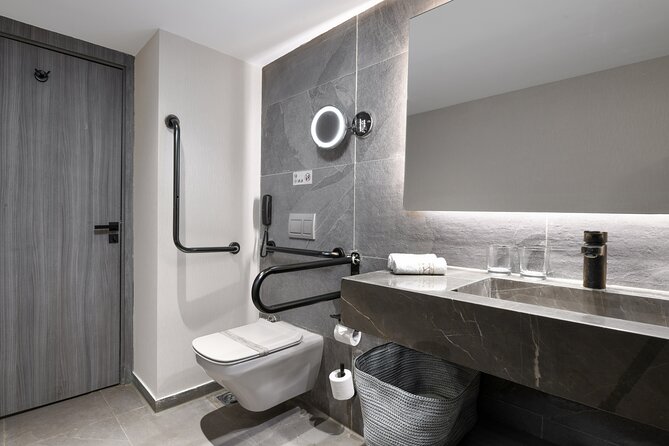
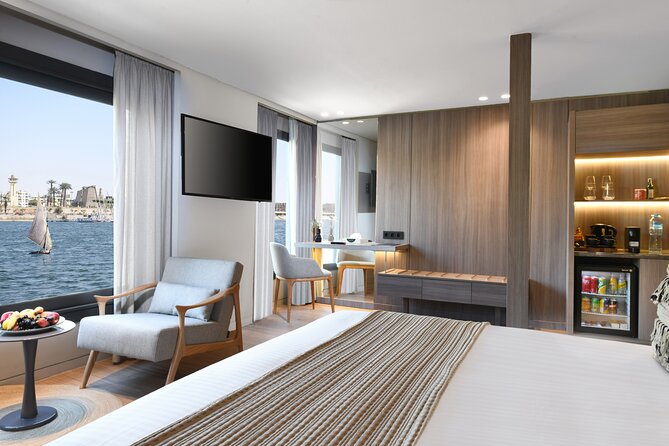
I like the modern cabins with Nile views and the quality of the food, which includes full-board breakfast, lunch, and dinner. I also like the personal service, with staff members such as Khaled, Hussein El Omada, and chef Mahmoud receiving repeated praise for their care. The main drawback is the price, $3,498 per person, and the limited internet connection reported aboard the ship.
Key points to know
- Four nights from Luxor to Aswan: You check in at Luxor Airport and finish at the Nile cruise port on Corniche Street in Aswan.
- Major sites included: Karnak, Luxor Temple, the Valley of the Kings, Hatshepsut’s temple, Kom Ombo, Edfu, Philae, and the Unfinished Obelisk.
- Full-board stay: Four breakfasts, four lunches, and four dinners are included, along with sightseeing fees and transfers in a modern air-conditioned vehicle.
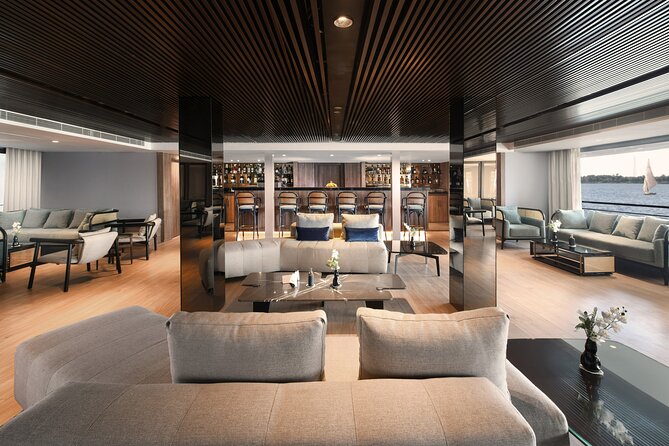
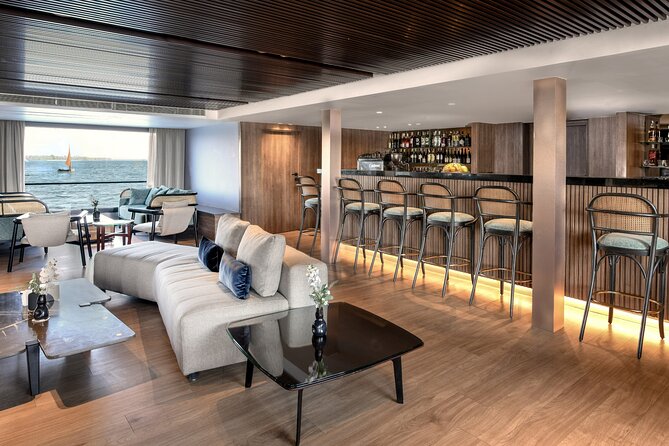
- Boutique-hotel style: The ship offers modern rooms, Nile views, a polished interior, a top deck, entertainment, and a Seneb spa.
- Guides matter: The sightseeing program can include private car service and an in-person guide. Mohammed has been praised for Spanish-language guiding, while Tarek and Zidane are also named as guides.
- Plan for weak internet: Connectivity may work unpredictably, so this is better suited to a holiday where you can spend several days mostly offline.
A floating hotel between Luxor and Aswan
A Nile cruise works best when you treat it as both transport and accommodation. Instead of spending hours in a road vehicle between Luxor and Aswan, you return to the same cabin after each outing and watch the river towns, fields, desert edges, and passing boats from the deck.
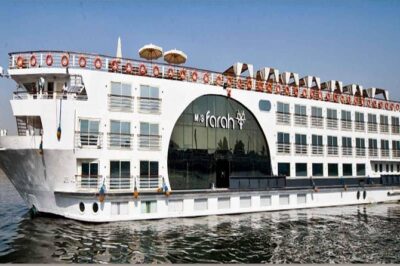
Historia presents itself as a boutique hotel on water rather than a bare-bones sightseeing vessel. The ship is described as modern, clean, and spacious, with rooms designed around comfort and river views. Several named staff members receive praise for warm, personal service, and the executive chef, Mahmoud, is repeatedly singled out for the food.
That service focus matters on a cruise. You spend four nights in the same place, eat several meals aboard, and rely on the crew for help with timing, excursions, and daily routines. Small acts of attention can make the difference between a smooth trip and one that feels mechanical.
The ship also offers a Seneb spa, a top deck, and evening entertainment. The entertainment is not described in detail, so you should think of it as an added feature rather than the main reason to book. The real attraction is the view from the river and the easy access to ancient sites.
More Boat Trips in Egypt
- Hurghada: 2-Day Luxor Tour with Hotel, Balloon, & Boat Ride
★ 4.5 · 1,113 reviews - Amazing Sunset sailing by Felucca in Luxor -2 Hours (Private)
★ 5.0 · 255 reviews - Luxor: Private East and West Banks Tour and Felucca Cruise
★ 4.7 · 209 reviews
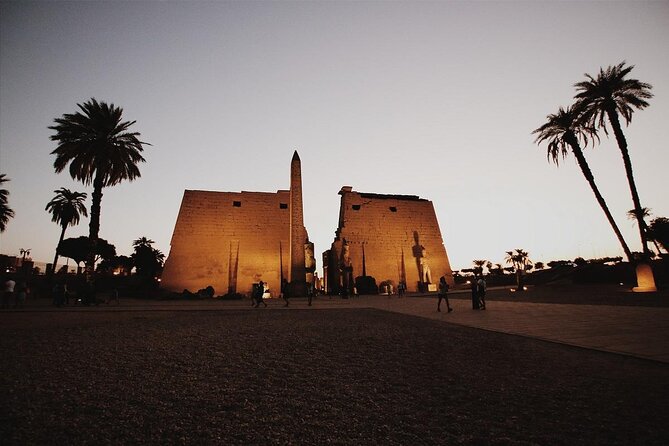
Day one: Karnak and Luxor Temple in the evening light
Your first sightseeing day covers two of Luxor’s great monuments: Karnak Temple and Luxor Temple. Each visit is scheduled for about two hours, with admission included.
Karnak is not a single building. It is a huge religious complex built and expanded over many centuries, with pylons, chapels, courts, columns, and remains spread across a broad site. Its ancient name, Ipet-isut, means The Most Selected Places, a fitting title for the major worship center it became during Egypt’s New Kingdom.
Give yourself time to look beyond the largest columns. The site makes more sense when your guide explains how different rulers added their own walls, sanctuaries, and inscriptions. A two-hour visit gives you a useful introduction, though you will not see every corner at a slow pace.
Luxor Temple is more compact and easier to grasp in one visit. Built around 1400 BC, it was connected with the renewal of kingship rather than dedicated only to one god or ruler. The setting on the east bank, near modern Luxor, gives it a different feel from the broad religious complex at Karnak.
The two-hour schedule is sensible for a first day, but it can also feel full if you arrive after a flight and transfer. The listed start time is noon, and the meeting point is Luxor Airport. Confirm the exact airport pickup details before you go, since transportation to and from Historia itself is not included.
Day two: royal tombs and Hatshepsut’s terraces
The second day moves to Luxor’s west bank, beginning at the Valley of the Kings. Sixty-three tombs have been identified there, ranging from simple chambers to long corridors with many rooms. The valley served as a burial ground for pharaohs including Ramses II, Tutankhamun, and Seti I.
The important practical point is that an admission ticket does not mean every tomb is automatically open or included in every visit. The information supplied confirms access to the Valley of the Kings, but it does not specify which individual tombs are part of the admission. Ask your guide what is available on your date, especially if Tutankhamun’s tomb is a priority.
Inside, expect a hot, dry setting and enclosed corridors. The painted walls and ceilings are the reward, not the size of the rooms. If you dislike tight spaces or steep passages, tell your guide before entering a tomb so you can choose sensibly.
Next comes the Temple of Hatshepsut at Deir el-Bahari, built beneath the cliffs on the west bank. Its broad terraces and strong horizontal lines make it one of the most recognizable monuments near Luxor. Reliefs tell the story of Hatshepsut’s divine birth and support her claim as a female pharaoh.
The temple sits beside the older mortuary temple of Mentuhotep. That pairing gives you a useful lesson in how Egyptian rulers borrowed and reshaped earlier designs. The visit is listed at two hours, enough to see the main terraces and hear the story without turning the morning into a marathon.
Day three: the double temple at Kom Ombo
As the ship moves south, the program reaches Kom Ombo. This temple is unusual because it was designed for two gods, Sobek and Horus the Elder. Its halls, courts, and sanctuaries are duplicated along a central axis, creating a remarkably balanced plan.
The southern side honors Sobek, the crocodile god, while the northern side belongs to Horus the Elder, shown with a falcon connection. The paired layout is easier to understand with a guide, since the symmetry can otherwise look like a series of damaged walls without a clear pattern.
Kom Ombo is also a good place to notice how later Egyptian builders continued older religious traditions. The temple dates from the Ptolemaic period, long after the age of the great pharaohs, yet it uses familiar Egyptian forms and religious images.
The visit is scheduled for two hours. That should allow time for the main courts and inscriptions, though the exact pace can depend on docking and ship schedules. Wear shoes with a firm sole, since ancient temple grounds can be uneven.
More Boat Trips in Luxor
- From Cairo: 4-Day Nile Cruise to Luxor with Balloon Flight
★ 4.2 · 112 reviews - Luxor: Private Felucca Boat Trip with Hotel Pickup
★ 4.7 · 90 reviews - Private 3-Days Nile Cruise to Luxor with Hot Air Balloon Ride
★ 5.0 · 88 reviews
Edfu and the best-preserved temple walls
The same day includes Edfu Temple, dedicated to Horus. Built from sandstone between 237 BC and 57 BC, it is regarded as one of the best-preserved ancient Egyptian temples.
Preservation is the appeal here. Walls, columns, and inscriptions still give you a strong sense of the original scale and decoration. The inscriptions also offer useful clues about Egyptian religion, language, and mythology, so this is a stop where a good Egyptologist guide adds real value.
The cruise information names Mohammed, Tarek, and Zidane among guides associated with the sightseeing program. Mohammed is specifically praised for Spanish-language guiding, so Spanish-speaking visitors should ask about guide availability when arranging the excursion package.
Edfu and Kom Ombo on the same day make for a temple-heavy schedule. That is excellent if you want ancient architecture and inscriptions, but it may feel repetitive if you prefer markets, village visits, or long stretches of free time. This program clearly favors major monuments over unstructured wandering.
Day four: Philae and the Unfinished Obelisk
By day four, the ship reaches Aswan and the itinerary turns to two important sites: Philae and the Unfinished Obelisk.
Philae is associated with the southern Nile and the island world around Aswan. The supplied information describes Elephantine Island, which measures about 1,200 meters from north to south and 400 meters at its widest point. Its name refers to elephants and ivory, reflecting the area’s role in trade.
The itinerary labels the stop Temple of Philae but then gives background on Elephantine Island. Those are separate places, so you should confirm the exact Philae arrangements and boat transfer details with the operator before departure. The supplied information confirms the sightseeing fee, but it does not explain the precise transfer method.
Philae itself is valued for its island setting and its connection with the goddess Isis. The surrounding water gives the visit a different character from the desert tombs near Luxor. It is also a reminder that the Nile is not just a backdrop to the monuments. The river shaped where people lived, worshiped, farmed, and traded.
The Unfinished Obelisk lies in an Aswan granite quarry. It was abandoned after cracks appeared during carving, leaving the monument attached to the bedrock. If completed, it would have measured about 42 meters and weighed roughly 1,090 tons.
That unfinished state is exactly what makes the site useful. You can see the working process rather than only the final product. The scale also helps you understand the technical demands of ancient stone cutting, transport, and placement.
Both visits are listed at two hours. Aswan can be hot, so a hat, water, and practical footwear will make the quarry visit easier. The final day is intentionally lighter, with time to enjoy Aswan views before checkout.
Day five: a quiet finish in Aswan
The final stop is simply Aswan, with about two hours set aside for views before departure. There is no admission fee for this portion.
That lighter ending is welcome after four days of temples and tombs. You can use the time to look back over the river, take final photographs, and leave without another major archaeological site competing for attention.
The cruise ends in Aswan city at the Nile cruise port on Corniche Street, near Diverso Cafe. The listed end point is not the airport, so arrange onward transport separately. The package includes transfers used during the excursions, but transportation to and from Historia is excluded.
Food, rooms, and the real value of the price
At $3,498 per person, this is not a budget Nile cruise. The value depends on how much you want included in one package and how much comfort matters to you.
The price includes four nights of full-board accommodation, four breakfasts, four lunches, four dinners, sightseeing fees, personnel assistance, and transfers by a modern air-conditioned deluxe vehicle. It also covers the listed Nile cruise excursions, with the excursions described as part of a shared cruise group.
The dining program gets especially strong praise. Meals are described as fresh, flavorful, carefully presented, and varied, with one Egyptian buffet singled out as a memorable evening. Chef Mahmoud is repeatedly named for personal attention, including adapting meals for dietary restrictions and preparing special food for children.
That is useful if food is a major part of your trip. You are not choosing a cruise where meals are merely a way to get through the day. Dining on deck at sunset, when available, is likely to be one of the most appealing moments of the journey, though the exact dining arrangements can change with ship operations.
Cabins are described as modern, clean, spacious, and comfortable, with clear Nile views. Some passengers also received complimentary suite upgrades, but you should treat an upgrade as a possibility rather than something promised in the price.
Internet is the clearest practical weakness. Connection may be unreliable, and the supplied comments warn that you may not know when it will work. If you need dependable contact for work or family, plan around that limitation instead of assuming the ship will function like a city hotel.
Who will appreciate this cruise most
I would recommend Historia to you if you want ancient Egypt arranged in a comfortable, structured way. The route covers the main Luxor to Aswan highlights, and the ship removes the need to change hotels while moving between them.
It is also a good fit if you care about food and attentive service. The repeated praise for the crew, housekeeping, restaurant staff, and chefs suggests that the human side of the trip is a major part of the experience.
Families may appreciate the staff’s willingness to prepare special food for children. Spanish-speaking visitors should ask about Mohammed, whose guiding language is specifically noted. Couples and first-time visitors may like the balance of organized sightseeing and quiet time on the river.
I would be more cautious if you want a small, independent archaeological tour with long visits at every site. The excursions are described as sharing the cruise group, even though the booking information lists a maximum of two travelers. Ask how that group arrangement works before paying.
Also remember the cancellation terms. The experience is non-refundable and cannot be changed for any reason, except when the operator cancels because of poor weather or because the minimum number is not met. In those cases, you are offered another date, another experience, or a full refund.
Should you book Historia?
Book it if you want a polished Nile journey with modern rooms, full-board meals, major temples, and staff who make the routine feel personal. The strongest reasons are the comfortable ship, the highly praised food, and the efficient route from Luxor to Aswan.
Think twice if $3,498 feels stretched, if reliable internet is essential, or if you prefer to set your own schedule. Before booking, confirm the airport pickup, the exact guide language, the Philae transfer details, which Valley of the Kings tombs are included, and how the shared excursion group is organized.
For the right traveler, Historia offers a comfortable way to see Egypt’s greatest Nile monuments without turning every day into a logistics exercise.
FAQ
How long is the Historia Nile Cruise?
The experience lasts approximately five days, including four nights aboard the cruise from Luxor to Aswan.
Where does the cruise start and end?
The listed meeting point is Luxor Airport in Luxor, Egypt, with a start time of 12:00 pm. The cruise ends at the Nile cruise port on Corniche Street in Aswan city, near Diverso Cafe.
What meals are included?
The package includes four breakfasts, four lunches, and four dinners as part of a full-board stay.
Which sights are included?
The included program covers Karnak Temple, Luxor Temple, the Valley of the Kings, the Temple of Hatshepsut, Kom Ombo, Edfu Temple, Philae, the Unfinished Obelisk, and time in Aswan.
Is transportation included?
Transfers during the sightseeing program are included in a modern air-conditioned deluxe vehicle. Transportation to and from Historia Nile Cruise is not included.
Can the booking be canceled or changed?
The experience is non-refundable and cannot be changed for any reason. If poor weather causes cancellation, or if the minimum number of travelers is not reached, you are offered another date or experience, or a full refund.
More Day Trips in Luxor
- Luxor: Valley of the Kings and Hatshepsut Temple Day Tour
★ 4.4 · 1,404 reviews - VIP Luxor Day Tour from Hurghada, Small group the top operator
★ 5.0 · 980 reviews - Hurghada: Small-Group Luxor Highlights & Tut Tomb Day Tour
★ 4.6 · 928 reviews - Luxor : Full Day Tour to Luxor West and East Banks & Lunch
★ 5.0 · 870 reviews
More Day Trips in Egypt
- Luxor Day Trip from Hurghada Small Group & Tutankhamun Tomb
★ 4.8 · 5,366 reviews - Luxor: Shared Full-Day Tour to Luxor West and East Banks
★ 4.5 · 1,812 reviews - Luxor Day Tour: Valley of Kings & Queens & Hatchepsut Temples
★ 5.0 · 1,496 reviews - Full Day Tour to East and West Banks of Luxor
★ 5.0 · 1,449 reviews
Just added for Luxor
- Full-Day Luxor private Tour from Cairo by Plane with Lunch★ 5.0 · 446 reviews
- Private Day from Cairo to Luxor by plane with hotel,balloon,west,east and lunch★ 4.5 · 199 reviews
- From Cairo Private Luxor Full-Day Tour with Guide and Flights★ 5.0 · 124 reviews
- Day Trip To Luxor From Cairo By Plane★ 4.5 · 393 reviews
- Day Trip To Luxor From Cairo By Plane Including Lunch★ 4.5 · 92 reviews
- Day Trip to Luxor From Cairo By Flight, King Tut Tomb Included★ 4.5 · 270 reviews
- Incredible 7 Days Tour around Cairo, Luxor, and Hurghada★ 5.0 · 117 reviews
- Private 3-Days Nile Cruise to Luxor with Hot Air Balloon Ride★ 5.0 · 88 reviews
Nile Cruises, compared.
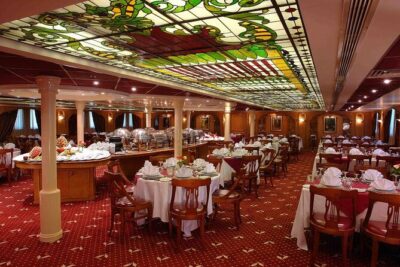
4-Days Nile Cruise From Aswan To Luxor including Abu Simbel and Hot Air Balloon
Read our review →
Dinner Cruise on the Nile River with Entertainment
Read our review →
4-Day 3-Night Nile Cruise from Aswan to Luxor&Abu Simbel+Balloon
Read our review →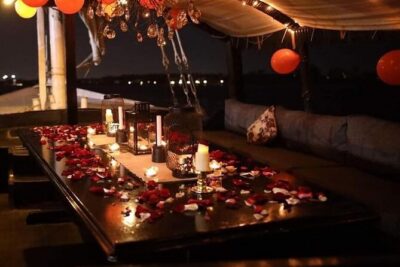

Nile Dinner Cruise with Belly Dancer Show with Pickup
Read our review →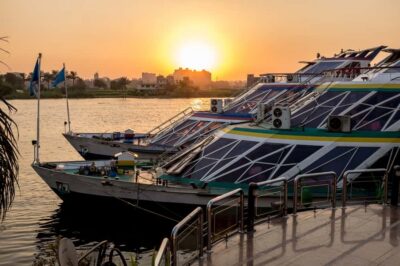
Sakkara, Memphis & Dahshur (Pyramid & Felucca Options)
Read our review →Browse the lists this tour appears in