
Reviewed · WILDLIFE SAFARIS
6 Days Tanzania Budget Camping Safari
The main appeal here is the range: in six days, you visit Tarangire, Serengeti, Ngorongoro Crater, and Lake Manyara, with a cultural stop in Mto wa Mbu. You get long game drives, a safari cook, camping inside or near the parks, and a small group capped at six people.
I like the strong mix of wildlife and local life, and I like the practical extras, including hotel pickup, unlimited mineral water, Wi-Fi in the safari vehicle, and emergency rescue cover. The main caution is the pace. Several days run eight to ten hours, and the promised migration depends heavily on the season and where the herds are moving.
Key points at a glance
- Four major wildlife areas in six days: Tarangire, Serengeti, Ngorongoro Crater, and Lake Manyara.
- Small-group format: The vehicle holds a maximum of six people, giving you more room than a large safari bus.
- Real camping included: Three nights are listed as camping, with other nights in lodges or hotels depending on the operating arrangement.
- A proper Serengeti day: Day three gives you a full day to search for predators, plains animals, and moving wildebeest.
- Cultural time in Mto wa Mbu: Expect a walking tour, banana plantations, local food, and community-based activities.
- Good practical coverage: Meals, guide, transfers, water, coffee and tea, park fees, Wi-Fi, and AMREF Flying Doctors emergency rescue are included.
Four parks, one busy six-day route
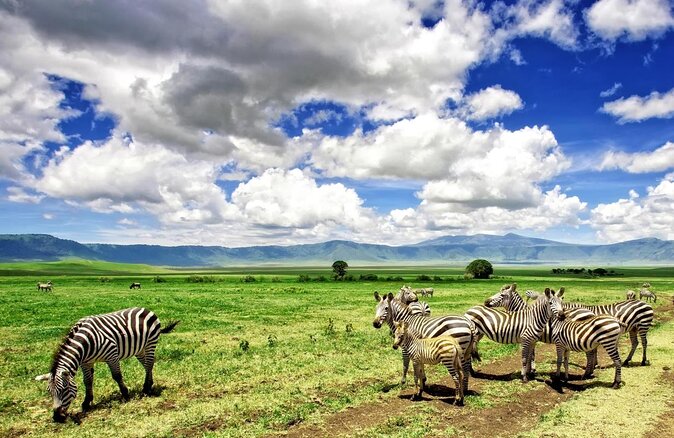
This safari is built for you if you want to see as much of northern Tanzania as possible without paying lodge-safari prices. The route covers four famous wildlife areas, but it does so at a brisk pace.
You begin in Arusha and travel through Tarangire, the Serengeti, Ngorongoro, Mto wa Mbu, and Lake Manyara before returning to Arusha. That gives you a broad look at the region, from baobab country to the open Serengeti plains and the enclosed wildlife world of the Ngorongoro Crater.
The tradeoff is time on the road. Reaching the Serengeti involves a long transfer with game viewing along the way, while the route from the crater area to Lake Manyara and then Arusha keeps the final days full. I would choose this itinerary for variety, not for a slow, restful safari.
The group limit of six matters. You have a better chance of getting a window seat, and the vehicle should feel less crowded than a large shared truck. It also means you are sharing the pace and wildlife preferences of a small group, so clear communication with your guide will help.
More Wildlife Safaris in Tanzania
- Serengeti Balloon Safari and authentic bush breakfast
★ 5.0 · 2,480 reviews - Balloon Safari & Bush Breakfast in Serengeti – Miracle Experience
★ 5.0 · 1,646 reviews - 4 Days Group Camping Safari
★ 5.0 · 1,101 reviews
Day one: elephants and baobabs in Tarangire
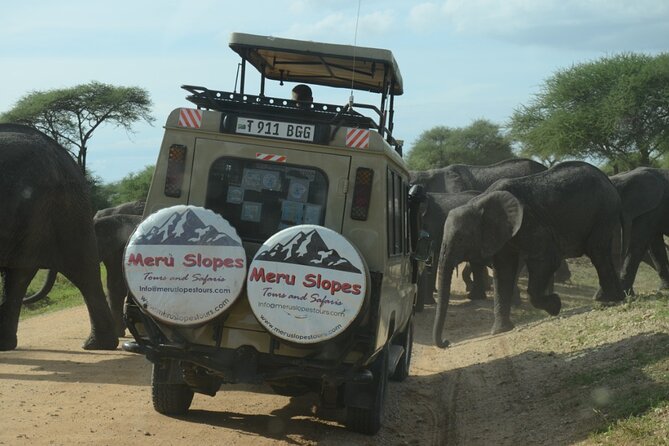
Pickup is scheduled from your Arusha hotel at 8 a.m., followed by about three hours of driving to Tarangire National Park. The park covers roughly 2,800 square kilometers and is named for the Tarangire River, a key water source for wildlife.
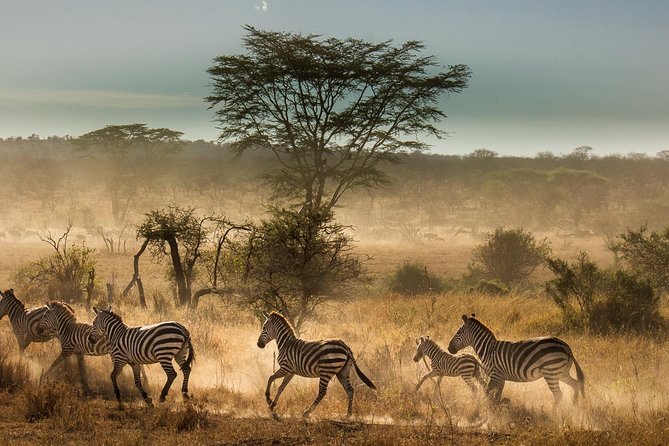
You spend the day on a game drive. Tarangire is especially associated with large elephant groups, old baobab trees, and pythons that can climb trees. Lions, leopards, and other animals may also appear.
This is a strong opening day because Tarangire has a clear visual identity. The baobabs give the park a storybook look, while the river helps concentrate animals. You are not simply ticking off an entrance gate and moving on. The full day gives your guide time to search different areas.
After the drive, you go to Jambo Lodge for dinner and the night. The exact balance between lodge accommodation and camping can vary in practice, so I would confirm the sleeping arrangements before booking, especially if you are choosing this trip because of the word budget rather than because you specifically want a tent every night.
Day two: crossing toward the Serengeti
After breakfast, you pack into the safari vehicle and begin the journey to Serengeti National Park. Lunch is carried in the vehicle, and the day includes views of the Rift Valley and Ngorongoro Crater before you reach the central Serengeti around mid-afternoon.
This is a long day, listed at about ten hours. That sounds demanding, and it is. Still, the route itself is part of the safari. You gradually move from the more enclosed northern circuit into the huge open plains for which the Serengeti is famous.
An evening game drive in central Serengeti brings you into the park at a rewarding time of day. The light softens, temperatures usually become easier to bear, and animals can become more active. You then eat dinner and sleep at Seronera campsite inside the Serengeti.
Camping inside the park saves you from driving out to a town each evening. It also puts you closer to the next morning’s wildlife search. In exchange, you should be comfortable with basic camp living and early starts. This is not a hotel-based holiday with occasional wildlife viewing. You are sleeping in the setting you came to see.
Day three: your best chance for a full Serengeti day
Day three is the core of the safari. You have breakfast early, then spend the full day looking for wildlife in the Serengeti. The guide will direct the vehicle toward areas where animal activity is strongest.
The Serengeti is known for its vast grassy plains and the annual movement of roughly 1.5 million wildebeest, along with other grazing animals and predators. The key point is that the migration does not follow a fixed calendar. The animals move according to rainfall, food, and conditions.
June through September is presented as the strongest period for migration viewing, while January through March is associated with wildebeest calving. From July through September, the route may extend toward northern Serengeti for a chance to see a Mara River crossing.
That wording matters. A river crossing is never a guaranteed scheduled performance, and no responsible safari can promise the exact location of the herds. You should book this trip for the Serengeti itself, with the migration as a possible bonus. A full day gives you a better chance than a quick drive-through, but nature still makes the timetable.
You return to the Seronera campsite after a long day. Guides such as Nuru, Robert, Mohamed, and Florian have been associated with departures from this operator, with particular praise for animal spotting and route decisions. Your assigned guide may be different, so ask about the guide and cook team before departure if that is important to you.
More Wildlife Safaris in Serengeti & Ngorongoro:
- 5 Days Group Camping Safari
★ 5.0 · 730 reviews - 3 Days Serengeti & Ngorongoro Group Camping Safari
★ 5.0 · 574 reviews - 7-Day Premium Luxury Tanzania Safari All-Inclusive
★ 5.0 · 426 reviews - 5-Day Highlights mid-Range Crater, Serengeti, Tarangire
★ 5.0 · 296 reviews
Day four: an early Serengeti start and the road to Ngorongoro
The fourth day begins around 5:45 a.m. with breakfast and sunrise inside the Serengeti. You take an early game drive until about 11:30 a.m., return to camp for a hot lunch, pack the vehicle, and continue with more wildlife viewing while heading toward Ngorongoro.
This schedule gives you two different Serengeti moods. The early hours can be cool and quiet, while the later drive lets you continue searching as you leave the park. The cost is another early morning followed by a long day in the vehicle.
You spend the night at Simba campsite near Ngorongoro. This is a useful location for the following day’s crater descent. It also breaks up the journey rather than forcing you to travel from the Serengeti to the crater floor in one exhausting push.
If you prefer a slower trip with more time at each camp, this is the point where the itinerary may feel tight. If you want several parks in one compact trip, the schedule makes sense.
Day five: Ngorongoro Crater and Mto wa Mbu

You rise around 5:30 a.m., eat breakfast, and descend into Ngorongoro Crater. The crater floor is known for high wildlife density, and the day’s targets include the Big Five, birds, flamingos, and the endangered black rhino.
The crater is one of the strongest wildlife stops on this route because the enclosed setting can make animal viewing feel concentrated. You spend six to seven hours on the crater floor, with lunch in the vehicle while watching the surrounding wildlife.
Do not treat the crater as a guaranteed checklist. Seeing all of the Big Five is possible but never certain, and animal sightings depend on the day. The black rhino is present in the area, but that does not mean you will automatically see one. Your guide’s patience and ability to communicate with other drivers can make a real difference.
After ascending, you visit Mto wa Mbu for a walking and cultural tour. This is one of the most useful parts of the trip for anyone who wants more than wildlife photographs. You may visit banana plantations, taste Tanzanian food, see community projects, and learn about local daily life.
The village visit is only about an hour in the stated schedule, so keep your expectations realistic. It is an introduction, not an extended cultural stay. Still, it adds human context to a route otherwise focused on parks and animals.
Dinner and the night are at Jambo Lodge. The supplied details describe this day as both a crater excursion and a route toward Lake Manyara, so confirm the precise overnight plan and number of lodge versus tent nights before paying.
Day six: Lake Manyara, flamingos, and the return to Arusha
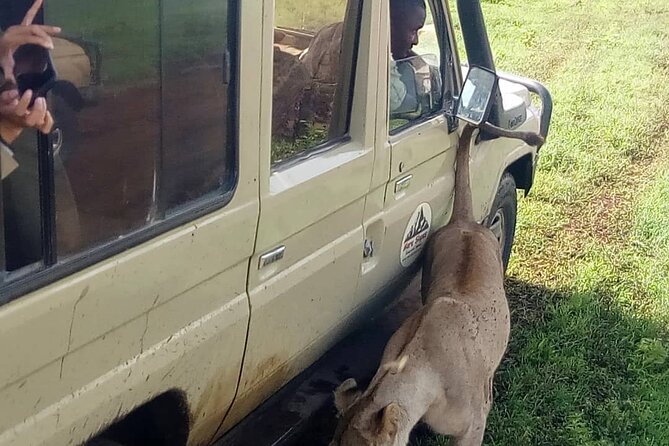
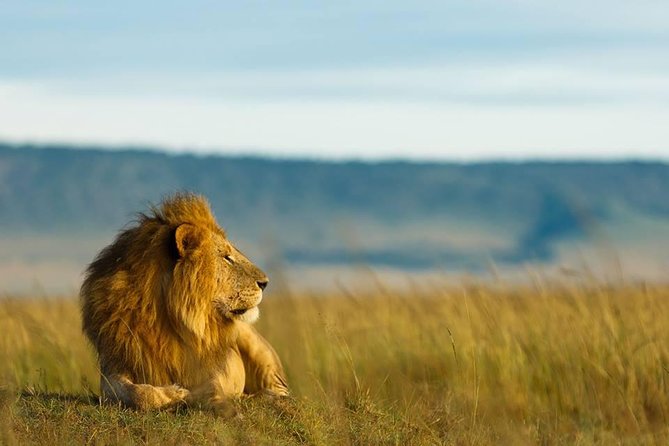
The final safari day takes you to Lake Manyara National Park for a full-day game drive. The park is associated with tree-climbing lions, flamingos drawn by algae in the lake, and a hot spring.
Lake Manyara gives you a different setting from Tarangire and Serengeti. The lake and forested areas change the kinds of views you get, and the hot spring provides a short natural stop between game-viewing periods. You may also visit a Maasai boma to learn about local traditions and daily life.
The schedule then calls for a drive back to Arusha, with dinner and an overnight stay noted in the program. That creates an important planning question: the experience is marketed as six days, yet the inclusions also mention two nights of hotel accommodation in Arusha and six nights of accommodation. Ask the operator to confirm the exact final-night arrangement, departure time, and whether your trip ends after dinner or the following morning.
This is not a minor detail if you have a flight or another tour booked. Leave a buffer after the safari rather than scheduling a tight onward connection.
What the $1,600 price really covers

At $1,600 per person, the value depends on how you use the included services. The price covers six days of guiding, park visits, meals, accommodation, hotel pickup and drop-off, water, coffee and tea, taxes, Wi-Fi in the safari vehicle, and AMREF Flying Doctors emergency rescue cover.
It also includes breakfast, lunch, and dinner as laid out in the program. Alcohol is extra, and flights are not included. Any service not named in the inclusions should be treated as your own expense.
For a northern Tanzania safari, the important value is not just the room or tent. Park access, vehicle operation, fuel, guiding, food, and long-distance transfers can quickly add up. A small group of no more than six helps keep the trip personal without moving into private-safari pricing.
The budget label still matters. Camping usually means simpler facilities than a high-end lodge, and the early starts and long drives are part of the bargain. You are paying for access to major parks and a full itinerary, not for polished resort comfort.
The guide and cook make the difference
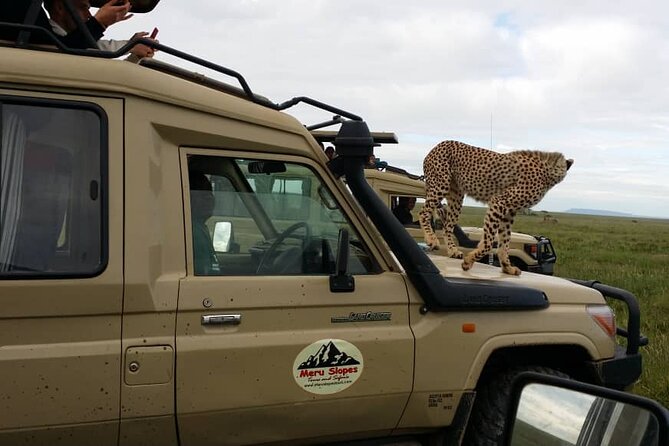
A safari vehicle is only as useful as the person making decisions from the driver’s seat. The strongest praise connected with this operator centers on guides who can spot animals, explain what you are seeing, and adjust the route when conditions change.
Names associated with highly praised departures include Nuru, Robert, Mohamed, and Florian. A cook named Gideon and another named Saleem have also been associated with past safari teams. These details are useful when speaking with the company, but they do not mean you can assume a particular person will lead your trip.
Ask how the guide shares information, how long the vehicle normally stays at sightings, and how the group handles different interests. Someone focused on birds may want a different pace from someone hoping to see lions or a leopard.
The included Wi-Fi can help with basic communication, but do not let it replace your phone camera battery plan. You will spend long days away from town, and keeping your equipment charged and protected from dust is sensible.
Who should book this safari
I would choose this trip if you want:
- A first safari covering the main northern Tanzania parks
- A lower-cost alternative to an all-lodge itinerary
- A small shared group rather than a large coach
- A full Serengeti day and a chance to follow the migration
- A mix of wildlife, village culture, and natural sights
- Most meals and transport arranged in advance
I would hesitate if you want a slow schedule, luxury accommodation, or a guaranteed focus on one species. The itinerary is active, with early breakfasts, long drives, several park transfers, and basic camping.
Families can consider it, but children must be accompanied by an adult. Most people can participate, yet the long game drives may be tiring for anyone who dislikes extended time in a vehicle.
The experience is offered in multiple languages, which can be helpful if you want explanations in something other than English. Confirm your preferred language before departure rather than assuming it will be available on every date.
Practical details before you book
Pickup is available from accommodation, with the listed meeting point at Arusha Tourist Inn on Sokoine Road. The activity ends back at the meeting point, although the program also refers to hotel drop-off and an Arusha overnight, so confirm the final transfer plan.
The tour is normally booked well ahead, with an average booking lead time of about 68 days. That is worth noting for peak migration months, especially June through September.
Free cancellation is available if you cancel at least 24 hours before the local start time. Changes made inside that window are not accepted, and poor weather may lead to a different date or a full refund.
Pack for dust, cool early mornings, hot midday drives, and simple camp nights. The supplied information does not specify a full packing list, so ask the operator what bedding and camping equipment are provided.
Should you book it?
Book this safari if your priority is seeing northern Tanzania’s biggest names in one well-filled trip. Tarangire’s elephants and baobabs, the Serengeti’s open plains, Ngorongoro’s concentrated wildlife, Lake Manyara’s birds and tree-climbing lions, and Mto wa Mbu’s cultural stop give you a lot for the price.
Before confirming, get the sleeping arrangements and final-night schedule in writing. If you accept the brisk pace and basic camping, this is a strong value choice for a first Tanzania safari. If you want quiet mornings, luxury beds, or more control over each day, pay more for a private and slower itinerary.
FAQ
How long is the safari?
The experience is scheduled for six days. The accommodation details also mention six nights, including two nights in Arusha, so confirm the exact overnight schedule with the operator.
Which parks and areas are included?
The route includes Tarangire National Park, Serengeti National Park, the Ngorongoro Conservation Area and Crater, Lake Manyara National Park, and Mto wa Mbu village.
Is hotel pickup available?
Yes. Pickup and drop-off from accommodation are offered, and the listed meeting point is Arusha Tourist Inn on Sokoine Road.
How many people can join the safari?
The maximum group size is six people.
Are meals included?
Yes. Breakfast, lunch, and dinner are included according to the itinerary. Coffee, tea, and unlimited mineral water are also included.
Is camping included?
Yes. Six nights of accommodation are supplied, and the program includes camping in places such as Seronera and Simba. Confirm the exact split between tents, lodges, and Arusha hotel nights before booking.
Can I see the Great Migration?
The safari is designed to follow the wildebeest migration when possible, but the animals move according to natural conditions. June through September is identified as the strongest period, with calving generally taking place from January through March.
What happens if I need to cancel?
You can receive a full refund if you cancel at least 24 hours before the experience start time. Cancellations or changes made less than 24 hours in advance are not accepted, while poor-weather cancellations may result in a different date or a full refund.
More Six-Day Routes from Serengeti & Ngorongoro
- Tanzania Wildlife Encounters – 6 Days
★ 5.0 · 277 reviews - Private 6-Day Tarangire Manyara Crater and Serengeti with Mid-Range Lodges
★ 5.0 · 238 reviews - 6 Days Private Budget Safari
★ 5.0 · 163 reviews - Tanzania Enticing Explorations – 6 Days
★ 5.0 · 106 reviews
Just added for Serengeti & Ngorongoro
- Tanzania Enticing Explorations – 6 Days★ 5.0 · 106 reviews
- Tanzania Simba Safari – 5 Days★ 5.0 · 217 reviews
- 3 Days Private Safari – manyara, Ngorongoro & Tarangire★ 5.0 · 94 reviews
- Living Among Lions★ 5.0 · 191 reviews
- Tarangire Day Tour★ 5.0 · 95 reviews
- Safari Excelente y Safari lujos Tanzania★ 5.0 · 103 reviews
- Arusha Guided Walking City Tour, Culture, Lifestyle & History★ 5.0 · 150 reviews
- 8 Day Spectacular Migration Serengeti mid -Range Tanzania Safari★ 5.0 · 161 reviews
Wildlife Safaris, compared.
Serengeti Balloon Safari and authentic bush breakfast
Read our review →
Balloon Safari & Bush Breakfast in Serengeti – Miracle Experience
Read our review →
From Zanzibar: Mikumi Safari Day Trip with Flights and Meal
Read our review →
From Zanzibar: Day Selous Game Reserve Safari with Flights
Read our review →Browse the lists this tour appears in