
Reviewed · SERENGETI & NGORONGORO TOURS
Arusha Guided Walking City Tour, Culture, Lifestyle & History
Arusha reveals itself best at street level, where colonial buildings, government offices, gemstone shops, markets, and everyday city life sit close together. This four-hour tour gives you a useful introduction, with guide Israel often leading the walk and explaining Tanzania’s past, customs, and present-day life in clear English.
I like the mix of history and daily life, from the old German fort to Maasai crafts and busy city streets. I also like the personal guidance through the markets, especially if you are new to Arusha or want help feeling at ease in an unfamiliar city. The main consideration is that this is not always a pure walking tour. Short drives or tuk-tuk rides may connect some stops, and the route can feel more like a city sampler than one long stroll.
Key things to know before booking
- Old Boma puts Arusha’s past first: See a former German fort with displays on human evolution, the city’s early years, ecology, and wildlife photography.
- Tanzanite gets its own focused stop: Learn how the blue-violet stone is mined, cut, and sold before deciding if you want to browse the shop.
- Israel is a strong guide choice: He is praised for clear English, warmth, local insight, and his ability to explain Tanzania’s past without making the walk feel like a lecture.
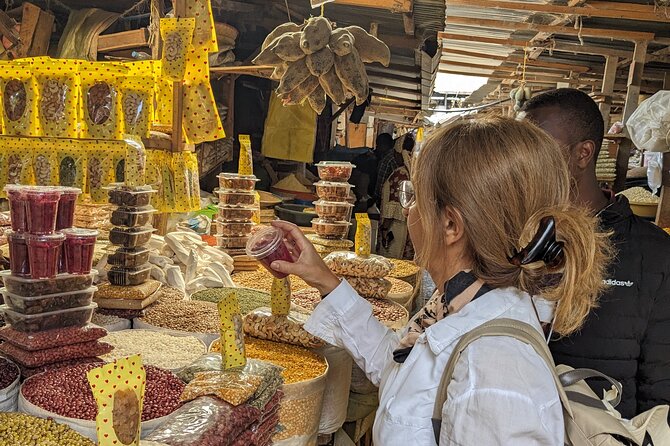
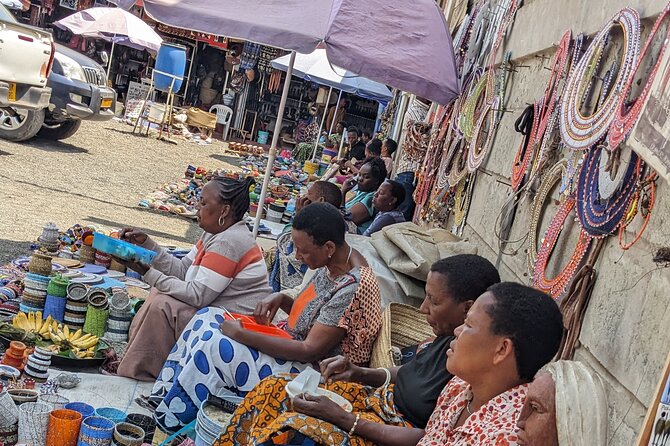
- Markets are part of the experience: Expect fabrics, jewelry, Maasai sandals, bags, blankets, shirts, and artwork, with time to browse and bargain at your own pace.
- The Cultural Heritage Centre broadens the picture: Its gallery presents art from Tanzania and other parts of Africa, followed by more shopping opportunities.
- Plan for extra costs: Old Boma admission is about $6 per adult, while food, drinks, souvenirs, and tips are not included.
Why a short city walk matters in Arusha
Arusha is often used as a starting point for safari and Kilimanjaro trips. That makes it easy to spend the night in a hotel and leave without seeing much of the city itself. This tour helps correct that. In a few hours, you can connect the town’s colonial past, modern public life, local commerce, art, and national identity.
The route also gives you a sense of scale. You pass important buildings such as the East African Community headquarters, the Arusha International Conference Centre, and a large public hospital before reaching the Old Boma area. These sights help place Arusha within regional politics, business, and public life rather than presenting it only as a gateway to national parks.
The experience is listed at $26 per person, which is a fair price for a guided introduction if you make use of the explanations and local help. The value is not in transport or admission packages. It is in having someone interpret what you are seeing, guide you through central streets, and connect separate sights into one story.
Pickup and drop-off are offered for hotels near the city centre. The group can reach as many as 19 people, although the exact feel of the walk will depend on the day. A smaller group usually makes market browsing and questions easier. The stated duration is about four hours, though the included information allows for guided time ranging from roughly two and a half to six hours, so confirm the expected schedule when you book.
More Walking Tours in Tanzania
- Stone Town Private Walking Tour
★ 5.0 · 371 reviews - Zanzibar: 3 Hours Private Stone Town walking Tour with Guide
★ 4.6 · 301 reviews - Zanzibar: Stone Town Historical Cultural Walking Guided Tour
★ 4.5 · 179 reviews
Old Boma and the early story of Arusha
Old Boma Museum is the most useful historical stop on the route. The building was constructed by the Germans during the colonial period as a fort, and it is described as the oldest building in Arusha. Today it houses the National Natural History Museum.
You can expect about 45 minutes here. Admission is not included, so allow around $6 per adult. That extra fee is small, but it is worth knowing before you arrive, especially if you are carrying only a limited amount of cash.
The museum has three permanent displays and three temporary exhibitions. The human evolution section uses replica fossils, tools, and a replica of an ancient footprint found in East Africa. This gives you a starting point for understanding the wider region before you head into Tanzania’s more familiar safari stories.
A smaller display covers the history of the Boma and the city from 1884 to 1919. This is a compact time period, but it helps explain how Arusha developed under German rule and how the building’s purpose changed. An ecology and wildlife photography exhibition adds another side of Tanzania, connecting the city to the animals and habitats that draw so many people to northern Tanzania.
I would pay attention here rather than rush through for photographs. The building itself is part of the lesson. The main drawback is time: 45 minutes is enough for a guided overview, not a slow museum visit with every panel read.
Tanzanite and the business behind the blue stone
The Tanzanite Experience offers a different kind of history, centered on a stone found only in Tanzania. The exhibition explains the gemstone’s violet-blue color, its mining process, and the work involved in cutting and polishing it.
The tour describes tanzanite as exceptionally rare because of its limited source, with the claim that it can be 1,000 times rarer than diamond. You can treat that comparison as part of the presentation, while focusing on the more practical point: the stone’s appeal comes from its color, its origin, and the complicated path from mine to finished jewelry.
The guided visit lasts about 30 minutes and admission is included. You can also visit the shop, where prices range from about $100 to $3,000 and above. That is a wide range, so you do not need to regard the stop as a buying obligation. You can simply learn how the stone is handled and see the jewelry in person.
I like this stop because it shows a side of Tanzania that is easy to miss. Safari is not the country’s only major connection to the outside world. Mining, cutting, design, and local trade also shape the economy and the way Tanzania presents itself to visitors.
If you are considering a purchase, take your time. Ask questions, compare pieces, and remember that the tour includes the museum visit, not a gemstone purchase. Bring cash for smaller purchases, but do not feel pressured to spend beyond your budget.
Arusha Clock Tower and the city centre
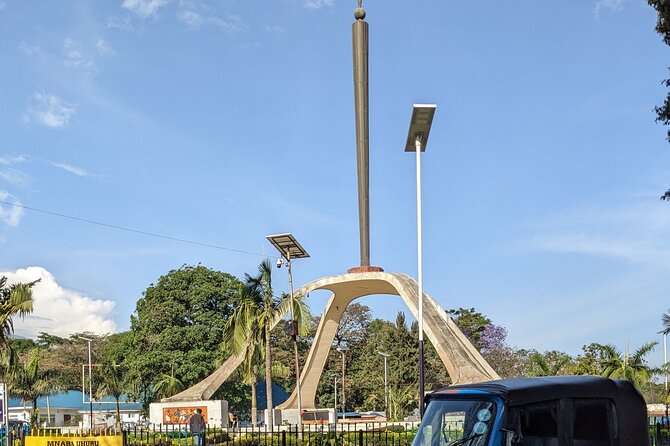
The Clock Tower is a short stop, about 15 minutes, but it helps you understand how the central city is organized. It is known as a meeting point and was built by Galanos, a Greek millionaire who came to Tanganyika in the early 20th century.
The tower is often described as lying between Cairo and Cape Town and as a central point between Tanzania, Kenya, and Uganda. Those claims are part of the tower’s local identity and appeal, though you should not confuse a popular geographic story with a formal scientific marker.
After the Clock Tower, the walk continues toward one of the older hotels and a school built during the colonial period. This section is less about entering a major attraction and more about seeing how older structures fit into present-day Arusha.
I like this kind of stop because it gives you a fixed point in a city that might otherwise feel confusing at first. The limitation is that 15 minutes is brief. You will get the explanation and a look around, but not an extended architectural tour.
More Historical Tours in Serengeti & Ngorongoro:
- Hurghada: Luxor Valley of the Kings & Tutankhamun Tomb Trip
★ 4.7 · 13,208 reviews - Luxor Day Trip from Hurghada Small Group & Tutankhamun Tomb
★ 4.8 · 5,366 reviews - Marrakech: Bahia Palace, Saadian Tombs, Souk and Medina Tour
★ 4.7 · 4,974 reviews - From Marrakech: Casablanca Tour with Hassan II Mosque Visit
★ 4.7 · 4,756 reviews
Shopping for crafts at the Maasai market

The Maasai Market Curios and Crafts stop is designed for browsing. Allow about 25 minutes, although you may wish you had longer if you are serious about shopping.
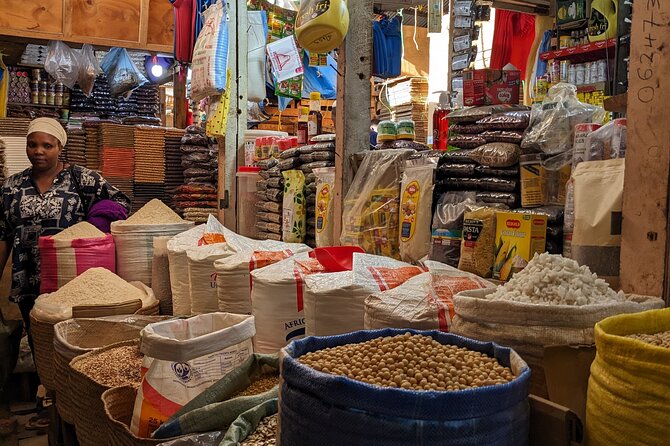
The market carries the sort of items many people look for after a Tanzania trip: African pots and pans, safari shirts, fabric clothing, Tanzania jerseys, Maasai shoes and sandals, jewelry, necklaces, bags, shuka blankets, and artwork. The selection makes this a practical place to compare souvenirs in one setting.
You should bring cash. Money for purchases is not included, and the tour specifically advises you to have cash available. A little patience helps too. Look around before buying, ask about prices, and decide what fits in your luggage. A short stop can turn into a rushed one if you wait until the last few minutes.
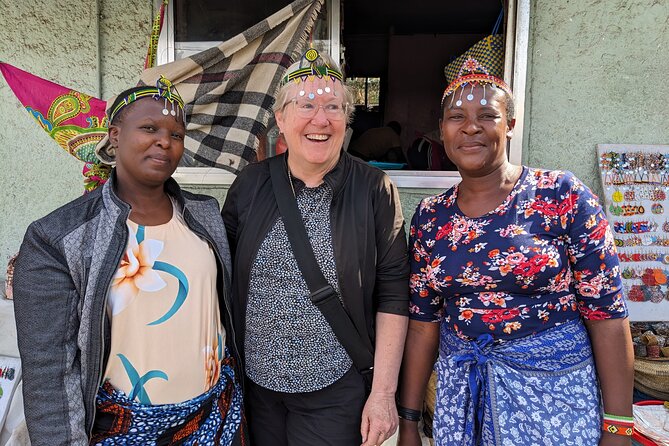
This is also where a local guide can be especially useful. Guide Israel has been praised for taking people through busy streets and markets in a way that feels comfortable, while also explaining local customs and products. You still need to make your own decisions, but having someone nearby can make the experience less awkward.
Do not expect a quiet museum atmosphere here. The market is a commercial place, and shopping is part of the point. If you dislike browsing or do not plan to buy anything, this may be the least important stop for you. If you want fabric, jewelry, or a tangible reminder of Tanzania, it earns its place.
The Cultural Heritage Centre’s wide art collection
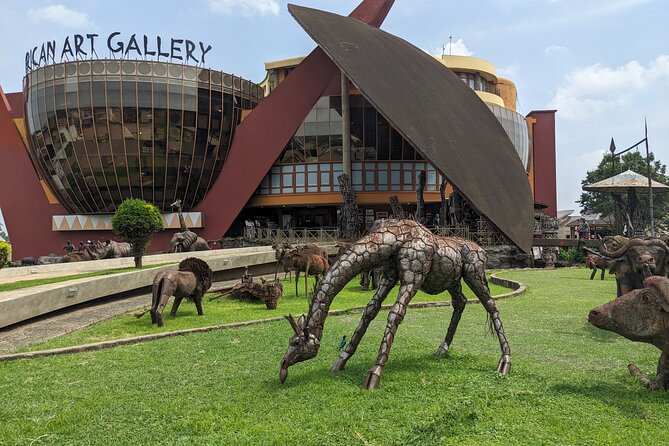
The Cultural Heritage Centre is the longest scheduled stop after Old Boma, with about 40 minutes. It is presented as one of Africa’s larger art galleries, with works from different parts of Tanzania and other African countries.
The centre helps widen your view beyond northern Tanzania. You may see artwork connected to many regions and traditions, rather than only the Maasai items found in the earlier market. The visit gives you another chance to ask your guide about materials, styles, and the differences between handmade souvenirs and gallery pieces.
A shop next to the gallery sells more souvenirs. That makes the centre convenient, though it also means several parts of the tour include commercial opportunities. I would treat the shopping as optional and focus first on the art itself.
The 40-minute visit is enough for a useful orientation. It is not enough for every room if you prefer to study each piece closely. If art is your main reason for booking, ask how much free time you will have inside.
What the guide adds to the experience
The guide can make or break a city walk. Here, Israel is the name most often associated with the tour. He is described as young, energetic, friendly, and easy to understand, with strong English and a clear way of explaining Arusha’s past and Tanzanian culture.
That matters because the route moves between very different subjects. You go from human evolution to colonial buildings, from tanzanite mining to street commerce, then from a central meeting point to African art. A good guide keeps these pieces connected instead of leaving you with a string of unrelated stops.
Israel has also guided solo women and helped people feel comfortable in busy areas. That does not remove the need for normal city awareness, but it is useful if you are arriving in Arusha alone or are unsure about walking through an unfamiliar market.
The tour provider is Tanzania Songbirds Safaris. The experience can accommodate up to 19 people, and a local guide leads the outing. Because the route may combine walking with short car or tuk-tuk transfers, wear comfortable shoes but do not assume every minute will be on foot.
Walking, short rides, and the pace of the day
The name suggests a fully pedestrian tour, but the actual experience can include local transport between attractions. One account describes a tuk-tuk ride from the hotel to the first sight, followed by short walks between locations.
I see that as a practical advantage in Arusha. You cover more ground and avoid spending the whole morning on one long stretch of pavement. Still, if your main goal is a continuous walking route, this may not match your expectations.
The stated duration is approximately four hours. The stops add up to about two hours and 35 minutes, before transfers, explanations, and time spent moving between sites. That leaves a reasonable amount of flexibility, but the exact pace can change with traffic, market time, and your interest in shopping.
Pickup and drop-off are available for hotels near the city centre. If your accommodation is farther out, confirm whether transport is included for your location. Public transportation is nearby, but the tour is set up primarily around central hotels and central attractions.
Who will get the most from this tour
I would recommend this experience to you if you have a half-day in Arusha and want more than a hotel-to-safari transfer. It is especially useful on a first visit, when the city’s streets, landmarks, and public buildings have not yet become familiar.
It also suits you if you like variety. The route combines a museum, a gemstone exhibition, a civic landmark, two shopping and art stops, and explanations of local life. You will not spend hours at one institution, but you will get a broad picture.
Solo visitors can benefit from the guide’s help in markets and on busy streets. Couples and families may appreciate the manageable length. Art lovers and shoppers will find useful stops, while history-minded visitors should give Old Boma extra attention.
You may want a different experience if you dislike shopping stops, want a long museum visit, or expect a fully continuous walk. This is a sampling of Arusha, not a specialist architecture, food, or archaeology tour. Food is not included, and the route does not promise a meal or tasting.
Practical value at $26
At $26 per person, the tour offers good value if you would otherwise pay for separate transport and try to interpret the city on your own. You receive a local guide, the Tanzanite Experience, the Cultural Heritage Centre, and pickup and drop-off near the city centre.
Old Boma costs extra, at about $6 per adult. Food, drinks, accommodation, souvenirs, and gratuities are also outside the price. The two included cultural attractions help balance the additional museum fee, but you should budget more if you plan to buy tanzanite, fabric, jewelry, or art.
Tips are optional and depend on your satisfaction. I would judge the value by the quality of the explanations, how well the guide handles the city route, and whether the tour gives you the kind of introduction you wanted.
The activity has a 99 percent recommendation rate and a five-star rating based on 150 ratings. That points to a consistently well-received service, while the specific praise focuses most on guide Israel’s communication, local understanding, warmth, and ability to make the city feel approachable.
Should you book the Arusha city walk?
Book it if you want a compact introduction to Arusha with a strong human element. The best reasons are the Old Boma context, the focused tanzanite presentation, the chance to see real city commerce, and the guide’s help in making busy streets easier to handle.
Before booking, accept three things: the walk may include short rides, some stops include shops, and you will pay extra for Old Boma and anything you buy. If those points suit you, $26 buys a useful first look at Arusha instead of another quiet morning at the hotel.
Free cancellation is available up to 24 hours before the start time. Changes or cancellations within 24 hours are not refundable.
FAQ
How long does the Arusha guided walking tour last?
The tour lasts approximately four hours. The included information also allows for guided time ranging from about two and a half to six hours, depending on the arrangement and pace.
Is hotel pickup included?
Pickup and drop-off are included for hotels near the city centre. Confirm the details if your accommodation is outside the central area.
Is the whole tour completed on foot?
No. The experience is described as a walking tour, but short car or tuk-tuk rides may connect some sights.
Is Old Boma Museum admission included?
No. Admission to the Natural History Museum at Old Boma costs about $6 per adult and is paid separately.
Are food and drinks included?
No. Food and drinks are not included in the tour price.
How many people can join the tour?
The maximum group size is 19 people.
Can I cancel for a full refund?
Yes. You can cancel at least 24 hours before the experience start time for a full refund. Cancellations or changes made within 24 hours are not accepted for a refund.
More City Tours in Serengeti & Ngorongoro
- Casablanca City Tour with Hassan II mosque ticket
★ 5.0 · 2,480 reviews - Cape Town Hop-On Hop-Off City Tour with Optional Cruise
★ 4.5 · 1,793 reviews - Cairo: Female-Guided Pyramids, Sphinx & Museum City Tour
★ 4.8 · 1,614 reviews - Marrakech: Private Guided Half-Day City Tour
★ 5.0 · 1,249 reviews
More Walking Tours in Serengeti & Ngorongoro
- Marrakech: Ben Youssef, Secret Garden, & Souks Walking Tour
★ 4.6 · 2,802 reviews - Marrakech: Colorful Medina Souks Guided Walking Tour
★ 4.7 · 2,470 reviews - Explore Fes: Unforgettable Guided Walking Tour of the Medina
★ 4.7 · 1,339 reviews - Nairobi: Historic and Modern Highlights Walking Tour
★ 4.8 · 703 reviews
Just added for Serengeti & Ngorongoro
- Tanzania Enticing Explorations – 6 Days★ 5.0 · 106 reviews
- Tanzania Simba Safari – 5 Days★ 5.0 · 217 reviews
- 3 Days Private Safari – manyara, Ngorongoro & Tarangire★ 5.0 · 94 reviews
- Living Among Lions★ 5.0 · 191 reviews
- Tarangire Day Tour★ 5.0 · 95 reviews
- Safari Excelente y Safari lujos Tanzania★ 5.0 · 103 reviews
- 8 Day Spectacular Migration Serengeti mid -Range Tanzania Safari★ 5.0 · 161 reviews
- 9-Day Serengeti Migration Footsteps Tanzania Safari★ 5.0 · 96 reviews
Serengeti & Ngorongoro Tours, compared.

Serengeti Balloon Safari and authentic bush breakfast
Read our review →
Balloon Safari & Bush Breakfast in Serengeti – Miracle Experience
Read our review →

3 Days Serengeti & Ngorongoro Group Camping Safari
Read our review →
7-Day Premium Luxury Tanzania Safari All-Inclusive
Read our review →
5-Day Highlights mid-Range Crater, Serengeti, Tarangire
Read our review →Browse the lists this tour appears in