
Reviewed · WILDLIFE SAFARIS
9-Day Serengeti Migration Footsteps Tanzania Safari
The main draw here is simple: four nights in the Serengeti, timed around the moving herds. From December to March, the action is centered around Ndutu. From July to November, the trip heads north toward the Mara River, where a crossing can happen in seconds or not at all.
I like the wide range of habitats, from Tarangire’s baobabs and elephants to the enclosed wildlife world of Ngorongoro Crater. I also like the private format, which gives your own group one vehicle and a guide rather than placing you with strangers. The catch is the price, $4,539 per person, and the fact that a river crossing is never guaranteed, no matter how carefully the dates are chosen.
Key points at a glance
- Four Serengeti nights: The schedule gives you real time in the park rather than a quick pass through.
- Migration timing matters: Ndutu is the focus from December to March, while Northern Serengeti and the Mara River are used from July to November.
- Private vehicle and guide: Only your group takes part, with guides such as Enock, Mwita, Gilbert, and Yusuph praised for animal spotting and attentive care.
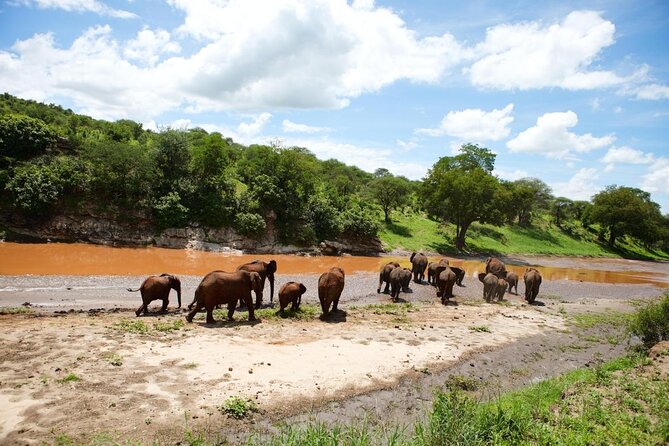
- Strong wildlife variety: Tarangire, Serengeti, Ngorongoro, and Lake Manyara each offer a different setting and animal mix.
- Early starts and long drives: This is an active safari with full game-drive days, road transfers, and an especially early crater descent.
- Price includes meals and transport: Breakfast is provided for nine days, lunch for eight, dinner for seven, plus private transport and park parking fees.
Why four nights in the Serengeti matter
Many safari programs rush through the Serengeti in one or two nights. This one gives you four. That extra time improves your odds of seeing ordinary Serengeti life, not just a single famous sighting.
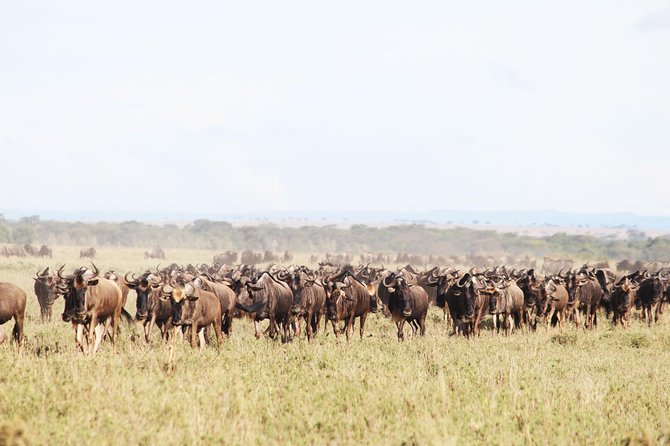
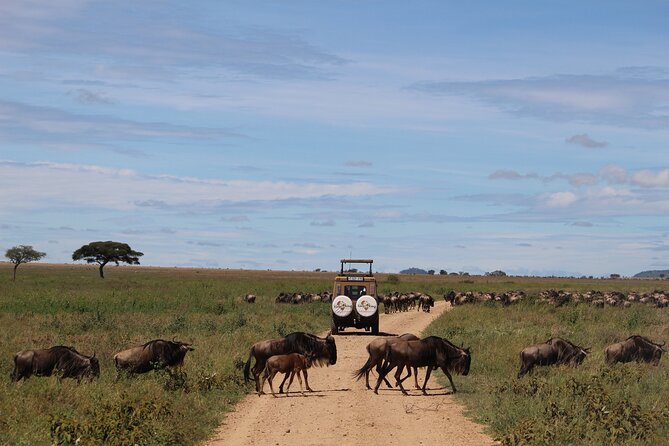
You can spend one day moving north from Seronera, another watching the Mara River area, and a later day returning south toward Seronera. That rhythm is useful because the migration is not a scheduled performance. Herds can pause for hours at a riverbank, scatter across a broad plain, or shift away from the area overnight.
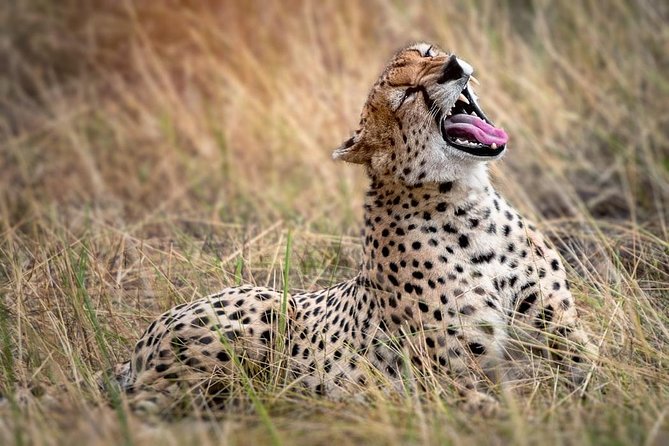
The program also leaves room for resident wildlife. Lions, leopards, and cheetahs remain in the Serengeti throughout the year, along with zebra, giraffe, buffalo, antelope, and many birds. You are not relying only on the wildebeest to make the safari worthwhile.
The private setup is another real advantage. A guide can spend more time with your group’s interests, whether you want birds, predators, elephants, or photography. Guides named in the feedback include Enock, Mwita, Gilbert, Yusuph, Leonard, Amani, Simon, Ozzy, Richard, Immanuel, and Shafino. The repeated praise centers on sharp eyesight, safe driving, animal knowledge, patience, and personal care.
More Multi-Day Tours in Tanzania
- 8 Days Great Wildebeest Calving Migration Safari from Arusha
★ 5.0 · 254 reviews - 10-Day Serengeti Wildebeest Migration Safari from Arusha
★ 5.0 · 218 reviews - 8 Day Spectacular Migration Serengeti mid -Range Tanzania Safari
★ 5.0 · 161 reviews
Day 1: A quiet start in Arusha
Your Lion King Adventures representative collects you at the airport and takes you to your Arusha accommodation. This first day is for rest and preparation, not sightseeing.
That may sound uneventful, but it is sensible. A nine-day safari involves early breakfasts, long drives, and hours in a vehicle. Arriving at the accommodation, settling in, and getting ready before the first full park day helps you start fresh.
The listed start time is 8:30 a.m., and the meeting point is in Arusha. Confirm the exact pickup details before arrival, especially if your flight lands at a different time or location.
Day 2: Baobabs and elephants in Tarangire
After breakfast, you drive to Tarangire National Park for a full-day game drive. Tarangire is a strong opening act because it feels different from the Serengeti. Its nine vegetation zones include open areas, woodland, river country, and the huge baobab trees that give the park its unmistakable look.
The Tarangire River draws animals, especially in a dry period. You might see elephants, lions, leopards, buffalo, zebra, giraffe, antelope, and a wide range of birds. The park is particularly known for its elephant population, so this is a good place to watch family groups interact at close range.
The practical point is that this day is not just a transfer with a few stops. It is a full safari day, which means you get an early taste of wildlife before reaching the Serengeti. The drawback is time in the vehicle. Tarangire, the highlands, Ngorongoro, and the Serengeti cover large distances, so this program suits you best if you enjoy the journey as much as the sightings.
Day 3: Through the highlands to the Serengeti
The route continues through fertile highlands where the Iraqw people grow wheat and corn. You then pass through the Ngorongoro Conservation Area, including misty rainforest where baboons, elephants, and possibly leopards may appear among the trees.
You also get a view of Ngorongoro Crater before continuing toward Serengeti National Park. Reaching the Serengeti around midday gives you a first look at its broad plains, swamps, lakes, and changing habitats.
This day combines scenery with transport, so expectations matter. You should not treat it as a full day devoted to game viewing. Its value is the gradual change from cultivated highlands to forest and then open Serengeti country. By midday, the setting changes dramatically, and the main safari chapter begins.
More Wildlife Safaris in Tanzania
- Serengeti Balloon Safari and authentic bush breakfast
★ 5.0 · 2,480 reviews - Balloon Safari & Bush Breakfast in Serengeti – Miracle Experience
★ 5.0 · 1,646 reviews - 4 Days Group Camping Safari
★ 5.0 · 1,101 reviews - 5 Days Group Camping Safari
★ 5.0 · 730 reviews
Days 4 and 5: Following the herds toward the Mara River
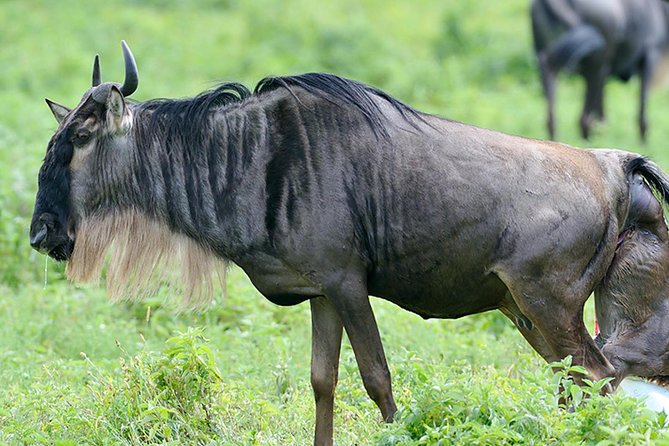
The northern drive from Seronera covers roughly 100 kilometers through rolling country, small rivers, occasional hills, and rocky kopjes. Lobo Kopje is one of the notable geological features along the way.
Northern Serengeti is farther from the park’s main southern entry points, so the program presents it as a quieter part of the park. Here the resident wildlife remains important, but the timing is aimed at the migration from July through November.
Day 5 begins with an early breakfast and a full day out. The focus is the Mara River, where hundreds of thousands of wildebeest may gather before crossing. A crossing is an extraordinary natural event, but it is also tense and unpredictable. The animals may stand at the bank for a long time, then one animal takes the first step and the rest follow. Crocodiles wait in the water, and the current can be rough.
You should book this section for the chance to witness the setting and behavior, not for a promised crossing. The schedule gives you two days in the northern area, which improves your opportunity, but nature decides the result. Even without a crossing, the river country, permanent wildlife, and open views make this a worthwhile part of the trip.
If you travel from December to March, the migration focus changes to Ndutu rather than the far north. Ask for the exact seasonal route before paying, since the location of the herds is central to the value of this safari.
Day 6: Returning toward Seronera
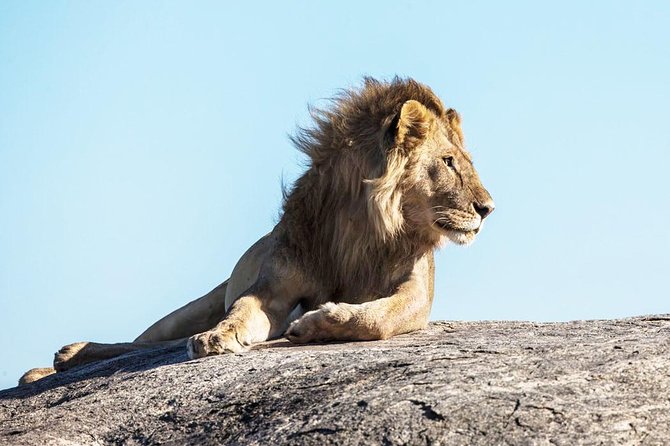
After another breakfast, the route turns back toward Seronera. This return day gives you more chances to see animals that may have been missed earlier, including leopard, cheetah, and lion.
Seronera is especially useful for a broader wildlife search because the day is not built around one dramatic event. You can spend time looking for predators, watching herds, and taking in the Serengeti’s open country. The evening ends at your accommodation, with dinner and time to sit outside under the stars.
The schedule describes a hearty dinner and an evening by the fire. Exact accommodation details are not given for every night, but the feedback names Nyota Luxury Camp and describes the tented lodges as clean and comfortable. Treat that as useful guidance, while confirming your assigned properties before booking if accommodation style matters to you.
Day 7: From the Serengeti to the crater rim
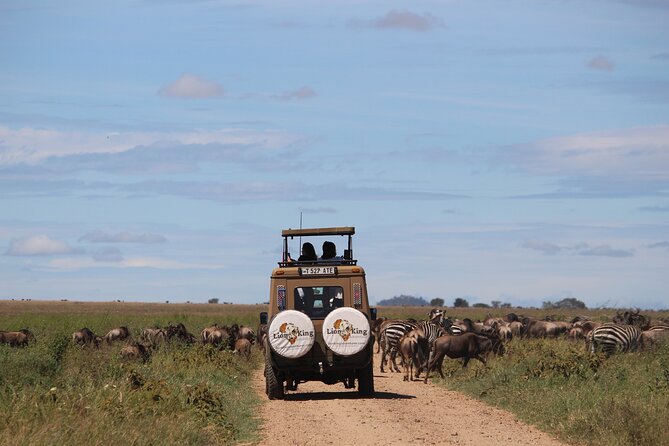
You have another morning game drive before leaving the Serengeti for Ngorongoro Crater. Reaching the crater rim in the afternoon gives you a first view of the caldera before the next morning’s descent.
This is a good transition because it breaks up the long route from the Serengeti to the crater floor. You spend the night near the rim, ready for an early start.
There is also a tradeoff. The day combines a game drive and a substantial transfer, so it may feel long. Still, the first glimpse from above can be one of the most memorable views of the trip: open grassland, streams, and animals gathered inside a natural bowl.
Day 8: A full wildlife day inside Ngorongoro Crater
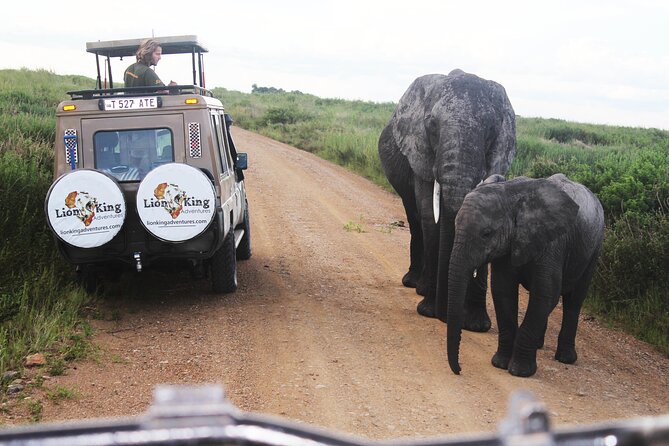
The day starts very early. After breakfast, you descend about 610 meters to the crater floor for a full day of wildlife viewing.
Ngorongoro is a caldera formed roughly three million years ago after a huge volcanic explosion. It covers about 260 square kilometers and functions as an enclosed ecosystem. The surrounding walls help keep many animals within the crater, making it one of Tanzania’s strongest places to look for the Big Five.
You may also see wildebeest, zebra, hippo, birds, and other grazing animals. The compact setting can make wildlife viewing feel especially rewarding because streams, grasslands, and animal groups are gathered within a defined area.
The early start is worth taking seriously. You will need energy for the long day, and the roads can be tiring. Still, this is one of the program’s best days for a concentrated wildlife experience. After several days of wide Serengeti plains, the crater offers a different kind of drama, with steep walls and a dense mix of animals.
Day 9: Lake Manyara before returning to Arusha
After breakfast, you drive to Lake Manyara National Park, about 120 kilometers west of Arusha. The park is smaller than Tarangire or Serengeti, but its habitats change quickly.
The shallow salt lake can cover about 70 percent of the park, depending on the season. It attracts flamingos and supports a remarkable bird list of roughly 500 species. Away from the water, you may see monkeys, giraffes, zebra, wildebeest, buffalo, elephants, and, with luck, lions in trees.
Lake Manyara’s appeal is variety in a compact area. You move among open grassland, woodland filled with primates, and baobab-dotted cliffs. After lunch, you return to Arusha in the late afternoon.
This final park visit makes sense for a nine-day route because it adds another habitat rather than repeating the Serengeti. The limitation is time. Since you must return to Arusha that afternoon, the day has a fixed endpoint and cannot stretch indefinitely around a distant sighting.
What the $4,539 price includes
At $4,539 per person, this is a major purchase. The value comes from the length of the route, four nights in the Serengeti, private transportation, park access, and meals.
Included services are:
- Private transportation
- Parking fees
- Breakfast for nine days
- Lunch for eight days
- Dinner for seven days
International flights are not included. Gratuities are also listed as excluded, so allow room in your budget for those. The exact accommodation plan should be confirmed before booking, since the program information refers to lodges and tented camps but does not provide a full property-by-property list.
I see the price as easier to justify if your priority is the migration and a private vehicle. You are paying for time in the field, long-distance routing, and the chance to adjust the search with your own guide. It is harder to justify if you want a short, low-cost introduction to Tanzania or if you are mainly interested in one park.
Who will enjoy this safari most
I would recommend this trip to you if the Great Migration is the main reason you are coming to Tanzania and you can travel in the correct seasonal window. It also suits families, couples, and small private groups who want the same vehicle and guide throughout the main route.
The program has worked well for groups with teenagers, honeymooners, friends, and older parents. Shafino is specifically praised for taking extra care of older family members, while Enock is repeatedly described as attentive and capable with full safari days.
You should be comfortable with early breakfasts, extended drives, and changing daily conditions. This is not a relaxed resort holiday. The rewards come from being outside for long periods and accepting that the animals set the schedule.
Practical details before you book
Pickup is offered, and the activity begins in Arusha at 8:30 a.m. The tour ends back at the meeting point in Arusha. Confirmation is provided at booking, and the activity is private, with only your group participating.
Most people can take part, and the meeting area is near public transportation. Still, tell the operator about mobility needs before booking, since the program includes vehicle travel, early starts, a crater descent, and full-day game drives.
Free cancellation is available if you cancel at least 24 hours before the local start time. Cancellations or changes made inside that window are not accepted for a refund. If the minimum number is not reached and the operator cancels, you are offered another date or experience, or a full refund.
Should you book the 9-Day Serengeti Migration Footsteps Safari?
Book it if you want a serious wildlife trip built around the Serengeti rather than a quick park sampler. The strongest reasons are the four Serengeti nights, private format, broad route, and the chance to work with guides such as Enock, Mwita, Gilbert, or Yusuph, whose strengths include animal spotting, care, and steady driving.
Before paying, confirm two things: the seasonal route and the accommodation list. From July to November, the focus is Northern Serengeti and the Mara River. From December to March, it is Ndutu. If your dates fall outside those periods, the program may still offer excellent wildlife, but the migration promise becomes less specific.
This is a good choice for an active safari enthusiast who values time in the field and accepts uncertainty. It is not the best fit for anyone seeking guaranteed river crossings, short driving days, or a bargain holiday.
FAQ
Where does the safari start and finish?
It starts in Arusha, Tanzania, with pickup offered. The activity ends back at the meeting point in Arusha.
How long is the experience?
The safari lasts approximately nine days.
When is the migration found in Northern Serengeti?
The migration is described as being in Northern Serengeti from July to November, with the northern section focused on the Mara River.
When is the migration found around Ndutu?
The migration is described as being in the Ndutu region from December to March.
Is this a private tour?
Yes. Only your group participates in the private tour or activity.
What meals are included?
Breakfast is included for nine days, lunch for eight days, and dinner for seven days.
Are international flights included?
No. International flights are not included in the tour price.
More Multi-Day Tours in Serengeti & Ngorongoro
- Multi-Day Tanzania Odssey Safari from Arusha
★ 5.0 · 120 reviews - From Cairo: 8-Day Tour of Cairo, Luxor and Aswan with Cruise
★ 4.2 · 204 reviews - Private 9-Day Tour package to Cairo, Alexandria, Luxor, and Aswan by flight
★ 5.0 · 193 reviews - Kilimanjaro Climbing Lemosho Route 8 Days.
★ 5.0 · 186 reviews
More Wildlife Safaris in Serengeti & Ngorongoro
- 3 Days Serengeti & Ngorongoro Group Camping Safari
★ 5.0 · 574 reviews - 7-Day Premium Luxury Tanzania Safari All-Inclusive
★ 5.0 · 426 reviews - 5-Day Highlights mid-Range Crater, Serengeti, Tarangire
★ 5.0 · 296 reviews - Safari Serengeti And Ngorongoro
★ 5.0 · 288 reviews
Just added for Serengeti & Ngorongoro
- Tanzania Enticing Explorations – 6 Days★ 5.0 · 106 reviews
- Tanzania Simba Safari – 5 Days★ 5.0 · 217 reviews
- 3 Days Private Safari – manyara, Ngorongoro & Tarangire★ 5.0 · 94 reviews
- Living Among Lions★ 5.0 · 191 reviews
- Tarangire Day Tour★ 5.0 · 95 reviews
- Arusha Guided Walking City Tour, Culture, Lifestyle & History★ 5.0 · 150 reviews
- Safari Excelente y Safari lujos Tanzania★ 5.0 · 103 reviews
- 8 Day Spectacular Migration Serengeti mid -Range Tanzania Safari★ 5.0 · 161 reviews
Wildlife Safaris, compared.
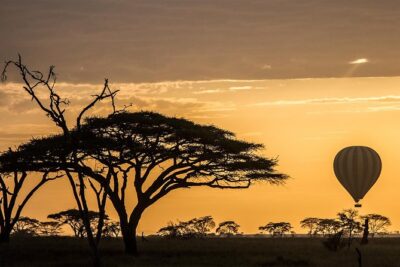
Serengeti Balloon Safari and authentic bush breakfast
Read our review →
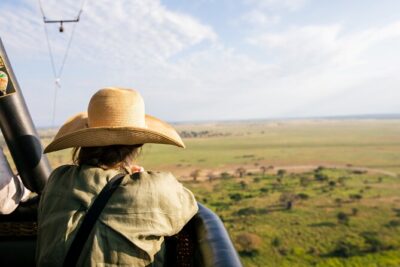
Balloon Safari & Bush Breakfast in Serengeti – Miracle Experience
Read our review →
From Zanzibar: Mikumi Safari Day Trip with Flights and Meal
Read our review →
From Zanzibar: Day Selous Game Reserve Safari with Flights
Read our review →Browse the lists this tour appears in