
Reviewed · COOKING CLASSES
Cape Town: Bo-Kapp Walking Tour and Malay Cooking Class
Bo-Kaap’s painted houses are the easy part to notice. The better reason to come is to hear how this close-knit Cape Town neighborhood became home to Cape Malay culture, then sit down in a local home and cook the food that gives the community its unmistakable flavor. Guides such as Faldela and Gadija bring the area to life with stories, spice knowledge, and plenty of humor.
I especially like the pairing of the short walking tour with the cooking class. The walk gives the meal a setting and a story, while the kitchen session lets you make samosas, roti, curry, sambal, and koesisters with your own hands. The main consideration is the small cooking area, which can mean that only one or two people work at the counter at once.
Key points at a glance
- A local view of Bo-Kaap: Walk past old buildings, the first mosque in South Africa, the cultural museum, art shops, and small local businesses.
- A real hands-on menu: Fold samosas, fry chili bites, prepare chicken curry, roll roti, and make sambal.
- Warm personal hosting: Faldela is often the cooking host, with Gadija and other local guides leading the neighborhood walk.
- Spice lessons included: Stop at a spice shop and learn about uses, flavor, and claimed health benefits.
- A four-hour food-and-culture outing: Finish with a shared meal, koesisters, cardamom tea, and recipes to take home.
- A few practical limits: The kitchen is compact, and the advertised inclusions should be checked if you have questions about food and drinks.
Why Bo-Kaap Works Best With a Local Guide
Bo-Kaap is one of Cape Town’s most photographed neighborhoods, thanks to its bright houses and steep cobblestone streets. A quick self-guided stroll can give you colorful photographs, but not much sense of how the neighborhood works or why it matters.
This tour adds the missing context. You walk with someone connected to the area, stopping at old buildings and hearing about local customs, Islam, Cape Malay identity, and community life. The first mosque in South Africa is part of the story, as is the cultural museum and the way local residents have shaped the area over time.
The guides are a major part of the appeal. Faldela is described as a popular local figure with a funny, lively manner, while Gadija has led walks and taught the cooking session. I like that the experience is not built around a distant guide delivering a memorized speech. You can expect personal stories, introductions to local shops, and the occasional greeting from people who know the host.
The walking portion is also a sensible length. It gives you time to understand Bo-Kaap without turning the afternoon into a tiring city march. You should still wear comfortable shoes, since the route uses cobblestone streets and includes walking through the neighborhood.
More Walking Tours in Cape Town
- Cape Town: Nathi Langa Township Walking Tour
★ 4.9 · 493 reviews - Cape Town: Art, Culture & History Walking Tour
★ 4.9 · 392 reviews - Cape Town: Street Art Walking Tour in Woodstock
★ 4.8 · 293 reviews
Colorful Streets, Old Mosques, and Local Shops

The walk begins at the meeting point, described as a purple house with flower pots on top. From there, the route takes you through Bo-Kaap’s colorful streets and past some of its oldest buildings.
The houses are more than a backdrop. Their bright colors make the neighborhood instantly recognizable, but the guide helps you look past the picture-postcard surface. You learn about the people who live there, the traditions they maintain, and the role of the Muslim community in Bo-Kaap.
The first mosque in South Africa is an important stop. The tour also includes the cultural museum, with the museum entrance fee covered in the price. One point needs attention: one person who took the activity did not visit the museum and suggested setting aside separate time if it matters to you. Ask the guide at the start how the museum fits into that day’s route.
You may also visit art and souvenir shops run by local people. Some walks include introductions to artists, which makes the shopping stop feel more personal than a standard tourist-market visit. You are not required to buy anything, but these small businesses help connect the neighborhood’s culture with the people working there now.
The Spice Shop Is More Than a Shopping Stop
The spice-shop visit is one of the more useful parts of the walking tour. You learn about the spices used in Cape Malay cooking, how they affect flavor, and different ways to use them.
Faldela is especially good at explaining spices. One useful tip is to start a video when she begins this section, since there can be a lot to remember. The talk includes claimed health benefits and alternative uses, so you will want to separate general cooking advice from medical guidance. Treat the health information as cultural and culinary background, not as a substitute for professional medical advice.
This stop also prepares you for the kitchen. Instead of meeting a curry as an anonymous plate of food, you begin to recognize the ingredients and understand how seasoning creates the final taste. For anyone who likes cooking at home, this is a practical bridge between the neighborhood walk and the meal.
Cooking in a Bo-Kaap Home
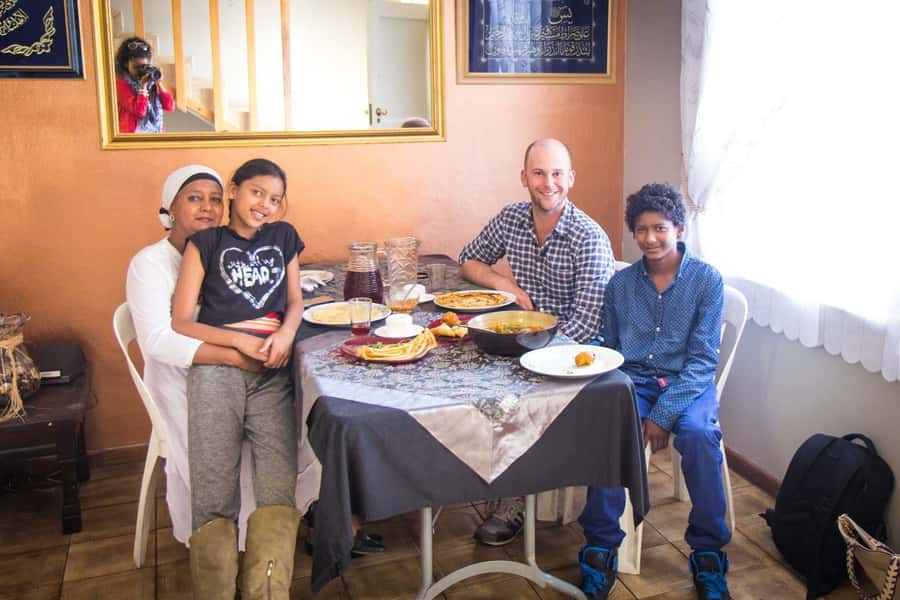
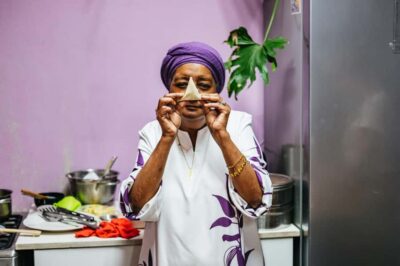
After the walk, you return to the host’s home for the cooking class. The setting is personal and informal. You are not simply watching a restaurant demonstration from across a large counter. The host welcomes you into her home, talks through the dishes, and gets everyone involved as far as the space allows.
The menu is generous:
- Samosas, folded by hand
- Chili bites, included in some sessions
- Chicken curry
- Roti flatbread
- Sambal, described as a salsa salad
- Koesisters, or spicy sweet donuts
- Cardamom tea
The class is designed for ordinary people, not trained cooks. You do not need to arrive with advanced kitchen skills. The recipes are considered repeatable at home, and the cooking process is explained in a relaxed way.
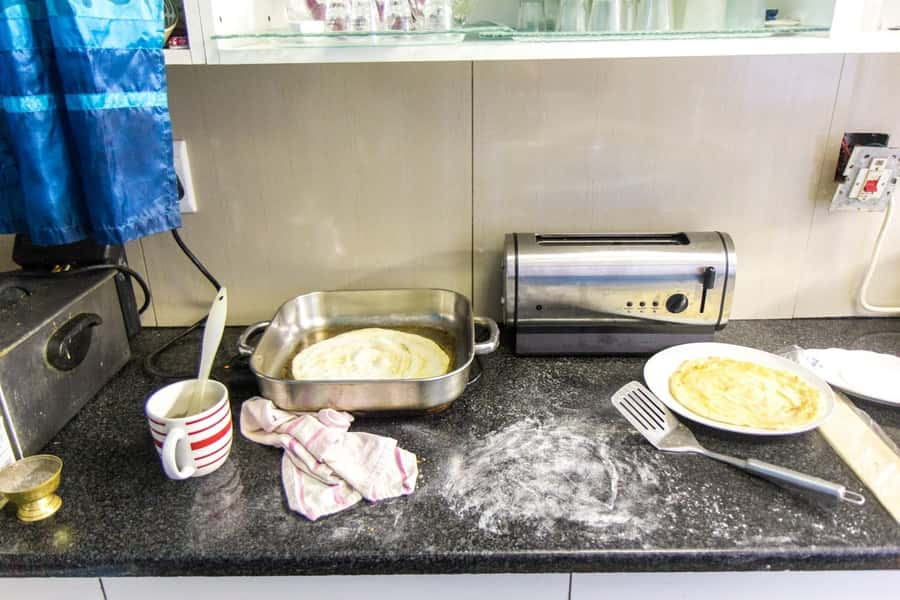
Samosas are a good first task because folding them gives you an immediate role. Roti is the more memorable lesson. You learn how to make the dough and create a flaky flatbread, a technique several people have been eager to try again at home. It is the kind of skill that looks simple until you attempt it, which is exactly why learning it with a patient teacher is useful.
The curry brings the spice discussion into focus. You help prepare the main dish and see how the seasonings build flavor. The sambal adds freshness and contrast, while the koesisters provide a sweet, spiced finish with cardamom tea.
More Walking Tours in South Africa
- Cape Town: Langa Township Walking Tour
★ 4.8 · 272 reviews - Cape Town: Private Walking Tour with a Local
★ 4.6 · 243 reviews - Cape Town Walking Tour: Bo-Kaap & City Highlights
★ 4.8 · 161 reviews - Bo-Kaap: Walk with a local
★ 5.0 · 131 reviews
A Hands-On Class With One Practical Limitation
The cooking class is interactive, but the room is small. One person noted that the cooking area really allows only one or two people to work at the counter at a time. That does not cancel the value of the class, but it affects your expectations.
In a larger group, you may spend part of the session watching, folding, mixing, or listening rather than doing every step yourself. The host still makes an effort to involve everyone, and the food preparation is organized, but this is not a spacious commercial kitchen where each person receives a full workstation.
Group size can vary. One person reported that the tour went ahead even when they were the only participant, while another group had nine people. A small group may give you more conversation and direct instruction. A larger group can be more social, but you may have to take turns at the counter.
I would book this as a shared cultural meal with cooking instruction, not as a technical chef’s course. If your main goal is to master every recipe step, ask about the group size before booking. If your goal is to meet a local host, eat well, and learn a few useful techniques, the compact kitchen is easier to accept.
Sitting Down to Eat What You Made
The best part of the schedule is the meal at the end. After the walking and preparation, you sit down with the host and fellow participants to eat the food you helped make.
That meal turns the class into a social experience. You can talk about Bo-Kaap, compare notes with people from different countries, and ask the host questions that may not come up while everyone is chopping and folding. The atmosphere is informal rather than polished, which is part of its appeal.
The portions are described as plentiful, and the menu provides a full meal rather than a token tasting. You leave with food in your stomach and the recipes for what you prepared. That recipe follow-up gives the $68 price more value, since the experience can continue in your own kitchen.
There is a small wording issue in the activity details. The experience describes and serves a prepared meal, but the inclusion section also says food and drinks are not included, while water is included and alcohol is excluded. Since the class clearly centers on cooking and eating, confirm exactly what the current booking includes before paying, especially if the wording matters to your budget.
What the $68 Price Buys You
At $68 per person, this is not the cheapest way to see Bo-Kaap. You are paying for four hours, a local guide, the neighborhood walk, museum entry, a cooking class, a shared meal, water, and recipes.
The value depends on what you want from Cape Town. If you only want photographs of the colorful houses, you can see the neighborhood for less. But a self-guided visit will not provide the same explanation of local history, access to a resident’s home, spice instruction, or cooking practice.
I consider the price fair for a small cultural activity that combines several separate experiences. The strongest value comes from the host’s personal involvement. If the guide is Faldela, Gadija, or another local with the same role, you are paying for conversation, instruction, and access to a part of Bo-Kaap that is difficult to understand from the street alone.
The museum entrance fee is included, as is water. Food and drink wording should be confirmed, as noted above. No alcohol is included.
Who Will Enjoy This Experience Most
This is a good choice for you if you want an activity that mixes walking, food, history, and conversation. It works particularly well for first-time visitors to Cape Town who want more than a quick stop for photographs.
You do not need to be passionate about cooking. One person specifically noted that non-cooks should not let that put them off. The class is as much about meeting the host and sharing a meal as it is about learning kitchen technique.
It also suits people who enjoy bringing a practical souvenir home. The recipes, especially the samosas, curry, and roti, are more useful than another small purchase from a gift shop. You can try to recreate the meal after your trip, though your first roti may require patience.
Families and mixed-interest groups may like the format because the walking portion and the meal break up the cooking. People who dislike group activities or want a quiet, highly structured class may find the social setting less comfortable.
The tour is conducted in English. Wear comfortable shoes for the walk and cobblestones. Since the cooking takes place in a private home, ask ahead about dietary needs. The experience has accommodated dietary requirements, but you should state yours before arrival rather than assume the standard menu will suit you.
Booking, Timing, and Cancellation
The activity lasts four hours, with starting times shown according to availability. Plan it as a half-day outing rather than something to squeeze between several major Cape Town attractions.
You meet the host at the purple house with flower pots on top. Keep the meeting description handy, since this is a neighborhood home rather than a large public attraction.
Free cancellation is available up to 24 hours before the activity for a full refund. You can also reserve now and pay later, which is useful if your Cape Town schedule may change.
The advertised rating is 4.7 from 105 ratings, with strong praise for the guides, food, local setting, and friendly instruction. The one recurring practical caution is the compact kitchen, along with the need to clarify the food-inclusion wording.
Should You Book the Bo-Kaap Cooking Class?
Book it if you want to understand Bo-Kaap through both its streets and its food. The combination is the point: the walk explains the community, and the kitchen gives you a way to take part rather than simply look around.
I would make this a priority for food lovers, culturally curious visitors, and anyone who prefers meeting local people to ticking off major sights. Start with the walking tour, pay attention at the spice shop, and expect the cooking to be shared rather than individually paced.
Skip it if you want a large professional kitchen, a private lesson, or a purely historical tour with no meal. Otherwise, the $68 price buys a personable half-day with plenty to eat, useful recipes, and a much better understanding of why Bo-Kaap is more than a row of colorful houses.
FAQ
How long does the Bo-Kaap walking tour and cooking class last?
The full activity lasts four hours.
What language is the tour conducted in?
The live tour guide and cooking instruction are in English.
What food will I prepare?
The menu includes samosas, chicken curry, roti flatbread, sambal or salsa salad, and koesisters. Some sessions also include chili bites.
Is a meal included?
The activity describes preparing and eating a full traditional meal. However, the details also say food and drinks are not included, so confirm the exact current inclusions when booking. Water is included, and alcohol is not.
Is museum entry included?
Yes. The museum entrance fee is listed as included, although the museum may not be visited on every session according to the available activity information. Ask the guide how it fits into your schedule.
Where is the meeting point?
Meet your host at a purple house with flower pots on the top.
What should I bring?
Bring comfortable shoes for walking through Bo-Kaap’s cobblestone streets.
Can I cancel the activity?
You can cancel up to 24 hours in advance for a full refund. The activity also offers a reserve-now-and-pay-later option.
More Cooking Classes in Cape Town
- Cape Town: Malay Cooking Class and Lunch in Bo-Kaap
★ 4.8 · 515 reviews - Authentic African Cuisine Cooking Experience
★ 5.0 · 236 reviews - Cape Town: Cape Malay Cooking Class in Bo-Kaap
★ 4.8 · 120 reviews - Marrakech: Moroccan Cooking Class with Pickup
★ 4.6 · 1,862 reviews
Just added for Cape Town
- Best of Cape Town Full-Day Private Tour with Table Mountain★ 5.0 · 195 reviews
- Full Day Cape Point Sightseeing Tour★ 4.5 · 84 reviews
- Drumstruck at Silvermist. Live African Drum Show & Wine tasting★ 5.0 · 137 reviews
- Bo-Kaap: Walk with a local★ 5.0 · 131 reviews
- Cruise and Dine Dinner / Cape Town: Sunset Champagne Cruise and 3-Course Dinner★ 4.0 · 128 reviews
- Cruise and Dine Lunch / Cape Town: Coastal Motor Cruise and 2-Course Lunch★ 4.5 · 151 reviews
- Champagne Cruise (Pre-Sunset) from Cape Town★ 4.5 · 152 reviews
- Cheetah Outreach Tour Somerset West, Gordon’s Bay and Strand Beaches★ 4.5 · 94 reviews
Cooking Classes, compared.
Traditional Moroccan Cooking Class & Market Visit
Read our review →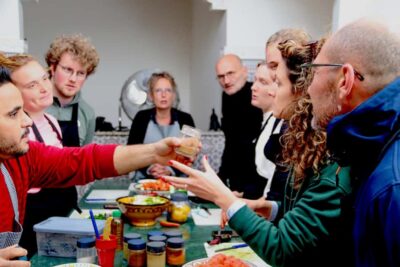
Moroccan Dishes Cooking Class with a Local Chef
Read our review →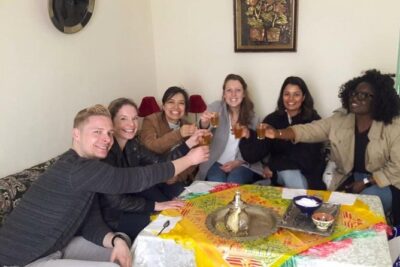
Moroccan Cooking Class & Marrakech Market Visit with Chef Khmisa
Read our review →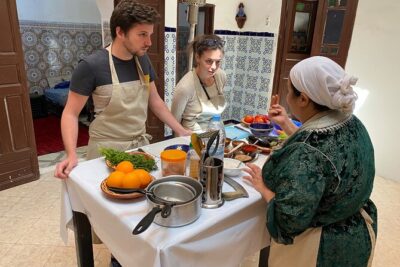
Half-Day Cooking Class with Local Chef Laila in Marrakech
Read our review →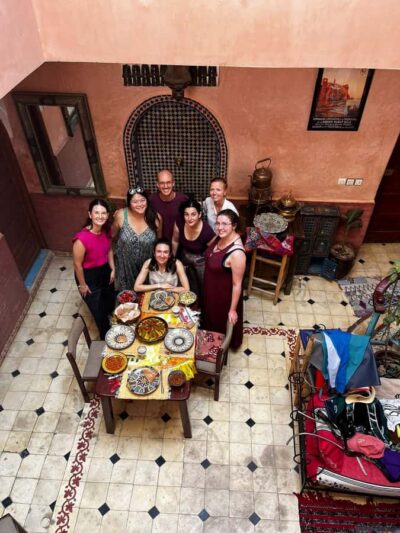
Browse the lists this tour appears in