
Reviewed · HISTORICAL TOURS
Guided Bike Tour of Carthage Archeological Site in Tunisia
Ancient Carthage is spread across modern streets, gardens, and scattered ruins, so a bicycle is a smart way to connect the pieces. In about three hours, you ride from the Punic ports and Tophet to the enormous Baths of Antoninus, then up toward Byrsa Hill and Saint Louis Cathedral.
I like the private format, since your guide can slow down at a site instead of rushing your group along. I also like the electric-bike option, especially in Tunisia’s heat and on the hills around Carthage. The one caution is that this is still an active bike ride near cars and pedestrians, so you should be comfortable cycling and have a moderate level of fitness.
Key Things to Know Before You Ride
- The Baths of Antoninus get the most time: You spend about an hour among the largest Roman bath ruins on the route.
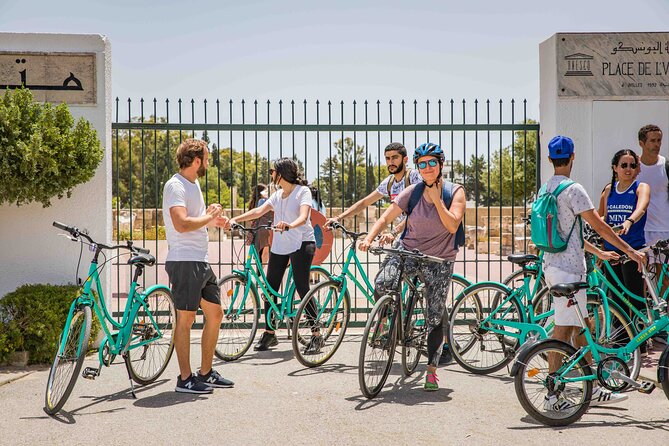
- Electric bikes are available: They can make hills, heat, and the distance between sites easier.
- This is a private tour: Only your own group participates, with a professional guide.
- The Carthage museum is closed: You visit Byrsa Hill and see Saint Louis Cathedral from outside, but do not enter the museum or cathedral.
- You cover several separate sites: The bike matters because Carthage is not one compact ruin.
- The price is $91.89 per person: That includes the guide, bicycle, helmet, taxes, and fees, but not transport to the meeting point.
Why a Bike Works So Well in Carthage
Carthage is not a single archaeological park with one entrance and a neat walking path. Its remains are spread across the modern city of Carthage, with ancient ports, sanctuaries, Roman ruins, hills, and residential streets occupying different parts of the area.
That makes cycling useful rather than just entertaining. You can move between major sites without spending much of the three-hour tour simply walking from one ruin to the next. You also get a sense of how the ancient city fits into the modern neighborhood around it.
The route is led by a private guide, and that is one of the tour’s strongest features. Guides named Kareem, Jibrane, and Chedi have led these outings, with particular praise for clear explanations and enough time at each stop. Kareem, for example, is noted for allowing time to understand each site rather than hurrying from one location to another.
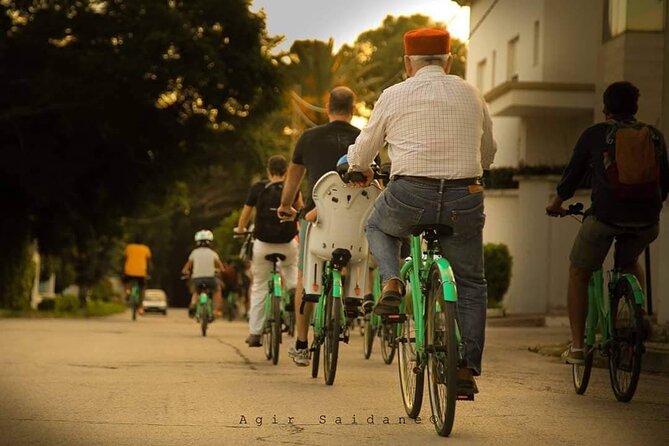
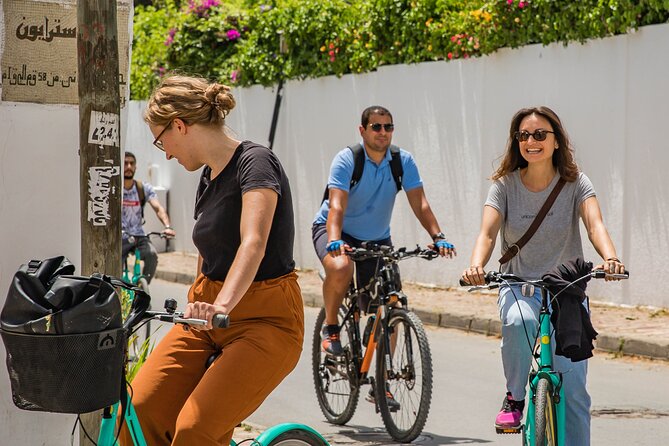
You will also get a small lesson in modern Tunisian road habits. One particularly useful part of the ride is learning how bicycles, cars, and pedestrians share the streets. That may not sound like a major attraction, but it helps you feel more comfortable moving around the Carthage area by bicycle.
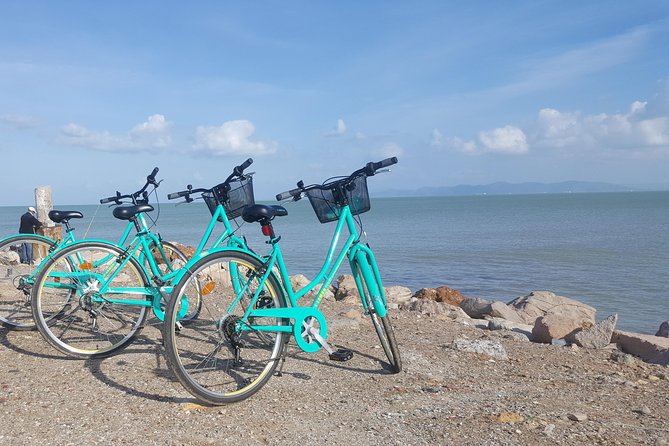
The standard bicycle is included, as are a helmet and the other required safety equipment. You can upgrade to an electric bicycle if you prefer less effort. I would give that option serious thought in warm weather, since it can help with hills and reduce fatigue without changing the basic experience.
More Historical Tours in Tunisia:
- Hurghada: Luxor Valley of the Kings & Tutankhamun Tomb Trip
★ 4.7 · 13,208 reviews - Luxor Day Trip from Hurghada Small Group & Tutankhamun Tomb
★ 4.8 · 5,366 reviews - Marrakech: Bahia Palace, Saadian Tombs, Souk and Medina Tour
★ 4.7 · 4,974 reviews
Tophet: Starting with Punic Carthage
The first stop is Tophet de Carthage, where you spend about 30 minutes learning about Punic culture and the role of this sanctuary.
This is an important opening because it puts Carthage’s Phoenician and Punic past first. Much of the famous surviving architecture in Carthage is Roman, so it is useful to begin with the earlier civilization that founded and shaped the city.
Your guide is the key here. Tophet can be difficult to understand if you simply walk among the remains without context. The guide explains what you are seeing and places the sanctuary within Punic culture before the tour turns to the later Roman period.
The stop is not especially long, which suits the overall ride. You get a focused explanation, then return to the bicycles. If your main goal is an extended archaeological study of Tophet, 30 minutes may feel brief. For a broad tour of Carthage, it is a sensible introduction.
Admission is included, so you do not need to arrange a separate ticket for this stop.
The Punic Ports and Carthage’s Maritime Power
Next comes the Punic ports and museum area, with about 30 minutes devoted to this section.
The ports help explain why Carthage became such an important Mediterranean power. Here, the value comes less from one spectacular standing building and more from understanding the city’s connection to the sea and its role as a major port.
A guide makes a real difference at a site like this. The physical remains may not tell the full story on their own, but an explanation can help you picture the function of the harbor and its place in Carthage’s wider story.
The stop is also a good match for a bike tour because you arrive from another part of the archaeological area without making a long walk through modern streets. You can spend your time looking and listening rather than using your energy simply to get there.
The schedule allows about half an hour. That gives you a useful overview, although anyone wanting detailed museum time may find the stop limited. The admission listed for the port and museum stop is included in the tour.
One Hour at the Baths of Antoninus
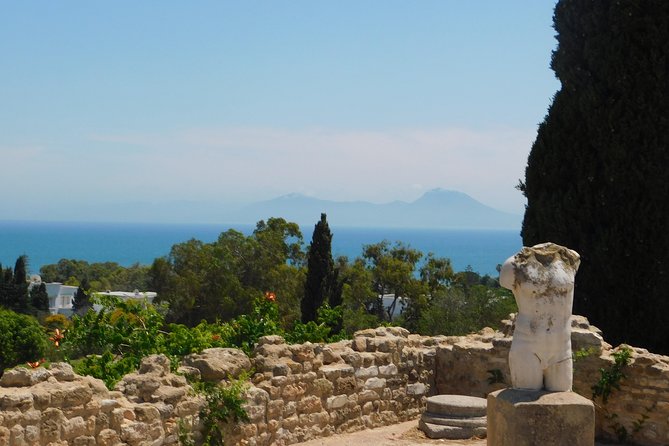
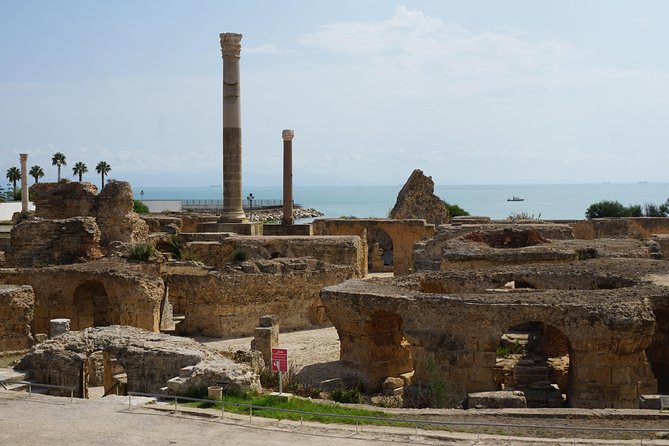
The Baths of Antoninus receive the longest visit, about one hour, and that feels right. They are among the most impressive remains on the route, with extensive Roman ruins beside the sea.
This is where you get the clearest sense of the scale of Roman Carthage. The bath complex was among the largest in the Roman Empire, and the surviving columns, walls, foundations, and open spaces spread across a broad area. You are not looking at one intact bathhouse. You are reading a large ruin, with your guide helping you understand how its different parts fit together.
I appreciate the longer stop here because the site deserves time. You can listen to the explanation, look toward the sea, and walk around the remains without feeling that you are being pushed back onto the bicycles after a quick photograph.
The setting is one of the tour’s visual highlights. The baths face the sea, adding a strong sense of place to the Roman remains. At the same time, remember that this is an archaeological site rather than a reconstructed attraction. You will need to use your imagination, supported by the guide’s explanation, to picture the original complex.
This section may also be where the electric bicycle proves most useful. The bike helps you reach the site from the earlier stops, but you will still spend time on your feet exploring the ruins. An electric bicycle does not remove all physical activity. It simply makes the riding portions easier.
More Bike Tours in Tunisia:
- Marrakech: Cultural Bicycle Tour with Pastry and Tea
★ 4.8 · 583 reviews - Marrakech: Bicycle Tour with a Local Guide
★ 4.7 · 495 reviews - Marrakech : Electric Bicycle City Tour
★ 4.8 · 363 reviews - Soweto: Guided Bicycle Tour with Lunch
★ 4.9 · 292 reviews
The Roman Theatre: A Short, Focused Stop
The Roman Theatre of Carthage gets about 20 minutes.
That is enough time for a concise explanation and a look at the structure, but it is not a full theatrical history lesson. You should expect this stop to be a quick part of a wider tour rather than a long, detailed visit.
The theatre adds another angle to Roman Carthage. After seeing the practical and monumental scale of the baths, you get a glimpse of the city’s public entertainment spaces. The variety is one of the tour’s strengths: you are not spending three hours at similar ruins.
As with the other stops, the guide gives the site meaning. Without that context, a theatre can be easy to view as just another set of old stones. With an explanation, you can better understand its role in the Roman city.
The short timing also helps keep the overall route moving. If you prefer slow photography or detailed architectural study, you may want to tell your guide early in the tour. The private format should make it easier to discuss your pace, though the full route still has to fit within roughly three hours.
Byrsa Hill and Saint Louis Cathedral
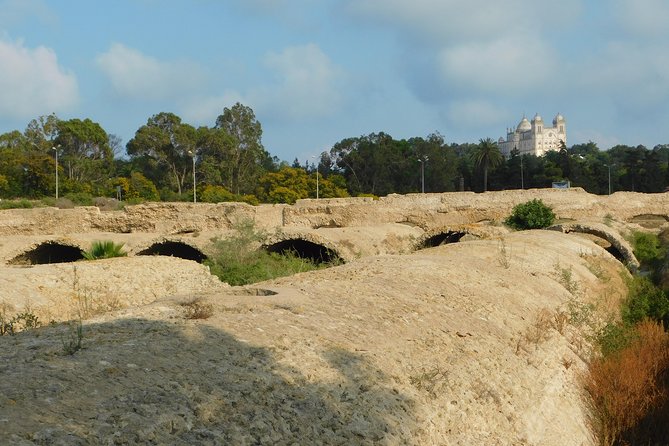
The final listed stop is Byrsa Hill, where you spend about 15 minutes.
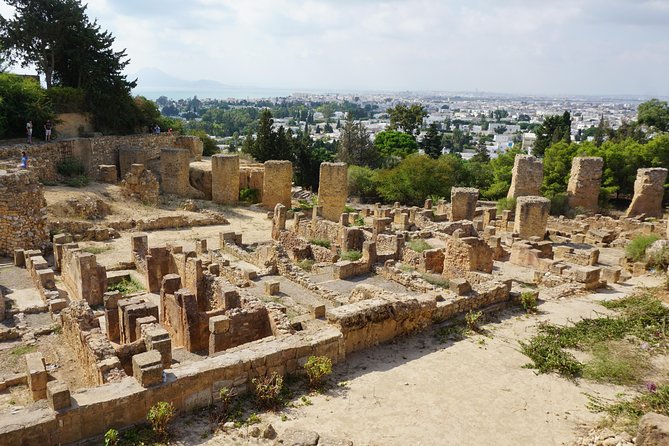
The hill offers a different kind of experience from the lower archaeological sites. Here, you learn about Punic architecture and how the Romans converted the hill for their own purposes. The stop connects the earlier Punic city with the later Roman period and brings the tour back to the city’s central high ground.
You also see Saint Louis Cathedral, but only from outside. The tour does not include entry, and the Carthage museum on the hill is currently closed. That is important to know before booking, especially if the museum is a major reason you want to visit Carthage.
Fifteen minutes is a short stop, so think of Byrsa Hill as a final orientation point rather than a full museum visit. It gives you another view of Carthage’s layered past and a chance to see the cathedral’s exterior before cycling back to the starting point.
The fact that the museum is closed limits what you can do on the hill, but it does not erase the value of the stop. You still see the setting, hear about the ancient city, and connect the hill with the sites visited earlier.
What the Three-Hour Format Gives You
Three hours is enough for a strong first look at Carthage, not enough for every ruin in detail.
The route includes five distinct stops, and each one contributes something different. Tophet introduces Punic culture. The ports explain the city’s maritime role. The Baths of Antoninus show Roman scale. The theatre adds public life. Byrsa Hill connects the city’s periods and provides a final view from above.
The tour also leaves time for the actual cycling. That matters because the ride is not simply a way to transfer between attractions. You pass through a beautiful modern neighborhood and learn how to move through its streets with a local guide.
The most highly praised part of the experience is the guide’s role. The guides are described as engaging and generous with information, but the more useful point for you is that the explanations do not appear limited to a short script at each site. Jibrane, for example, is noted for explaining the city and archaeological remains in an especially immersive way, while Chedi is described as giving complete explanations during a history-focused tour.
The private setup helps. You are not sharing the ride with a large group, and only your own party participates. That can make it easier to ask questions, adjust the pace, or spend a little longer at a site that interests you.
Price, Equipment, and Practical Value
At $91.89 per person, this is not the cheapest way to see Carthage. But the price includes a private professional guide, bicycle use, helmet, admission costs, taxes, fees, and handling charges.
The value depends on what you want from the visit. If you only need transportation between ruins and plan to read about them yourself, the price may feel high. If you want a guide who can connect Punic and Roman Carthage, explain the scattered sites, and lead you safely through the neighborhood, the cost is easier to justify.
The electric-bike upgrade can improve that value for anyone concerned about heat or hills. Several parts of Carthage are spread out, and the ride includes normal street traffic. The electric bicycle is not just a novelty. It can help you see more without using all your energy before reaching the Baths of Antoninus.
The tour starts at 9 Rue Hannibal at the Carthage archaeological site and returns to the same meeting point. Hotel pickup and drop-off are not included, so you need to arrange your own way to the start. The location is near public transportation.
Bring a current valid passport on the day of the tour. You also need a moderate level of physical fitness and reasonable comfort on a bicycle. Since the experience depends on good weather, poor conditions can lead to a different date or a full refund.
Free cancellation is available if you cancel at least 24 hours before the scheduled start. Cancellations or changes made less than 24 hours ahead are not accepted for a refund.
Who Should Book This Carthage Bike Tour
I would choose this tour if you want to see several parts of Carthage in one morning and prefer active sightseeing to a slow walk between isolated ruins.
It suits couples, families with older children, and small private groups who want their own guide. It is also a good choice if you want to ask questions about Punic culture, Roman architecture, or the way the modern city is organized around the ruins.
The tour is less suitable if you dislike cycling near traffic, need a fully sedentary sightseeing experience, or mainly want to visit the Carthage museum. The museum is closed, and the cathedral is viewed from outside only.
You should also consider the heat. The electric bicycle is the sensible upgrade if you are unsure about the hills or want to save energy for the archaeological stops. The bike will make the route easier, but you should still expect moderate activity and time walking among uneven ruins.
Should You Book It?
Book this Carthage bike tour if you want an active, well-organized introduction to a large archaeological area and value a private guide more than the lowest possible price.
The strongest reasons are the guide-led explanations, the efficient connection between scattered sites, the hour at the Baths of Antoninus, and the option of an electric bicycle. The main limitations are the short time at some stops, the closed museum, the lack of hotel transport, and the need to cycle in ordinary streets.
For a first visit to Carthage, I think the format works very well. Choose the electric bicycle if the weather is warm or hills concern you, bring your passport, and arrive ready to ride, listen, and spend less time wondering how all those ruins fit together.
FAQ
How long does the Carthage bike tour last?
The tour lasts approximately three hours.
What sites does the tour visit?
The route includes Tophet de Carthage, the Punic ports and museum area, the Baths of Antoninus, the Roman Theatre of Carthage, Byrsa Hill, and Saint Louis Cathedral from outside.
Is an electric bicycle available?
Yes. You can upgrade to an electric bicycle for easier riding on hills and in warm conditions.
Is transportation from my hotel included?
No. Hotel pickup and drop-off are not included. The tour begins and ends at 9 Rue Hannibal, Site archéologique de Carthage, and the meeting point is near public transportation.
Is the Carthage museum open during this tour?
No. The Carthage museum on Byrsa Hill is closed. You see Saint Louis Cathedral from outside and do not enter it.
What happens if bad weather cancels the tour?
Because the experience requires good weather, you will be offered a different date or a full refund if it is canceled due to poor conditions.
Just added for Tunisia
- Cook and Connect: Tunisian Culinary Adventure with a Local Family★ 5.0 · 109 reviews
- Discovery ride on horseback or camel 2h30★ 5.0 · 153 reviews
- Djerba Flamingo Island Pirate Boatrip – Trip, Lunch & Pick-up★ 3.5 · 84 reviews
- Quad ride on the hills of Hammamet★ 4.0 · 104 reviews
- Private tour: Medina,Carthage ,Sidi Bou Said, Bardo Museum+lunch★ 5.0 · 194 reviews
- 1 day excursion Tunis Sidi Bousaid Carthage departure from Sousse★ 5.0 · 87 reviews
- Fun VIP Tour: El Jem, Kairouan, Monastir/Sousse (PICKUP ALL City)★ 5.0 · 451 reviews
- VIP Tour: Tunis Medina/Bardo, Sidi Bou Said, Carthage |PICKUP ALL★ 5.0 · 512 reviews
Historical Tours, compared.
Luxor Valley of the Kings & Tutankhamun Tomb Trip
Read our review →
Luxor Day Trip from Hurghada Small Group & Tutankhamun Tomb
Read our review →
Bahia Palace, Saadian Tombs, Souk and Medina Tour
Read our review →
Hassan II Mosque Premium Tour with Entry Ticket
Read our review →

Bahia Palace, Saadian Tombs, & Koutoubia Mosque
Read our review →
Casablanca City Tour with Hassan II mosque ticket
Read our review →Browse the lists this tour appears in