Reviewed · TOWNSHIP & VILLAGE TOURS
Soweto: Guided Bicycle Tour with Lunch
Soweto makes the most sense when you move beyond its famous addresses. This bicycle tour carries you through Orlando West, Mzimhlophe, Orlando East, and Vilakazi Street, linking apartheid-era landmarks with ordinary streets, homes, shops, stadiums, and community spaces. Hector Pieterson Museum and Mandela House provide the major historical anchors, but the ride gives you a wider view of Soweto.
I like two things right away: the bicycle lets you cover ground that a walking tour cannot, and local guides such as Thabo, Teboho, and Themba bring both historical detail and present-day insight. Lunch is another strong point, with a filling kota sandwich at a local restaurant. The main catch is fitness. The route is roughly 11 kilometers, includes some uphill sections, and the standard bicycles may not have gears.
Key points
- About 11 kilometers by bicycle: You see several parts of Soweto rather than only the best-known street.
- Apartheid history made personal: Hector Pieterson Museum, Mama Lilian Ngoyi’s house, Mandela House, and Tutu House connect major events to real people.
- Local guides lead the way: Thabo, Teboho, and Themba are praised for clear storytelling, humor, and careful riding guidance.
- A respectful look at township life: The route includes ordinary neighborhoods, community spaces, an informal settlement visit, and local businesses.
- Kota lunch included: You finish with a South African township sandwich and drinks.
- Good value at $52: The price covers a bicycle, guide, food, and four hours of sightseeing, but not transport to Soweto.
Why a bicycle is a smart way to see Soweto
Soweto is too spread out for a short walking tour to show much of it. By bicycle, you can connect Orlando West with Mzimhlophe and Orlando East, passing from historic streets to football grounds, community centers, and residential areas. That variety matters. You are not being shown one polished pocket and sent home with a narrow idea of the place.
The ride also gives the tour a pleasant rhythm. You stop for a story, cycle for a while, pause for photographs, and then move on. The activity feels more active than a vehicle tour but less demanding than a serious cycling excursion. Several people describe it as manageable, though the uphill sections can work your legs, especially at Johannesburg’s altitude.
I would call the route moderate rather than effortless. You need to ride a bicycle confidently, handle some traffic and uneven urban streets, and be comfortable cycling for several hours with stops. You do not need to be a competitive cyclist, but this is not the right choice if you rarely ride or strongly dislike hills.
More Bike Tours in South Africa
- Soweto: Bike Tour with a Local Tour Guide
★ 4.7 · 114 reviews - Stellenbosch: Historical Bike Tour & Wine Tasting
★ 4.9 · 248 reviews - Cape Town City Cycling Tour
★ 5.0 · 199 reviews
Meeting at Vilakazi Espresso in Orlando West
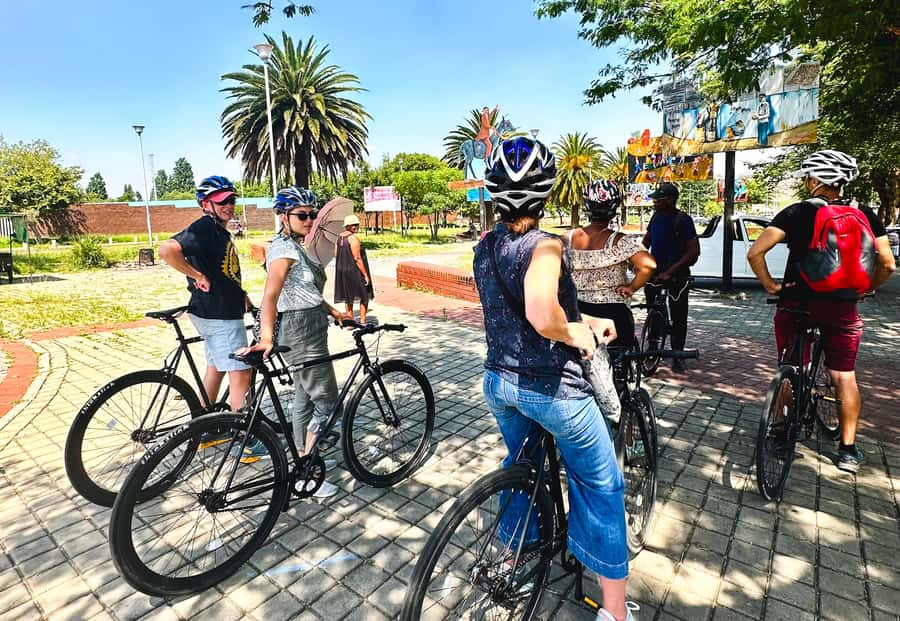
You meet at Vilakazi Espresso, a practical starting point near Soweto’s best-known historic street. The tour gets you set up with a bicycle and introduces the route before heading out with an English-speaking guide.
The opening explanation places Soweto in context. The township was created in 1904, and the guide explains how its neighborhoods developed under segregation and apartheid. That early briefing helps you read the streets properly. A row of homes, a hostel, or a stadium becomes part of a larger story instead of just another photo stop.
The guides are a major part of the experience. Thabo is frequently praised for his clear explanations, humor, and ability to answer questions. Teboho and Themba also lead tours, and the guiding style is warm and conversational. If you have questions about current life in South Africa, ask them. The tour is not limited to dates and monuments.
The group can sometimes be very small. One person ended up with a private ride, while other outings included family groups and small parties. That can make the pace more personal, although group size may vary by date.
Mzimhlophe and the women’s hostel
The route continues toward Mzimhlophe, including a stop at the Mzimhlophe Women’s Hostel. This is one of the more useful parts of the tour because it widens the story beyond famous political leaders.
A hostel is not simply a sightseeing object. It helps explain how apartheid-era labor systems separated families and shaped township life. Your guide provides the context, then you have a chance to look around and ask questions. The stop is brief, about 15 minutes in the planned schedule, so expect an introduction rather than a long museum visit.
The tour may also include an informal settlement visit with a local guide. You should approach this part with care and respect. It can offer a closer look at how some residents live, but it should not be treated as entertainment or a photo backdrop. A gratuity of R20 to R50, or more if you choose, is welcomed during or after this visit. Bring cash if you want to contribute.
Orlando East, the stadium, and community life
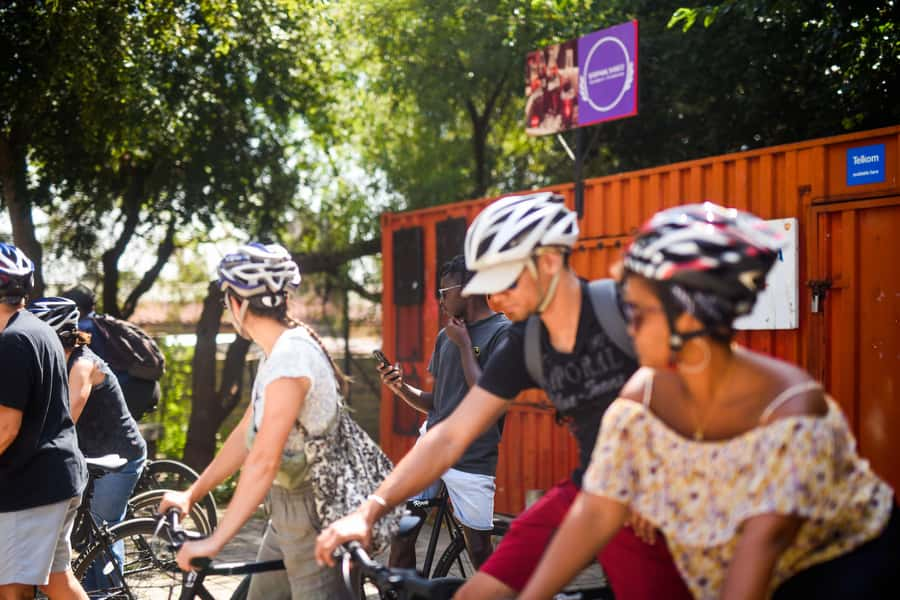
The bicycle route passes through Orlando East and stops at Orlando Stadium and Orlando Community Centre. These pauses are short, but they help show the scale and variety of Soweto.
Orlando Stadium links the area to football and public life. The community center adds another angle, showing how local spaces serve residents beyond the headline attractions. You will hear about the area as a living township, not only as a place tied to past political struggle.
This is where cycling earns its keep. You get a sense of distances between neighborhoods and see changes in housing and street life as you ride. A vehicle can carry you through the same streets faster, but the bicycle keeps you close to the surroundings and makes it easier to pause.
You should not expect a long stop at every location. Orlando East and the stadium receive only a few minutes in the schedule, while the museum and main historical sites get more attention. The strength is the combined route, not extended time at each minor stop.
More Village Tours in Johannesburg & Pretoria
- Johannesburg: Hop-On Hop-Off Bus with Optional Soweto Tour
★ 4.6 · 985 reviews - Soweto /Johannesburg and Apartheid Museum Guided Full Day Tour
★ 5.0 · 932 reviews - Johannesburg Hop-On Hop-Off City Tour with Soweto Option
★ 4.5 · 768 reviews - Half-Day Tour of Soweto Tour
★ 4.5 · 712 reviews
Hector Pieterson Museum and the Soweto uprising
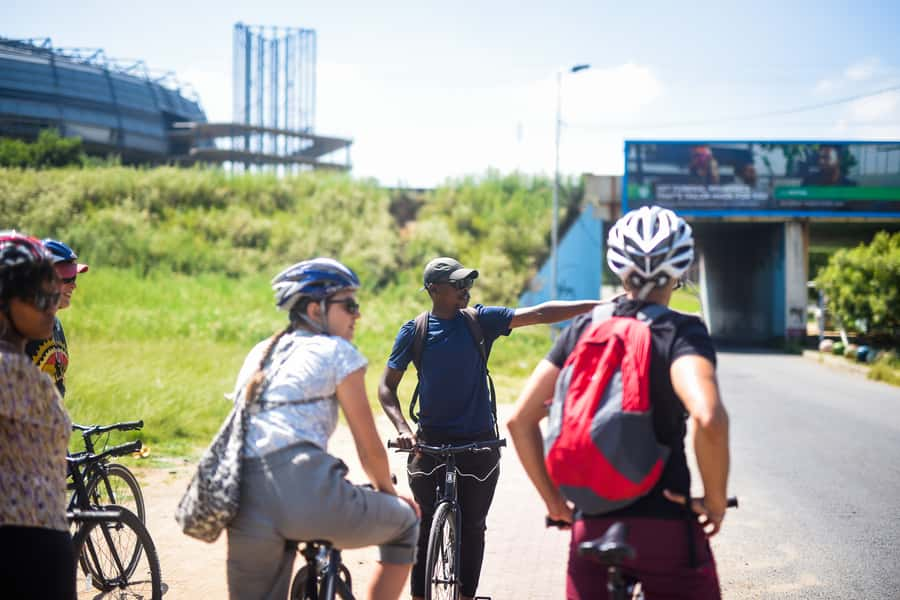
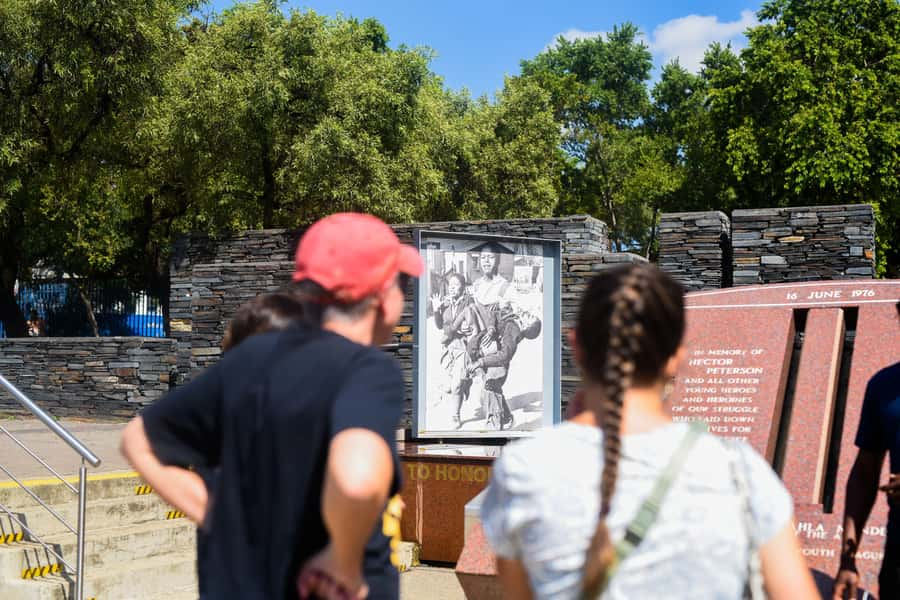
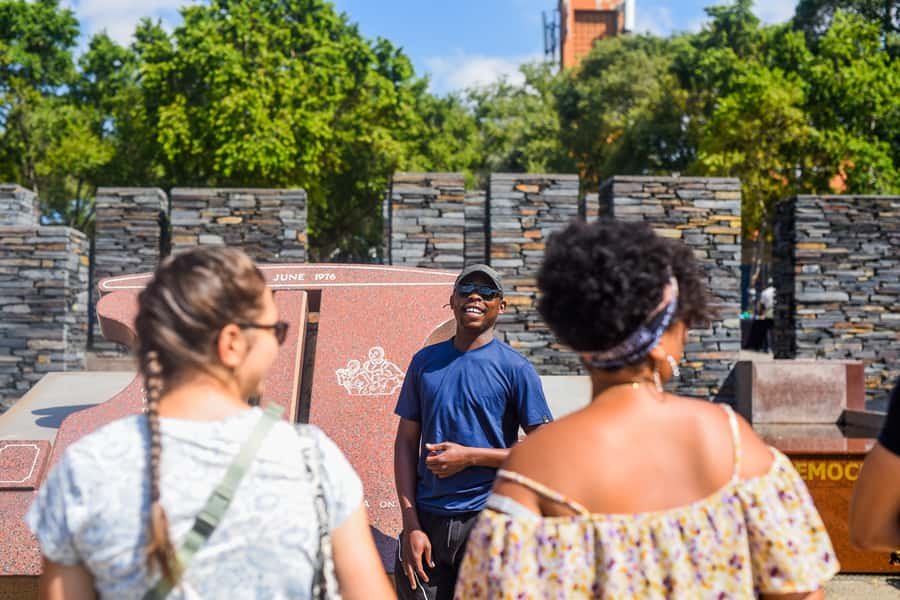
Hector Pieterson Museum is the emotional center of the tour. The museum recalls the Soweto uprising of 1976, when students protested against the apartheid government’s education policies. The death of Hector Pieterson became one of the best-known images of that uprising and helped focus international attention on apartheid.
The planned visit lasts about 20 minutes, including a guided stop and time for photographs. That is enough for an introduction, though you may want to return on another day if you prefer to read every display at length.
I value this stop because the guide connects the museum to the streets around it. You are not hearing about a distant event in a textbook. You are standing in the area where the uprising unfolded, then cycling through the community shaped by those events.
Give this section the attention it deserves. The tour has a light, social feel at times, but this is a serious part of South African history. A good guide, including Thabo or Themba, can explain the events clearly while allowing space for questions and reflection.
Vilakazi Street, Mandela House, and Tutu House
Vilakazi Street is the tour’s best-known stretch. It is famous for being associated with two Nobel Peace Prize winners, Nelson Mandela and Archbishop Desmond Tutu. Few streets can make that claim.
At Mandela House, you learn about the home where Nelson Mandela lived from 1946 to 1962. The stop helps place his political life in a real domestic setting. Instead of treating him only as a global symbol, you see the address connected to his early activism, family life, and years of resistance.
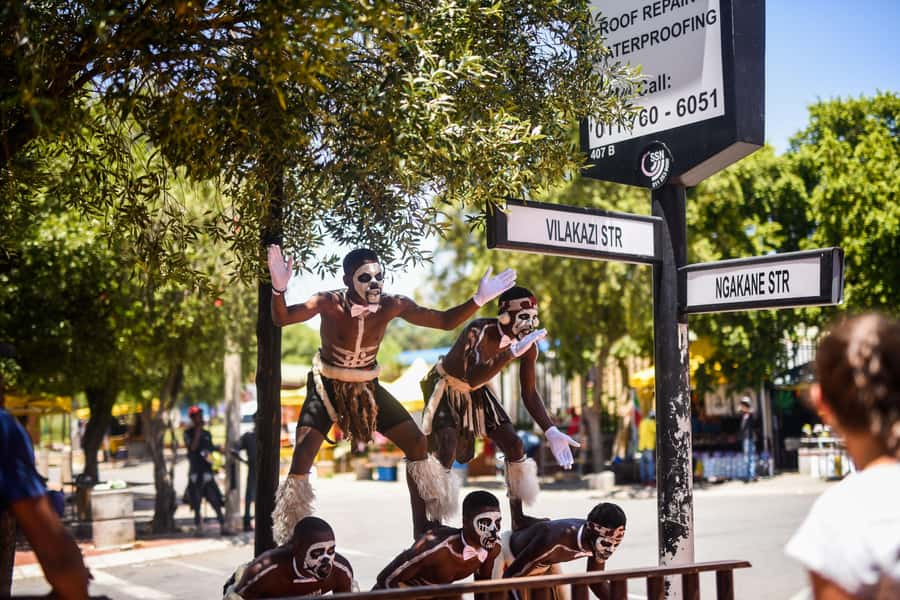
The scheduled visit is around 15 minutes, with photographs, a guided explanation, and a traditional dance show. The short timing means you should not assume you will study every room at leisure. The value lies in the setting and the guide’s explanation, especially if you are seeing the house as part of a broader Soweto route.
Tutu House is a quick stop on Vilakazi Street. Archbishop Desmond Tutu and his family once lived there, and the guide explains his contribution to the end of apartheid. Seeing both addresses on one street gives Vilakazi Street unusual weight, but the guide also keeps the focus on the wider neighborhood rather than presenting it as a shrine-lined attraction.
You may notice olive trees planted by Mandela, Tutu, and Bill Clinton in memory of Hector Pieterson. This detail adds a small, human touch to the stop and gives you another way to connect the people and events discussed earlier.
Kota lunch and township flavor
After the main sightseeing, you stop for lunch at a local restaurant on or near Vilakazi Street. The meal is a kota, a South African township sandwich, with food and drinks included in the tour price.
A kota is hearty street food rather than a formal meal. Expect something filling and local, which suits a bicycle tour far better than a delicate snack. Lunch also gives you time to sit down, recover from the hills, and talk with the guide outside the cycling rhythm.
I like this part because it keeps the experience grounded in everyday food. You are not simply being shown Soweto from the outside. You get to try something strongly linked with township food culture, and several people rate the kota as a highlight.
Food preferences and exact restaurant arrangements are not specified, so tell the provider about any dietary needs before booking. Do not count on lunch to replace a full day of meals. It is one included local meal during a four-hour activity.
Fitness, bicycles, and practical comfort
The tour supplies a bicycle, and the equipment is generally described as being in good condition. One guide even handled a flat tire quickly during a tour, which is reassuring, though you should still check your brakes, seat, and tires before setting off.
The route includes hills. Some bicycles may have limited gearing, and one person specifically wished for geared bikes or e-bikes. If you are used to cycling uphill, the route should be manageable with regular stops. If you are not, the hills can change the mood of the afternoon.
Wear comfortable clothes and closed shoes suitable for pedaling. Apply sunscreen before you start, and bring rain gear because conditions can change. Carry cash for optional gratuities and small personal purchases. Water is not listed among the included items, and one practical complaint was the lack of a supplied bottle, so bring your own water.
This activity is not suitable for pregnant women, wheelchair users, or anyone who cannot ride a bicycle. It is also a poor fit for anyone looking for a fully passive sightseeing outing.
What the $52 price really covers
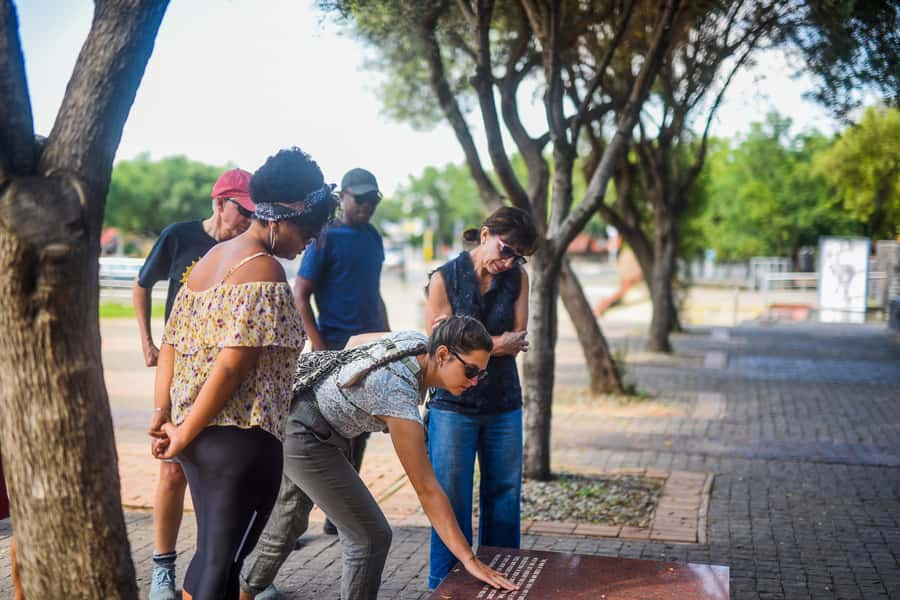
At $52 per person, the tour is good value if you want history, local context, exercise, and lunch in one half-day. The price includes the bicycle, English-speaking guide, food, and drinks. It also saves you the trouble of planning transport between scattered Soweto sights.
A vehicle tour may be easier on your legs, but it can offer less contact with the route. A walking tour may feel more intimate, but it cannot cover as much ground in four hours. This bicycle option sits between the two, giving you access to several neighborhoods without turning the day into a long formal excursion.
The price does not include hotel pickup or drop-off. You need to reach Vilakazi Espresso yourself, so factor in the cost and time of getting to Soweto. If you are staying in Johannesburg, the transfer may be the main extra expense.
The booking terms are flexible: you can cancel up to 24 hours before the start for a full refund, and you can reserve now and pay later. Starting times vary, so check availability for your date.
Who will enjoy this tour most
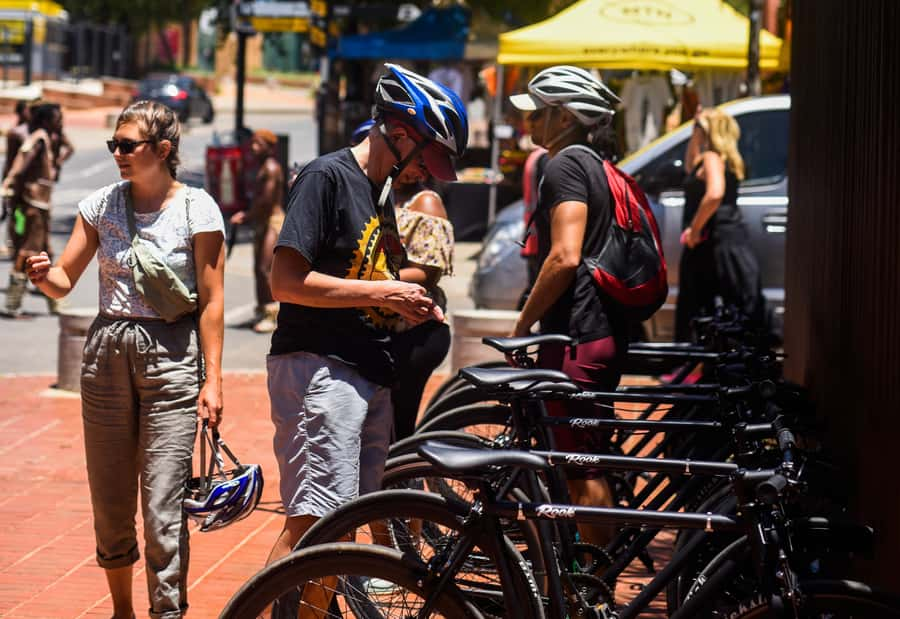
I would choose this experience if you want to understand how Soweto’s famous history connects with present-day neighborhoods. It works especially well for first-time visitors to Johannesburg who want more than a quick stop at Mandela House.
It also suits active families with older children, couples, solo visitors, and small groups who enjoy asking questions. The guides are comfortable adjusting their pace and explaining things to different age groups. Several outings included older riders, though that does not remove the need for basic fitness.
You should choose another format if you want long museum visits, a luxury vehicle, or a slow route with no hills. You should also think carefully about the informal settlement stop and approach it with humility. The best experience comes from listening, asking respectful questions, and remembering that this is a working community.
Should you book the Soweto bicycle tour?
I would book it if you can ride comfortably for roughly 11 kilometers and want a direct, active introduction to Soweto. The combination of Hector Pieterson Museum, Mandela House, Tutu House, Mzimhlophe, Orlando Stadium, local streets, and kota lunch gives you a lot in four hours.
The strongest reason to choose it is the guide. Thabo, Teboho, and Themba are praised for clear storytelling, humor, local perspective, and careful attention to safety. The main reasons to hesitate are the hills, the lack of hotel transport, and the possibility that standard bikes may feel basic if you are used to gears.
Bring sunscreen, rain gear, water, and cash. Arrive ready to pedal, listen, and treat the neighborhoods with respect. For $52, this is a useful and memorable way to see more of Soweto than its famous street alone.
FAQ
Where does the Soweto bicycle tour start?
The meeting point is Vilakazi Espresso in Soweto.
How long does the tour last?
The activity lasts four hours.
What language is the tour conducted in?
The live tour guide speaks English.
What is included in the price?
The price includes a local guide, bicycle, food, and drinks.
Is hotel pickup included?
No. Hotel pickup and drop-off are not included, so you must make your own way to Vilakazi Espresso.
Which major sites are visited?
The route includes Hector Pieterson Museum, Mandela House, Tutu House, Vilakazi Street, Mzimhlophe, Orlando East, Orlando Stadium, and Orlando Community Centre.
Is lunch included?
Yes. Lunch includes a South African kota sandwich at a local restaurant, along with food and drinks covered by the tour.
How fit do I need to be?
You need to be able to ride a bicycle for roughly 11 kilometers and handle some uphill sections. The activity is not suitable for people who cannot ride a bike.
What should I bring?
Bring sunscreen, rain gear, and cash. Cash is useful if you wish to offer the suggested R20 to R50 gratuity during or after the informal settlement visit.
More Bike Tours in Johannesburg & Pretoria
- Marrakech: Cultural Bicycle Tour with Pastry and Tea
★ 4.8 · 583 reviews - Marrakech: Bicycle Tour with a Local Guide
★ 4.7 · 495 reviews - Marrakech : Electric Bicycle City Tour
★ 4.8 · 363 reviews - Cycling Adventure in Marrakech
★ 5.0 · 289 reviews
More Village Tours in South Africa
- Soweto: Walking Tour with a Local Guide and Lunch
★ 4.9 · 648 reviews - Jo’berg in 1 Day: Soweto, Apartheid Museum & City Tour
★ 4.8 · 524 reviews - Johannesburg: Full-Day Tour with Soweto and Apartheid Museum
★ 4.8 · 478 reviews - Johannesburg and Soweto: Half-Day Tour
★ 4.8 · 439 reviews
Just added for Johannesburg & Pretoria
- Soweto: Bike Tour with a Local Tour Guide★ 4.7 · 114 reviews
- From Johannesburg: Lion & Safari Park Half-Day Tour★ 4.6 · 384 reviews
- Johannesburg: Soweto Half-Day Tour★ 4.7 · 196 reviews
- Johannesburg: Street Art and Culture in Maboneng!★ 4.8 · 107 reviews
- Johannesburg: Maboneng Street Art & Culture Tour★ 4.9 · 257 reviews
- Johannesburg: Soweto & Apartheid Museum Half-Day Tour★ 4.9 · 99 reviews
- Johannesburg: Soweto Apartheid & Township Tour with Lunch★ 4.8 · 80 reviews
- Johannesburg and Soweto Apartheid Full Day Tour w/Lunch★ 4.9 · 219 reviews
Township & Village Tours, compared.

Berber villages : Atlas Mountains Day Hike from Marrakech
Read our review →
Atlas Mountains, Berber Villages and Three Valleys all inclusive
Read our review →
Quad Bike, Buggy, and Camel Ride & Bedouin Village
Read our review →
Atlas Mountains, Berber Villages, Agafay & Camel Ride
Read our review →
Paragliding, Camel Ride & Berber Villages Trip
Read our review →
Atlas Mountains and Three Valleys & Waterfalls – Villages Marrakech Day Trip
Read our review →