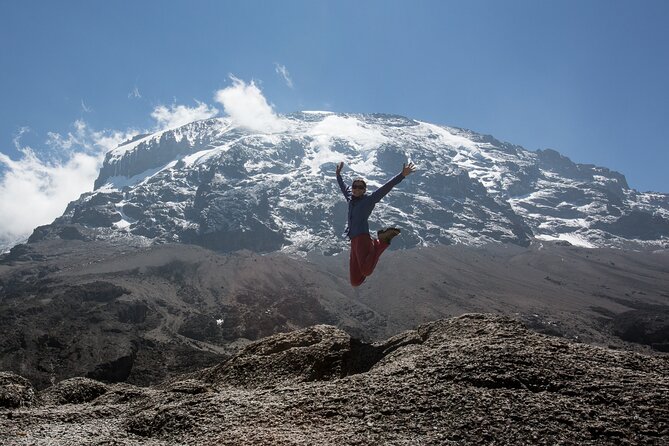
Reviewed · HIKING & TREKKING
8-Day Small-group Lemosho Kilimanjaro Summit Trekking
Mount Kilimanjaro’s Lemosho route gives you the mountain in chapters: rainforest on day one, open highland on day two, the Shira Plateau soon after, then volcanic rock and thin air before the midnight push to Uhuru Peak. The eight-day schedule gives your body more time to adjust than shorter routes, which is a major reason this trek appeals to first-time high-altitude hikers.
I like the small-group format, capped at 15, and the care built into the operation. I also like that the price includes park fees, camping gear, meals, and round-trip hotel transfers, so you are not assembling the trip piece by piece. The catch is simple: this remains a demanding climb, with a long summit night, cold conditions, and no guarantee that altitude will treat you kindly.
Key points to know before booking
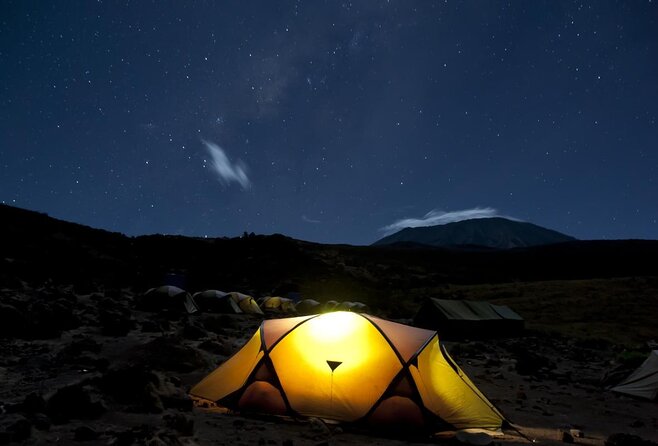
- Lemosho starts quietly in the western rainforest, then crosses the Shira Plateau before joining the southern circuit.
- Eight days helps with acclimatization, including a high walk to Lava Tower followed by a descent to Barranco Camp.
- Summit night begins around midnight, with roughly six to seven hours to Stella Point and another hour to Uhuru Peak.
- The group limit is 15 people, useful if you want more personal attention than a large expedition can offer.
- The $2,895 price includes the main trekking costs, including camping equipment, park fees, meals, and hotel transfers.
- The hardest section is not technical climbing, but the combination of steep scree, low oxygen, cold, fatigue, and a long descent.
Why the Lemosho route is a smart eight-day choice
Lemosho is one of Kilimanjaro’s most scenic approaches because it does not rush you straight toward the upper mountain. You begin on the western side, walk through montane forest, cross the Shira highlands, and eventually join the route used for the final approach from the south.
That gradual change matters. Kilimanjaro is not a technical mountain climb on this route, but altitude is the real opponent. The summit is 19,340 feet, or 5,895 meters, and your body needs time to adjust to thinner air. The extra day compared with shorter itineraries creates a more measured rhythm, with high walking followed by lower sleeping when possible.
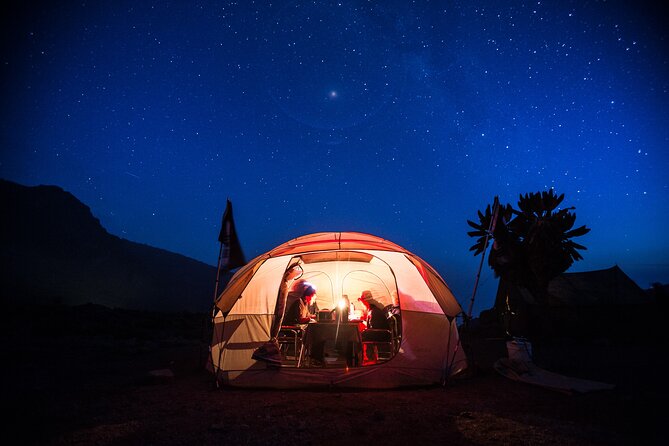
You will hike, eat, rest, and sleep in tents every night on the mountain. The operator supplies camping equipment, meals, and park fees, which makes the $2,895 cost easier to judge. You are paying for more than a guide and a path: the package covers the mountain infrastructure and the support team needed to move a small expedition up and down Kilimanjaro.
The group can include up to 15 people, though past departures have also included much smaller groups. That range matters. A group of four or five can feel close and easy to manage, while a full group of 15 may take longer to move through camps and difficult sections. The advantage is that Climb Kili can assign several guides and crew members as needed, giving the lead guide more eyes on the group.
More Hiking Tours in Kilimanjaro & Moshi
- Kilimanjaro climb by Lemosho Route (7-day)
★ 5.0 · 651 reviews - Kilimanjaro climb, Machame Route (7-day)
★ 5.0 · 262 reviews - Kilimanjaro Climbing Lemosho Route 8 Days.
★ 5.0 · 186 reviews
Day 1: Mti Mkubwa and the first rainforest climb
Your first morning starts with pickup from your Arusha hotel at about 8 a.m. You then drive to the western side of Kilimanjaro and check in at Londorossi Gate before beginning the hike.
The opening walk covers about 3 miles, or 4.8 kilometers, and takes around three to four hours. You climb gently through the montane forest toward Mti Mkubwa Camp, whose name means Big Tree in Swahili.
This is a friendly introduction rather than a brutal opening. The rainforest gives you shade, moisture, and a sense that the summit is still far away. That is useful psychologically. You can settle into the pace, learn how the guides organize breaks, and get used to walking with a daypack before the air becomes noticeably thin.
The first camp is also a reminder that this is a camping trip, not a hotel-based mountain holiday. Your tent and personal belongings are set up under the Climb Kili banner, but you still need to be comfortable with basic camp life, shared routines, and changing weather.
Day 2: Leaving the trees for Shira Ridge
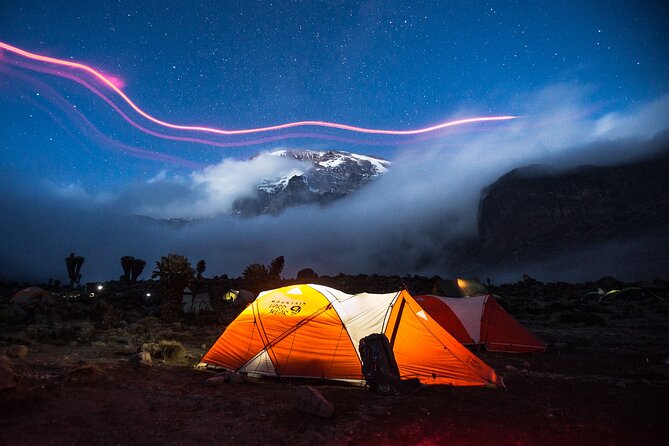
The second day covers about 4.9 miles, or 8 kilometers, in roughly five to six hours, with camp at about 11,500 feet, or 3,505 meters.
The forest gives way to tall grasses, heather, volcanic rock, and pale lichen hanging from the plants. It is a sharp visual change. You are no longer walking under a leafy canopy, and Kilimanjaro begins to feel like a high mountain rather than a tropical hike.
The trail follows Shira Ridge toward the broad Shira Plateau. This is one of the route’s rewarding stretches because the view of Kibo, the main summit cone, begins to open across the highlands. You get your first real sense of the scale ahead.
The day is not especially long by Kilimanjaro standards, but the sleeping altitude is significant. Walk slowly, drink as directed by your crew, and do not treat an easy trail as permission to race ahead. On this mountain, saving energy is part of the plan.
Day 3: A full day on the Shira Plateau
Day three is a longer outing, about 8.7 miles, or 14 kilometers, over five to seven hours. You reach Moir Camp at roughly 13,800 feet, or 4,206 meters.
The route crosses the Shira Plateau toward Kibo’s glaciated summit. You may have the option to visit the collapsed Shira Cone, the oldest of Kilimanjaro’s three volcanic cones. That option adds interest for hikers who want to understand the mountain’s volcanic shape, though the day already involves a fair amount of walking at altitude.
Moir Camp sits in a broad gorge at the end of a dormant lava flow. It is a stark setting, with fewer plants and more exposed rock. For many people, this is the point when Kilimanjaro feels properly high.
The drawback is that you are gaining altitude quickly compared with the first two days. Pay attention to headache, nausea, dizziness, or unusual fatigue, and tell your guide early. A good guide can adjust the pace or response, but only if you speak up.
More Multi-Day Tours in Tanzania
- Kilimanjaro climb, Lemosho Route (8-day)
★ 5.0 · 148 reviews - 8 Days Great Wildebeest Calving Migration Safari from Arusha
★ 5.0 · 254 reviews - 10-Day Serengeti Wildebeest Migration Safari from Arusha
★ 5.0 · 218 reviews - 8 Day Spectacular Migration Serengeti mid -Range Tanzania Safari
★ 5.0 · 161 reviews
Day 4: Lava Tower, then down to Barranco
Day four is the key acclimatization day. You climb toward Lava Tower, listed at about 15,000 feet, or 4,500 meters, then descend through the Senecio forest to Barranco Camp at around 13,000 feet, or 3,962 meters.
The walking distance is about 4.3 miles, or 7 kilometers, with four to six hours on the trail. The principle is excellent: walk high, sleep lower. Even if you feel tired at Lava Tower, the descent gives your body a better chance to recover before the next stages.
The route passes a junction toward the Arrow Glacier, then continues down toward Barranco. The scenery changes again, with enormous senecio plants and a valley often wrapped in cloud. Barranco Camp sits in the shadow of the Barranco Wall, a steep volcanic formation that you will climb the following morning.
This is one of the most useful days in the program, but it can also be confusing on paper because the Lava Tower elevation and the camp elevation are quite different. That is intentional, not a mistake in the route design. You are meant to reach a high point, spend time there, then lose elevation before sleeping.
Day 5: Climbing the Barranco Wall
Day five covers about 2.2 miles, or 3.2 kilometers, and takes four to five hours. The distance looks short, but the Barranco Wall makes this a more active morning than the mileage suggests.
You climb the wall and enter the mountain’s arctic zone, then continue along the South Circuit into Karanga Valley. The route is not described as technical climbing, but you should expect steep, uneven ground and sections where careful foot placement matters.
This is the kind of day when a patient guide makes a real difference. Guides associated with the Climb Kili team include Amani, Isaya, Emanuel, Raymond, Herment Mosha, Goodluck, Manny, and Cinga. Your exact crew can vary, but the company’s strongest praise centers on calm pacing, encouragement, health checks, and practical help when the trail becomes tiring.
Karanga Camp is at about 13,100 feet, or 3,992 meters. The short distance does not mean an easy day. You are gaining and losing height, climbing over rough ground, and preparing for the higher camps ahead.
Day 6: Kosovo Camp and a quiet afternoon before the summit
Day six takes you slowly toward Kosovo Camp at roughly 16,000 feet, or 4,876 meters. The listed walk is about 2.6 miles, or 3.5 kilometers, and takes five to six hours.
You pass Barafu Camp, where the views include both Kibo and Mawenzi, two of Kilimanjaro’s major peaks. Kosovo is on an exposed ridge, so the practical advice is to get familiar with your surroundings before dark. You do not want to be searching for the dining tent, toilet area, or route in the middle of the night.
This day is about restraint. You may feel excited and want to talk, walk, or fuss over equipment, but your job is to eat, drink, rest, and prepare. Your guides can help you organize what you need for the summit attempt.
The altitude here is serious. Even a short walk can feel slow. That is normal. The schedule protects energy for the hardest part, which begins around midnight.
Day 7: Stella Point, Uhuru Peak, and the long descent
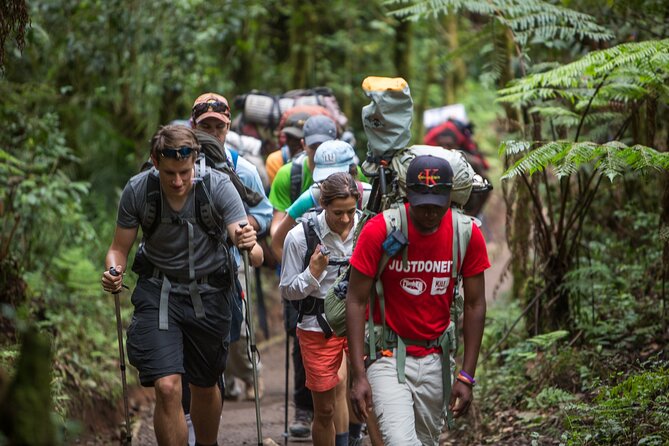
Summit night starts around midnight. You climb through the darkest and coldest part of the trek toward Stella Point on the crater rim, a six to seven-hour ascent according to the schedule.
The trail is steep and covered with loose scree. Every step can slide backward, and the low oxygen makes a modest slope feel far harder than it looks. This is the portion that tests patience and focus more than technical skill.
The goal is to reach Stella Point in time for sunrise. From there, Uhuru Peak is about another hour away, with the route passing between the Rebmann and Ratzel glaciers. At 19,340 feet, Uhuru is the highest point in Africa and the emotional center of the trek.
The listed day includes about 13 miles, or 21 kilometers, split between roughly 5 kilometers of ascent and 12 kilometers of descent. The summit climb takes six to seven hours, followed by four to six hours descending to Mweka Camp. The total is shown as about 11 hours, though your exact timing depends on pace, weather, altitude, and how long you spend at the summit.
Do not underestimate the return. Reaching Uhuru is only half the day. The descent to Mweka is long, and tired legs can make loose ground awkward. This is where the crew’s encouragement and close attention matter most.
Past departures have praised guides such as Raymond for checking when people wanted food, breaks, and a slower pace. That style is exactly what you need on summit day. A guide who pays attention to your condition is more valuable than one who simply pushes for speed.
Day 8: Mweka Gate and a welcome shower
The final walk goes from Mweka Camp to Mweka Gate. It covers about 6.4 miles, or 10.3 kilometers, and takes three to four hours.
After the stark upper mountain, the return through lower terrain can feel almost luxurious. Your Climb Kili vehicle then transfers you back to your Arusha hotel, where a shower and clean clothes will likely seem as valuable as any souvenir.
This last day is not just a formality. You are still descending on tired legs, and the trail can feel longer than expected after summit night. Keep your pace controlled and use the morning to reflect on the week instead of rushing toward the finish.
What $2,895 buys you
At $2,895 per person, this is not a budget walk. It is also not an à la carte arrangement where you must separately organize park access, tents, meals, and transport.
The price includes round-trip transfers from your Arusha hotel, camping equipment, mountain fees, and meals. That gives the package real value if you want one company handling the practical pieces. You are also paying for a small-group operation, a guide team, and an eight-day schedule designed around acclimatization.
The important comparison is not simply the daily price. Compare what other operators include, how many people they accept, how many days they allow, and what support is provided on summit night. A cheaper headline price can become less attractive if major mountain costs are added later.
The available information does not specify every item of personal equipment or every extra expense. You should ask Climb Kili what you must bring yourself before booking, especially for clothing, footwear, and personal medical supplies.
Food, camping, and the human side of the trek
Meals are included, which removes one daily concern. You still need to eat even when altitude reduces your appetite, particularly before the summit attempt. Ask your guide about meal timing and tell the crew promptly if you are struggling to eat or drink.
The human support appears to be a major part of the experience. Past groups have highlighted guides including Amani, Raymond, Goodluck, Herment Mosha, Veda, Steve, Manny, and Cinga, along with cooks and porters who help keep camp functioning.
One especially useful detail from the crew descriptions is the attention to small comforts: coffee wake-up calls, comfortable tents, encouraging conversation, and help with pacing. Those touches do not change the altitude, but they can change how manageable a hard day feels.
You should also understand the group dynamic. A small group can be friendly and motivating, but you may still be sharing the pace of people with different fitness levels. The stated maximum is 15, so ask about the expected group size for your departure if that matters to you.
Who should book this trek
This route suits you if you want a serious physical challenge without technical mountaineering. You need strong physical fitness, comfort with long walks, and the patience to move slowly at high altitude.
It can work for a first Kilimanjaro attempt because the eight-day schedule gives more time for acclimatization than a compressed itinerary. It also suits experienced hikers who value scenery and a measured pace rather than chasing the shortest possible ascent.
You should think twice if you dislike camping, struggle with long back-to-back walking days, or want a relaxed holiday with only occasional hiking. The summit night is cold, steep, dark, and tiring. A high summit rate is encouraging, but it is never a personal guarantee.
Climb Kili offers free cancellation up to 24 hours before the start time for a full refund. Cancellations or changes made later are not accepted under the stated terms, and all cut-off times use local time.
Should you book the 8-day Lemosho trek?
I would choose this trek if your priority is a well-supported, carefully paced Kilimanjaro attempt with varied scenery and a small-group feel. The strongest reasons are the extra acclimatization day, the route through the Shira Plateau, the included mountain costs, and the attention repeatedly associated with guides such as Raymond, Amani, and Goodluck.
I would not choose it simply because the company reports a high summit rate. You still need to arrive fit, take altitude symptoms seriously, and accept that the summit attempt can be physically and mentally rough.
For the right hiker, the $2,895 package offers a practical balance: eight days on the mountain, meals and camping equipment included, hotel transfers arranged, and a guide team focused on getting you safely to Uhuru Peak and back down. If that sounds like the kind of challenge you want, Lemosho is a strong route choice.
FAQ
How long is the Kilimanjaro trek?
The trek lasts approximately eight days, including the approach, summit attempt, descent, and transfer back to your Arusha hotel.
Where does the trek begin?
The route begins on Kilimanjaro’s western side after checking in at Londorossi Gate. Pickup is offered from your Arusha hotel, with a listed start time of 8 a.m.
What route does the trek use?
The trek uses the Lemosho route. It passes through montane forest, the Shira Plateau, Lava Tower, Barranco, Karanga, Kosovo, Stella Point, Uhuru Peak, and Mweka Gate.
How large can the group be?
The maximum group size is 15 people. Actual departures may be smaller.
What is included in the price?
The $2,895 price includes round-trip transfers from your Arusha hotel, camping equipment, mountain fees, and meals.
How difficult is the summit day?
Summit day begins around midnight and includes a six to seven-hour ascent to Stella Point, about one more hour to Uhuru Peak, and a four to six-hour descent to Mweka Camp. Strong physical fitness is required.
Can I cancel for a full refund?
Yes. You can cancel at least 24 hours before the experience start time for a full refund. Cancellations or changes made less than 24 hours before the start time are not accepted.
More Multi-Day Tours in Kilimanjaro & Moshi
- From Cairo: 8-Day Tour of Cairo, Luxor and Aswan with Cruise
★ 4.2 · 204 reviews - Private 9-Day Tour package to Cairo, Alexandria, Luxor, and Aswan by flight
★ 5.0 · 193 reviews - 8-Day Private Tour Cairo, Aswan, Luxor and Nile Cruise Including Air Fare
★ 5.0 · 142 reviews - From Cairo: 8-Day Tour of Cairo, Luxor and Aswan with Cruise
★ 5.0 · 132 reviews
More Small Group Tours in Kilimanjaro & Moshi
- From Marrakech: Small Group to Essaouira & Sekkala Day Trip
★ 4.9 · 6,671 reviews - Luxor Day Trip from Hurghada Small Group & Tutankhamun Tomb
★ 4.8 · 5,366 reviews - From Marrakesh: Small Group To Essaouira With Opt Activities
★ 4.8 · 2,633 reviews - Small group Hurghada to Luxor, Valley of the Kings by Van
★ 4.5 · 2,470 reviews
Just added for Kilimanjaro & Moshi
- Maasai village visit, Materuni waterfalls & coffee experience★ 4.5 · 95 reviews
- Materuni Waterfalls & Coffee Tour from Moshi★ 5.0 · 92 reviews
- Mountain Kilimanjaro Day Hike★ 5.0 · 102 reviews
- Arusha or Moshi : Hot Spring, Waterfall & Coffee Farm Tour★ 4.8 · 80 reviews
- Kilimanjaro climb, Lemosho Route (6-day)★ 5.0 · 129 reviews
- Materuni Waterfall, Coffee Tour and Picnic Hot Lunch★ 5.0 · 128 reviews
- 7-Day Machame Kilimanjaro Summit Tour from Arusha★ 5.0 · 125 reviews
- Materuni Waterfalls & Chemka Hotsprings Day Trip★ 5.0 · 214 reviews
Hiking & Trekking, compared.
Berber villages : Atlas Mountains Day Hike from Marrakech
Read our review →
3 Days Desert Tour From Marrakech To Merzouga Dunes & Camel Trek
Read our review →
Ourika Valley Trip with Waterfall Hike & Lunch
Read our review →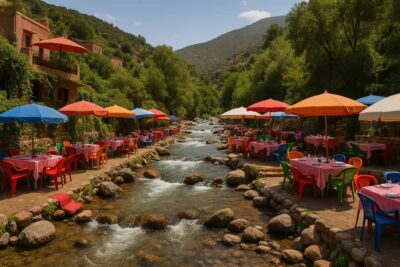
ourika valley lunch & guided hike to waterfalls
Read our review →