

Reviewed · TOWNSHIP & VILLAGE TOURS
Kevins Kibera Slum Tours
Kibera is not a sightseeing backdrop. It is a large, working community, and this tour gives you a chance to see it with Kevin or his brother Ishmael, both closely connected to the area. You’ll visit a school, workshops, the main market, and a family home, while hearing about daily life from someone who knows Kibera firsthand.
I like the personal scale of the tour and the chance to enter a local home rather than simply walk past crowded streets. I also like the practical hotel pickup, which makes a morning visit easier in Nairobi. The main drawback is the rough walking: muddy paths, uneven ground, and precarious sections can be hard after rain or for anyone with balance or mobility problems.
Key points to know before booking

- Local guides: Kevin and his brother Ishmael grew up in Kibera and guide you through places connected to their own lives.
- Personal visit: The route can include Kevin’s house and family home, an unusual chance to see how a household functions in the community.
- Community stops: You may visit a school for children and orphans, an African bone workshop, a bag-making project, the market, and other local landmarks.
- Private format: Only your own group takes part, giving you more room to ask questions and set the pace.
- Four-hour outing: The tour lasts about half a day and includes pickup and drop-off at a Nairobi hotel.
- Bring sturdy shoes: Closed-toe footwear that can get very dirty is essential, especially if recent rain has affected the paths.
Entering Kibera with someone who grew up there

The most important feature here is not the list of stops. It is the guide.
Kevin’s Kibera Slum Tours places you with a local resident, usually Kevin or his brother Ishmael, who can explain the area through personal experience. That changes the tone of the visit. Instead of looking at Kibera from a vehicle or hearing a distant account, you walk through it with someone who is known in the community and can introduce you to people and places along the way.
You should expect a direct look at difficult living conditions. The route may pass open waste areas, a landfill, rough footpaths, and crowded sections of the settlement. At the same time, Kibera is not only poverty. It is also a place where people work, raise children, study, trade, make goods, and support one another.
That balance matters. A tour like this can easily become a parade of hardship. The family visit, school stop, workshops, and conversations help show people as neighbors and workers, not just as subjects of poverty. Still, you should arrive ready for an experience that may feel uncomfortable and sad at times.
More Village Tours in Kenya
- Nairobi: Explore Kibera Slum with Local Guides
★ 4.9 · 365 reviews - Masai village Day Tour Experience
★ 5.0 · 284 reviews - Nairobi: Kibera Slum storytelling tour with a Local
★ 5.0 · 185 reviews
What the four-hour morning looks like
The listed start time is 8:00 am, with the tour lasting roughly four hours. Pickup and drop-off are offered from hotel accommodation in Nairobi, so you do not need to arrange your own way to the meeting point.
Allow some flexibility around the pickup. One person reported waiting about an hour longer than expected, so it is sensible to confirm the timing clearly before the morning begins. That is a small but important point if you have another booking, airport transfer, or fixed appointment later in the day.
The walking portion takes about three hours, with the remaining time likely used for transfers and the various stops. Since this is a private activity, you are not joining a large coach group. Your own party takes part, which is useful when you want to ask about family life, schooling, work, or local projects.
The tour is listed at $65 per person. That is not the cheapest way to spend a morning in Nairobi, but the price includes a private local guide and hotel transportation. You are paying for access, introductions, and context rather than a simple ride past the neighborhood. For a small group that values personal contact, the cost is reasonable. For someone seeking a low-cost city walk, it may feel high.
The school and orphanage stop
A visit to a local school or orphanage is one of the most affecting parts of the experience. You may see where children study and learn about efforts to support pupils who have little funding or family support.
The stop can be hopeful and difficult at once. The schools described on this route operate with limited resources, while local people work to help children continue their education. You may hear about efforts to support bright pupils and help them attend boarding schools. These details put faces and daily routines behind the broad idea of urban poverty.
This is also a place where respectful behavior matters most. You are entering a space used by children, not a staged attraction. Listen to the guide, follow the school’s lead, and avoid treating the visit as a photo opportunity. The value comes from understanding how education works in the community and what local people are trying to build.
Families with children of their own have taken this tour, including children as young as eight and nine. Still, parents should decide in advance how they want to discuss poverty, sanitation, and unequal access to education. The experience can be meaningful for older children, but it is not a light or polished family outing.
Kevin’s house and a personal family welcome

The visit to Kevin’s house and family home gives the tour its most personal touch. Rather than seeing only public spaces, you may be welcomed into the home of the person guiding you.
That can help you understand ordinary family life in Kibera. The point is not that every household lives in exactly the same way, but that a home visit shows relationships, routines, and hospitality that are easy to miss when you only walk along the main street.
Several accounts describe the guides as warm and welcoming, with Ishmael taking time to introduce people to his home and relatives. This personal connection is a major reason to choose this tour over a more general city excursion.
You should remember that a private home is a generous invitation. Be polite, keep your questions considerate, and let the family decide what they wish to discuss. The strongest part of the visit is the human exchange, not the chance to inspect someone else’s living space.
More Village Tours in Nairobi
- Nairobi: Kibera Slum Tour with Local Social Entrepreneurs
★ 5.0 · 107 reviews
Bone crafts, bags, and local work
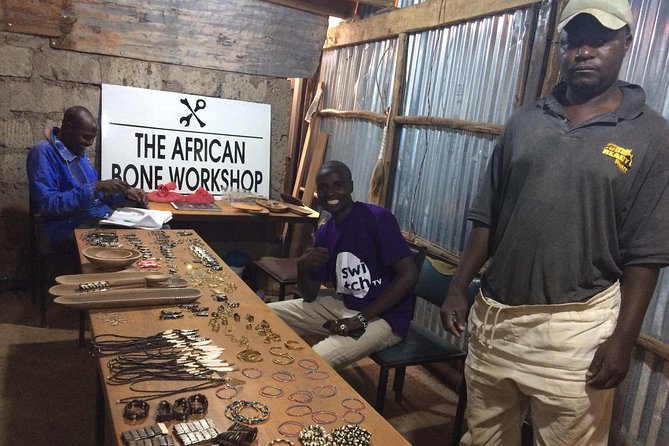
The African bone workshop is another memorable stop. Here you can see how discarded animal bone is turned into jewelry or other craft items. The visit gives you something concrete to focus on: skill, labor, and small business rather than only the physical hardships of the settlement.
Some tours also include a community empowerment project that makes bags. These stops show how residents create income with limited resources. They also give you a chance to buy something useful, if purchases are offered during your visit, while directing attention toward local work instead of outside souvenirs.
The precise order and number of workshop stops may vary. The published route names the bone workshop and describes a bag-making project in the broader experience, but the only formal inclusion listed is the Kibera guide. Food and drinks are not included, so do not expect a meal or refreshments to be part of the price.
The marketplace, main street, and train track

The main street market shows Kibera in its everyday role as a place to shop and work. You may see the practical side of the settlement here, with people moving through their day rather than waiting for a tour group.
The train track is another named landmark on the route. Together with the main street, it helps you understand the physical layout of the area and the narrow routes people use to get around. The walk is not a neat loop on broad pavements. It can involve tight passages, uneven ground, and sections that become especially difficult after rain.
The landfill is one of the harder stops emotionally. It brings the problems of waste, sanitation, and public services into plain view. You may find the contrast sharp: children playing nearby, people working, and families carrying on with daily life beside serious environmental hazards.
That is part of the tour’s value, but it is also why you should not book it expecting easy sightseeing. This is a demanding morning in both body and mind.
Safety, walking, and what to wear

The route has been described as safe when accompanied by the local guide, who is known and respected in the community. Several accounts describe feeling comfortable during the visit, including people traveling alone. That does not remove the need for normal city awareness, but it is reassuring that the tour is led by someone with strong local ties.
The bigger practical issue is the ground beneath your feet. The path can be precarious, with uneven surfaces and difficult sections. Recent rain may leave the route muddy and much harder to manage.
Wear:
- Closed-toe shoes
- Footwear you do not mind getting very dirty
- Comfortable clothing suitable for a long walk
- Clothing that allows easy movement
If you struggle with balance, walking on uneven surfaces, or climbing over rough sections, I would skip this tour. One person specifically advised against it for older people or anyone with mobility concerns. The activity information says most people can participate, but that should not be read as a promise of easy access.
The tour requires good weather. If poor conditions force cancellation, you are offered another date or a full refund.
The private format and guide quality
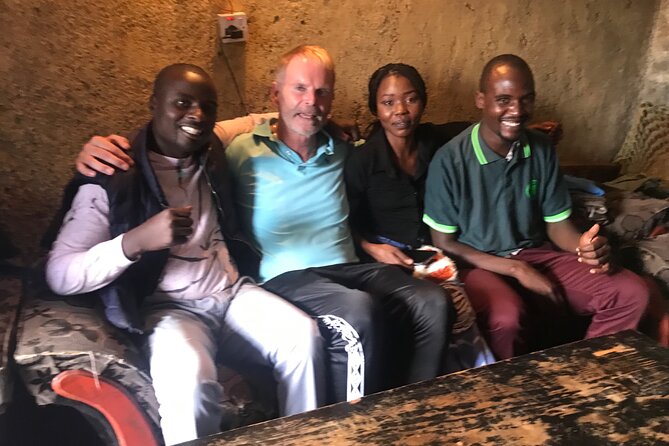
A private tour makes a real difference here. You can ask questions without holding up a large group, and the guide can explain details based on your interests. You might want to ask about education, work, waste collection, housing, family life, or community projects.
Kevin is repeatedly described as personable and welcoming. Ishmael, also spelled Ismael in some descriptions, receives similar praise for his patience, storytelling, and ability to include quieter people in conversation. The guides appear to be the strongest part of the experience.
Do keep expectations realistic. A local guide can offer access and personal insight, but he cannot solve the larger problems you will see. You may leave impressed by community efforts and frustrated by poor public services at the same time. That mixed reaction is probably more honest than a simple feel-good story.
Is $65 a fair price?
At $65 per person, the value depends on what you want from Nairobi.
The price includes the guide and hotel pickup and drop-off. It also buys a private experience rather than a large group outing. You are not just paying for three hours of walking. You are paying for local introductions, a family welcome, and the chance to hear about Kibera from someone raised there.
There are limits. Food and drinks are not included. The tour does not promise donations, admission to a formal attraction, or a specific number of workshop visits. You should also allow for possible pickup delays and the physical demands of the route.
I think the price makes sense for someone who values direct contact and careful explanation. If your main aim is to see Nairobi’s famous sights, spend the money elsewhere. If you want to understand a major part of the city that most standard tours avoid, this is a useful investment in time and attention.
The experience is also booked well ahead, on average about 27 days before the visit. That suggests you should not leave it until the last minute if it is important to your schedule.
Who should book this Kibera visit?
I would recommend it to you if you:
- Want a private tour with a guide raised in Kibera
- Are comfortable seeing poverty and difficult public health conditions
- Can walk for several hours on uneven ground
- Prefer personal stories and local introductions to polished attractions
- Want to learn about schools, family life, crafts, and small community projects
- Are visiting Nairobi with enough time to think about what you have seen
I would be cautious if you dislike uncertain timing, cannot manage rough paths, or want a relaxed morning with cafés and monuments. This is not a conventional sightseeing tour, and it should not be sold to yourself as one.
The best mindset is respectful curiosity. You are entering a real community, not a theme park. Listen more than you speak, follow the guide’s direction, and remember that the people you meet are living their daily lives.
Should you book Kevin’s Kibera Slum Tours?
Book it if you want the personal side of Nairobi and can handle an intense walk. Kevin and Ishmael offer something that a distant viewpoint cannot: access to homes, schools, workshops, markets, and family stories through local eyes.
Skip it if uneven terrain is a serious concern or if you are looking for easy entertainment. For the right visitor, this half-day can reshape how you understand Nairobi. It may leave you hopeful about local effort, troubled by poor conditions, and grateful for the welcome you received. That is a serious experience, but a worthwhile one.
FAQ
How long does Kevin’s Kibera Slum Tours last?
The experience lasts approximately four hours, with about three hours listed for the Kibera visit and walking route.
What time does the tour start?
The listed start time is 8:00 am.
Is hotel pickup available?
Yes. Pickup and drop-off are offered from hotel accommodation in Nairobi.
Is this a private tour?
Yes. Only your own group takes part in the activity.
Which places are visited in Kibera?
The route includes the African bone workshop, an orphanage school, Kevin’s house and family, the landfill, the train track, and the main street market.
Will I meet Kevin or Ishmael?
The tour is associated with Kevin, and Ishmael, also spelled Ismael in some descriptions, may guide the experience. Both are connected to Kibera and are described as locally raised guides.
Are food and drinks included?
No. Food and drinks are not included in the tour price.
Is the tour suitable for people with walking or balance problems?
The route can be difficult, with uneven and precarious sections. It is not recommended for anyone who has trouble walking on rough surfaces or maintaining balance.
What is the cancellation policy?
You can cancel for a full refund up to 24 hours before the start time. Changes or cancellations made less than 24 hours before the tour are not accepted for a refund. If poor weather causes the tour to be canceled, you are offered another date or a full refund.
Just added for Nairobi
- Nairobi: National Park, Elephant Orphanage & Giraffe Center★ 4.5 · 113 reviews
- Nairobi: National Park, Elephant Orphanage & Giraffe Center★ 4.6 · 81 reviews
- Nairobi Walking tour:Explore History Culture and Traditions★ 4.8 · 222 reviews
- Nairobi: Kibera Slum Tour with Local Social Entrepreneurs★ 5.0 · 107 reviews
- Nairobi Downtown Walking Tour★ 4.7 · 208 reviews
- Nairobi: Elephant Sanctuary and Giraffe Center Day Tour★ 4.8 · 148 reviews
- Nairobi: Kibera Slum storytelling tour with a Local★ 5.0 · 185 reviews
- Nairobi National Park Full or Half-Day Tour with Guide★ 4.7 · 217 reviews
Township & Village Tours, compared.

Berber villages : Atlas Mountains Day Hike from Marrakech
Read our review →
Atlas Mountains, Berber Villages and Three Valleys all inclusive
Read our review →
Quad Bike, Buggy, and Camel Ride & Bedouin Village
Read our review →
Atlas Mountains, Berber Villages, Agafay & Camel Ride
Read our review →
Paragliding, Camel Ride & Berber Villages Trip
Read our review →

Atlas Mountains and Three Valleys & Waterfalls – Villages Marrakech Day Trip
Read our review →
Agafay Desert & Berber villages & Atlas Mountains, Full Day Trip From Marrakech
Read our review →Browse the lists this tour appears in