
Reviewed · TOWNSHIP & VILLAGE TOURS
Nairobi: Kibera Slum Tour with Local Social Entrepreneurs
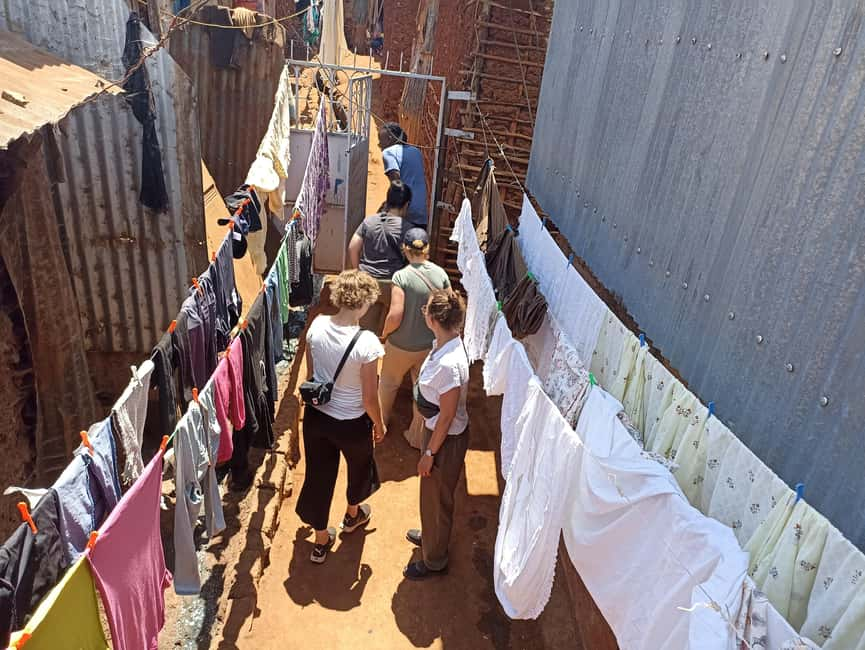
Kibera is not a sightseeing backdrop. It is home to more than 300,000 people in about three square kilometers, and this three-hour walk lets you meet the people who live and work there. Guide Luke, who grew up in Kibera, brings you into places you would not find on your own, from a family home to a children’s center and an art workshop.
I like two things right away: the local connection and the clear community purpose. Luke and guides such as Samuel, Victor, and Clement know the streets and the people, while 30 percent of the tour revenue supports a children’s home and school supplies. The possible drawback is that visiting homes, children, and vulnerable residents can feel uncomfortable if you expect a light tourist outing. You need humility, good questions, and permission before taking photographs.
Key points to know before you book

- A local guide leads the way: Luke was born and raised in Kibera and explains daily life from personal experience.
- The route takes about three hours: It includes a market, children’s home, school, art gallery, home visit, viewpoint, and recycling workshop.
- Thirty percent goes back to local support: Funds help a children’s home and school with food, stationery, and other supplies.
- The tour shows both hardship and enterprise: You see problems with housing, water, electricity, waste, health, and employment, but also art, trade, education, and recycling.
- The walking route is personal: You may meet Luke’s family, speak with residents, and see a small 4-by-4-meter home.
- The meeting point is simple: Start at Greenhouse Mall near Adams Arcade, off Ngong Road. The tour ends at Olympic Estate, where you arrange your next taxi.
Why this Kibera walk is different

Many city tours keep you at a distance. This one takes you into Kibera with someone who grew up there and still has family and social ties in the area. That changes the tone. Luke is not simply pointing out buildings. He explains how people find work, manage limited space, send children to school, handle waste, and support one another.
The tour also avoids presenting Kibera as only a place of poverty. You will see serious problems, but you will also see small businesses, artists, teachers, craftspeople, families, and children going about ordinary routines. That balance matters. A short visit cannot explain every part of Kibera, but it can correct the flat picture many outsiders have of the community.
The route is scheduled for a maximum of three hours. That is enough time for several stops without turning the visit into an exhausting full-day outing. It is still a walking tour through uneven, crowded streets, so wear practical shoes and expect the pace and order of stops to change slightly.
More Village Tours in Kenya
- Nairobi: Explore Kibera Slum with Local Guides
★ 4.9 · 365 reviews - Masai village Day Tour Experience
★ 5.0 · 284 reviews - Kevins Kibera Slum Tours
★ 5.0 · 213 reviews
Meeting Luke at Greenhouse Mall
The meeting point is the entrance of Greenhouse Mall, near the security checkpoint, at Adams Arcade off Ngong Road. This is a useful place to begin because you can meet your guide in a clear public setting and contact him by WhatsApp before the tour.
Luke has a reputation for quick communication and for explaining the plan before setting off. That small briefing helps you understand what will happen and gives you a chance to discuss questions, interests, or concerns. The tour is advertised with flexible scheduling, so contact with the guide matters.
Some tours use Luke alone. Others may include a local friend or colleague such as Samuel, Victor, or Clement. The extra guide can be helpful when a group needs more attention, but the main value remains the local connection and the personal explanation of Kibera.
Toi Market and the local economy

The first major stop is Toi Market, described as Nairobi’s second-largest open-air market. It is a place where many Kibera residents shop for second-hand clothing and other goods. The clothing comes from places including Europe, the United Kingdom, the United States, and China.
This stop gives you an early lesson in how local commerce works. You are not just looking at stalls. You are seeing a market that serves the neighborhood and supports sellers, buyers, and transport workers. The market can also be busy, so keep your belongings secure and stay close to your guide.
If you want to buy something, you can. Purchases are not included in the tour price, and buying from local makers or vendors can add a direct economic benefit. Still, do not feel you must shop. The better approach is to ask questions, listen, and buy only when you genuinely want the item.
A children’s home and the hard part of the visit

The children’s home supports needy and vulnerable children with food, shelter, and education. Some children are orphans, while others were rescued from the streets. The visit can be emotionally strong, especially when you hear about the work of caregivers such as Mama Paschalia, who looks after a group of children.
This is one of the stops where your conduct matters most. You are entering a place that serves children, not a performance staged for sightseeing. Ask before taking photographs, avoid treating children as photo subjects, and let the guide explain what is appropriate.
You may choose to bring useful items such as stationery or food, but it is best to discuss this with Luke before arriving. One visitor brought maize flour, stationery, fruit, and cookies. That kind of help can be welcome, but unplanned gifts can create awkwardness or unequal treatment among children.
The tour states that 30 percent of revenue supports a children’s home and a local school, including stationery and other school items. That gives the $40 price more purpose than a normal guided walk, though you should still see the payment as a tour fee rather than a substitute for careful charitable giving.
More Village Tours in Nairobi
- Nairobi: Kibera Slum storytelling tour with a Local
★ 5.0 · 185 reviews
Uweza Art Gallery and Kibera’s creative side
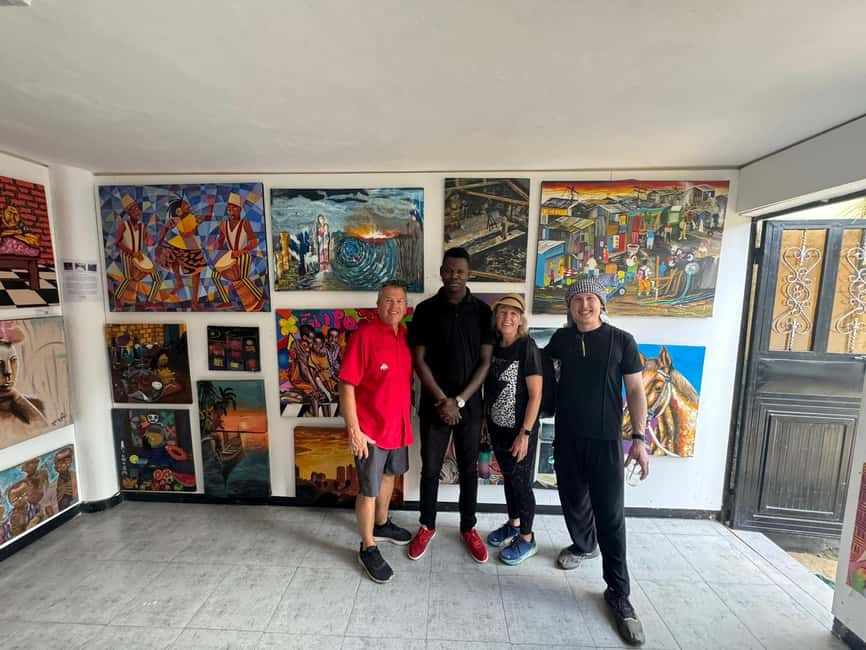
Uweza Art Gallery provides a platform for children and artists from Kibera. The art shown here gives you a different way to understand the neighborhood. Instead of only hearing about need, you see people expressing ideas, memories, humor, and ambition through paintings and other work.
Luke explains the meaning behind the pieces and the role the art center plays in supporting local talent. If you are interested in art, this may become one of the strongest stops. It also offers a quieter pause after the market and before more walking.
You may be able to purchase artwork, but products are not included in the tour price. Ask about prices and where the money goes before buying. The point is not to collect souvenirs at every stop. It is to understand how creative work can offer both income and a public voice.
The Kibera viewpoint near the railway line

Near Kibera Town Centre, the route reaches an elevated viewpoint close to the old Kenya-Uganda Railway line. From here, you see part of the settlement from above.
The view helps you grasp Kibera’s size and density in a way that street-level walking cannot. It is also a useful moment to ask Luke about the settlement’s origins, growth, and relationship to Nairobi. The tour presents Kibera as Africa’s largest slum, while also showing that it is a functioning community rather than an empty symbol of hardship.
Keep your expectations realistic. This is a view of one section, not a complete survey of Kibera. The value lies in combining the wider view with the close-up stories you have already heard.
Entering a local home
A local home visit offers one of the most specific details of the tour: you may see how a family arranges a roughly 4-by-4-meter house. That small space makes the challenges of housing and privacy much easier to understand than statistics alone.
Some tours include a visit to Luke’s family home, where you may meet his parents. This can feel unusually personal, and it helps place the guide’s story within an actual family setting. You are not hearing about Kibera from someone passing through. You are meeting a person whose own life is tied to the community.
This is also the point where courtesy matters. Follow the guide’s lead, ask before touching anything, and avoid judging the household by standards that do not fit the setting. The visit is brief, but it can be one of the most memorable parts of the morning.
Fairview Academy and education under pressure
Fairview Academy is a local school in Kibera. The stop shows children studying despite limited resources and difficult conditions. It also connects directly to the tour’s stated community support, since part of the revenue helps provide stationery and other school items.
A school visit can be more useful than a general talk about education because you see the setting where learning takes place. Ask Luke about access, resources, and the daily challenges facing families. The tour does not promise a full study of Kenya’s education system, but it does give you a grounded example.
Be respectful around pupils and staff. A school is a working place, not a photo set. The guide can tell you when pictures or conversation are suitable.
Victorious Bone Craft Workshop

At Victorious Bone Craft, local artisans recycle cow bones, cow horn, used brass padlocks, and camel bone into ornaments. The workshop links employment with environmental work by keeping materials out of the waste stream.
This is a smart final stop because it shows practical problem-solving. People are not only coping with poor conditions. They are finding ways to turn discarded materials into saleable goods and jobs.
You can purchase products if you wish, but you are not pressured to do so. One useful tip is to bring some Kenyan cash if you plan to support local makers. The starting mall has places to buy snacks, water, or withdraw money, which makes it easier to prepare before walking.
Safety, comfort, and the ethics of visiting
The strongest practical point is to go with a local guide rather than attempt to wander through Kibera alone. Luke knows the area, introduces you to people he trusts, and helps you avoid unwanted attention. Several routes include a second guide, which can provide additional support.
That does not mean you should switch off your common sense. Keep valuables discreet, follow the guide’s directions, and ask before photographing people. Dress simply and comfortably. The walk is social and interactive, but it remains a visit to people’s homes, workplaces, and community spaces.
You may feel conflicted about slum tourism. That concern is reasonable. The best way to handle it is to avoid gawking, listen more than you speak, and choose a tour with a clear local benefit. Here, the stated 30 percent contribution and the use of a local-born guide make the purpose more direct, though no three-hour tour can represent every resident’s experience.
What the $40 price delivers
At $40 per person, the price includes the guide, bottled water, the market, children’s home, local house, art center, recycling workshop, school, and Kibera viewpoint. Transport to and from the starting point is not listed as included, and purchases are extra.
For value, this is stronger than a short walk that only points out streets. You receive several distinct visits and a guide who can explain the area through lived experience. The fee also supports local initiatives according to the tour’s stated arrangement.
The best value comes when you treat the tour as a cultural and social visit, not as a checklist. If you only want photographs from a viewpoint, you can spend less elsewhere. If you want personal contact, context, and a chance to support local work, the price is reasonable.
The tour ends at Olympic Estate, where you arrange an Uber or Bolt for your next destination. Build that into your timing. The official meeting information also describes the activity as ending back at the meeting point, so confirm the final drop-off details with Luke when booking.
Who should book this experience
I would choose this tour if you want to understand Nairobi beyond museums, shopping, and safari connections. It suits adults, older children, students of development or social studies, solo visitors, and anyone interested in local enterprise.
It is not suitable for children under seven, babies under one, or people over 95. The walking and subject matter may also be a poor fit for anyone who wants a relaxed sightseeing outing with little emotional weight.
English and Swahili are available. The guide can adjust the conversation and, within reason, the route. If you want extra time at the art center, school, family home, or children’s home, say so in advance.
FAQ
How long does the Kibera tour last?
The tour is scheduled for a maximum of three hours.
Where does the tour start?
Meet at the entrance of Greenhouse Mall, off Ngong Road at Adams Arcade, near the security checkpoint. You should contact the guide through WhatsApp.
Where does the tour end?
The stated final stop is Olympic Estate, where you can arrange an Uber or Bolt. The meeting information also says the activity ends back at the meeting point, so confirm the return details with the guide.
What is included in the $40 price?
The price includes the guide, bottled water, Toi Market, a children’s home, a local house, Uweza Foundation Art Centre, Victorious Bone Craft, Fairview Academy, and the Kibera viewpoint.
Is the tour available in English?
Yes. The available languages are English and Swahili.
Is this tour suitable for young children?
No. It is not suitable for children under seven or babies under one year. It is also not suitable for people over 95.
Should you book the Kibera walk?
Book it if you want a direct, human look at Kibera and are ready to approach the visit with respect. Luke’s local ties, the family visit, the school and children’s home, and the small businesses make this more than a street walk.
Skip it if you want a polished sightseeing product or feel uncomfortable entering community spaces. For everyone else, the $40 fee buys a personal three-hour introduction and sends a stated share back to local support. Bring curiosity, modest expectations, and permission before taking photos. That is the right way to meet Kibera.
Just added for Nairobi
- Nairobi: National Park, Elephant Orphanage & Giraffe Center★ 4.5 · 113 reviews
- Nairobi: National Park, Elephant Orphanage & Giraffe Center★ 4.6 · 81 reviews
- Nairobi Walking tour:Explore History Culture and Traditions★ 4.8 · 222 reviews
- Nairobi: Elephant Sanctuary and Giraffe Center Day Tour★ 4.8 · 148 reviews
- Nairobi Downtown Walking Tour★ 4.7 · 208 reviews
- Nairobi: Kibera Slum storytelling tour with a Local★ 5.0 · 185 reviews
- Kevins Kibera Slum Tours★ 5.0 · 213 reviews
- Nairobi National Park Full or Half-Day Tour with Guide★ 4.7 · 217 reviews
Township & Village Tours, compared.

Berber villages : Atlas Mountains Day Hike from Marrakech
Read our review →
Atlas Mountains, Berber Villages and Three Valleys all inclusive
Read our review →
Quad Bike, Buggy, and Camel Ride & Bedouin Village
Read our review →
Atlas Mountains, Berber Villages, Agafay & Camel Ride
Read our review →
Paragliding, Camel Ride & Berber Villages Trip
Read our review →
Atlas Mountains and Three Valleys & Waterfalls – Villages Marrakech Day Trip
Read our review →
Agafay Desert & Berber villages & Atlas Mountains, Full Day Trip From Marrakech
Read our review →Browse the lists this tour appears in