Reviewed · TOWNSHIP & VILLAGE TOURS
Johannesburg: Soweto Half-Day Tour
Soweto is not a single attraction. It is a huge township with streets, schools, churches, markets, memorials, formal homes, and informal settlements. This five-hour tour gives you a quick but meaningful way to see several sides of it, from Vilakazi Street and Mandela House to the Hector Pieterson Museum and a local settlement.
I like the way the tour joins famous South African history to daily life. I also like the local guides, including Mark, Thapelo, Sello, Lebo, and others, who explain what you are seeing instead of simply pointing at buildings. The main drawback is time: five hours can feel tight, especially if you want to linger at the museum or buy a separate ticket for Mandela House.
Key points at a glance
- Vilakazi Street: See the former home of Nelson Mandela and the home of Archbishop Desmond Tutu on the same famous street.
- Hector Pieterson Museum: Learn about the June 16, 1976, student uprising and its lasting effect on South Africa.
- Local Soweto life: Walk through Diepkloof, pass market stalls, and visit an informal settlement with a local guide.
- Useful inclusions: Johannesburg pickup, vehicle transfers, WiFi, Hector Pieterson Museum, and Regina Mundi Church are covered.
- Extra cost to plan for: Entry to the Nelson Mandela House Museum is not included.
- Best reason to book: You get history, local context, and an overview of Soweto in half a day.
Why this half-day Soweto tour works

I see this tour as an introduction rather than a full study of Soweto. It gives you a broad view in a limited time, which is useful if Johannesburg is one stop on a longer South Africa trip or if you have only a free morning or afternoon.
The route is also more thoughtful than a simple drive-by sightseeing trip. You spend time on foot in Diepkloof, visit the Hector Pieterson Museum, enter Regina Mundi Church, and go into an informal settlement. Those stops help connect major political events with the ordinary places where people lived, worked, worshipped, and protested.
The guides are a major part of the experience. Mark is praised for being kind and accommodating, while Thapelo is known for clear explanations and a friendly manner. Sello, Lebo, William, Carson, and other guides have also led strong tours. Your exact guide will vary, but the tour depends on having someone who can explain local history with care and answer questions as you go.
The overall rating is 4.7 from 196 reviews, and the praise is unusually consistent about the guides, clear timing, and educational value. That does not mean every part will suit every person. Some visitors feel uncomfortable when visiting very poor areas, and the short schedule can make the day feel hurried.
More Day Trips in Johannesburg & Pretoria
- Soweto /Johannesburg and Apartheid Museum Guided Full Day Tour
★ 5.0 · 932 reviews - Half-Day Tour of Soweto Tour
★ 4.5 · 712 reviews - Johannesburg: Full-Day Tour with Soweto and Apartheid Museum
★ 4.8 · 478 reviews
From Johannesburg to Soweto by road
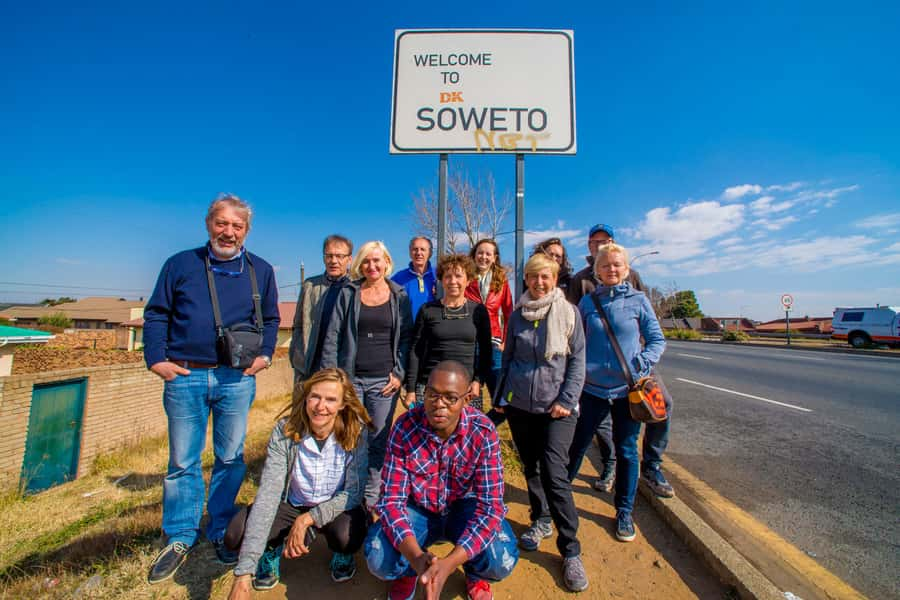
Pickup is available from your Johannesburg accommodation, and the tour begins with a short briefing before you set off. The vehicle transfer to Soweto takes about 45 minutes, depending on traffic and the pickup route.
On the way, you pass the National Football Stadium, used for the opening and closing ceremonies of the 2010 World Cup. It is a useful first marker because it shows the sharp change from Johannesburg’s major event venues to the township areas beyond them.
The drive is not wasted time. Your guide can set out the basic story of Soweto, explain the meaning of its name, and prepare you for the stops ahead. Carson, for example, has been praised for talking through upcoming places before arrival, which makes the museum and memorial sites easier to understand.
Bring questions. This is one of those tours where the value depends partly on conversation. A good guide can explain the difference between a memorial, a political landmark, a church, and an ordinary neighborhood instead of treating them all as photo stops.
Diepkloof, market stalls, and the first walk
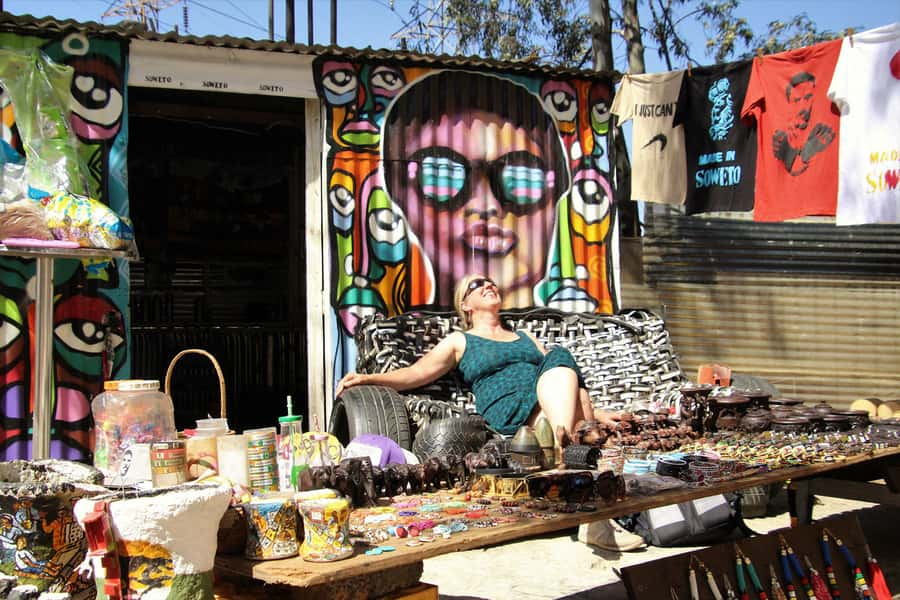
The first substantial stop is Diepkloof, where you walk for about 30 minutes. The route takes you past vendors selling a wide range of goods, giving you a glimpse of commerce in the township.
This is a modest stop, but I like it because it shifts the focus away from famous names. You see Soweto as a lived-in place rather than only as the setting for major events. The walk also gives you a chance to stretch your legs after the drive.
Do not expect a long market visit or a guided shopping session. The time is limited, and the purpose is to observe the neighborhood and hear from your guide. Personal purchases are not included, so carry money only if you want to buy something.
The tour description includes free onboard uncapped WiFi, which is handy during the longer drives. It is less important once you are walking, but useful for checking messages or sharing photos between stops.
Vilakazi Street and two Nobel-era homes

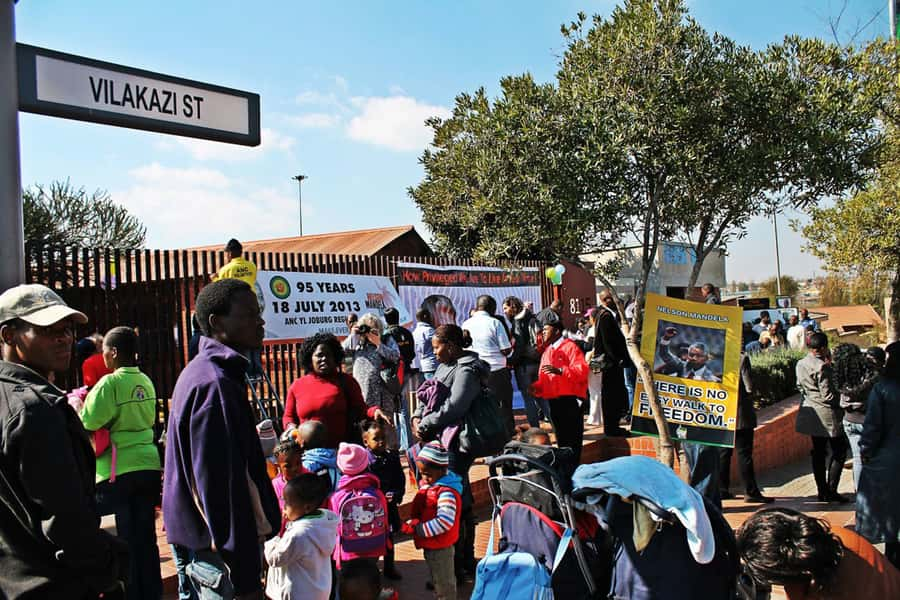
Orlando West brings you to Vilakazi Street, the best-known address on the route. You drive past the former home of Nelson Mandela and the current home of Archbishop Emeritus Desmond Tutu. Winnie Madikizela-Mandela’s former home is also part of the sightseeing.
Vilakazi Street has unusual historical weight. It is widely known as the street associated with two Nobel Peace Prize winners, Mandela and Tutu. Your guide explains the people and events connected with the houses, so the street becomes more than a collection of famous addresses.
You can take photographs from outside, and guides often help with pictures. One solo visitor specifically appreciated being offered help with photos, a small service that matters when you are traveling alone.
The tour includes a view of Mandela House, but entry to the Nelson Mandela House Museum costs extra and is paid locally. This distinction matters. If you want to go inside, allow both extra money and extra time. The museum can add depth, but choosing it may make the already tight schedule feel faster elsewhere.
If Mandela’s life is your main reason for visiting Soweto, you may prefer a tour that gives the house more time. If you want a wider introduction to the township, the outside view is a reasonable compromise.
More Day Trips in South Africa
- Johannesburg and Soweto: Half-Day Tour
★ 4.8 · 439 reviews - From Johannesburg: Lion & Safari Park Half-Day Tour
★ 4.6 · 384 reviews - Johannesburg and Soweto Apartheid Full Day Tour w/Lunch
★ 4.9 · 219 reviews - Johannesburg: Soweto & Apartheid Museum Half-Day Tour
★ 4.9 · 99 reviews
Hector Pieterson Museum and June 16, 1976
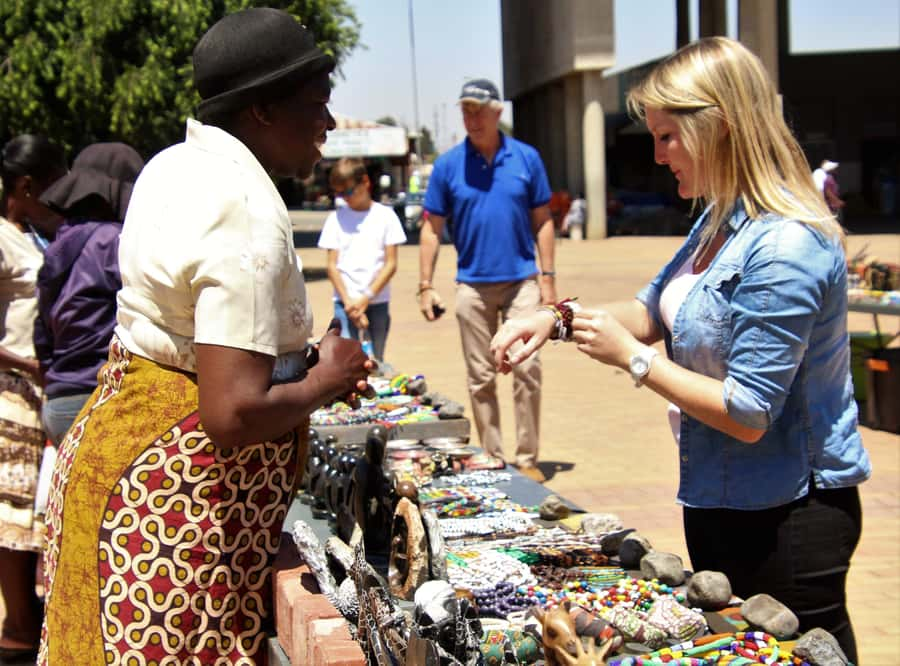
The Hector Pieterson Museum is one of the most important stops. Admission is included, unlike Mandela House, and the visit focuses on the Soweto uprising of June 16, 1976.
The museum recalls the student protests against the apartheid government’s education policies and the death of Hector Pieterson, whose image became a symbol of the struggle. This is a serious and emotional part of the tour. The point is not to rush through a list of dates, but to understand how young people helped push South Africa toward change.
A good guide makes a real difference here. Several guides have been praised for explaining the background before entering, which helps you read the exhibits with more context. The museum may be difficult emotionally, but that is also why it matters. You are not looking at distant history. The events took place within living memory and still shape how South Africans understand their country.
The schedule gives roughly an hour to Vilakazi Street and about 45 minutes for later sightseeing, but exact time at each location can shift. If the museum is especially important to you, ask your guide early how much time you will have inside.
One practical warning: another Johannesburg attraction, the Apartheid Museum, is not part of this Soweto tour. If you want to visit it too, arrange it separately and check opening dates. A holiday closure once prevented a visitor from adding that museum, but the Soweto tour itself remained worthwhile.
Regina Mundi Church and the role of faith
Regina Mundi Church is included in the tour. The church has a place in Soweto’s political and social story, and your guide explains why it mattered during the apartheid years.
This stop adds a different angle to the museum and street visits. You are not only following protests and political leaders. You are also seeing a place where community life and public action met.
The church is especially useful for anyone who wants more than a quick photograph of Mandela’s former home. Its meaning comes from the explanation, so listen closely and ask questions. The stop is not likely to be the longest part of the tour, but it broadens the story.
Entering an informal settlement
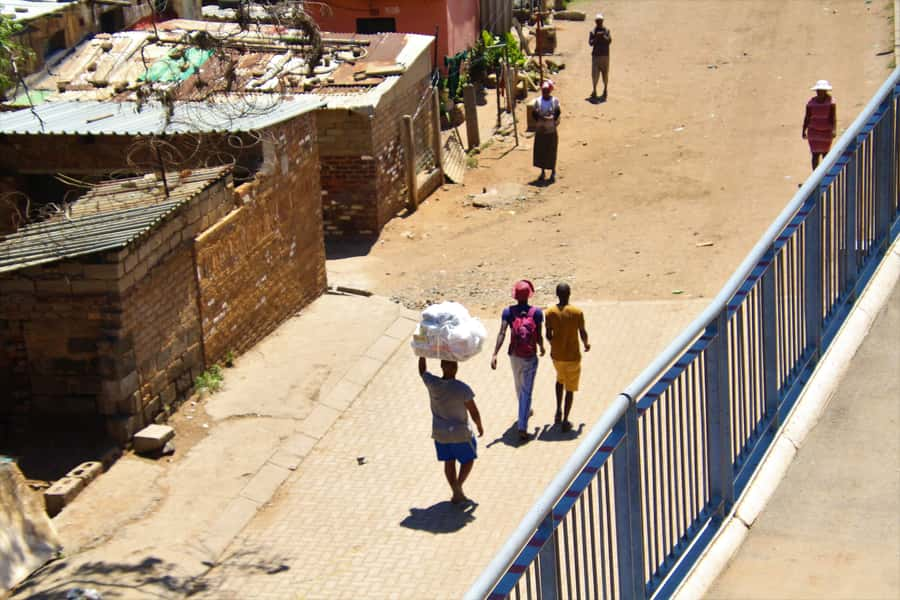
The most sensitive part of the tour is the visit to an informal settlement. Here you see a poorer side of Soweto and interact with local residents. The stated aim is to help you understand housing conditions and daily life, not just the better-known streets of Orlando West.
I think this can be valuable when approached with humility. You will see conditions that may be difficult, and you may hear about efforts to improve life for children, women, and young people. Some tours have also included contact with a local daycare or youth program, though the exact visit can vary.
At the same time, you should think about the ethics of this stop before booking. One visitor felt uneasy about entering very poor areas and worried that the visit could feel intrusive. That is a fair concern. You should never treat someone’s home or hardship as a photo prop. Follow your guide’s instructions, ask before taking pictures, and respect anyone who does not want to talk.
You may also want small cash for personal purchases or tips, although it is not required. One past visitor felt uncertain about whether money was expected. The simplest approach is to ask your guide directly and avoid handing out sweets or gifts unless the guide says it is appropriate. Older advice to bring sweets, paper, or pencils for children should be treated carefully, since giving items to children can create awkward expectations.
Cooling towers, the university, and Baragwanath
The later drive takes in the Soweto cooling towers, the Soweto Campus of the University of Johannesburg, and the Chris Hani Baragwanath Hospital area. You also pass the Baragwanath Taxi Rank.
These are not all formal walk-around stops. They are part of the wider view from the vehicle, so you should think of them as markers that help you understand the scale and structure of Soweto.
The cooling towers are particularly easy to recognize and make useful photographs when the vehicle stops safely. The taxi rank and hospital show the practical side of the township, where transport, health care, education, and work connect large numbers of people.
Chris Hani Baragwanath Hospital is described as the largest hospital in the world. The view from the road does not replace a hospital tour, but it gives you a sense of the scale of the institution and its importance to the region.
Some people would gladly trade one of the drive-by sights for more time at the museum or in the informal settlement. That is the central compromise of this experience: you see a lot, but not every place receives a long visit.
What $74 buys you

At $74 per person, this is not the cheapest way to see Soweto, but the price is reasonable if you value hotel pickup, a five-hour guided route, several entry points, and transport between widely separated areas.
The package includes a comfortable vehicle, Johannesburg pickup, English-speaking live guidance, Hector Pieterson Museum admission, Regina Mundi Church, Vilakazi Street, views of Mandela, Tutu, and Winnie Mandela’s homes, the informal settlement visit, cooling towers, Baragwanath Hospital, and onboard WiFi.
Food and personal purchases are not included. The Nelson Mandela House Museum also costs extra. Budget for those separately if they matter to you.
The value is strongest for first-time visitors who want context without arranging several separate rides. It is less strong for people who prefer a slow, private tour with long stops and plenty of time for photography.
The tour is wheelchair accessible, and pickup is included from Johannesburg accommodation. Cancellation is free up to 24 hours before departure, and you can reserve now and pay later, which helps if your schedule is still changing.
Time, pace, and guide quality
Five hours sounds generous until you count hotel pickups, the 45-minute ride each way, a 30-minute walk in Diepkloof, Vilakazi Street, the museum, the church, and the settlement visit. In practice, this is a brisk overview.
Most guides receive praise for being punctual, friendly, attentive, and clear. A few names that have received especially warm feedback include Mark, Thapelo, Sello, Lebo, William, Carson, Patience, Tshepo, Thabang, and Stanley. You cannot select a particular guide from the information provided, but the repeated strength of the guiding is a good reason to choose a guided visit rather than trying to piece together the route alone.
The tour can still be affected by traffic or local events. One group had its timing disrupted but found the guide flexible. I would avoid scheduling a tight airport connection immediately afterward.
Who should book it
I would choose this tour if you are staying in Johannesburg and want a clear first look at Soweto. It suits visitors interested in apartheid history, Nelson Mandela, local neighborhoods, and the connection between political events and ordinary life.
It also works well for solo visitors. The included pickup, transport, and guide make the day simple, and guides have helped solo participants with photographs and questions.
Families and older visitors may appreciate the vehicle transfers and the short walking sections, though the informal settlement and museum can be emotionally demanding. Anyone with limited mobility should confirm the exact walking arrangements despite the stated wheelchair accessibility.
I would look for a longer or more focused option if your priority is an extended visit inside Mandela House, long photography stops, or a private schedule. I would also skip it if you feel strongly that visits to poor communities can become intrusive. The tour can be handled respectfully, but your own comfort and boundaries matter.
Should you book the Soweto tour?
Yes, if you want a well-organized introduction to Soweto in half a day. The strongest reasons are the local guides, the Hector Pieterson Museum, Vilakazi Street, and the chance to see more than postcard history.
Go in ready for a serious experience, not a light sightseeing loop. The informal settlement visit may challenge you, the museum may move you, and the schedule may feel quick. At $74, the tour offers good value for a first visit, especially with Johannesburg pickup and several inclusions.
If you book, decide in advance whether you want to pay extra for Mandela House, ask about photography in the settlement, and keep your afternoon free enough to allow for traffic. That small preparation will help you get more from the day.
FAQ
How long is the Soweto tour?
The tour lasts five hours, including the transfers between Johannesburg and Soweto.
Where does pickup take place?
Pickup is available from your accommodation in Johannesburg.
Is transport included?
Yes. Transfers are provided in a comfortable vehicle.
What language is the tour conducted in?
The live tour guide speaks English.
Is the tour wheelchair accessible?
Yes, the activity is listed as wheelchair accessible.
Is entry to the Hector Pieterson Museum included?
Yes. Admission to the Hector Pieterson Museum is included.
Is entry to Mandela House included?
No. Entry to the Nelson Mandela House Museum costs extra and is payable on arrival.
What places can you see on Vilakazi Street?
You can see the former home of Nelson Mandela, the home of Archbishop Emeritus Desmond Tutu, and the former home of Winnie Madikizela-Mandela.
Does the tour visit an informal settlement?
Yes. The route includes a visit to an informal settlement where you can interact with local residents.
Are food and personal purchases included?
No. Food and personal purchases are not included.
Is WiFi available during the tour?
Yes. Free onboard uncapped WiFi is included.
Can you cancel the tour?
Yes. You can cancel up to 24 hours before the activity for a full refund.
Can you reserve the tour without paying immediately?
Yes. The reserve now and pay later option lets you book without paying at the time of reservation.
More Village Tours in South Africa
- Soweto: Guided Bicycle Tour with Lunch
★ 4.9 · 292 reviews - Johannesburg: Maboneng Street Art & Culture Tour
★ 4.9 · 257 reviews - Soweto: Hop-On Hop-Off Bus, City Tour and Apartheid Museum
★ 4.5 · 250 reviews - Soweto: Bike Tour with a Local Tour Guide
★ 4.7 · 114 reviews
More Village Tours in Johannesburg & Pretoria
- Johannesburg: Hop-On Hop-Off Bus with Optional Soweto Tour
★ 4.6 · 985 reviews - Johannesburg Hop-On Hop-Off City Tour with Soweto Option
★ 4.5 · 768 reviews - Soweto: Walking Tour with a Local Guide and Lunch
★ 4.9 · 648 reviews - Jo’berg in 1 Day: Soweto, Apartheid Museum & City Tour
★ 4.8 · 524 reviews
Just added for Johannesburg & Pretoria
- Soweto: Bike Tour with a Local Tour Guide★ 4.7 · 114 reviews
- From Johannesburg: Lion & Safari Park Half-Day Tour★ 4.6 · 384 reviews
- Johannesburg: Street Art and Culture in Maboneng!★ 4.8 · 107 reviews
- Johannesburg: Maboneng Street Art & Culture Tour★ 4.9 · 257 reviews
- Johannesburg: Soweto & Apartheid Museum Half-Day Tour★ 4.9 · 99 reviews
- Johannesburg: Soweto Apartheid & Township Tour with Lunch★ 4.8 · 80 reviews
- Johannesburg and Soweto Apartheid Full Day Tour w/Lunch★ 4.9 · 219 reviews
- Johannesburg: City Centre Walking Tour★ 4.8 · 152 reviews
Township & Village Tours, compared.

Berber villages : Atlas Mountains Day Hike from Marrakech
Read our review →
Atlas Mountains, Berber Villages and Three Valleys all inclusive
Read our review →
Quad Bike, Buggy, and Camel Ride & Bedouin Village
Read our review →
Atlas Mountains, Berber Villages, Agafay & Camel Ride
Read our review →
Paragliding, Camel Ride & Berber Villages Trip
Read our review →

Atlas Mountains and Three Valleys & Waterfalls – Villages Marrakech Day Trip
Read our review →