

Reviewed · TOWNSHIP & VILLAGE TOURS
Nairobi: Kibera Slum storytelling tour with a Local
Kibera is not a polished sightseeing stop. It is a working neighborhood of narrow lanes, small homes, markets, workshops, schools, and busy daily routines. The best part of this three-hour private walk is having a guide who grew up in the area and can explain what you are seeing without turning people’s lives into a show.
I like the direct community connection, especially the visit to a local home and the school supported by tour income. I also like the care taken with safety and the chance to see projects led by residents, including women’s groups and artists using recycled materials. The main consideration is simple: this is a physically demanding walk through uneven, crowded lanes, and the subject matter can be emotionally heavy.
Key points before you book

- Local guides with personal roots: Elijah, Peter, Effie, and Lucas are among the guides who explain Kibera from lived experience.
- A school visit with a clear local purpose: Part of the tour income supports a Kibera school and teacher salaries.
- Toi Market adds daily energy: You will see one of Kibera’s main shopping areas and may have chances to buy local crafts.
- A home visit makes the tour personal: You may be invited inside a resident’s home to see how families live.
- Private groups keep the walk flexible: Only your own group takes part, making it easier to ask questions.
- Dress for a rough walking route: Wear practical clothes and shoes you do not mind getting dusty or dirty.
Why a Kibera walk is different from ordinary Nairobi sightseeing
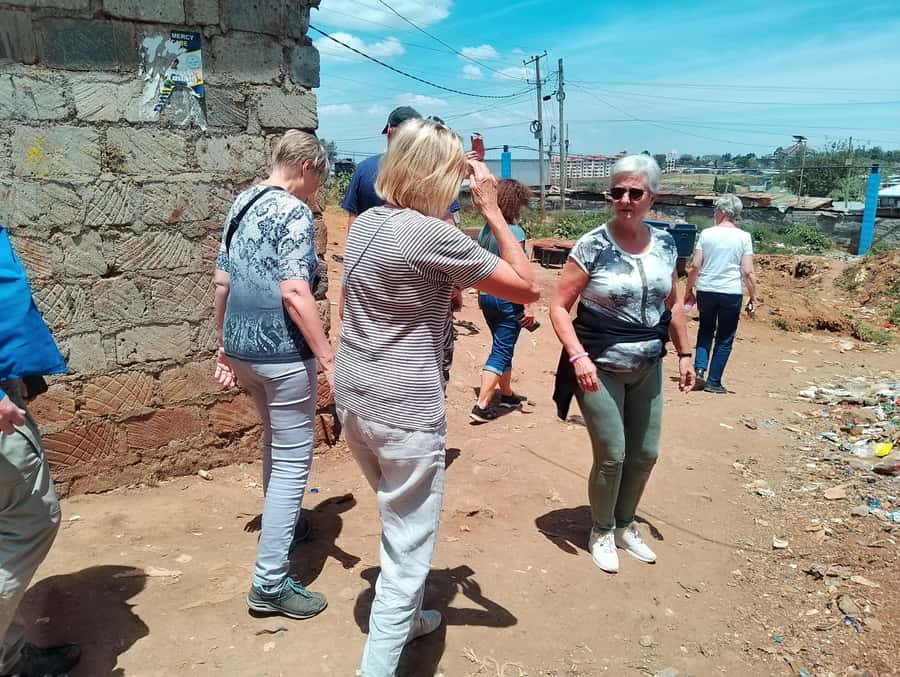
Many Nairobi tours keep you at a comfortable distance from the city’s harder realities. This one asks you to walk through them, with a local guide explaining the setting as you go. That makes the outing more confronting, but also more useful if you want to understand how people build ordinary lives in difficult conditions.
Kibera is often described as East Africa’s largest informal settlement. The tour does not reduce it to poverty statistics. Instead, you see homes, shops, schools, market stalls, public facilities, creative workshops, and community groups. The picture is difficult, but it is not one-dimensional.
I appreciate that the focus is on resilience and local initiative. The guides explain how residents respond to limited resources through education, small businesses, art, recycling, women’s groups, and mutual support. You are likely to leave with a more grounded view of Nairobi, not simply a list of dramatic images.
Still, you should think carefully about your reasons for going. A slum tour can feel uncomfortable if you are looking for light entertainment or easy photographs. The respectful approach here helps, but you are still entering people’s homes and neighborhoods. Listen first, ask before taking pictures, and follow your guide’s lead.
More Village Tours in Kenya
- Nairobi: Explore Kibera Slum with Local Guides
★ 4.9 · 365 reviews - Masai village Day Tour Experience
★ 5.0 · 284 reviews - Kevins Kibera Slum Tours
★ 5.0 · 213 reviews
Meeting at Greenhouse Mall in Kilimani
The tour begins at the entrance of Greenhouse Mall in Kilimani. If you arrive early, a bench near the ground-floor fountain provides a waiting spot. This is a practical meeting point, but allow enough time to find the entrance and get settled before the walk begins.
The tour is listed at $20 per group up to one person. Because the price wording is unusual for a private activity, check the final booking total for your party before paying. At that rate, the value is strong if you want a private guide and a locally led visit rather than a large group outing.
The walk lasts about three hours, though one account describes a visit lasting roughly three and a half hours. Build in a little flexibility. Depending on the pace of your group, conversations, shopping stops, and the time spent at the school or home, the finish may not be exact to the minute.
The live guide speaks English. Audio support is listed in French, Spanish, German, and Chinese. Since the most valuable parts rely on personal stories and conversation, I would still confirm how the audio option works if you do not speak English comfortably.
Entering Kibera through narrow lanes

Once you reach Kibera, the polished city setting gives way to unmarked streets and tight alleys. Your guide leads rather than handing you a map. That matters here, since the route can be confusing and the point is to observe daily life rather than rush from one fixed monument to another.
Expect a lot of walking. The route may include market paths, residential lanes, public facilities, a railway area, a river, a garbage collection point, and a viewpoint, depending on the day’s plan. These details help explain how the settlement functions, but they also mean you should wear sturdy, comfortable footwear.
A local guide changes the tone of the visit. Elijah, Peter, Effie, Lucas, and other members of the team have been described as calm, patient, and closely connected to the area. Elijah has shared stories about his own childhood and family. Peter has shown his home and, in some cases, helped people arrange their ride afterward.
That personal link is the heart of the tour. You are not simply looking at buildings from a distance. You can ask how people manage everyday needs, how local groups organize support, and how residents view the future. The strongest guides explain hard facts while treating the people around them with dignity.
Toi Market and local buying opportunities

Toi Market is described as the largest market in Kibera. This is one of the more social parts of the route, with stalls and people moving through the area as they shop, work, and meet one another.
The market gives you a better sense of Kibera as a place where people earn money and solve practical problems. It is not only a backdrop for photographs. You may see clothing, food, household goods, and handmade items, though the precise stalls and products can change.
The tour may also include stops with local artists, craft workers, and youth groups. Some use recycled materials to make jewelry or art. A women’s group has been described as supporting HIV-positive women through handmade clothing and jewelry. Buying something is optional, but a small purchase can direct money toward local makers and community projects.
Bring Kenyan shillings if you hope to shop. The tour price does not list shopping money as included. Ask before taking close-up photographs, especially around market sellers and craftspeople. Your guide can help you handle these encounters politely.
More Village Tours in Nairobi
- Nairobi: Kibera Slum Tour with Local Social Entrepreneurs
★ 5.0 · 107 reviews
Hope and Shine Kibera Centre and community projects

The Hope and Shine Kibera Centre is a community center offering education and support. It gives the tour a useful shift in focus. Instead of only seeing the pressure caused by poverty, you see people working on practical answers.
Other stops may include local initiatives connected with art, recycling, women’s empowerment, youth work, sanitation, or energy production. The exact selection can vary, but the general lesson is clear: Kibera residents are not waiting passively for outside help.
This is where the tour earns much of its value. You can see how small projects support skills, income, education, or dignity. The work may not solve every problem, but it shows local effort in a concrete way.
I also like that the guides talk about both the difficulties and the progress. You may see inadequate infrastructure and cramped living conditions, then visit a school or workshop run with care. Holding both realities together gives you a more honest understanding than either a bleak poverty narrative or a cheerful public-relations tour.
The school visit and what your ticket supports

A visit to a Kibera school is included. This is often the most affecting part of the outing, especially if children are present and classes are in session. The school is described as a project built and supported through the local guiding operation, with tour income helping fund education and teacher salaries.
One figure given by the operator is that 20 percent of ticket money goes to the local school. You should treat that as the stated contribution and ask the guide if you want to understand how funds are used at the time of your visit.
The school stop also helps explain why local guiding matters here. You are not only paying for someone to lead you through streets. You are helping support an ongoing local project, at least in part, while learning about the people connected with it.
You may meet children who are curious and welcoming. Some visitors bring sweets, biscuits, or small candy bags, and children are said to enjoy them. I would not treat gifts as an obligation, and you should ask your guide what is appropriate. A respectful visit matters more than handing out items.
Do not assume the school stop will feel like a staged attraction. It is a working place serving children. Keep your voice low, ask before photographing, and let the guide explain when it is suitable to interact.
Visiting a local home

The home visit is one of the tour’s most personal elements. You may be invited into the home of your guide or another resident and see the interior rather than only the outside of the settlement.
Several guides have welcomed visitors into their family homes. One visit included meeting Elijah’s mother, described as warm and hospitable. Peter has also shown his own house. These encounters can make the tour feel unusually human, but they require extra courtesy.
A home is not a museum. Ask permission before taking photographs, and do not assume every room or family member is part of the tour. If you feel unsure, let your guide set the boundaries.
The physical conditions may be confronting. That is part of the information the stop provides, but it is not the whole story. You also see family life, hospitality, and the ways people make a home with limited space and resources.
Safety, timing, and comfort

Safety is a major concern for many people considering this tour. The guides and organizer emphasize safety throughout the visit, and accounts describe people feeling secure even during afternoon tours that continued into darkness. That said, no city walk is risk-free.
Stay close to your guide, follow instructions, and keep valuables out of sight. Avoid displaying expensive cameras or jewelry. Since this is a private group, you can raise concerns directly and adjust the pace if needed.
The tour requires good weather. If poor weather cancels it, you can choose another date or receive a full refund. A wet walk through narrow, uneven lanes would not be pleasant, so this policy makes practical sense.
The activity is not suitable for people with back or heart problems. The route involves extended walking and may be physically taxing. Smoking is not allowed.
Wear plain, washable clothes and shoes with good grip. You do not need to dress like you are preparing for a trek, but this is not the day for white sneakers or expensive clothing. Bring water, protect yourself from the sun, and carry only what you need.
How the private format affects the visit

The group is private, so only your party participates. I like this format for a place where questions and personal boundaries matter. You can pause to ask about something you have seen, spend longer at a craft project, or move on when a scene feels uncomfortable.
A private tour also lets the guide adapt the conversation. Families with children may need a different pace than a solo visitor. Someone interested in education can ask more about the school, while an art lover can spend more time with local makers.
The tradeoff is that the experience depends heavily on your particular guide. Names associated with the tour include Elijah, Peter, Effie, and Lucas. Their shared connection to Kibera is a major strength, but each may tell stories in a slightly different way and take a somewhat different route.
Clear communication before the tour helps. Lucas has been described as responsive and organized, and the team has handled late arrivals and last-minute bookings. Even so, arrive on time and confirm the exact meeting and finish details.
The written schedule lists Greenhouse Mall as the starting and return location, while the route description says the walking portion ends at Equity Bank Kibera. Confirm whether you will be escorted back to Greenhouse Mall or should arrange your own transport from Kibera.
Who will get the most from this tour
I would recommend this outing to you if you want a serious look at Nairobi beyond standard attractions. It suits people who value local voices, social context, education projects, and direct conversation.
It is also a good choice for families with older children or teenagers who can listen respectfully and manage the walking. One visitor took a daughter and felt safe throughout, but the emotional subject matter may not suit very young children.
You may not enjoy it if you dislike uneven walking, crowded lanes, poverty-focused tourism, or being photographed around ordinary homes and businesses. The tour is respectful in its stated approach, but it cannot remove the discomfort of seeing difficult living conditions.
The best attitude is curiosity without pity. Ask thoughtful questions. Buy from local makers if something appeals to you. Let residents remain people with work, humor, ambition, and family life, not just subjects for pictures.
Should you book the Kibera storytelling tour?
I would book it if you want one of Nairobi’s most direct community-based experiences and are ready to walk, listen, and accept some discomfort. The combination of local guides, a school visit, Toi Market, community projects, and a home visit gives you much more context than a quick drive past Kibera.
The strongest reasons to choose it are the guides’ personal connection to the area and the stated contribution to the school. The main reasons to pause are the physical demands, the emotional weight, and the need to behave carefully in a residential community.
At $20 per group up to one person, it offers good value for a private three-hour visit, provided the final group pricing suits your party. Book with realistic expectations, wear practical clothes, carry modest belongings, and confirm the return arrangement. If that sounds right for you, this is a meaningful way to see another side of Nairobi and support a locally led project at the same time.
FAQ
Where does the Kibera tour begin?
Meet your guide at the entrance of Greenhouse Mall in Kilimani. If you arrive early, you can wait on a bench near the fountain on the ground floor.
How long does the tour last?
The scheduled duration is three hours. Some visits may run slightly longer, so allow extra time if your plans afterward are fixed.
Is this a private tour?
Yes. Only your own group participates in the activity.
Which language does the live guide speak?
The live tour guide speaks English. Audio guide support is listed in French, Spanish, German, and Chinese.
What places do you visit?
The route includes Kibera, Toi Market, the Hope and Shine Kibera Centre, a local school, and a resident’s home. Other community projects may also be included.
Does the tour include a school visit?
Yes. A visit to a Kibera school is included.
How does the tour support the local community?
The tour information states that 20 percent of ticket money goes to a local school. The school project supports education and teacher salaries.
What should I wear?
Wear comfortable clothes and practical walking shoes that you do not mind getting dusty or dirty. The route uses narrow, unmarked streets and alleys.
Can the tour be canceled because of weather?
Yes. The activity requires good weather. If poor weather causes cancellation, you can receive a full refund or choose another date.
More Tours with a Local in Nairobi
- From Tangier: Chefchaouen Day Trip with Local Guide
★ 4.8 · 3,287 reviews - Sal: Island Experience Tour with a Certified Local Guide
★ 4.8 · 3,249 reviews - Marrakech: Street Food Tour with a Local Guide
★ 4.9 · 3,119 reviews - Serengeti Balloon Safari and authentic bush breakfast
★ 5.0 · 2,480 reviews
Just added for Nairobi
- Nairobi: National Park, Elephant Orphanage & Giraffe Center★ 4.5 · 113 reviews
- Nairobi: National Park, Elephant Orphanage & Giraffe Center★ 4.6 · 81 reviews
- Nairobi Walking tour:Explore History Culture and Traditions★ 4.8 · 222 reviews
- Nairobi: Kibera Slum Tour with Local Social Entrepreneurs★ 5.0 · 107 reviews
- Nairobi Downtown Walking Tour★ 4.7 · 208 reviews
- Nairobi: Elephant Sanctuary and Giraffe Center Day Tour★ 4.8 · 148 reviews
- Kevins Kibera Slum Tours★ 5.0 · 213 reviews
- Nairobi National Park Full or Half-Day Tour with Guide★ 4.7 · 217 reviews
Township & Village Tours, compared.

Berber villages : Atlas Mountains Day Hike from Marrakech
Read our review →
Atlas Mountains, Berber Villages and Three Valleys all inclusive
Read our review →
Quad Bike, Buggy, and Camel Ride & Bedouin Village
Read our review →
Atlas Mountains, Berber Villages, Agafay & Camel Ride
Read our review →
Paragliding, Camel Ride & Berber Villages Trip
Read our review →
Atlas Mountains and Three Valleys & Waterfalls – Villages Marrakech Day Trip
Read our review →
Agafay Desert & Berber villages & Atlas Mountains, Full Day Trip From Marrakech
Read our review →Browse the lists this tour appears in