Reviewed · TOWNSHIP & VILLAGE TOURS
Soweto: Walking Tour with a Local Guide and Lunch
Soweto is best understood on foot, with a local voice to explain what you are seeing. This four-hour tour moves from the Hector Pieterson Memorial and the 1976 uprising to Mandela’s House, Vilakazi Street, an informal settlement, and the Soweto Towers. It gives you both famous landmarks and ordinary streets.
I like the personal storytelling from guides such as Maweza, who grew up in Soweto and links national events to daily life. I also like the mix of history, street food, local transport, and conversation with residents. The drawback is that this is a serious walking tour with some exposed time outdoors, and the lunch is simple rather than a full restaurant meal.
Key points to know before you book

- The 1976 uprising is the tour’s historical anchor: You walk along Moema Street after visiting the Hector Pieterson Memorial.
- Mandela’s House costs extra: You can enter for about 20 minutes, but admission is not included in the $43 price.
- You see more than the famous addresses: Nomzamo Park and Orlando East add a look at present-day Soweto.
- Lunch is local and uncomplicated: Expect street food, including kota-style food on some outings, with drinks sold separately.
- The guide makes the difference: Maweza is frequently named, while Teboho, Mulalo, and Thabo also lead tours.
- Bring comfortable shoes and cash: You will walk, ride a minibus taxi, and may want money for drinks, tips, or community support.
Why this Soweto walk is worth your time

Soweto is not a museum district. It is a large township with famous political landmarks, working neighborhoods, homes, shops, informal settlements, and a strong local identity. That mix can be hard to understand from a car window.
This tour gives you time to walk between important places and ask questions as the day unfolds. The guide explains apartheid, the student uprising, Nelson Mandela, Desmond Tutu, Winnie Mandela, and the township’s present-day life. The result is more personal than simply checking off historic addresses.
The strongest part is the connection between place and event. At the Hector Pieterson Memorial, you are not just hearing a date. You are near the streets where the 1976 student march took place. On Vilakazi Street, the houses of Mandela and Tutu show how one neighborhood became linked with two major figures in South Africa’s freedom struggle.
At the same time, the tour does not pretend that Soweto is only a place of historic heroes. The walk through Nomzamo Park brings attention to housing, income, and daily routines. That balance matters. Soweto is not frozen in its apartheid-era past.
More Tours with a Local in South Africa
- Soweto: Bike Tour with a Local Tour Guide
★ 4.7 · 114 reviews - Johannesburg: Half-Day Soweto Tour with a Local Guide
★ 4.8 · 110 reviews - Hike Table Mountain or Lions Head in Cape Town Like a Local
★ 5.0 · 266 reviews
Meeting at Vilakazi Espresso
The meeting point is in front of Vilakazi Espresso, opposite the Hector Pieterson Memorial. This is useful because the first major stop is close by, so you do not spend the opening part of the tour sitting in a vehicle.
Plan to arrive ready to walk. The tour lasts four hours, and the route includes streets, memorial sites, residential areas, and stops where you may stand outside in the sun or rain. Comfortable shoes matter more than smart clothes.
The tour operates rain or shine. Bring sunscreen, water, and a camera, although bottled water is included. Cash is also useful for drinks, tips, and any optional support you may wish to give to local performers or community members.
The guide speaks English, and an English audio guide is included. In practice, the live conversation is the key feature. Guides such as Maweza are known for answering questions, adapting explanations to the group, and sharing personal links to Soweto.
Hector Pieterson Memorial and the road of 1976

The first major stop is the Hector Pieterson Memorial, with about 20 minutes for a visit, guided explanation, photographs, and walking. This is the place to begin because it gives the tour its moral and historical center.
On June 16, 1976, students protested the forced use of Afrikaans in schools. The police response turned a student demonstration into a national turning point. Hector Pieterson, a 13-year-old student, became one of the best-known symbols of the violence after a photograph of his body was carried through the streets.
Your guide then takes you along Moema Street, following part of the route associated with the historic march. Walking here helps you picture the event in a way that a quick stop by vehicle cannot. The street itself is not a polished attraction, and that is part of the point. You are seeing an everyday setting connected to a major national event.
Expect the guide to spend time on context rather than rushing through a list of dates. The best explanations connect the uprising to apartheid schooling, language, police force, political resistance, and the later international response.
This section can feel heavy. If you want only cheerful sightseeing, this is not the right tour. If you want to understand why Soweto matters, it is essential.
Mandela’s House on Vilakazi Street

The walk continues to Vilakazi Street and Mandela’s House. Nelson Mandela lived here before his 27 years in prison, and the house is one of Soweto’s best-known historic addresses.
The tour allows roughly 20 to 25 minutes at the site. You may visit inside, but the entrance fee is not included. This is an important price detail because the advertised $43 does not cover every admission.
I would decide in advance if you want to go inside. The exterior and street are part of the guided visit, while the interior gives you a more focused look at Mandela’s domestic life and political story. With limited time, the visit is brief rather than a long museum session.
Vilakazi Street also helps correct a common misunderstanding. Soweto is not one uniform neighborhood. It includes different areas and social settings, and this street has a more established visitor infrastructure than the informal settlement later in the tour.
That contrast is useful. You begin with a famous address that attracts international interest, then move toward places where the focus is daily life rather than a single historical figure.
More Village Tours in Johannesburg & Pretoria
- Johannesburg: Hop-On Hop-Off Bus with Optional Soweto Tour
★ 4.6 · 985 reviews - Soweto /Johannesburg and Apartheid Museum Guided Full Day Tour
★ 5.0 · 932 reviews - Johannesburg Hop-On Hop-Off City Tour with Soweto Option
★ 4.5 · 768 reviews - Half-Day Tour of Soweto Tour
★ 4.5 · 712 reviews
Tutu House and the meaning of Vilakazi Street

A short stop follows at the former home of Desmond Tutu, usually about five minutes for photographs, explanation, and sightseeing. The house is close enough to Mandela’s House to make the connection clear: Vilakazi Street is associated with two Nobel Peace Prize winners.
The stop is brief, so do not expect an interior tour. Its value comes from the guide’s explanation of Tutu’s role and the unusual concentration of political history on one street.
I like this part because it prevents the tour from becoming only a Mandela visit. Tutu represents another strand of the struggle against apartheid, with a strong religious and public voice. A good guide can show how different leaders, methods, and communities contributed to the move toward democracy.
Local lunch on Vilakazi Street
Lunch comes at a local shop, with about 25 minutes for street food and tasting. This is not a long culinary event. It is a practical meal that lets you eat something associated with local everyday life.
The food can be simple. A kota, a South African-style filled bread roll, is served at some stops, while one account described the meal as a Soweto-style chip butty. A vegetarian option was available on at least one outing. Because the exact food may vary, you should not book this expecting a set menu or a formal restaurant lunch.
That simplicity is part of the experience. You are eating where local residents eat rather than stopping at an international chain. Still, I would like to see more choice clearly offered to every group. If you have dietary needs, ask the guide early.
Drinks are not included, so keep some cash aside. Bottled water is included, but additional drinks cost extra. The lunch also breaks up the walking before the group heads to Orlando East.
Winnie Mandela House and the changing township
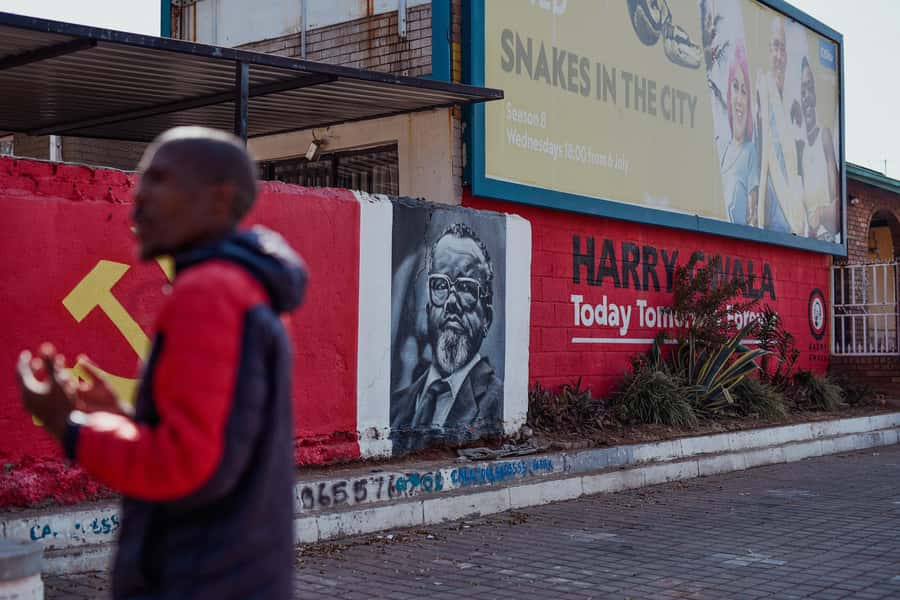
The itinerary includes a short stop outside Winnie Mandela’s House, usually around 10 minutes. Like the Tutu stop, this is mainly for photographs and explanation rather than an extended indoor visit.
The house adds another important person to the story. Winnie Mandela’s political work, public image, and relationship to the wider liberation movement are part of Soweto’s complicated history. You may find this section more nuanced than a simple hero story, which is appropriate for the subject.
The short timing means your guide has to choose what to emphasize. Ask questions if you want more detail. Guides such as Maweza are particularly useful here because they can move beyond prepared facts and explain how national politics affected local families and neighborhoods.
Riding a minibus taxi to Orlando East

After lunch, you take a minibus taxi to Orlando East. This is a small but meaningful part of the tour. Minibus taxis are a common form of local transport, and riding one gives you a brief sense of how people move around the township.
It also changes the pace. The morning is mainly on foot, while this section shows how the different parts of Soweto connect. The ride is not a sightseeing trip in itself, so do not expect a private vehicle or a narrated drive. Its value is practical and local.
You should be comfortable with a more ordinary form of transport. If you prefer a private car throughout, this tour may not suit you. The taxi ride is included as part of the experience, and it helps the day feel less staged.
Orlando East, Nomzamo Park, and everyday life
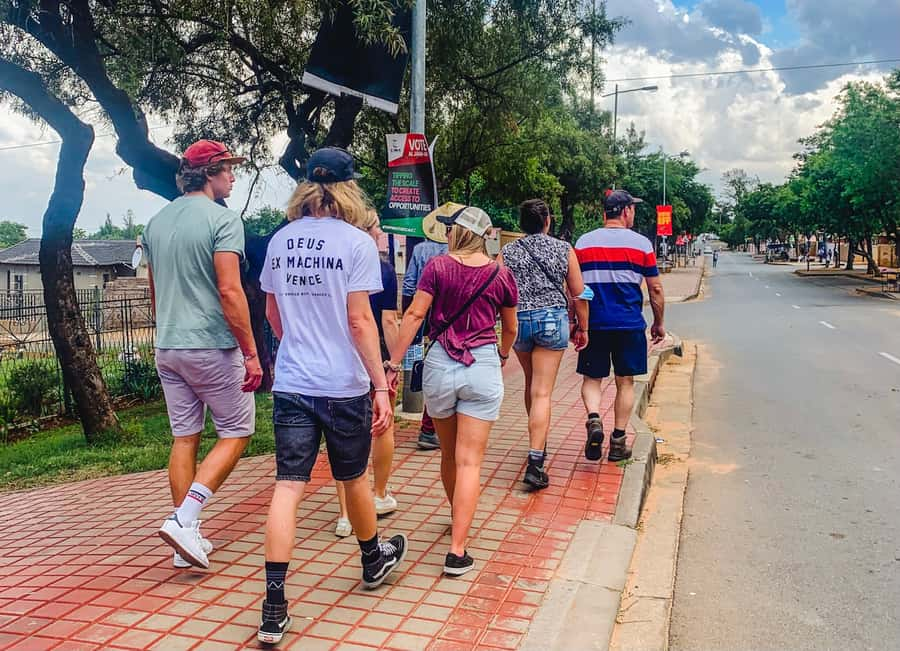
Orlando East is the next walking and sightseeing area, with about 15 minutes listed for the stop. From there, the tour continues toward Nomzamo Park, an informal settlement, for roughly 25 minutes of visiting, walking, and passing through the area.
This is the section that requires the most thought and respect. You are seeing homes and streets where people live, not a performance arranged for tourists. The people in Soweto are accustomed to tours, and the experience is presented as a chance to learn about the community rather than treat poverty as a spectacle.
Your guide should help you understand when to take photographs and when to simply observe. You may have the chance to speak with residents or children, but you can also keep some distance. The best approach is to follow local guidance, ask before photographing people, and remember that the settlement is a neighborhood first.
A donation may be possible if you want to support the community, but the tour information does not set a required amount. Carrying small cash can help if you choose to contribute. You may also encounter street performers, so extra money for tips is useful.
This part can be the most eye-opening because it shows a side of Soweto that is easy to miss on a standard landmark route. It can also feel confronting. That is not a flaw, but you should know what you are choosing.
Ending at the Soweto Towers
The final major stop is the Soweto Towers, with about 15 minutes for photographs, guided sightseeing, and walking. The towers are a strong visual finish after the memorials and residential streets.
They also reflect the township’s changing identity. Earlier stops focus on political struggle and household history. The towers give you a modern, recognizable image of Soweto and a place to look back on the parts of the township you have crossed.
Do not expect a long adventure activity at the towers. The stop is primarily for views and photographs. The appeal is the setting and the contrast with the morning’s more serious sites.
At the end, your guide can help you arrange your next transport. One guide waited with a participant when an Uber failed to arrive, and another made sure a visitor had a ride before leaving. You should still arrange your own pickup, since hotel transfer is not included.
The guides are the heart of the experience
The strongest praise goes to the guides, especially Maweza. He is described as a historian by several people who joined the tour, and his style seems to combine South African political history with personal experience of living in Soweto.
That matters because Soweto can be reduced to a few familiar names and dates. A well-prepared local guide can explain the less tidy parts too: poverty, politics, housing, transport, community pride, and the differences between neighborhoods.
Other guides named in the experience include Teboho, Mulalo, and Thabo. The exact guide depends on the date and group, but the common benefit is the chance to ask questions during the walk rather than listen to a fixed recording.
The guide can also adjust the level of interaction. You may speak with local residents, observe quietly, or spend more time on history. Let the guide know what interests you. This is not a good tour for staying completely detached from the place, but you do not have to force yourself into every interaction.
Is $43 good value?
At $43 per person, the tour is reasonably priced for four hours with a local guide, lunch, bottled water, a minibus taxi ride, and several major stops. You are paying for interpretation and access to local context, not just transport between attractions.
The value is strongest if you want to understand Soweto rather than only photograph Mandela’s House. The guide’s historical explanation is the part that turns separate locations into a connected story.
Budget extra for Mandela’s House admission and drinks. You may also want cash for tips, street entertainers, or a voluntary donation. Hotel pickup and drop-off are not included, so transport to Vilakazi Espresso and away from the final stop is your responsibility.
The lunch is enough to support the half-day format, but it should not be the reason you book. Food quality and choice may vary, and the meal is more about trying local street food than having a leisurely dining experience.
Who should book this walking tour?
I would choose this tour if you are staying in Johannesburg and want a serious introduction to Soweto in one half-day. It suits people interested in apartheid history, local politics, ordinary life, street food, and the relationship between famous places and working neighborhoods.
It can also suit families. A family with children aged 8, 12, and 15 completed the walk successfully, although parents should prepare younger children for difficult historical material and a fair amount of walking.
You should reconsider if you use a wheelchair, since the activity is not suitable for wheelchair users. You should also think twice if you dislike walking, local public transport, outdoor conditions, or visits to informal settlements.
Wear comfortable shoes. Bring sunscreen, water, a camera, tissues or hand sanitizer, a face covering if you prefer one, and cash. The tour runs in rain or sunshine, so check the forecast and dress for the conditions.
FAQ
Where does the Soweto walking tour begin?
Meet the guide in front of Vilakazi Espresso, opposite the Hector Pieterson Memorial.
How long does the tour last?
The tour lasts four hours.
What language is the tour in?
The live tour guide speaks English, and an English audio guide is included.
Is lunch included?
Yes. Lunch at a local shop is included, along with bottled water. Drinks are not included.
Is admission to Mandela’s House included?
No. You may visit the house for about 20 minutes, but the entrance fee is paid separately.
Does the tour include hotel pickup and drop-off?
No. You must make your own way to the meeting point and arrange transport after the tour.
Will I ride local public transport?
Yes. After lunch, the group takes a minibus taxi to Orlando East and the Soweto Towers.
Is the tour suitable for wheelchair users?
No. The activity is not suitable for wheelchair users.
What should I bring?
Bring comfortable shoes, sunscreen, a camera, water, cash, hand sanitizer or tissues, and a face mask or other protective covering if desired.
Does the tour operate in bad weather?
Yes. The tour runs rain or shine, so dress for the weather.
Should you book it?
Book this tour if you want Soweto explained by someone from Soweto, with time for questions and contact with everyday neighborhoods. The strongest reasons are the route from the Hector Pieterson Memorial to Nomzamo Park, the use of local transport, and the guides’ personal approach, especially Maweza.
Do not book it expecting a polished sightseeing loop or a food-focused outing. You will walk, spend time outdoors, pay extra for Mandela’s House, and confront some difficult realities. For $43, though, it offers a useful balance of landmark history, local food, and present-day life, making it one of the better ways to give Soweto more than a quick drive-by visit.
More Walking Tours in South Africa
- Johannesburg: Local Food Tasting Guided Walking Tour
★ 4.7 · 192 reviews - Johannesburg: City Centre Walking Tour
★ 4.8 · 152 reviews - Plettenberg Bay: Bungee Jumping with Zipline and Sky Walk
★ 5.0 · 506 reviews - Cape Town: Nathi Langa Township Walking Tour
★ 4.9 · 493 reviews
More Village Tours in South Africa
- Jo’berg in 1 Day: Soweto, Apartheid Museum & City Tour
★ 4.8 · 524 reviews - Johannesburg: Full-Day Tour with Soweto and Apartheid Museum
★ 4.8 · 478 reviews - Johannesburg and Soweto: Half-Day Tour
★ 4.8 · 439 reviews - Soweto: Guided Bicycle Tour with Lunch
★ 4.9 · 292 reviews
Just added for Johannesburg & Pretoria
- Soweto: Bike Tour with a Local Tour Guide★ 4.7 · 114 reviews
- From Johannesburg: Lion & Safari Park Half-Day Tour★ 4.6 · 384 reviews
- Johannesburg: Soweto Half-Day Tour★ 4.7 · 196 reviews
- Johannesburg: Street Art and Culture in Maboneng!★ 4.8 · 107 reviews
- Johannesburg: Maboneng Street Art & Culture Tour★ 4.9 · 257 reviews
- Johannesburg: Soweto & Apartheid Museum Half-Day Tour★ 4.9 · 99 reviews
- Johannesburg: Soweto Apartheid & Township Tour with Lunch★ 4.8 · 80 reviews
- Johannesburg and Soweto Apartheid Full Day Tour w/Lunch★ 4.9 · 219 reviews
Township & Village Tours, compared.

Berber villages : Atlas Mountains Day Hike from Marrakech
Read our review →
Atlas Mountains, Berber Villages and Three Valleys all inclusive
Read our review →
Quad Bike, Buggy, and Camel Ride & Bedouin Village
Read our review →
Atlas Mountains, Berber Villages, Agafay & Camel Ride
Read our review →
Paragliding, Camel Ride & Berber Villages Trip
Read our review →

Atlas Mountains and Three Valleys & Waterfalls – Villages Marrakech Day Trip
Read our review →