
Reviewed · HIKING & TREKKING
Climbing Kilimanjaro through 7 days Machame Route
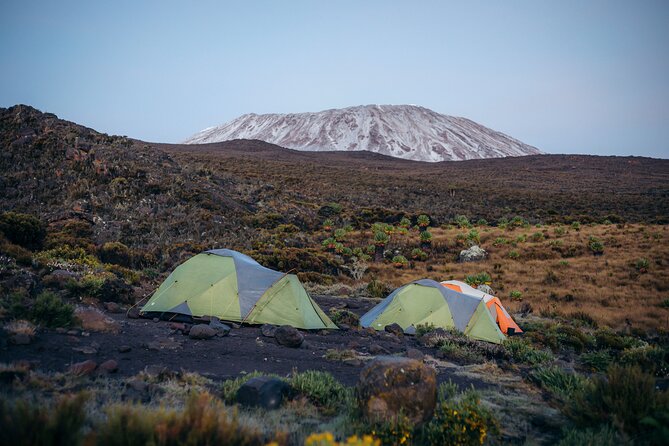
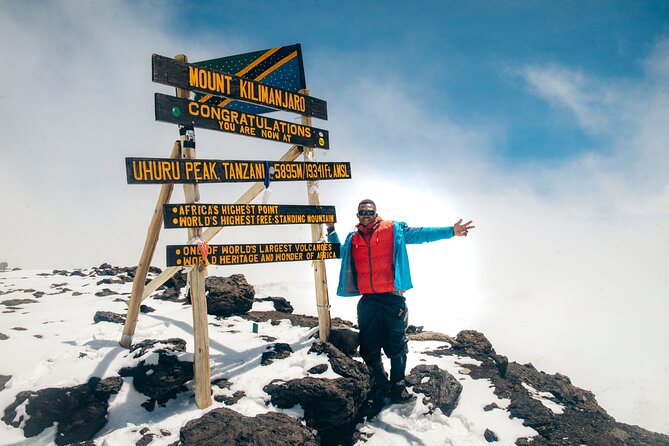
The 7-day Machame Route gives you one of Kilimanjaro’s best-balanced climbs: dramatic scenery, a proper acclimatization pattern, and a separate descent route. You begin in rainforest, cross high volcanic ground, tackle the Barranco Wall, and reach the summit after sleeping at Barafu Camp.
I like the daily health checks and the guide team’s wilderness first responder training. I also like the practical mountain setup: private tents, a dining tent, fresh cooked food, porters, and emergency oxygen. The main drawback is simple: Machame is the busiest route, and its steep sections make it a serious physical challenge.
Key points before you book
- Seven days on the mountain: The extra time helps you adjust to altitude better than a shorter itinerary.
- Walk high, sleep low: The Lava Tower and Barranco section gives your body useful acclimatization before the final push.
- Experienced mountain crew: Guides have at least eight years of experience, and the wider team has made many trips on Kilimanjaro.
- Fresh food and camp support: A chef, waiter, porters, private tents, dining equipment, and three daily meals are included.
- A different way down: You descend by the Mweka Trail instead of retracing the Machame ascent.
- Strong customer satisfaction: The experience has a 5 out of 5 rating from 151 reviews, with 100 percent recommending it.
Why seven days on Machame matters

Machame is often called the Whiskey Route, in contrast with Marangu’s nickname, the Coca Cola Route. The nickname can make Machame sound like a technical climb, but the real difference is its length and steepness. You do not need technical climbing skills as described here, but you do need steady fitness and the patience to walk slowly for several days.
The route begins at about 1,800 metres at Machame Gate and rises through several distinct mountain zones. That variety is part of the appeal. One day you are under tall rainforest, and a few days later you are walking among volcanic rock and open high-altitude ground.
I especially like the seven-day format because it gives the itinerary room to use the walk high, sleep low principle. You climb to a higher point, then spend the night at a lower camp before continuing upward. That rhythm is useful for altitude adjustment and is one reason this route has a strong summit success rate.
It is still important to keep expectations sensible. A successful summit is never guaranteed, and the final climb is demanding. Your guide’s role is not just to lead the way. The team checks your health each day, watches how you are coping, and gives practical guidance designed to help you reach the summit safely.
More Hiking Tours in Kilimanjaro & Moshi
- Kilimanjaro climb by Lemosho Route (7-day)
★ 5.0 · 651 reviews - Kilimanjaro climb, Machame Route (7-day)
★ 5.0 · 262 reviews - 8-Day Small-group Lemosho Kilimanjaro Summit Trekking
★ 5.0 · 186 reviews
Day 1: Machame Gate and the rainforest
Your climb starts from Machame Gate, reached from Moshi with private transportation. The route heads toward the southwestern side of Kilimanjaro and enters the rainforest on the first day.
This opening section is a fine introduction to the mountain. The forest gives you shade, changing plant life, and a softer start than the bare upper slopes. Your guide can also explain the mountain’s flora and fauna, an aspect that has been important to the team’s approach.
You will be carrying only what you need for the day, while porters handle the larger camping load. The included setup is not just a tent and sleeping space. It includes private tents, a dining tent, crew tents, tables, chairs, mattresses, cutlery, and cooking equipment.
Meals are prepared on the mountain. Breakfast, lunch, and dinner are included each day, along with coffee or tea. That matters more than it may sound. A hot meal and a reliable dining space give you a place to rest, eat, and prepare for the next section.
Day 2: Shira Camp and the first high views
From the rainforest, the route continues upward toward Shira Camp. This is where the Lemosho Route joins from the west, placing you on one of the main southern paths across Kilimanjaro.
Shira is an important change of mood. The dense forest gives way to more open mountain surroundings, and you begin to feel the scale of the climb. You are no longer simply walking uphill through trees. The summit is still ahead, but the mountain becomes more exposed and demanding.
This is also a day when pacing matters. You should follow the guide’s rhythm rather than trying to prove how fast you can walk. The local phrase pole pole, meaning slowly, is often heard on Kilimanjaro for good reason. A steady pace saves energy for the later days.
The crew’s attention to food and hydration becomes increasingly useful here. The operator promises freshly prepared meals, and the cook is part of the mountain team. Several past climbers have singled out the food, camp arrangements, and friendly support as major strengths. You should still tell the team promptly if you feel unwell, since daily health checks work best when paired with honest communication.
Day 3: Lava Tower and Barranco
One of the most valuable parts of the route comes as you cross the southern side of Kilimanjaro toward Barranco via Lava Tower. You gain altitude during the day, then descend to a lower sleeping point at Barranco.
This is the clearest example of the route’s walk high, sleep low design. It can feel counterintuitive to climb higher and then give up some height, but the pattern is intended to help your body adjust before the summit attempt.
Lava Tower also marks a more serious stage of the climb. The higher ground is more exposed, and the air may feel thinner. You should expect a slower day and listen carefully to your guide’s advice. The guides are certified wilderness first responders, and emergency oxygen cylinders are carried on the climb. Those safeguards are reassuring, but they do not replace sensible pacing or attention to symptoms.
Barranco Camp is memorable because it places you below the Great Barranco Wall, one of the route’s signature sections. You can look ahead to the next challenge while the crew prepares dinner and organizes camp. The wall is steep in places, but the information provided describes the route as a trekking challenge rather than a technical climbing trip.
Same corner of the map, a completely different outing:
- Materuni Waterfalls, coffee tour & Kikuletwa Hot Springs
★ 5.0 · 643 reviews - Materuni Waterfalls & Chemka Hotsprings Day Trip
★ 5.0 · 214 reviews - Kilimanjaro Climbing Lemosho Route 8 Days.
★ 5.0 · 186 reviews - Climbing Kilimanjaro – Machame Route
★ 5.0 · 170 reviews
Day 4: The Great Barranco Wall
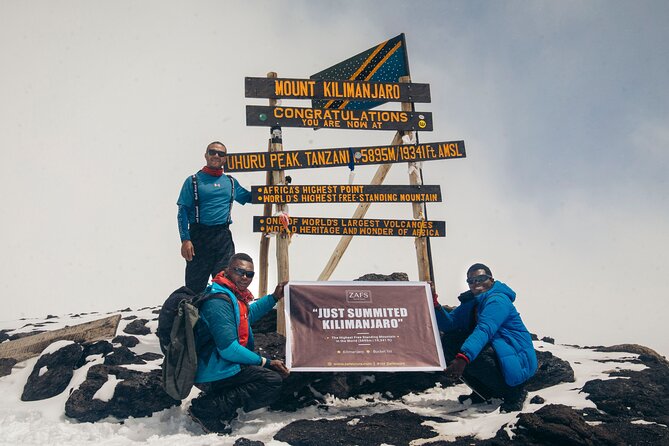
The climb over the Great Barranco Wall is one of the moments that gives Machame its character. It is steeper and more hands-on than the gentler walking sections, so you should expect to move carefully and follow the guide’s instructions.
This is not a place to rush. Your guide sets the pace and helps you choose the best line over the rock. The support team is also close by, which can make a major difference if you are tired or worried about the climb.
After the wall, the route continues across the southern side of the mountain toward the upper camps. The scenery changes again, and you gain a sense that the summit attempt is approaching. This is a good time to conserve energy, eat properly, and avoid treating every view stop as a race.
The trip’s private-tour format means only your own group takes part, but it does not mean you are without a full mountain crew. Guides, a chef, a waiter, and porters are included. The number of porters is not specified, so you should ask for the full staffing plan and luggage arrangements before departure.
Day 5: Toward Barafu Camp
The route continues toward Barafu Camp, the base for the summit attempt. By now, the forest is long behind you, and the terrain is more open, rocky, and stark.
Barafu is a functional camp rather than a place for sightseeing. Its importance comes from its position and timing. You need to rest, eat, organize clothing and equipment, and prepare mentally for the summit push.
This is where the quality of camp support becomes particularly valuable. Fresh dinner, a proper dining tent, chairs, mattresses, and hot drinks give you a chance to recover before the hardest part of the trip. The guides also provide special advice aimed at helping you summit safely.
I would treat this day as a careful preparation day, not an ordinary hiking day. Ask questions about the next stage, keep your belongings organized, and tell the guide about any symptoms. The team performs daily health checks, but your own report is an essential part of that process.
Day 6: Summit day and the start of the descent
Summit day is the central goal of the climb. The exact timing is not provided, so you should confirm the departure schedule with ZAFS Tours before you begin. What is clear is that this is the most demanding day, following the gradual approach through Machame, Shira, Lava Tower, Barranco, and Barafu.
You will need patience more than speed. The guides’ experience matters here, and the available names include Alex, Gabriel, Mushi, Farooq, Musa, and Mushi in different groups. Guide assignments can change, so ask who will lead your departure and who will be responsible for health checks.
Emergency oxygen is carried on the climb, and the guides have wilderness first responder certification. Those measures add an important layer of safety. They should not be read as a promise that altitude problems cannot occur, but they do show that the operator has planned for serious mountain conditions.
After reaching the summit, you descend by the Mweka Trail. This is a useful feature of the route because you do not simply walk back over the same ground. The change of route also gives the trip a stronger sense of progression, even though your body may be ready for a long rest.
Day 7: Mweka descent and return to Moshi
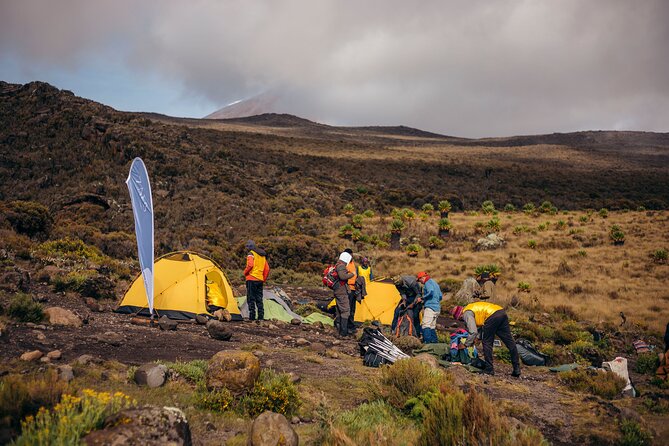
The final day takes you down the Mweka route and back toward the meeting point in Moshi. The trip begins and ends at the Moshi Leopard Hotel on Market Street, and private transportation is included.
The descent can be easier on your breathing than the ascent, but it is not effortless. Tired legs and uneven ground can make the downward walk surprisingly demanding. Your trekking poles, if you use them, and your guide’s pace can help you manage the strain.
At the end, the value of the seven-day plan becomes clear. You have not only made a summit attempt. You have crossed rainforest, high volcanic ground, the Barranco Wall, and the southern side of the mountain before coming down a separate trail.
What the $2,425 price covers
At $2,425 per person, this is not a budget day hike. It is a full mountain package that includes private transportation, park fees and taxes, camping equipment, a dining system, meals, hot drinks, guides, a chef, a waiter, and porters.
The price is easier to judge when you separate the climb into its working parts. You are paying for seven days of food preparation, camp movement, route leadership, health monitoring, and mountain logistics. The included private tents and dining tent also mean you are not expected to create the entire camp system yourself.
I consider the package good value for someone who wants a supported climb rather than a stripped-down trek. The strongest value comes from the experienced crew, daily checks, emergency oxygen, and fresh food. The price does not include accommodation in Moshi before or after the climb, although that can be arranged on request.
Group discounts are available, and the activity is private for your group. Pickup is offered, and mobile ticketing is listed as a feature. The stated start time is 12:00 am, which may refer to the booking system rather than the actual mountain departure, so confirm the precise meeting and pickup time before travel.
Food, tents, and the human side of the climb
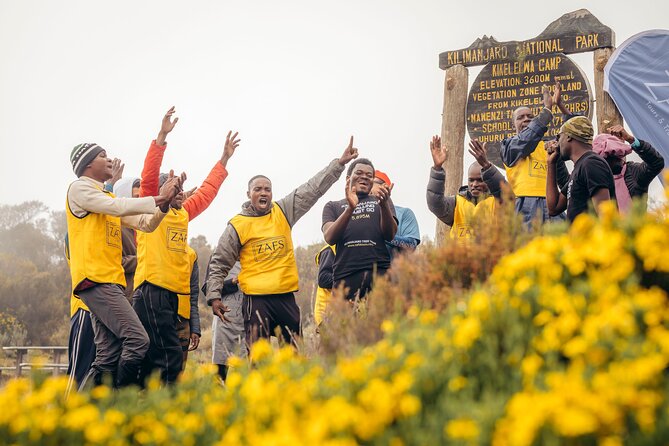
A Kilimanjaro trip depends heavily on the crew. The guides lead the route and monitor your health, but the chef, waiter, and porters make the daily camp routine possible.
The company says its guides have at least eight years of mountain experience and that its wider dream team has been on Kilimanjaro more than 100 times. Several guide names appear in the trip feedback, including Alex, Gabriel, Mushi, Farooq, Musa, Danis, and Frank. You should not assume you will receive a particular guide, but these names may help you identify the team when you arrive.
The most consistently praised features are the support, motivation, food, and organization. One useful detail is the repeated mention of guides matching their pace to someone who was struggling rather than pushing that person away from the group. That is exactly the kind of support you want on a high-altitude trek.
You should also ask how tipping is handled and how the crew is organized, since those details are not provided here. The operator includes porters, but the supplied information does not state porter numbers, baggage limits, or tipping guidance.
Who should book this Machame climb
This experience suits you if you have a moderate level of physical fitness, are prepared for steep walking, and want a supported camping trek with a strong focus on summit preparation.
It is a good fit for:
- You want seven days rather than a rushed shorter climb.
- You value experienced guides and daily health monitoring.
- You prefer a route with varied scenery and a separate descent.
- You want meals, tents, camp furniture, and a full mountain crew included.
- You are comfortable joining a private activity with your own group.
It may not suit you if you dislike camping, need hotel accommodation included, or want a quiet route away from other climbing groups. Machame is described as the busiest route on Kilimanjaro. Its popularity brings a proven route and strong support network, but not solitude.
Should you book it?
I would book this climb if your main priorities are a seven-day schedule, careful acclimatization, dependable camp support, and a serious guide team. The combination of Lava Tower, Barranco, Barafu, and the Mweka descent gives you a varied route rather than a simple up-and-down walk.
Before paying, I would confirm the actual start time, pre and post-climb accommodation, guide assignment, porter arrangements, equipment requirements, and the plan for altitude checks. Also remember that free cancellation applies only when you cancel at least 24 hours before the local start time. Changes or cancellations inside that window are not refundable.
For a first Kilimanjaro climb, the package offers the right kind of structure. You still need fitness, patience, and a willingness to walk slowly, but the food, camping system, medical preparation, and experienced crew remove much of the avoidable stress.
FAQ
How long is the Machame Route experience?
The climb lasts approximately seven days. The route begins at Machame Gate, passes through Shira Camp, Lava Tower, Barranco, and Barafu, reaches the summit, and descends by the Mweka Trail.
What is included in the $2,425 price?
The price includes private transportation, fees and taxes, private tents, a dining tent, crew tents, tables, chairs, mattresses, cutlery, utensils, coffee or tea, breakfast, lunch, dinner, guides, a chef, a waiter, and porters.
Is accommodation in Moshi included?
No. Pre and post-hike accommodation in Moshi is not included, but it is available on request.
Where does the activity start and end?
The meeting point is Moshi Leopard Hotel on Market Street in Tanzania. The activity ends back at the meeting point.
Do I need a high level of fitness?
The stated requirement is a moderate physical fitness level. You should still expect a demanding mountain trek with longer and steeper sections, including the Great Barranco Wall.
Can I cancel for a full refund?
Yes, if you cancel at least 24 hours before the experience start time. Cancellations or changes made less than 24 hours before the local start time are not refunded.
More Week-Long Routes from Kilimanjaro & Moshi
- 7-Day Machame Kilimanjaro Summit Tour from Arusha
★ 5.0 · 125 reviews - Tanzania Classic – 7 Days
★ 5.0 · 1,151 reviews - 7-Day Premium Luxury Tanzania Safari All-Inclusive
★ 5.0 · 426 reviews - 7 days Tour from Tangier to Marrakech Morocco Tours
★ 5.0 · 245 reviews
Just added for Kilimanjaro & Moshi
- Maasai village visit, Materuni waterfalls & coffee experience★ 4.5 · 95 reviews
- Materuni Waterfalls & Coffee Tour from Moshi★ 5.0 · 92 reviews
- Mountain Kilimanjaro Day Hike★ 5.0 · 102 reviews
- Arusha or Moshi : Hot Spring, Waterfall & Coffee Farm Tour★ 4.8 · 80 reviews
- Materuni Waterfall, Coffee Tour and Picnic Hot Lunch★ 5.0 · 128 reviews
- 7-Day Machame Kilimanjaro Summit Tour from Arusha★ 5.0 · 125 reviews
- Kilimanjaro climb, Lemosho Route (6-day)★ 5.0 · 129 reviews
- Kilimanjaro climb, Lemosho Route (8-day)★ 5.0 · 148 reviews
Hiking & Trekking, compared.
Berber villages : Atlas Mountains Day Hike from Marrakech
Read our review →
3 Days Desert Tour From Marrakech To Merzouga Dunes & Camel Trek
Read our review →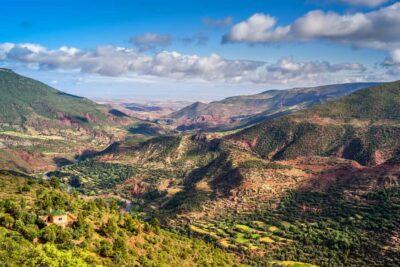
Ourika Valley Trip with Waterfall Hike & Lunch
Read our review →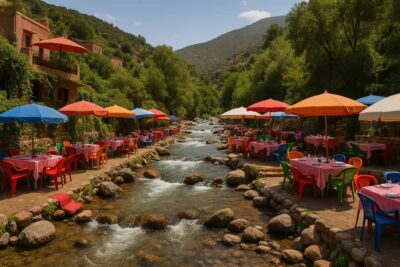
ourika valley lunch & guided hike to waterfalls
Read our review →
3-Day Tour to Merzouga Erg Chebbi with Food & Camel Trek
Read our review →Browse the lists this tour appears in